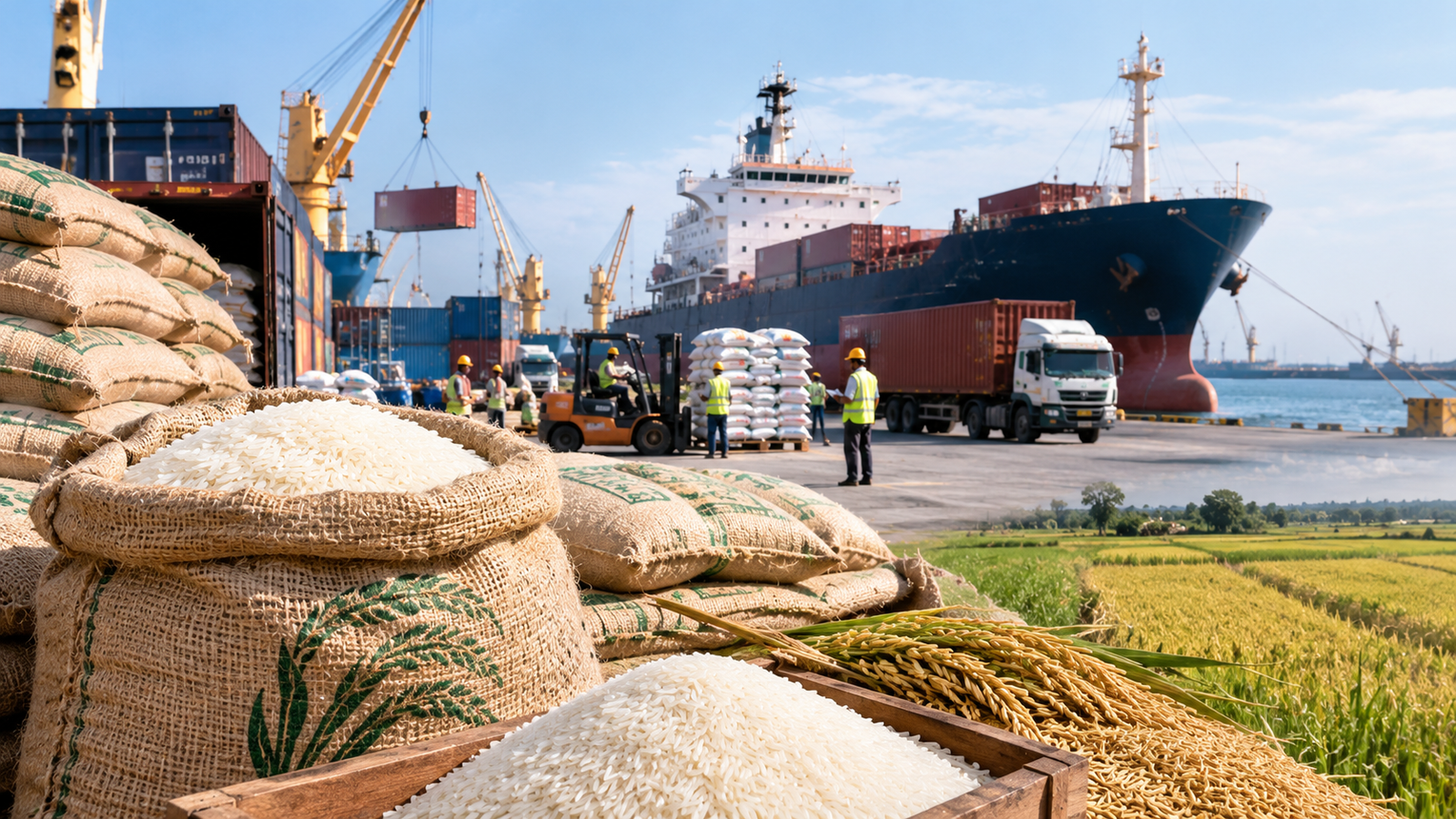
ISLAMABAD, October 18, 2026 – Pakistan’s food exports increased by 25.31% in the first three months of the 2026–27 financial year, reaching $1.388 billion. Stronger rice shipments were the main reason for the rise, according to Pakistan Bureau of Statistics (PBS) figures reported by Dawn on Sunday.
The Pakistan food exports 2026 results offer encouraging news for exporters and farmers supplying overseas markets. A year earlier, exports in the same July–September period stood at $1.108 billion. That means export earnings increased by approximately $280 million compared with the first quarter of the previous financial year.
But the numbers tell more than one story. Rice, meat and fish exports rose, while fruit and vegetable shipments dropped sharply. Pakistan also spent $2.330 billion on food imports during the same quarter — more than the value of its raw food exports.
Pakistan Food Exports 2026: Key Figures
Reporting period: July–September 2026, the first quarter of financial year 2026–27.
Raw food exports: $1.388 billion, compared with $1.108 billion a year earlier.
Year-on-year export growth: 25.31%.
Rice export value: Up 55.89%.
Basmati rice export value: Up 86.28%.
Non-basmati rice export value: Up 39.20%.
Meat exports: Up 21.09%.
Fish product exports: Up 14.61%.
Fruit exports: Down 30.62%.
Vegetable exports: Down 20.48%.
Food imports: $2.330 billion, up 3.44%.
These percentages compare the same three-month period in two different financial years. They are not full-year totals or forecasts for the remainder of 2026–27.
What Caused Pakistan’s Food Export Growth?
Rice played the biggest role in the latest export increase. PBS-based reporting shows that both the value and quantity of rice shipments grew during the July–September quarter.
This matters because Pakistan supplies rice to customers in a range of international markets. Export earnings depend on how much rice is sold and the price buyers pay for it.
Other goods also contributed, including meat, fish products, tobacco and spices. However, the growth was not equal across every category, so it would be inaccurate to suggest that all agricultural exports improved.
Dawn’s October 18 report identifies higher rice shipments as the main driver of the overall result.
Why Rice Exports Grew So Quickly
The total value of Pakistan’s rice exports increased by 55.89% compared with the same quarter last year. Both basmati and non-basmati rice contributed to that growth.
Basmati rice export earnings increased by 86.28%, while the quantity shipped rose by 80.21%. Non-basmati export earnings increased by 39.20%, with shipment quantities up 43.55%.
These figures are important because they show growth in physical shipments, not just changes in prices. If the value of exports rises, it can happen because more goods were sold, higher prices were received, or both.
The rice export figures indicate that volumes were an important part of the increase. They do not establish that every rice producer or trader made a higher profit.
What Is the Difference Between Basmati and Non-Basmati Rice?
Basmati is a long-grain aromatic rice known for its distinctive fragrance and cooking qualities. Pakistan exports basmati to buyers looking for premium varieties.
Non-basmati rice includes other varieties used in everyday meals and food businesses. These may be sold at different prices and to different customers.
Both markets are important, but they have different costs and levels of demand. A change in one category does not automatically affect the other in the same way.
For businesses, the latest figures suggest stronger overseas demand or improved sales opportunities for both types during the quarter.
How Did Government Export Support Affect Rice?
According to Dawn, the Ministry of Commerce extended a rice export support scheme until September 30 and raised the Duty Drawback of Local Taxes and Levies rate for non-basmati rice.
The measure was intended to support exporters facing weaker international demand and cost pressures.
A duty drawback helps eligible exporters recover or offset certain charges under government rules. It may improve their ability to compete on price.
However, the available figures do not establish exactly how much of the export increase was caused by this policy. Weather, supply, international demand, exchange rates and competitors’ prices can also influence results.
The support window described in the report ended on September 30, so the next quarter will be important for judging whether rice exports maintain their momentum.
Meat and Fish Exports Also Improved
Rice was not the only growing category. Meat exports increased by 21.09%, while fish product exports were 14.61% higher than a year earlier.
These sectors can create opportunities for businesses involved in farming, processing, packaging, refrigerated transport and quality inspection.
Exporting food often requires strict standards for hygiene, freshness, storage and documentation. Meeting those requirements helps producers reach international buyers.
The latest data show higher export values. They do not confirm new factories, employment totals or investment commitments linked directly to the quarterly increase.
Which Food Categories Performed Poorly?
The recovery was uneven. Fruit exports fell by 30.62% and vegetable exports declined by 20.48% compared with the previous year’s first quarter.
This is a significant contrast to the strong rice result.
A fall in exports can reflect reduced available supply, changes in overseas demand, prices, quality issues or transport difficulties. The figures alone do not identify one confirmed cause behind every decline.
Businesses in these sectors may need to review production, cold storage, packaging and access to buyers. But any specific explanation for the latest fall requires additional commodity-level evidence.
The important point is that headline export growth does not mean every Pakistani farmer or food exporter experienced the same improvement.
What Happened to Pakistan’s Food Imports?
Pakistan imported $2.330 billion worth of food items in July–September 2026. That was 3.44% higher than the $2.252 billion recorded in the corresponding period last year.
The slower growth in imports is notable when compared with the 25.31% rise in exports.
Major imported food products include palm oil, pulses, tea and soybean oil. Pakistan also uses imported food items to meet demand when local production or supply is insufficient.
Even with stronger exports, the country’s raw food import bill was about $942 million higher than the value of its raw food exports during this quarter.
That comparison is not Pakistan’s total merchandise trade deficit. It concerns only the food figures presented here.
Palm Oil, Pulses and Tea: A Mixed Picture
Palm oil remained the largest component of the food import bill in the reviewed figures, but its import value declined by 2.30%. The quantity imported fell by 13.75%.
Pulse imports decreased by 12.07%, while tea imports increased by 25.54%.
These changes show that demand and prices can move differently across imported products. For example, spending can increase even if physical import volumes rise more slowly, depending on international prices.
Consumers should not assume that import-value changes automatically translate into the same percentage changes at retail shops.
Pakistan’s domestic taxes, transport costs, competition and exchange rates also influence prices paid by households.
Why Does Pakistan Still Import Food?
A country can export large amounts of one food product and import other products at the same time.
Pakistan is a major rice exporter, but it also purchases edible oils and other items that local production may not fully supply.
The government has approved plans to import wheat to address domestic production shortfalls, according to Dawn’s reporting.
That decision is separate from the rise in rice exports. One strong crop or export category cannot automatically remove supply shortages in another.
A balanced food policy needs to consider export earnings, domestic food availability and affordable prices for consumers.
Does Higher Food Export Revenue Help Pakistan’s Economy?
Export sales bring foreign currency into the country and can create business for farms, processors, transport companies and trading firms.
More export income can support the external account when it is earned and received through normal channels. It may also encourage businesses to invest in product quality and international marketing.
However, higher export value does not automatically mean an equal increase in national income, tax revenue or business profits.
Companies must pay for crops, packaging, labour, energy and transportation. Profits depend on these costs as well as selling prices.
It is also important to examine imports and the wider balance of trade rather than treating one category’s export growth as proof that all economic pressures have disappeared.
What Does the News Mean for Farmers?
Farmers who produce export-quality rice may benefit when traders have strong overseas orders. More demand can create opportunities for better sales and long-term business relationships.
But the price received by a farmer is not always the same as the price earned by an exporter. Storage, milling, transport, financing and other expenses affect the final value chain.
Some farmers may face higher input costs or difficult growing conditions even in a period of stronger exports.
The statistics are national export figures, not a survey showing that every farmer earned more money.
Policy discussions should therefore include crop productivity, reliable irrigation, farm costs and access to fair markets.
Could More Exports Raise Food Prices in Pakistan?
This is an important question for families concerned about the cost of living.
When overseas buyers demand more of a product, some suppliers may find international sales attractive. But the effect on local prices depends on the size of the harvest, domestic supply, stocks, transport and government policies.
Strong exports do not always lead to higher local prices. Likewise, a rise in exports does not guarantee cheaper food.
For consumers, the best evidence comes from current official retail price data and market surveys. Export earnings alone are not enough to predict the price of a bag of rice in every Pakistani city.
How Does This Quarter Compare With Last Year?
The latest rebound comes after a difficult previous financial year.
According to PBS data reported by Dawn, raw food exports fell by 29.49% in FY2025–26, dropping to $5.017 billion from $7.116 billion a year earlier.
That makes the increase in the July–September 2026 quarter particularly notable. It suggests an improvement after the previous annual decline.
Still, three months do not establish how the entire new financial year will perform.
Crop supplies, world prices, freight charges and changing customer demand will determine what happens in the remaining quarters.
What Should Exporters Watch Next?
The October–December quarter will provide an early test of whether the strong rice performance can continue.
Exporters will need to monitor global rice demand, competing suppliers, shipping costs and financing conditions.
Businesses in fruits and vegetables may focus on why export performance weakened and whether changes in quality, storage or market access can help.
For policymakers, timely commodity data and clear trade rules may be useful in supporting healthy competition and stable exports.
A strong quarterly report is encouraging, but lasting growth depends on consistent sales rather than one exceptional period.
Why This Is Important for International Investors
Trade figures are one way investors assess the strengths and risks of an economy.
Rising agricultural exports can show that local producers are finding overseas customers. This may matter to companies involved in logistics, food processing and agricultural technology.
However, investors should also review costs, profit margins, financial statements and the wider economy before evaluating a specific company.
The latest food export numbers are not a recommendation to buy agricultural shares or invest in any particular business.
Conclusion
Pakistan’s raw food exports increased by 25.31% to $1.388 billion in July–September 2026, led by a strong rise in rice shipments.
Basmati and non-basmati rice, meat and fish all recorded higher export values. But fruits and vegetables performed poorly, while food imports still reached $2.330 billion.
The quarter offers positive news for parts of Pakistan’s export economy. Whether this becomes a lasting recovery will depend on the next set of trade figures, the performance of different crops and conditions in overseas markets.
Frequently Asked Questions
How much did Pakistan’s food exports grow in 2026?
Raw food exports rose 25.31% year-on-year to $1.388 billion during July–September 2026.
Which product contributed most to the increase?
Rice was the main driver, with export value rising 55.89%.
How much did basmati rice exports rise?
The value of basmati rice exports increased by 86.28% compared with the same period a year earlier.
Did all food exports increase?
No. Fruit exports fell 30.62% and vegetable exports declined 20.48%.
What happened to meat and fish exports?
Meat export value rose 21.09%, and fish product exports increased 14.61%.
How much food did Pakistan import?
Food imports were $2.330 billion in July–September 2026, up 3.44% year-on-year.
Does the higher export total mean Pakistan has a food trade surplus?
No. Food imports were higher than raw food exports during the quarter.
Will food exports keep rising?
That is uncertain. Future results depend on crop supplies, global prices, shipping costs and customer demand.
About The Author