NASA and SpaceX are preparing the four-member Crew-12 team to depart the International Space Station on October 7, ending a long-duration mission that has kept the crew in orbit for 237 days. NASA is targeting an 8:05 a.m. EDT undocking, with splashdown off the coast of California expected at approximately 11:34 a.m. EDT on October 8, subject to weather, spacecraft readiness and recovery conditions.
The returning crew includes NASA astronauts Jessica Meir and Jack Hathaway, European Space Agency astronaut Sophie Adenot, and Roscosmos cosmonaut Andrey Fedyaev. Meir will command the Dragon spacecraft during the journey home, Hathaway will serve as pilot, while Adenot and Fedyaev will return as mission specialists.
Crew-12 has been aboard the orbital laboratory since February 14. During the mission, the crew supported scientific research, maintenance and experiments designed to improve understanding of human health, spaceflight systems and life in microgravity.
The planned departure also marks an important transition for the International Space Station. Crew-13 arrived at the station on October 1 and has already begun taking over research and operational responsibilities.
Crew-12 Return Timeline
NASA’s current return plan begins with hatch closure on October 7. Live coverage is scheduled to begin at 6 a.m. EDT, with the hatch expected to close around 6:20 a.m. Undocking coverage is then scheduled to begin at 7:45 a.m., followed by the spacecraft’s departure from the station at 8:05 a.m. EDT.
After undocking, Dragon will spend just over a day orbiting Earth while the crew and flight controllers prepare the spacecraft for re-entry. NASA plans to begin return coverage at 10:20 a.m. EDT on October 8. A deorbit burn is targeted for 10:46 a.m., followed by splashdown in the Pacific Ocean at approximately 11:34 a.m. EDT.
The exact timing could still change. NASA and SpaceX have emphasized that departure and splashdown depend on spacecraft readiness, recovery-team readiness, sea conditions and weather in the Pacific Ocean off California.
Who Is Returning on Crew-12?
The Crew-12 mission brings together astronauts and a cosmonaut from three major space agencies. Jessica Meir, a NASA astronaut, will command the Dragon spacecraft. Jack Hathaway, also from NASA, will serve as pilot. ESA astronaut Sophie Adenot and Roscosmos cosmonaut Andrey Fedyaev are returning as mission specialists.
The international makeup of Crew-12 reflects the long-standing multinational model of International Space Station operations. NASA, ESA, Roscosmos and other partner agencies continue to work together aboard the ISS despite wider political tensions on Earth.
What Crew-12 Did During 237 Days in Space
NASA says Crew-12 supported extensive research and operations during its stay on the International Space Station. The orbital laboratory is used to study how microgravity affects human health, materials, biology and technology, while also testing systems that could support future exploration missions.
Long-duration missions such as Crew-12 are particularly valuable because researchers can observe how the human body adapts over many months in space. These studies can help scientists understand changes involving muscles, bones, circulation, sleep and the immune system.
Crew members also participate in technology demonstrations and operational research that may support future missions to the Moon and eventually Mars. A major challenge for deep-space exploration is determining how astronauts can remain healthy and productive during long journeys far from Earth.
Preparing the Crew for Re-Entry
Returning to Earth after months in microgravity is physically demanding. Crew-12 members completed final packing of the Dragon spacecraft with personal items, cargo and scientific samples before departure.
The crew also prepared special drink bags containing fluid and salt tablets. Astronauts use this process, known as fluid loading, before re-entry because it helps their bodies adjust to Earth’s gravity after extended periods in microgravity.
In space, bodily fluids redistribute because there is no normal gravitational pull. After returning to Earth, astronauts must readjust to gravity quickly, and fluid loading can help support blood pressure during the transition.
How the Dragon Spacecraft Returns to Earth
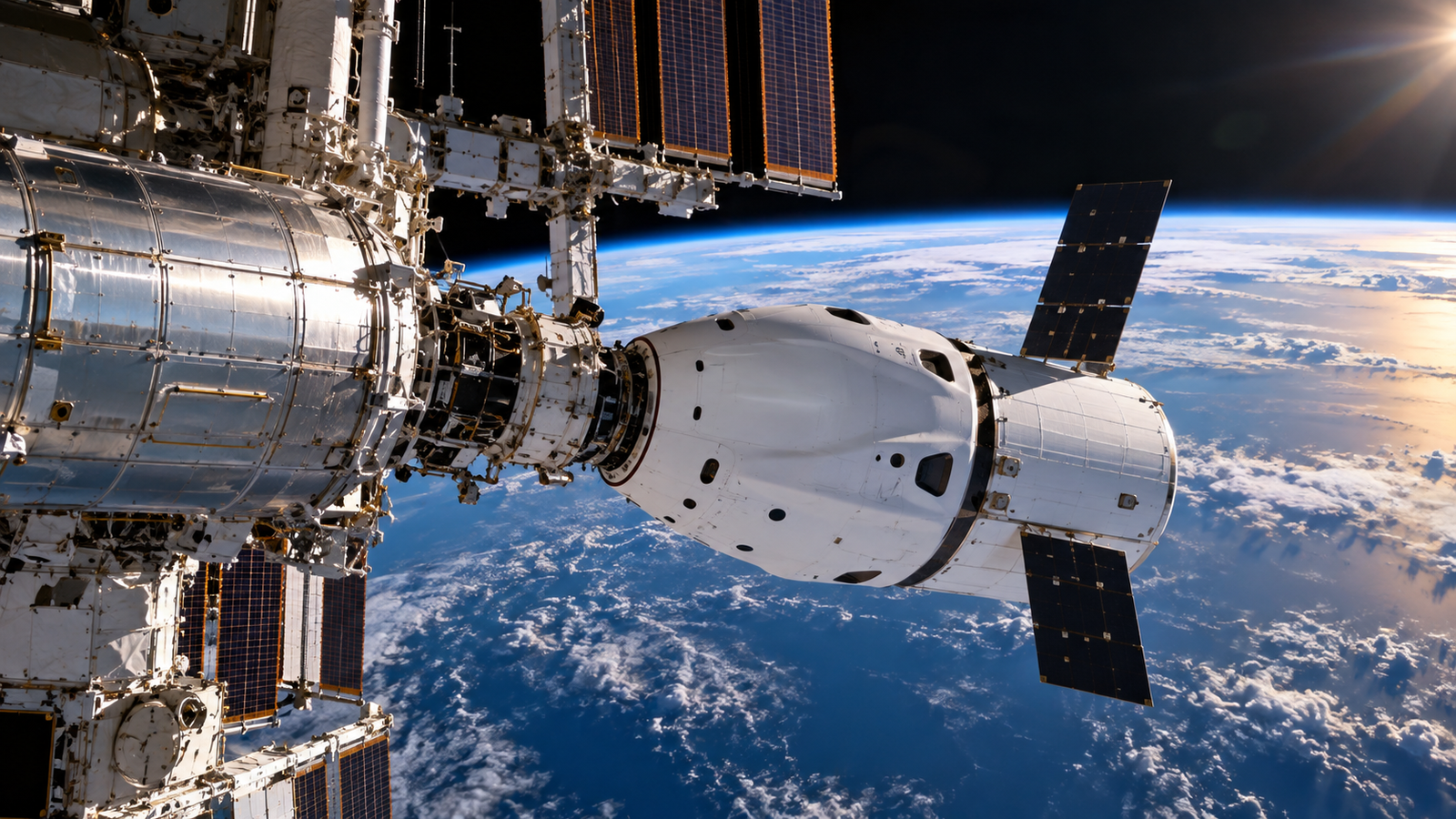
After leaving the ISS, Dragon gradually moves away from the station and enters a return trajectory. Flight controllers monitor the vehicle while the crew prepares for re-entry.
The spacecraft later performs a deorbit burn, which reduces its orbital velocity and begins the controlled descent toward Earth. Dragon’s heat shield then protects the capsule from the extreme temperatures generated during atmospheric re-entry.
As the spacecraft descends through the atmosphere, parachutes deploy in stages to reduce its speed before splashdown. NASA and SpaceX recovery teams then approach the capsule by ship, secure the spacecraft and help remove the crew.
Why California Is the Planned Splashdown Area
NASA’s current plan calls for Crew-12 to splash down in the Pacific Ocean off the coast of California. The exact landing location is normally chosen closer to re-entry based on sea and weather conditions.
Recovery conditions are one of the biggest variables in crewed spacecraft returns. Strong winds, high waves or poor visibility can make recovery operations more difficult, so NASA maintains flexibility in selecting a splashdown zone and may adjust the timing or location if conditions change.
Crew-13 Takes Over at the Space Station
Crew-12’s departure is taking place shortly after the arrival of Crew-13. NASA’s SpaceX Crew-13 arrived at the ISS on October 1 following a journey from Florida. Their arrival temporarily increased the station population before Crew-12’s scheduled departure.
Crew-13 members have already begun scientific and operational work aboard the station. The incoming team will continue health research and other experiments over a mission expected to continue into spring 2027.
The overlap between crews allows astronauts to transfer responsibilities and share operational knowledge before the departing team leaves. Jessica Meir also formally handed over station command to Roscosmos cosmonaut Pyotr Dubrov ahead of Crew-12’s departure.
Science Impact of Long-Duration Space Missions
Crew-12’s return is not only an operational milestone. It is also scientifically important because long-duration missions provide researchers with valuable information about the effects of spaceflight on the human body.
Researchers study changes in bone density, muscle mass, cardiovascular function, vision, sleep and immune responses. Understanding these changes is essential if agencies plan to send astronauts on missions lasting months or even years.
Data gathered from astronauts living aboard the ISS can help scientists develop improved exercise systems, medical procedures, nutrition plans and spacecraft environments for future exploration.
Why Crew-12 Matters for NASA’s Commercial Crew Programme
Crew-12 is part of NASA’s Commercial Crew Program, which uses privately operated spacecraft to transport astronauts between Earth and the International Space Station.
SpaceX’s Dragon spacecraft has become a central part of NASA’s human-spaceflight operations, allowing regular crew rotations to the ISS. The programme represents a shift from earlier spaceflight models in which NASA directly operated most crew transport systems.
By working with commercial companies, NASA aims to maintain routine access to low-Earth orbit while focusing government resources on larger exploration programmes, including Artemis missions to the Moon.
Global Importance
Crew-12 has global scientific relevance because the mission includes astronauts from the United States and Europe along with a Russian cosmonaut. Research conducted aboard the ISS is frequently shared across international teams and contributes to scientific knowledge that extends far beyond any single country.
The mission also demonstrates that international cooperation in space remains possible even during periods of geopolitical tension. For scientists and engineers, the ISS continues to function as a shared laboratory where research into human health, materials science and future exploration technologies can be conducted in microgravity.
Pakistan and South Asia Relevance
The Crew-12 mission has indirect but meaningful relevance for Pakistan and South Asia. Space science and astronaut research are becoming increasingly important across the region as governments invest in satellites, communications infrastructure, remote sensing and scientific education.
Pakistan’s own space ambitions remain much smaller than those of NASA or other major agencies, but developments aboard the ISS provide useful scientific and educational context for students, universities and researchers interested in aerospace engineering and space medicine.
What Happens Next
If weather and spacecraft conditions remain acceptable, Crew-12 will undock from the International Space Station on October 7 and begin its journey back to Earth.
The crew will spend more than a day aboard Dragon before the spacecraft performs its deorbit burn and enters Earth’s atmosphere. Splashdown is currently scheduled for approximately 11:34 a.m. EDT on October 8 off the coast of California.
Once Crew-12 safely returns, scientists will begin post-flight assessments to study how the astronauts’ bodies readjust to gravity after 237 days in space.
FAQs
When will NASA SpaceX Crew-12 leave the ISS?
NASA and SpaceX are targeting 8:05 a.m. EDT on October 7, 2026, for Crew-12’s undocking from the International Space Station, subject to weather and spacecraft readiness.
When is Crew-12 expected to splash down?
Splashdown is currently scheduled for around 11:34 a.m. EDT on October 8 off the coast of California.
Who are the Crew-12 astronauts?
The returning crew includes NASA astronauts Jessica Meir and Jack Hathaway, ESA astronaut Sophie Adenot and Roscosmos cosmonaut Andrey Fedyaev.
How long has Crew-12 been in space?
NASA says the mission will conclude after approximately 237 days in space.
Which spacecraft will bring Crew-12 home?
The crew will return aboard a SpaceX Dragon spacecraft.
Why could the return schedule change?
The timeline depends on weather, sea conditions, spacecraft readiness and recovery-team readiness.
Who replaces Crew-12 on the ISS?
Crew-13 arrived at the station on October 1 and has begun its own long-duration research mission.
Why is Crew-12 scientifically important?
Its long-duration stay provides valuable data about human adaptation to microgravity and supports research relevant to future deep-space missions.
About The Author