NEW DELHI, October 17, 2026 – Climate migration in South Asia could affect up to 40.5 million people by 2050 in a worst-case scenario, according to an estimate cited by the International Organization for Migration (IOM). The warning was highlighted by IOM Director General Amy Pope during a visit to New Delhi on October 16.
The warning about climate migration in South Asia has been reported by AFP, Dawn, The News and other publications. Pope said growing floods, droughts and rising sea levels are already putting homes and livelihoods at risk. She also explained that better planning and technology can help people before disaster strikes.
The figure of 40.5 million is not a count of people who have already moved. It is a possible future outcome if climate risks are not properly addressed. The actual number will depend on future weather conditions, government action, funding and how well communities are protected.
What Did the UN Migration Chief Say?
Amy Pope leads the International Organization for Migration, a United Nations-related body that works on migration and support for displaced people. During her visit to India, she explained that climate change is making daily life harder for families across South Asia.
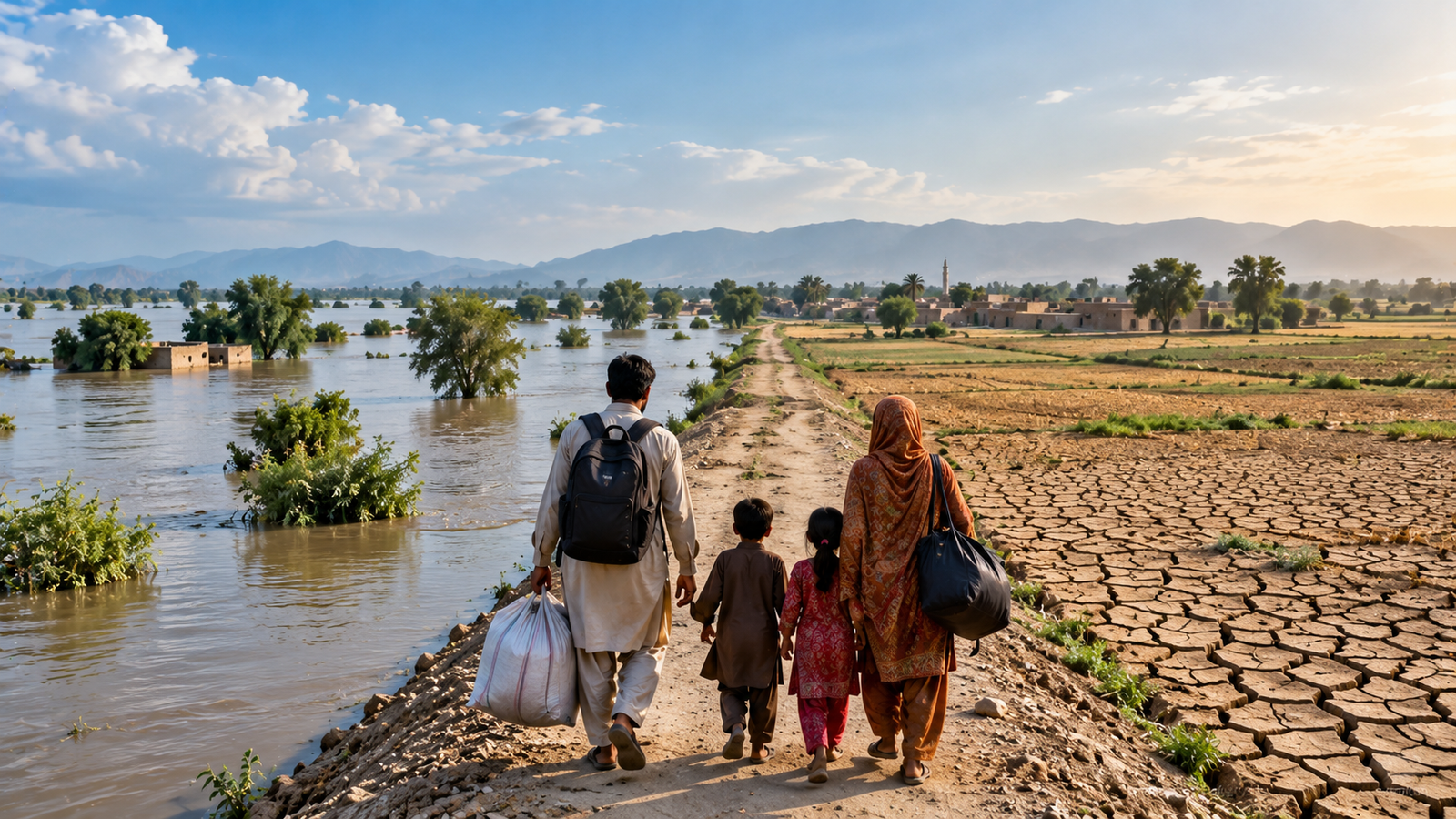
When floods destroy houses or drought damages farmland, families may struggle to earn enough money or grow food. Some move to another village or city. Others may stay but need help to survive and rebuild.
Pope said governments should not wait for families to lose their homes before providing support. She pointed to better weather data, early warnings, safer farming practices and jobs training as possible solutions.
The warning applies to the South Asian region, not only to India or Pakistan. It highlights a shared problem that crosses borders and affects both rural and urban communities.
Key Facts About the Climate Displacement Warning
Main concern: People may be forced to move because of floods, drought, rising seas and damage to livelihoods. Region: South Asia. Possible future number: Up to 40.5 million by 2050 in a worst-case scenario. Official speaking: Amy Pope, IOM Director General. Remarks reported: October 16, 2026. Today’s publication coverage: October 17, 2026. Possible responses: Early warnings, better data, improved farming, skills training and safer relocation where needed.
IOM’s earlier background material also referred to the 40.5 million projection. The number should therefore be described as a future risk estimate, not as a new headcount measured this week.
What Does Climate Migration in South Asia Mean?
Climate displacement happens when people have to leave their homes because of environmental problems made worse by climate change. Some people move suddenly after a disaster. Others move slowly when their land or work can no longer support them.
For example, a family may leave after a flood destroys its home. A farmer may move to a city after several seasons of failed crops. A coastal community may need to relocate if rising water makes homes unsafe.
Moving because of climate change does not always mean crossing an international border. Many families relocate within their own country. Some later return home, while others settle somewhere new.
Researchers also distinguish forced displacement from planned migration. A person who chooses to move for a better job may have more options than someone escaping sudden flooding.
Why Is Climate Migration in South Asia a Growing Risk?
South Asia has a large population and many communities depend on farming, fishing and daily-wage work. These activities can be seriously affected by unusual weather.
Some areas face strong monsoon rains and river floods. Others experience water shortages, heatwaves or coastal erosion. Mountain communities can face landslides and flooding caused by melting snow or glaciers.
These problems become more dangerous when families live in weak housing, have limited savings or cannot access reliable warnings and emergency support.
Climate change does not cause every disaster on its own. Local geography, land use, construction, poverty and emergency preparation also influence how serious the damage becomes.
How Floods Can Force People to Move
Floodwater can damage homes, roads, schools, crops and drinking-water systems. Families may need to leave immediately if their houses are unsafe or their villages become cut off.
After the water goes down, returning home can still be difficult. People may need money to repair buildings, replace farm equipment and restart businesses. Children may miss school, and workers may lose their income.
Pakistan has experienced severe floods in the past, showing why early warnings and strong public infrastructure matter. However, the latest 40.5 million estimate is for all of South Asia, not a forecast for Pakistan alone.
Better river monitoring, safe shelters and clear evacuation plans can reduce the risk to life and make recovery easier.
Why Drought Is Also a Serious Problem
Drought means a long period with too little rain or water. It can make crops fail, reduce drinking-water supplies and leave livestock without enough food.
Families who rely on farming may have to borrow money, sell animals or search for work elsewhere. If drought continues for years, some people may decide they cannot stay in the same place.
Water-saving farming methods, reliable local water systems and support for alternative jobs can help families cope with these pressures.
No single programme can prevent all drought-related movement, but preparation can give people more choices and reduce the chance that they are forced to leave suddenly.
Rising Sea Levels and Coastal Communities
Sea levels are rising as the planet warms. Coastal settlements can face more flooding, erosion and damage during powerful storms.
Saltwater can also enter farmland and freshwater supplies. This makes it harder to grow crops and find clean drinking water in some coastal areas.
Bangladesh and coastal parts of India and Pakistan are among the places where planners need to consider these risks. The level of danger varies from one community to another.
Coastal protection, stronger drainage, careful land-use planning and voluntary relocation programmes may help, depending on local conditions and available resources.
Extreme Heat Can Push People Toward Cities
High temperatures make outdoor work harder and can put health at risk. Farm workers, construction workers and other people who spend many hours outside may lose working time during very hot periods.
Pope said climate pressures can also increase movement into cities, including in India, as people search for safer conditions or a more reliable income.
But cities face challenges too. New arrivals need affordable housing, water, transport, healthcare and schools. Without planning, crowded settlements may become vulnerable to heat and floods themselves.
Helping people adapt in their home communities and preparing cities for population changes are both important.
Nepal’s Flood Disaster Shows the Risks
During the October 16 remarks, Pope referred to a disaster in Nepal on August 26, when a mountain and glacier collapse caused dangerous flooding. IOM provided humanitarian assistance after the event.
The example shows how mountain communities can face sudden hazards that destroy roads, homes and farmland.
A single disaster cannot automatically be attributed entirely to climate change without a detailed scientific study. Still, mountain weather, glacier conditions and exposure to hazards are important areas of climate research.
Early alerts and local emergency plans can give people more time to move to safety.
How Technology and AI Could Help
Weather satellites, rainfall sensors and computer models help experts understand where heavy rain, drought or flooding may happen. Governments can use this information to prepare before an emergency.
Artificial intelligence, or AI, can help examine large amounts of weather and local data. For example, it may help identify communities where a flood warning would be especially important because homes, farmland and roads are at risk.
Pope said combining forecasts with information about people’s work and living conditions could help officials plan support earlier.
AI forecasts are not perfect. They depend on good data, clear communication and people who can act on the warning. Technology is most helpful when it leads to practical local decisions.
Can Climate Displacement Be Prevented?
Not every move can be prevented, and moving can sometimes be the safest or best choice. But governments can reduce the number of people forced to leave without preparation.
Useful steps include stronger flood protection, better water systems, climate-resilient farming, safer housing and training for people who need new ways to earn a living.
Where an area remains dangerous, planned relocation should involve the people affected. Families need access to housing, jobs, schools and healthcare in their new location.
These programmes require money and long-term work. Pope warned that climate adaptation funding is still too limited compared with the needs of vulnerable communities.
How Climate Migration in South Asia Could Affect Pakistan
Pakistan faces different climate risks, including river floods, heat, drought and water stress. The IOM warning is relevant because many households depend on agriculture or live in areas exposed to extreme weather.
If disasters damage crops or homes, families may move toward larger towns and cities. That can increase demand for housing, employment, healthcare and other public services.
Pakistan can reduce risks by improving weather alerts, building safer infrastructure and helping communities prepare. Local governments also need reliable information about which areas are most at risk.
The 40.5 million figure must not be described as the number of Pakistanis expected to move. It covers the wider South Asian region under a worst-case scenario.
Why the Issue Matters Across the Region
Climate-related migration can affect education, public health, food supplies and local economies. When workers leave farming communities, both the original area and the place receiving new residents may change.
Some migrants find safer homes or better work. Others face difficult journeys and problems accessing basic services. Support systems should focus on giving people safe and informed choices.
Countries can share weather data, disaster-response experience and ideas for stronger infrastructure. International organisations may help with research, funding and emergency assistance.
The challenge is regional, but the best solutions often begin at the local level with practical steps suited to each community.
What Happens Next?
Governments and international organisations will continue studying how climate change affects where people live and work. Future research may update estimates as new population, climate and economic information becomes available.
IOM has called for better preparation, stronger funding and the responsible use of technology. The immediate goal is to help families before they face a disaster, not simply to respond once they have lost their homes.
The most important message is clear: millions could face greater pressure to move by 2050, but the worst outcome is not inevitable. The choices made today can reduce future harm.
Frequently Asked Questions
How many people could be displaced in South Asia by 2050?
IOM cites a worst-case estimate of up to 40.5 million people. It is a projection, not a confirmed count.
What is climate displacement?
It means people moving from their homes because floods, droughts, rising seas or other environmental problems make it difficult or unsafe to stay.
Does the 40.5 million figure apply only to Pakistan?
No. It covers the South Asian region, not Pakistan alone.
Who issued the latest warning?
IOM Director General Amy Pope discussed the risks during a visit to New Delhi on October 16, 2026.
Why can drought cause people to migrate?
Drought can damage crops, reduce water supplies and make it harder for farming families to earn a living.
Can AI help reduce climate displacement?
AI may improve forecasts and help identify communities at risk, but people still need practical support and reliable warning systems.
Will everyone at risk have to move?
No. The estimate is a possible worst-case outcome. Better preparation and adaptation can reduce harm.
What can governments do?
Improve early warnings, safer housing, flood protection, water management, job training and planned relocation where necessary.
About The Author