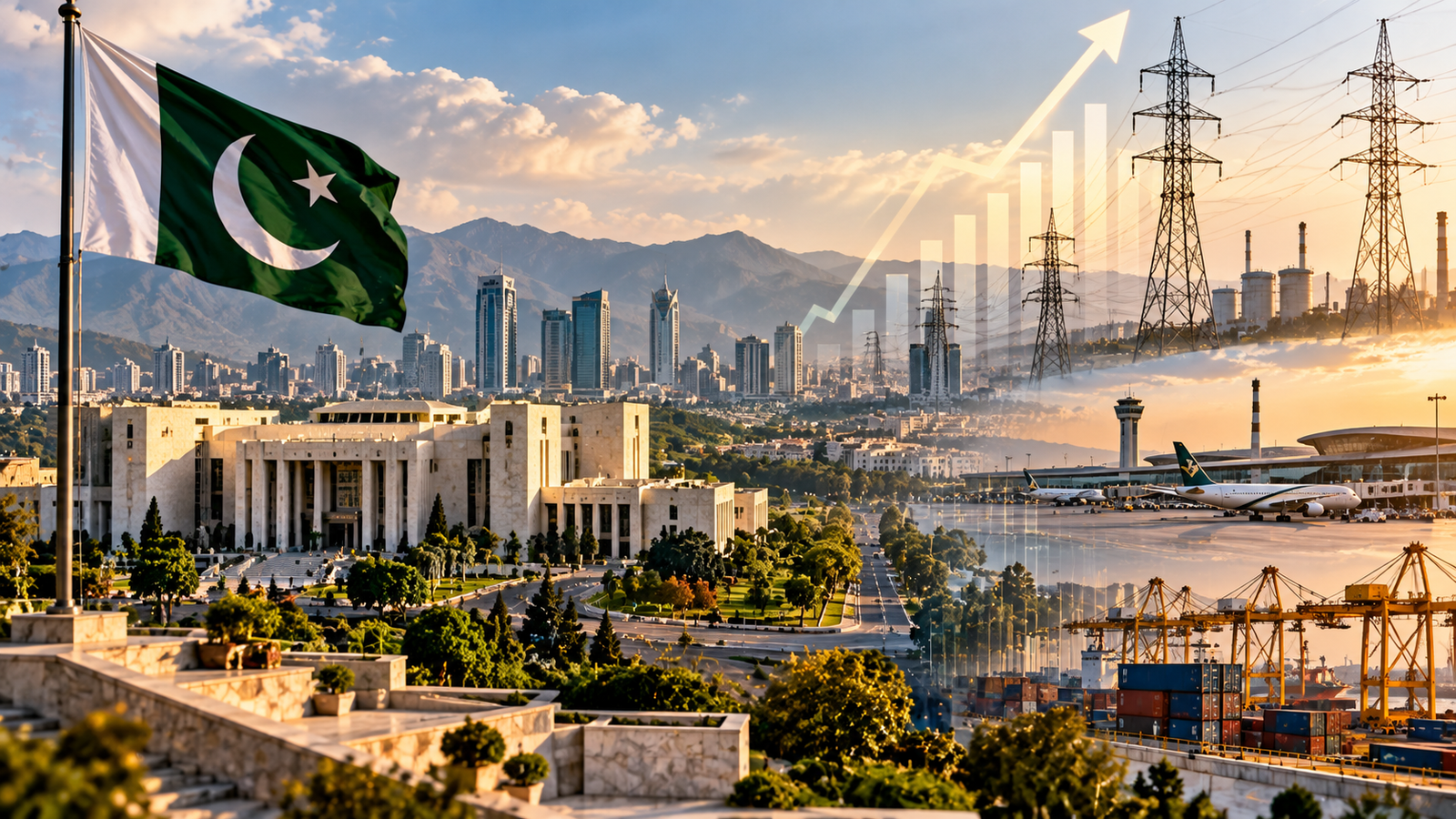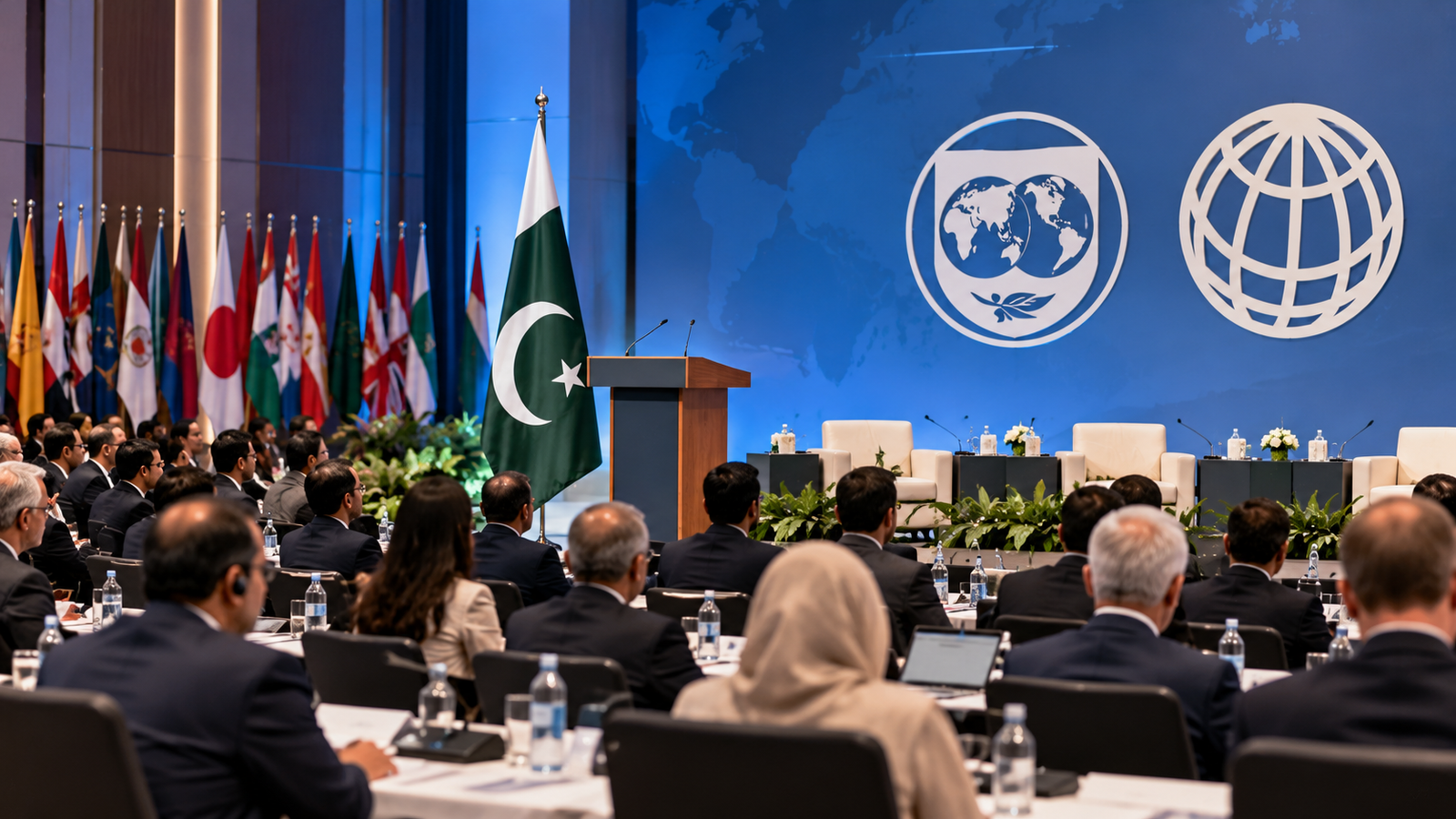
ISLAMABAD, October 17, 2026 – Pakistan has been selected to chair the Boards of Governors of the International Monetary Fund (IMF) and World Bank Group in 2027, marking the country’s first turn in this role since 1953. Federal Minister for Economic Affairs Ahad Khan Cheema was formally announced as the incoming chair at the 2026 annual meetings in Bangkok on October 16.
The Pakistan IMF World Bank chairmanship 2027 is an important diplomatic development, but it has a specific meaning. It gives Pakistan a role in guiding the annual meetings and encouraging dialogue between member countries. It does not give Pakistan control over IMF loans, extra voting rights or the power to direct World Bank financing.
Pakistan’s Economic Affairs Division announced the selection, while Dawn, Business Recorder and Dunya News reported it. This article explains the news in simple terms, including what the chair actually does, why the position matters and what it will not change for ordinary Pakistanis.
Pakistan IMF World Bank Chairmanship 2027: Key Facts
Country selected: Pakistan. Incoming chair: Federal Minister for Economic Affairs Ahad Khan Cheema. Institutions: IMF and World Bank Group Boards of Governors. Announcement: October 16, 2026, in Bangkok, Thailand. Chairmanship year: 2027. Previous Pakistan chairmanship: 1953. Next annual meetings: October 4–9, 2027, in Washington, DC. Main function: Presiding over meetings and supporting discussions among member countries.
Pakistan has not been appointed to run the IMF or World Bank as an organisation. The chairmanship is a meeting-leadership role, not the post of managing director or president.
What Exactly Happened in Bangkok?
The IMF and World Bank held their 2026 annual meetings in Bangkok from October 12 to 18. Finance ministers, central bank officials and other economic policymakers gathered to discuss economic growth, debt, trade and development.
During the October 16 plenary session, Pakistan’s Economic Affairs Minister Ahad Khan Cheema was formally announced as the incoming chair for 2027. Pakistan’s Economic Affairs Division described the selection as an important opportunity to contribute to international economic discussions.
Following the announcement, Cheema received a briefing from the World Bank Group’s corporate secretariat about the chairmanship’s responsibilities. This was part of the preparation for next year’s meetings.
Who Is Ahad Khan Cheema?
Ahad Khan Cheema is Pakistan’s Federal Minister for Economic Affairs and serves as Pakistan’s governor to the World Bank Group. He represented Pakistan during the relevant proceedings at the annual meetings in Bangkok.
As incoming chair, he is expected to carry out the chair’s duties at the 2027 annual meetings, subject to the normal institutional arrangements. The role is connected to the Boards of Governors, which bring together representatives of member countries.
This does not mean Cheema becomes the World Bank president or IMF managing director. Those are separate leadership positions with different powers and responsibilities.
What Are the IMF and World Bank?
The International Monetary Fund is an international organisation that helps countries address financial problems and supports global monetary cooperation. Its work includes economic analysis and financing programmes for eligible countries.
The World Bank Group focuses on development challenges such as poverty, infrastructure, education and economic opportunity. Its institutions work with countries and private-sector partners through financing, research and technical assistance.
Although the organisations work closely together and hold joint annual meetings, they have different responsibilities. Understanding that difference helps explain why chairing their Boards of Governors is not the same as managing all their daily operations.
What Does the Chair of the Boards of Governors Do?
The chair mainly presides over the annual meetings. In practical terms, that means helping the meetings run smoothly, guiding formal proceedings and supporting dialogue among representatives of member countries.
The role may also involve communicating information about the meetings alongside senior IMF and World Bank leaders. It is largely procedural and diplomatic.
Think of it like chairing a large international conference: the chair helps organise discussion and conduct the session, but does not personally control every institution or decide every participant’s financial policies.
Does Pakistan Get More Voting Power?
No. Dawn’s October 17 explainer makes this point clear. Chairing the meetings does not give Pakistan additional voting rights at the IMF or World Bank.
Countries’ voting arrangements follow each institution’s formal rules. The chairmanship does not change those rules or grant Pakistan a new share of decision-making power.
The selection is meaningful for international visibility, but it should not be presented as Pakistan gaining control over decisions made by the institutions.
Will Pakistan Receive New IMF Loans Automatically?
No. The chairmanship does not provide Pakistan with preferential financing or the authority to approve its own assistance programmes.
IMF financing decisions follow established rules, programme requirements and the relevant decision-making procedures. World Bank lending is also governed by its own formal systems.
Pakistan’s economic programme and financing needs remain separate from the rotating meeting chairmanship. The government will still need to meet applicable conditions and engage with the institutions through their regular channels.
It would therefore be inaccurate to describe the selection as a new bailout package or an instant source of additional dollars.
Why Is the Appointment Being Called Historic?
Pakistan last held this chairmanship in 1953. The 2027 position marks a return after approximately 74 years, making it a notable milestone for the country’s representation in international economic forums.
The Economic Affairs Division highlighted the long gap in its announcement. Domestic and international news outlets also focused on the timing, as Pakistan continues to participate in discussions about debt, growth and development.
Historic does not necessarily mean a change in financial powers. In this case, it refers to the return of an international leadership role after several decades.
Why Does the Role Matter for Pakistan’s Global Image?
Hosting and guiding high-level discussion can give a country greater diplomatic visibility. Pakistan will have opportunities to engage with economic leaders from many countries and participate in conversations about global challenges.
Those opportunities may help build relationships and allow Pakistani representatives to highlight issues affecting developing economies. However, the chair cannot force other countries to support Pakistan’s policy requests.
The value of the role will largely depend on how effectively Pakistan uses the platform for constructive international engagement.
When and Where Will the 2027 Meetings Take Place?
According to Dawn, the 2027 IMF and World Bank annual meetings are scheduled for October 4–9 in Washington, DC.
These meetings bring representatives of member countries together to review major international economic and development issues. Pakistan’s incoming chairmanship concerns this scheduled event and the associated formal responsibilities.
Meeting arrangements can be updated, so final schedules and operational details should be checked through official institutional channels closer to the event.
What Global Issues Could Be Discussed?
The 2026 meetings have taken place amid concerns about geopolitical conflict, high energy costs, debt and the impact of artificial intelligence on economies.
Reuters reported that IMF members were calling for greater support to countries facing financial stress, while senior officials discussed risks from conflict and changes in technology.
These subjects provide background for the global discussions Pakistan will help chair in 2027. The exact agenda for the next meeting has not yet been finalised in the reports reviewed.
Could the Appointment Help Pakistani Businesses?
A stronger international profile can create chances for officials to meet investors, lenders and development partners. It may also help Pakistan draw attention to economic challenges and opportunities.
But an international chairmanship alone does not create new business contracts, reduce taxes or guarantee foreign investment. Companies still need clear policies, competitive products and reliable conditions to attract capital.
For Pakistani businesses, the announcement is a diplomatic signal rather than an immediate change in the rules for operating a company.
What Does It Mean for Ordinary Pakistanis?
People may reasonably ask whether the news will lower inflation, create jobs or reduce the cost of living. There is no verified evidence that the chairmanship directly changes household prices or incomes.
The role may help Pakistan participate in important international conversations. Actual improvements to people’s lives depend on domestic economic policies, investment, services and wider economic conditions.
The most useful way to understand the news is that Pakistan has gained a prominent role at a major international meeting, not a new source of automatic financial relief.
Why Accurate Headlines Matter
A headline saying Pakistan will ‘control the IMF and World Bank’ would be incorrect. So would a claim that Ahad Cheema has been appointed to lead both organisations as their chief executive.
The verified description is that Pakistan will chair their Boards of Governors for the 2027 annual meetings. That wording explains the achievement without exaggerating the power attached to the role.
It is also important to keep 2026 and 2027 distinct. The announcement occurred on October 16, 2026; the chairmanship concerns the following year.
What Should Readers Watch Next?
The next developments may include official preparations for the Washington meetings, the publication of the agenda and further announcements from Pakistan’s Economic Affairs Division.
Journalists should also watch for statements explaining how the country intends to use the position to discuss development finance, economic stability and the needs of lower-income countries.
Any new loans, investment commitments or policy decisions must be reported as separate developments and verified from official records.
Conclusion
Pakistan’s selection to chair the IMF and World Bank Boards of Governors in 2027 marks its first return to the position since 1953. Ahad Khan Cheema was announced as incoming chair at the annual meetings in Bangkok on October 16.
The achievement provides Pakistan with an opportunity to take part in high-level international dialogue and lead formal meeting proceedings. It does not bring extra voting power, automatic loans or control over either institution’s lending decisions.
For readers, that is the key message: an important diplomatic and economic milestone, with practical powers that are clearly defined and limited.
Frequently Asked Questions
What is the Pakistan IMF World Bank chairmanship 2027?
Pakistan will chair the Boards of Governors at the IMF and World Bank’s 2027 annual meetings, mainly guiding proceedings and dialogue.
Who will serve as incoming chair?
Pakistan’s Federal Minister for Economic Affairs Ahad Khan Cheema was announced as incoming chair.
When was the announcement made?
It was made on October 16, 2026, during the annual meetings in Bangkok.
When did Pakistan last hold the chairmanship?
Pakistan last held the role in 1953, about 74 years before the upcoming chairmanship.
Does Pakistan get extra IMF voting rights?
No. The chairmanship does not change Pakistan’s voting rights.
Can Pakistan approve its own IMF loan?
No. Financing decisions remain subject to the institutions’ normal procedures and approval rules.
Where will the 2027 annual meetings be held?
They are scheduled for October 4–9, 2027, in Washington, DC.
What benefit could Pakistan receive?
The main potential benefit is greater diplomatic visibility and a platform for international economic discussions, not automatic financial assistance.
About The Author