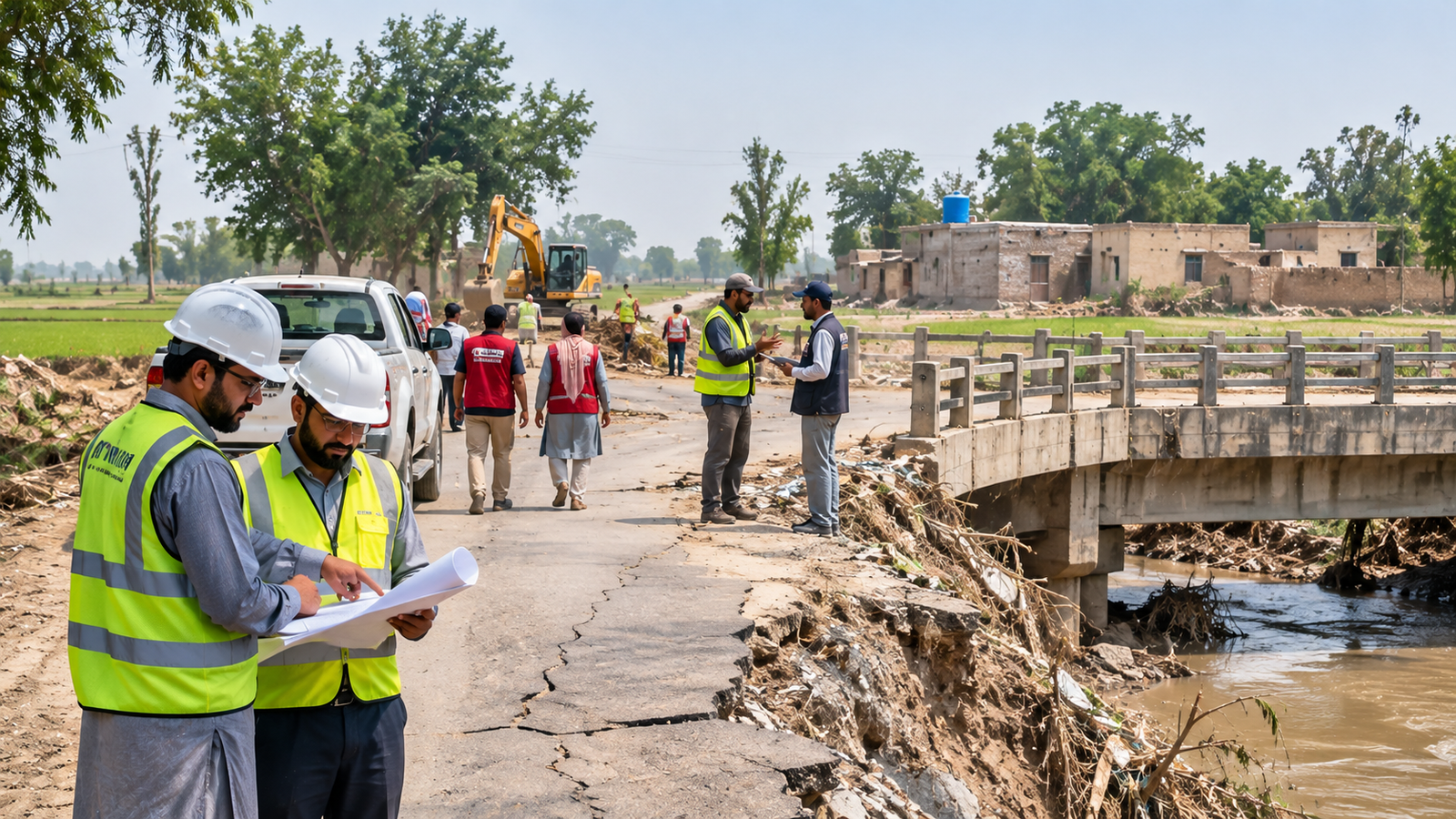
The Asian Development Bank (ADB) has approved contingent disaster financing facilities of up to $500 million for Pakistan, creating an additional financial mechanism to help the country respond to eligible natural disasters. Announced on November 11, 2026, the facility is designed to provide prompt budget support after qualifying disaster events, helping reduce the pressure that floods, earthquakes and other emergencies can place on public finances.
The approval comes as Pakistan continues to face substantial economic risks from climate-related disasters and natural hazards. According to the ADB, floods, earthquakes and other disasters cause the country an estimated $2 billion in average annual losses. The devastating floods of 2022 alone resulted in $14.9 billion in direct physical damage and $15.2 billion in broader economic losses, while pushing as many as 9.1 million people into poverty.
The new financing is part of the second subprogramme of the Climate and Disaster Resilience Enhancement Programme. It combines financial preparedness with policy reforms intended to strengthen disaster-risk management, improve institutional capacity and integrate climate resilience into national development planning.
Importantly, the $500 million facility should not be described as an unconditional cash grant or money immediately distributed to households. It is contingent disaster financing, meaning that support is intended to become available following eligible disaster events under the programme’s applicable conditions. Its economic value will depend on preparedness, implementation and the speed with which financing can be mobilised when a qualifying emergency occurs.
What the ADB’s $500 Million Financing Means for Pakistan
The approval provides Pakistan with a financial instrument designed to reduce delays in arranging emergency budget resources after a major disaster. Governments often face sudden spending requirements following floods, earthquakes and other natural hazards. These may include emergency relief, restoration of essential services, infrastructure repairs and support for affected communities.
Without pre-arranged financing, governments may need to shift money away from planned development projects, seek additional borrowing or wait for emergency assistance to be mobilised. Such delays can increase the economic cost of disasters, particularly when roads, bridges, irrigation systems, schools and health facilities are damaged.
The ADB’s contingent disaster financing facility is intended to improve the availability of funds after eligible events. By preparing financing arrangements in advance, the programme aims to make it easier for Pakistan to respond to emergencies while reducing some of the immediate pressure on the national budget.
The facility is part of a broader policy-based lending programme rather than a stand-alone cash distribution scheme. Its purpose is to strengthen the systems through which Pakistan prepares for disasters, finances emergency response and incorporates resilience into public investment decisions.
For Pakistan’s economy, this matters because natural disasters can affect government finances, agricultural production, industrial activity, employment, household incomes and trade. A faster response can help limit disruption, although financing alone cannot prevent physical damage or eliminate the wider economic consequences of a disaster.
Pakistan Faces an Estimated $2 Billion in Annual Disaster Losses
The scale of Pakistan’s disaster exposure is one of the central reasons behind the financing programme. The ADB estimates that floods, earthquakes and other disasters cause the country average annual losses of approximately $2 billion.
These losses extend beyond the immediate cost of damaged buildings and infrastructure. Flooding can destroy crops, disrupt agricultural supply chains, damage transport networks and interrupt industrial operations. Businesses may face delays in receiving raw materials or delivering finished goods, while households can lose homes, savings and sources of income.
Rural communities are particularly exposed when floods damage agricultural land, livestock, roads and irrigation infrastructure. Small businesses may also struggle to reopen when their premises, equipment or supply networks are affected. The resulting disruption can reduce local economic activity long after floodwaters have receded.
Disaster-related spending also places pressure on public finances. Governments must often redirect resources towards emergency response and reconstruction at a time when tax collection and economic activity may already be under pressure. This can make it more difficult to maintain development spending and other public services.
The ADB’s estimated annual loss figure illustrates why disaster preparedness is also an economic and financial issue. Reducing the time required to mobilise emergency resources can support recovery, protect livelihoods and help limit the long-term impact on economic development.
Lessons from Pakistan’s Devastating 2022 Floods
Pakistan’s 2022 floods demonstrated how a natural disaster can become a nationwide economic crisis. The ADB cited $14.9 billion in direct damage and $15.2 billion in broader economic losses from the disaster. It also noted that as many as 9.1 million people were pushed into poverty.
The damage affected housing, agriculture, transport infrastructure, public facilities and livelihoods. Floodwaters disrupted economic activity across affected areas, while the destruction of roads and other infrastructure made it more difficult to deliver relief and restore essential services.
The impact was not limited to the immediate period of flooding. Farmers faced losses to crops and productive assets, families experienced interruptions to income, and businesses had to deal with damaged premises and disrupted supply chains. Recovery required resources for reconstruction as well as support for people who had lost their livelihoods.
The experience highlighted the importance of preparing financial resources before a disaster occurs. Emergency funds, risk assessments, early-warning systems and coordinated response arrangements can help governments act more quickly when communities are affected.
The ADB’s new facility is intended to strengthen this financial preparedness. It does not guarantee that future disasters will cause less physical damage, but it aims to improve Pakistan’s ability to access budget support after eligible events and manage the resulting economic and fiscal pressures.
Climate and Disaster Resilience Enhancement Programme: The Wider Plan
The $500 million contingent financing facility forms part of the second subprogramme of the Climate and Disaster Resilience Enhancement Programme. The wider programme focuses on improving Pakistan’s ability to prepare for, manage and recover from disasters triggered by natural hazards and climate change.
Its approach includes three connected areas: stronger institutional capacity for planning and response, greater investment in disaster-risk reduction and climate resilience, and improved disaster-risk financing.
Institutional capacity is important because disaster response involves several government departments and public agencies. Effective action requires reliable information, clear responsibilities, coordination between national and provincial authorities, and systems that can operate under emergency conditions.
Investment in disaster-risk reduction is equally important. Infrastructure projects, development plans and public facilities can be designed with greater attention to flood exposure, climate risks and other hazards. Better planning may reduce future damage and help protect public investment.
The third area is disaster-risk financing. This involves arranging financial resources in advance so that governments have access to suitable funding when disasters occur. The contingent facility is intended to strengthen this part of Pakistan’s disaster-management framework.
Together, these measures seek to move the country towards a more organised approach that combines prevention, preparedness, emergency financing and recovery rather than relying mainly on action after a disaster has already caused widespread damage.
How Faster Disaster Financing Can Protect Businesses and Jobs
Natural disasters can disrupt businesses in several ways. Floods may damage factories, warehouses, markets, roads and electricity infrastructure. Agricultural losses can affect food processors, retailers, exporters and transport companies. Small businesses may lose stock, equipment and customer access at the same time.
When economic activity is interrupted, workers can lose wages and businesses may struggle to meet financial obligations. Transport disruptions can increase delivery costs, while damage to agricultural production can affect the availability and prices of food-related products.
A faster government response can help restore essential infrastructure and public services, creating better conditions for economic activity to resume. Emergency financing may also help authorities respond without immediately diverting as much funding from planned development projects.
However, the ADB facility is not a direct business loan, private-sector insurance policy or compensation scheme for every affected company. Its stated purpose is to provide budget support following eligible disaster events. Any benefits to businesses and workers would largely depend on how public authorities use available resources and how effectively recovery programmes are implemented.
For companies, the wider lesson is that disaster preparedness should be part of financial and operational planning. Businesses operating in flood-prone or climate-exposed areas may need contingency plans, insurance coverage where available, backup suppliers and measures to protect critical equipment and records.
Why Rural Communities and Vulnerable Groups Matter
The economic impact of disasters is not distributed equally. The ADB has highlighted that poor and rural communities often have less capacity to recover, while women and girls can face disproportionate effects.
Rural households may depend on agriculture, livestock and daily-wage work. When a flood destroys crops, damages homes or cuts off access to markets, families can lose both their immediate income and the assets needed to rebuild their livelihoods.
Low-income households may also have limited savings, insurance coverage or access to formal credit. This can make recovery slower and increase the risk that a temporary shock develops into long-term financial hardship.
Women and girls can face additional challenges when disasters disrupt education, healthcare, mobility and household income. Recovery planning therefore needs to consider access to essential services and the different needs of affected communities.
The ADB programme’s emphasis on resilience and disaster-risk management is relevant to these challenges. However, the real measure of progress will be whether improved planning and financing arrangements reach vulnerable communities quickly and fairly when emergencies occur.
What the Financing Could Mean for Pakistan’s Public Finances
Disaster response can create sudden fiscal pressure because governments must spend money at short notice. Emergency relief, infrastructure repairs and reconstruction can require substantial resources, often when economic activity and revenue collection are under stress.
Pre-arranged contingent financing can help improve the predictability of emergency funding. Rather than relying entirely on new borrowing or reallocating existing budgets after a disaster, authorities have a financing mechanism intended for eligible events.
This does not mean that the facility removes Pakistan’s broader debt obligations or eliminates the cost of disasters. The financing is part of a lending programme, and its use is subject to applicable conditions. The country will still need to manage repayment obligations and maintain sound public-finance practices.
The wider economic benefit would come from combining access to emergency funds with investments that reduce future risks. Better infrastructure planning, stronger disaster institutions and improved financial systems can help protect public assets and reduce the likelihood that repeated disasters undermine development spending.
For investors and businesses, stronger disaster resilience can also matter when assessing long-term risks. Reliable transport networks, functioning utilities and predictable public services are important for industrial operations, agriculture, logistics and investment decisions.
Implementation and Accountability Will Determine the Results
The approval of financing is an important development, but it is only one part of a larger disaster-resilience effort. Pakistan will need to ensure that the programme’s policy reforms are implemented effectively and that institutions responsible for preparedness and response can work together.
Clear rules will be important for determining when contingent financing can be accessed, how funds are released and how spending is monitored. Public accountability can help ensure that emergency resources are used for their intended purposes and reach the areas most affected.
Authorities will also need to improve risk information, strengthen early-warning and assessment systems, and incorporate disaster exposure into infrastructure and development planning. Financing can support recovery, but prevention and preparedness remain essential to reducing losses.
The ADB’s project information identifies the Ministry of Finance and Revenue as the executing agency for the programme. Coordination with relevant national and provincial institutions will be important because disaster management responsibilities and emergency needs extend across different levels of government.
The programme’s progress should ultimately be assessed through practical outcomes: whether emergency financing becomes available when required, whether public institutions respond more effectively, whether vulnerable communities receive timely support and whether future investments are better protected against climate and disaster risks.
Conclusion: A Financial Safety Net, Not a Substitute for Disaster Prevention
The Asian Development Bank’s approval of up to $500 million in contingent disaster financing marks an important step in strengthening Pakistan’s financial preparedness for natural disasters. With average annual disaster losses estimated at $2 billion, the country faces a continuing economic challenge that extends beyond emergency relief to agriculture, infrastructure, public finances, businesses and household livelihoods.
The facility is designed to provide prompt budget support after eligible disaster events, while the wider Climate and Disaster Resilience Enhancement Programme seeks to improve planning, institutional capacity, risk reduction and disaster financing.
Its success will not be measured by the headline amount alone. Effective implementation, transparent use of funds, stronger institutions and investment in prevention will determine whether the programme helps reduce the economic impact of future emergencies.
For Pakistan, the central challenge is to move from reacting to disasters towards preparing for them financially and institutionally. The new ADB facility can strengthen that effort, but lasting resilience will require consistent planning and action across government, businesses and communities.
What is the ADB’s $500 million financing facility for Pakistan?
It is a contingent disaster financing facility approved by the Asian Development Bank to provide prompt budget support after eligible natural disaster events in Pakistan.
Is the ADB’s $500 million facility a cash grant?
No. It is contingent financing under a lending programme, not an unconditional grant or direct cash payment to households. Access to funds depends on eligible disaster events and applicable programme conditions.
When did the Asian Development Bank approve the financing?
The ADB approved the contingent disaster financing facility on November 11, 2026.
Why does Pakistan need disaster financing?
The ADB estimates that floods, earthquakes and other disasters cause Pakistan around $2 billion in average annual losses, creating pressure on public finances, infrastructure, businesses and household livelihoods.
How much damage did the 2022 floods cause in Pakistan?
The ADB reported $14.9 billion in direct damage and $15.2 billion in broader economic losses from the 2022 floods. It also estimated that as many as 9.1 million people were pushed into poverty.
What is the Climate and Disaster Resilience Enhancement Programme?
It is an ADB-supported programme designed to strengthen disaster preparedness, institutional capacity, climate-resilient development planning and disaster-risk financing in Pakistan.
Will the ADB financing directly compensate businesses affected by floods?
The facility is intended to provide budget support to the government after eligible disasters. It is not a direct compensation scheme or private-sector loan for every affected business.
How could the financing benefit Pakistan’s economy?
By helping the government mobilise funds more quickly after eligible disasters, the facility could support emergency response, infrastructure recovery and the protection of public finances, businesses and livelihoods. Its impact will depend on implementation.
About The Author