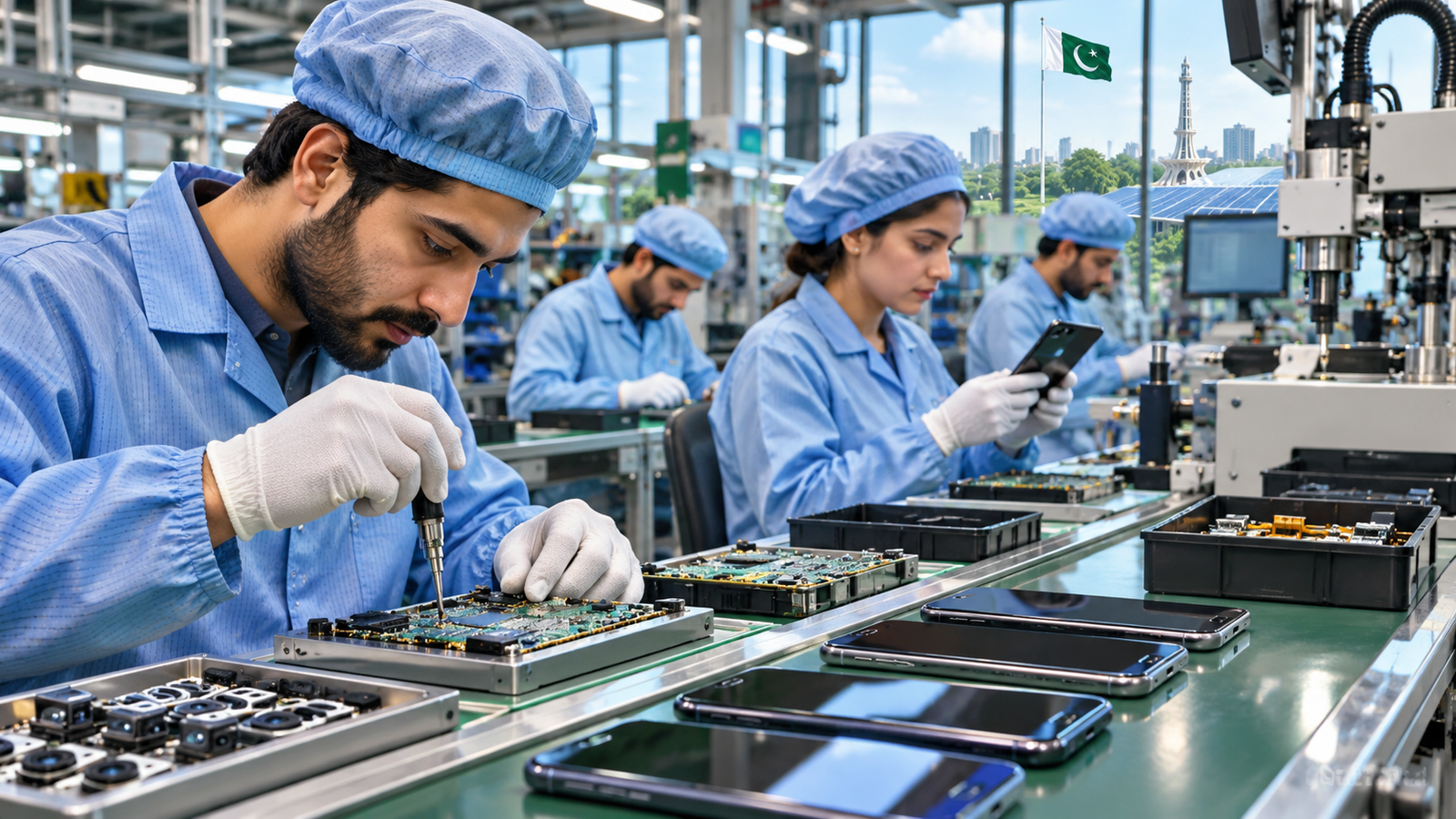
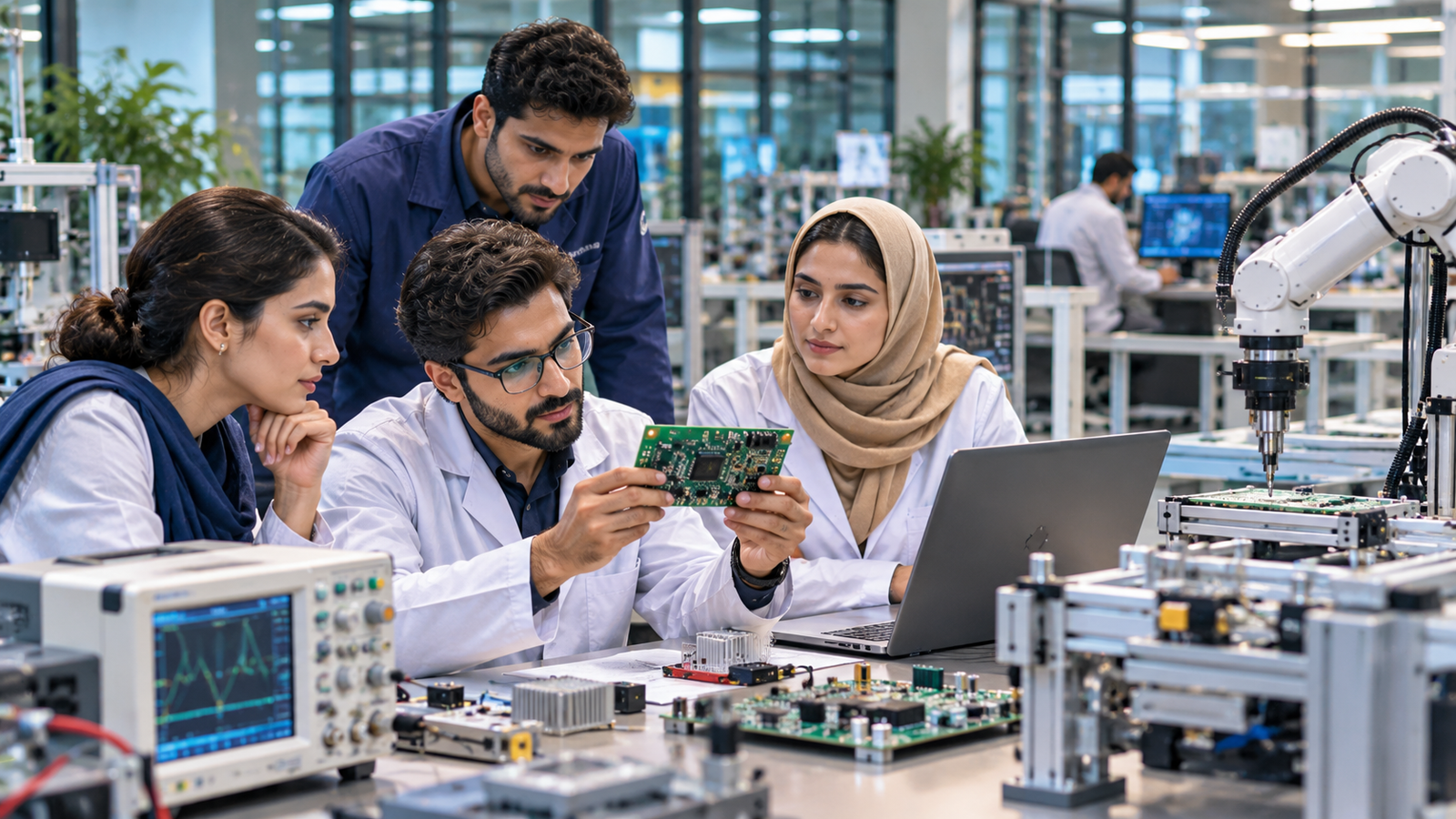
Pakistan is planning to establish 10 National Catapults to help universities, research institutions and businesses turn scientific research into commercially viable technologies and products. The initiative was announced by Federal Minister for Planning, Development and Special Initiatives Ahsan Iqbal following his visit to the Indigenous Research and Development Agency (IRADA) in Islamabad. The proposed network will operate under the Science, Technology and Engineering for Development (STED) programme, a flagship initiative of URAAN Pakistan.
The announcement addresses a longstanding challenge in Pakistan’s technology and industrial sectors: the gap between academic research and commercial production. Universities and research institutions develop ideas, conduct experiments and produce prototypes, but many innovations struggle to progress beyond laboratories. Researchers may not have access to industrial testing equipment, specialised engineering support, pilot production facilities or the investment needed to establish whether a technology can work reliably at commercial scale.
The National Catapults are intended to address this gap by connecting researchers with manufacturers, entrepreneurs, investors and government institutions. The centres will provide shared testing facilities, prototyping infrastructure and pilot production capabilities, allowing promising technologies to be evaluated before businesses commit significant capital to full-scale manufacturing.
The government has identified 10 priority areas, including semiconductors, artificial intelligence, advanced manufacturing, agricultural technology, health technology, clean energy and space technology. IRADA will lead the first proposed centre, focusing on semiconductors and advanced electronics.
The announcement represents a proposed national technology development network, not confirmation that all 10 centres are already operational. Its eventual impact will depend on implementation, funding, access to facilities and the ability to move Pakistani research into products that businesses and customers can actually use.
What Are Pakistan’s 10 National Catapults?
The Planning Commission has outlined 10 National Catapults covering technology areas considered important for industrial development, research commercialisation and future economic opportunities. The network is intended to bring together universities, research organisations, manufacturers, startups, investors and government agencies.
The proposed centres will focus on the following sectors:
- Semiconductor and Advanced Electronics
- High-Value Manufacturing and Industry 4.0
- Digital Economy and Artificial Intelligence
- AgriTech and Food Technology
- Health Technology and MedTech
- Clean Energy and Climate Technology
- Mines, Minerals and Materials
- Defence Technology and Dual-Use
- Space Technology
- Chemicals and Composites
Each area represents a different part of the technology and industrial economy. Semiconductor research, for example, involves electronic components used in computers, telecommunications equipment, vehicles and industrial systems. Artificial intelligence and digital technologies can support software development, automation and data-based services, while agricultural and health technologies can address practical challenges in food production and healthcare delivery.
The inclusion of clean energy, minerals, space technology and advanced manufacturing also indicates that the proposed network is not limited to software startups. It is designed to cover scientific research, engineering, physical products and industrial processes.
However, the announcement does not mean that every sector will immediately receive a fully equipped centre. The network is planned as a national programme, and its effectiveness will depend on how the government establishes facilities, selects participating institutions and develops partnerships with industry.
IRADA to Lead the First Semiconductor and Electronics Centre
The Indigenous Research and Development Agency, known as IRADA, has been identified as the first state-owned enterprise formally designated to lead a National Catapult. Its initial responsibility will be the Semiconductor and Advanced Electronics Catapult.
This is a significant starting point because semiconductors are essential components in modern electronic devices and industrial systems. They are used in smartphones, computers, communication equipment, vehicles, medical devices, power systems and a wide range of digital products.
Developing capabilities in this field requires specialised knowledge, precision equipment, testing facilities and trained engineers. Research institutions may be able to design or develop an electronic component, but moving from a laboratory prototype to a reliable commercial product requires further testing, validation and manufacturing preparation.
The proposed Catapult model is intended to provide access to some of these missing stages. Researchers could work with industry engineers to improve prototypes, test performance and identify technical problems before attempting commercial production.
IRADA’s role in the first centre will therefore be important in determining how the wider programme begins. The government has not yet published a complete operational timetable or detailed investment breakdown for all 10 centres, so their establishment and readiness should be followed through future official announcements.
How National Catapults Can Connect Universities with Industry
One of the central objectives of the programme is to improve cooperation between universities and businesses. In many countries, universities conduct research that can eventually become the foundation of new products, manufacturing processes or commercial services. However, research institutions and private companies often operate with different priorities.
Academic researchers may focus on scientific discovery, technical performance and publication of results. Manufacturers, on the other hand, need to know whether a product can be produced consistently, whether it meets required standards and whether customers will pay a commercially sustainable price.
This difference can prevent promising research from reaching the market. A prototype may work under controlled laboratory conditions but fail when exposed to industrial workloads, environmental conditions or the requirements of mass production.
The National Catapults are intended to provide a shared environment where researchers and industry professionals can address these problems together. A university team could refine its prototype with engineers from a manufacturing company, while a business could test a new production process before investing in a full industrial facility.
Such cooperation could also help universities understand the practical needs of local industries. Instead of research being developed without a clear commercial pathway, businesses could contribute to identifying problems that require new technologies and engineering solutions.
For Pakistan, a stronger connection between research and industry could create opportunities to develop local products, improve industrial processes and reduce dependence on imported technologies in areas where domestic firms can compete.
What Are Technology Readiness Levels 4 to 7?
The proposed National Catapults will focus on Technology Readiness Levels (TRLs) 4 to 7. These levels describe stages in the development of a technology, from laboratory validation to the demonstration of a prototype in an operational environment.
Technology Readiness Levels are used internationally to assess how mature a particular technology is. They help researchers, businesses and investors understand whether an idea is still being tested, has reached a working prototype stage or is approaching practical deployment.
At the earlier stages, research may involve identifying a technical concept and testing individual components. By TRL 4, components or systems have been validated in a laboratory environment. TRL 5 involves validation in a relevant environment, while TRL 6 generally involves demonstrating a prototype in that environment. TRL 7 involves demonstrating a system prototype in an operational setting.
These stages are important because a successful laboratory experiment does not automatically become a market-ready product. A technology may need additional engineering, reliability testing, safety checks, certification and manufacturing adjustments before it can be sold or used commercially.
By concentrating on TRLs 4 to 7, the National Catapults are intended to support the transition between research and practical industrial application. The programme is not simply about funding early ideas; it is intended to help promising technologies progress through the testing and demonstration stages that often determine whether commercialisation is possible.
Why Semiconductor and Advanced Electronics Matter
Semiconductors are among the most important components in the global technology industry. They are used in devices and systems that support computing, telecommunications, artificial intelligence, transport, industrial automation and modern healthcare.
A semiconductor is a material whose electrical conductivity can be controlled. This property makes semiconductors essential for manufacturing electronic components such as integrated circuits and other devices that process, store or control electrical signals.
Global demand for semiconductor technology has increased as more industries adopt digital systems, connected devices and automation. Artificial intelligence infrastructure, data centres, electric vehicles and advanced communication networks also depend on electronic components.
Pakistan’s proposed Semiconductor and Advanced Electronics Catapult could provide a platform for developing local research and engineering capabilities in this field. Its precise future activities will depend on the equipment, expertise, partnerships and funding made available.
It is important not to confuse the proposed centre with the establishment of a complete domestic semiconductor fabrication industry. Building advanced chip manufacturing facilities requires extremely high investment, specialised supply chains, reliable utilities and highly technical production environments. The government announcement does not confirm that Pakistan will immediately begin manufacturing advanced commercial chips at scale.
The more immediate purpose described for the Catapult is to support research, prototyping, testing and the development of technologies that can progress towards commercial applications.
Artificial Intelligence and Digital Economy Opportunities
Artificial intelligence and the digital economy are another major area included in the proposed National Catapult network. AI technologies are increasingly being used in software development, data analysis, industrial automation, financial services, healthcare and customer support.
For Pakistani businesses, AI research and commercialisation could create opportunities to develop locally relevant software, automate routine processes and improve productivity. Universities and research institutions can contribute through machine learning research, data science, software engineering and the development of specialised applications.
However, creating a successful AI product requires more than developing a model or demonstrating a software prototype. Businesses need access to computing resources, reliable data, technical talent, cybersecurity expertise and customers willing to adopt the product.
The proposed Digital Economy and Artificial Intelligence Catapult could help connect researchers with companies that need practical technology solutions. Shared testing facilities and industry partnerships may allow promising products to be evaluated before businesses invest in wider deployment.
The programme could also support entrepreneurs who want to turn university research into technology businesses. Nevertheless, the government has not announced specific AI products, startup beneficiaries or funding allocations under this centre. Its future contribution will depend on the facilities and partnerships established during implementation.
Opportunities for Agriculture, Healthcare and Clean Energy
The proposed network also includes sectors that directly affect public welfare and economic productivity. AgriTech and Food Technology, for example, can support the development of tools and processes for farming, food storage, processing and supply-chain management.
Pakistan’s agricultural sector faces challenges involving water management, crop productivity, post-harvest losses and changing weather conditions. Research-based technologies could help farmers and food businesses improve efficiency, although successful adoption would require affordable solutions and access to technical support.
Health Technology and MedTech is another proposed area. Medical devices, diagnostic technologies and digital health systems can support healthcare delivery when they meet appropriate safety, quality and regulatory standards. Research commercialisation could help local institutions develop products that address practical needs, but medical technologies require careful testing before they can be used in clinical settings.
Clean Energy and Climate Technology could support research into renewable energy, energy efficiency, storage and other solutions relevant to Pakistan’s energy and environmental challenges. These technologies may also create opportunities for local manufacturing and technical services.
The inclusion of these sectors shows that the National Catapults are intended to cover a broad range of scientific and industrial applications. Their success will depend on whether research can progress into affordable, reliable and commercially useful products.
How the Programme Could Help Startups and Manufacturers
Startups often face difficulties when developing products that require physical testing, specialised equipment or pilot manufacturing. A software business may be able to test an application using relatively accessible tools, but a company developing electronics, medical devices, industrial machinery or agricultural equipment may need expensive facilities.
The National Catapults are intended to reduce some of these barriers by providing shared access to testing and prototyping infrastructure. This could allow smaller businesses to evaluate their technologies without immediately building their own complete facilities.
Manufacturers may also benefit by testing new materials, production processes and industrial technologies before making large capital investments. Investors could use performance results from real operating conditions to assess whether a technology has a realistic commercial pathway.
The programme is also expected to help universities commercialise intellectual property. Intellectual property can include inventions, designs, software and other research outputs that may have commercial value. Turning such research into a product requires clear ownership arrangements, licensing structures and cooperation between researchers and businesses.
If the network is implemented effectively, it could help create a more connected innovation ecosystem. However, access rules, pricing, intellectual property policies and the selection of participating companies will be important factors in determining whether startups and smaller manufacturers can benefit fairly.
International Models Behind the National Catapults
The government says the proposed initiative draws on international examples, including the United Kingdom’s Catapult Network, Germany’s Fraunhofer Institutes, Manufacturing USA and Singapore’s A*STAR.
These models provide examples of how research organisations, universities and industrial companies can cooperate to develop and commercialise technology. Their structures differ, but they share an emphasis on applied research, industrial collaboration and the practical use of scientific knowledge.
The UK’s Catapult Network, for example, connects businesses with research and technology capabilities to help develop and test innovations. Germany’s Fraunhofer Institutes are known for applied research and cooperation with industry, while Manufacturing USA focuses on collaboration in advanced manufacturing. Singapore’s A*STAR supports research and development and links scientific capabilities with economic and industrial priorities.
Pakistan’s proposed National Catapults aim to adapt lessons from these models to local conditions. The country will need to consider its existing university infrastructure, industrial capacity, available research funding and the needs of domestic manufacturers.
International examples can provide useful guidance, but successful implementation will require a model suited to Pakistan’s own economic and institutional environment.
Can the National Catapults Reduce Dependence on Imported Technology?
Pakistan imports a wide range of machinery, electronic equipment, industrial components and technology products. Developing local capabilities in selected areas could create opportunities to produce alternatives where domestic firms have the technical and commercial ability to compete.
The government’s announcement specifically identifies the development of local alternatives to imported technologies as one of the intended benefits of the network. The Catapults are also expected to help businesses meet international standards and develop higher-value products for domestic and export markets.
However, reducing technology imports is not an automatic result of establishing research centres. Local products must meet quality requirements, remain commercially competitive and provide reliable performance. Some advanced technologies may continue to require international suppliers, licensing arrangements or imported components.
The more realistic opportunity is to strengthen domestic capabilities in selected fields where Pakistan can build technical expertise and develop competitive products. This may include specialised electronics, industrial processes, agricultural technology and other areas in which local research can address identifiable market needs.
The programme’s value should therefore be measured through actual products, industrial adoption and commercial outcomes rather than the number of centres announced.
Investment, Skilled Jobs and Export Potential
The Planning Commission has stated that the network is intended to attract foreign direct investment and risk capital while helping Pakistani firms access new markets. The initiative may also support skilled employment for engineers, scientists, technicians and other professionals involved in research and industrial development.
Research commercialisation can create economic opportunities through several stages. A successful prototype may lead to further engineering work, testing services, manufacturing partnerships and eventually commercial production. If a product finds customers in international markets, it may also contribute to exports.
The government has said that the programme’s success will be assessed through measurable outcomes, including the number of technologies reaching commercial production, Pakistani firms gaining access to new markets and skilled jobs created.
This approach is important because it focuses on results rather than simply counting research projects or facilities. A centre that conducts research but cannot help technologies reach industrial use may have limited economic impact.
No specific foreign investment amount, export target or employment figure has been confirmed in the announcement. These outcomes will need to be assessed after the centres are established and their activities begin producing measurable results.
Challenges That Could Affect Implementation
Establishing a national technology network will require more than announcing 10 priority areas. Each centre will need appropriate facilities, qualified staff, reliable funding, technical equipment and strong partnerships with universities and industry.
One challenge will be coordination between institutions. Universities, government departments and private companies may have different priorities, administrative processes and expectations. Clear responsibilities will be necessary to prevent delays and ensure that research projects receive the support they need.
Funding will also be important. Testing laboratories, prototyping equipment and pilot production facilities can require substantial investment, particularly in areas such as semiconductors, advanced manufacturing and medical technology.
Another challenge will be the commercialisation process itself. A successful prototype does not guarantee that customers will buy the product. Businesses must evaluate production costs, market demand, product standards, intellectual property rights and competition before moving towards commercial manufacturing.
Pakistan will also need to retain and develop skilled professionals. Advanced research and industrial technology require engineers, scientists and technicians with specialised knowledge. Training and collaboration with international research institutions may help strengthen these capabilities.
The long-term success of the National Catapults will therefore depend on consistent implementation, transparent access to facilities and a clear focus on commercial outcomes.
Conclusion
Pakistan’s plan to establish 10 National Catapults represents an important proposed step towards connecting scientific research with industrial development. Under the STED programme of URAAN Pakistan, the network is intended to help universities, startups and manufacturers test technologies, develop prototypes and prepare promising innovations for commercial production.
The 10 proposed areas cover semiconductors, advanced manufacturing, artificial intelligence, agriculture, healthcare, clean energy, minerals, defence technology, space and advanced materials. IRADA will lead the first centre, focusing on semiconductors and advanced electronics.
The initiative could create opportunities for local research commercialisation, technology startups, industrial innovation, skilled employment and exports. However, these benefits are not guaranteed by the announcement alone. The government will need to establish the centres, provide suitable facilities, develop partnerships and ensure that businesses can access the support they need.
Ultimately, the success of Pakistan’s National Catapults should be judged by the technologies that reach commercial production, the companies that adopt them and the skilled jobs and market opportunities they create. Turning research into practical products will be the real test of this technology initiative.
What are Pakistan’s 10 National Catapults?
Pakistan’s proposed National Catapults are 10 technology-focused centres designed to help universities and industry turn research into commercially viable products. Their areas include semiconductors, AI, advanced manufacturing, agriculture, healthcare, clean energy, minerals, defence, space and chemicals.
Who announced Pakistan’s National Catapult initiative?
Federal Minister for Planning, Development and Special Initiatives Ahsan Iqbal announced the initiative following a visit to IRADA in Islamabad.
What is the first National Catapult in Pakistan?
IRADA will lead the first proposed National Catapult, focusing on semiconductors and advanced electronics.
What is the purpose of the National Catapults?
The centres are intended to provide shared testing facilities, prototyping infrastructure and pilot production capabilities so that university research can progress towards commercial applications.
What are Technology Readiness Levels 4 to 7?
Technology Readiness Levels 4 to 7 cover stages from laboratory validation and testing in relevant environments to prototype demonstration in operational settings.
How could the National Catapults help Pakistani startups?
Startups could gain access to testing facilities, prototype development support and pilot production infrastructure without immediately investing in their own complete facilities.
Have all 10 National Catapults started operating?
No. The government has announced plans to establish the 10-centre network. IRADA has been designated to lead the first centre, but the announcement does not confirm that all 10 centres are already operational.
Will Pakistan start manufacturing advanced semiconductors through this programme?
The first proposed centre will focus on semiconductor and advanced electronics research and development. The announcement does not confirm that Pakistan will immediately manufacture advanced commercial chips at scale.
About The Author