Pakistan’s smartphone industry may be approaching an important stage as Chinese technology group Transsion Holdings explores opportunities to expand its manufacturing operations beyond smartphone assembly and towards local component production. The company, which owns popular smartphone brands Tecno and Infinix, has discussed further investment, deeper localisation and the development of domestic supply chains with Pakistan’s government. If the discussions eventually lead to a formal manufacturing project, the move could create new opportunities for local businesses and contribute to the country’s broader electronics industry.
The development came after Transsion Founder and Chairman George Zhu met Federal Finance Minister Muhammad Aurangzeb in Islamabad. The meeting focused on the company’s existing operations in Pakistan, its future investment plans and opportunities to strengthen local manufacturing and the country’s export potential. According to the official government statement, Transsion discussed the possibility of moving beyond assembly operations towards greater value addition and component manufacturing.
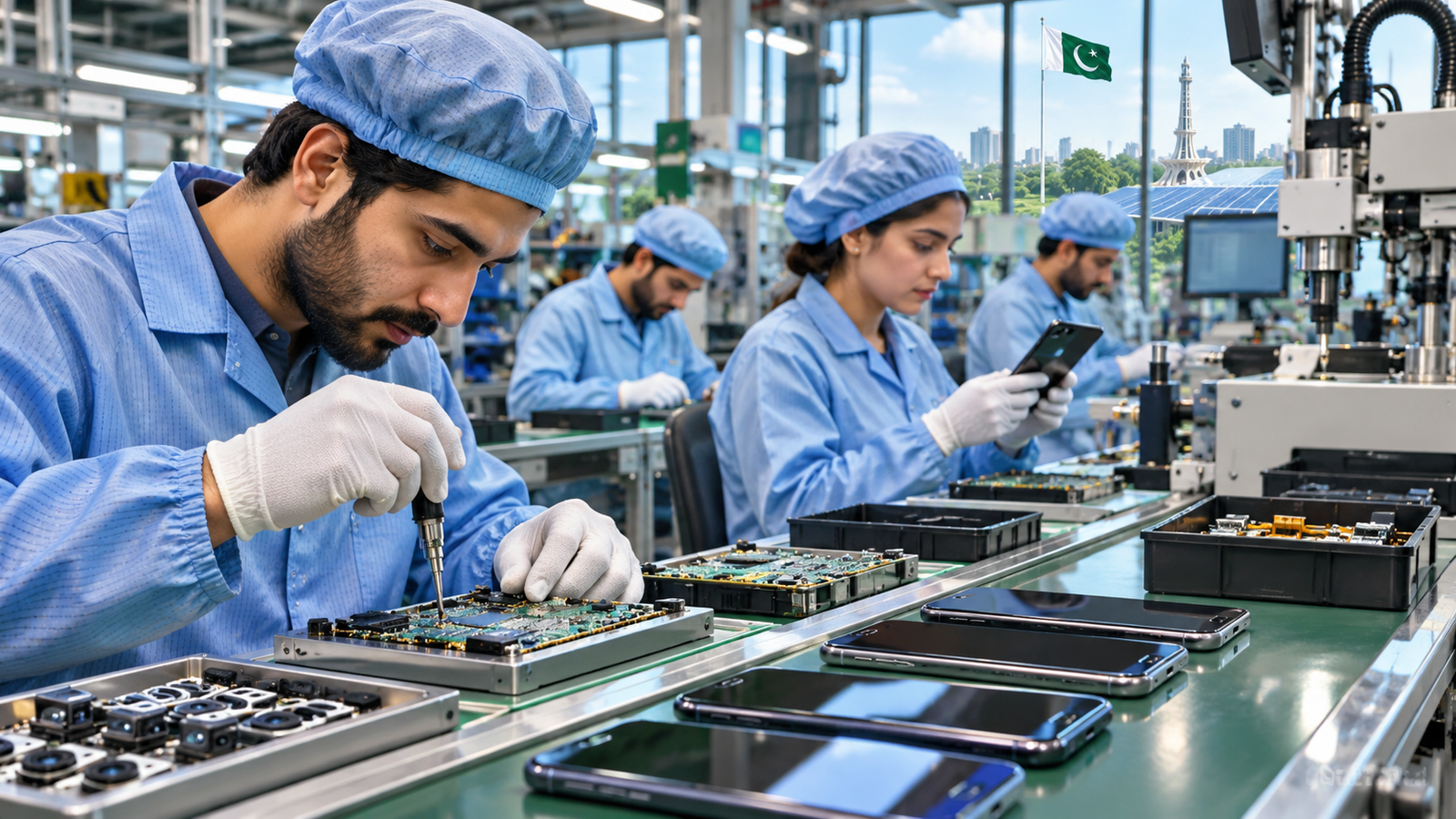
The discussions are relevant because smartphone assembly and component manufacturing represent different levels of industrial activity. Assembly brings imported or locally sourced parts together to produce a finished device, while component manufacturing involves producing selected parts within the country. A shift towards greater local production could help Pakistan develop a wider electronics supply chain rather than depending primarily on imported components.
However, the proposal remains at an exploratory stage. No specific investment amount, new factory location, production capacity, component list or launch date has been announced. The development should therefore be understood as a potential expansion opportunity, not confirmation that Transsion has already started building a new component manufacturing facility in Pakistan.
Transsion Discusses Further Investment and Local Manufacturing
Transsion’s discussions with the Pakistani government focused on strengthening the company’s existing presence and exploring opportunities for further business expansion. During the meeting, Finance Minister Muhammad Aurangzeb welcomed the company’s continued interest in Pakistan and its contribution to the country’s manufacturing sector. The delegation briefed the government on Transsion’s activities in smartphones, electric bikes and energy storage solutions, while outlining its interest in further investment.
A key part of the discussions involved the possibility of expanding beyond smartphone assembly towards greater local value addition. The company highlighted opportunities to develop supporting industries, strengthen domestic supply chains and encourage more businesses to participate in the manufacturing ecosystem. These areas are important because a successful electronics industry depends not only on the final device manufacturer but also on the network of suppliers, component producers, logistics providers and technical service companies supporting production.
The government also discussed Pakistan’s potential to serve as a manufacturing and export base. Finance Minister Aurangzeb emphasised the importance of export-oriented growth, industrial development and stronger integration into international supply chains. He encouraged continued engagement between Transsion and relevant government institutions to explore further investment and business expansion opportunities.
Both sides expressed interest in strengthening cooperation. Nevertheless, the official announcement did not identify a final project agreement or confirm that component production would begin by a particular date. The next stage will depend on the company’s investment decisions, commercial assessments and any formal arrangements reached with relevant Pakistani institutions.
What Is Transsion Holdings and Why Is Its Interest Important?
Transsion Holdings is a Chinese technology group best known for its smartphone brands, including Tecno and Infinix. These brands have developed a presence in several international markets, particularly among consumers looking for smartphones across different price segments. In Pakistan, Tecno and Infinix are familiar names in the mobile phone market, giving Transsion an established consumer-facing business in the country.
The company’s operations in Pakistan are not limited to smartphones. The government statement also referred to its presence in electric bikes and energy storage solutions. This broader activity is relevant because it shows that the company’s engagement with Pakistan involves more than one technology-related business segment. Its discussions about further investment and local manufacturing could therefore connect with a wider industrial strategy.
Transsion’s interest is important for Pakistan because international manufacturers can bring technical expertise, production processes, supplier relationships and access to global markets. If the company decides to increase local production, Pakistani businesses may have an opportunity to supply selected materials and services or develop partnerships linked to the manufacturing process.
However, the scale of that opportunity will depend on the company’s eventual plans. The government announcement does not provide a detailed description of the components Transsion may consider producing locally. It also does not confirm whether the company will establish a new facility, expand an existing operation or work with independent Pakistani suppliers.
Smartphone Assembly and Component Manufacturing Are Not the Same
Understanding the difference between assembly and component manufacturing is essential to assessing the possible impact of Transsion’s discussions. Smartphone assembly generally involves combining different parts to produce a finished mobile phone. These parts can include displays, batteries, printed circuit boards, camera modules, processors, casings and other electronic components. Depending on the production arrangement, many of these items may be imported before the final device is assembled locally.
Component manufacturing involves producing some of those parts within the country. This process can require specialised machinery, trained workers, industrial facilities, quality-control systems and reliable access to raw materials. It may also require local suppliers capable of meeting the technical specifications and production standards set by the smartphone manufacturer.
Moving from assembly towards component manufacturing can increase the amount of value added within the domestic economy. It can also create opportunities for businesses that supply materials, equipment, packaging, testing and other manufacturing services. The wider industrial impact may be greater when a manufacturer develops a network of local suppliers instead of relying almost entirely on imported inputs.
That does not mean every smartphone component can or will be produced locally. Advanced components such as processors, memory chips and sophisticated display technologies involve complex manufacturing processes and substantial investment. Even countries with established electronics industries import many high-value components from specialised international suppliers. Pakistan’s potential progress would therefore likely depend on identifying components that can be produced competitively and reliably within the country.
Why Local Smartphone Component Manufacturing Matters for Pakistan
Pakistan has a large consumer market for mobile phones, but domestic demand alone does not automatically create a strong electronics manufacturing industry. A sustainable industrial ecosystem requires investment in production facilities, technical capabilities, supplier networks and access to markets beyond domestic consumers. Transsion’s interest in deeper localisation is relevant because it raises the possibility of expanding the country’s role in the smartphone value chain.
If the company moves forward with selected local component production, Pakistani businesses could potentially participate in manufacturing parts, supplying packaging materials, providing industrial services or supporting logistics and quality-control operations. Such participation could help local firms develop technical experience and build relationships with an international technology group.
Greater local production may also help diversify the country’s industrial base. Instead of focusing mainly on assembling finished devices from imported components, Pakistan could gradually develop capabilities in selected areas of electronics production. The benefits would depend on the type of components manufactured, the amount of investment involved and the proportion of production sourced from domestic suppliers.
There may also be an opportunity to strengthen exports. If locally produced components meet international quality standards and remain commercially competitive, manufacturers could potentially supply customers beyond Pakistan. However, export opportunities would require consistent production quality, reliable delivery schedules, competitive pricing and compliance with the technical requirements of international buyers.
These outcomes remain possibilities rather than confirmed results. The November meeting established that the company and government discussed deeper localisation and component manufacturing, but it did not announce a completed project or measurable production targets.
Potential Impact on Employment and Technical Skills
A move towards more advanced manufacturing could create demand for workers with specialised technical skills. Depending on the components selected for local production, companies may require electronics technicians, production engineers, machine operators, maintenance specialists and quality-control professionals. These roles can involve more technical responsibilities than some basic assembly activities.
Local suppliers may also need to improve their workforce capabilities to meet the standards required by an international manufacturer. This could create opportunities for cooperation between private companies, vocational training institutes and technical education organisations. Training programmes focused on electronics production, equipment operation, industrial maintenance and quality assurance could become more relevant if the sector expands.
The potential employment impact may extend beyond the factory floor. Manufacturing operations rely on transport providers, packaging companies, equipment suppliers, warehouses, maintenance services and other supporting businesses. A wider supplier network can create indirect economic activity as production increases.
However, it would be premature to estimate the number of jobs that Transsion’s proposed expansion could generate. The company has not announced the size of a planned facility, the amount of investment, its expected production capacity or a recruitment schedule. Any specific employment figure presented without such information would be speculative.
Could Tecno and Infinix Smartphones Become Cheaper?
One question Pakistani consumers may ask is whether local component manufacturing could eventually reduce the prices of Tecno and Infinix smartphones. In principle, local sourcing can reduce certain import-related expenses and improve supply-chain efficiency. If domestic suppliers can provide components at competitive prices and maintain consistent quality, manufacturers may be able to manage some production costs more effectively.
However, lower manufacturing costs do not automatically translate into lower retail prices. Smartphone prices are influenced by several factors, including the cost of imported components, currency exchange rates, taxes, duties, transportation, distribution expenses, marketing costs and competition in the local market. Some advanced components may continue to be imported even if selected parts are produced domestically.
There has been no announcement of an immediate price reduction for Tecno or Infinix devices as a result of the discussions. The government meeting focused on investment, local manufacturing, value addition and export opportunities rather than a consumer pricing policy. Buyers should therefore not assume that smartphone prices will fall simply because the company is exploring deeper localisation.
Any future impact on retail prices would depend on the scale of local production, the cost savings achieved and the company’s commercial decisions. Local component manufacturing could strengthen the domestic industry even if its effect on the final price of a smartphone remains limited.
Pakistan’s Opportunity to Strengthen Its Electronics Supply Chain
The discussions also connect with Pakistan’s broader ambition to increase industrial value addition and improve its position in international supply chains. Electronics manufacturing is supported by a large network of companies producing components, materials, tools and specialised services. Countries seeking to develop this sector need to attract manufacturers while also building the domestic businesses that can support their operations.
Transsion’s interest could provide an opportunity to expand this network if the company proceeds with a formal investment plan. Local suppliers may be able to develop capabilities in selected production areas, while technical service providers could support equipment installation, maintenance and quality assurance. Over time, such activity may help create a more diversified industrial ecosystem.
Pakistan’s domestic consumer market and geographic position were among the factors discussed during the meeting. The company described Pakistan as a strategic market and discussed the potential to use local manufacturing capacity to serve international markets. This indicates that export opportunities formed part of the broader conversation, although no export target or destination market was announced.
Turning this potential into a competitive manufacturing base will require reliable electricity, efficient transport, predictable customs procedures, skilled labour and a stable regulatory environment. Manufacturers also need confidence that they can access raw materials and imported components without unnecessary delays. These practical conditions can influence whether a company chooses to make a long-term investment.
Government Policy and the Need for a Stable Business Environment
Government policy can play an important role in determining whether investment discussions become operational manufacturing projects. Taxation, customs procedures, import duties, industrial incentives and regulatory requirements all affect the cost of producing electronics locally. Companies making long-term decisions need clarity about the rules that will apply to their operations and supply chains.
During the meeting, Finance Minister Muhammad Aurangzeb highlighted the importance of macroeconomic stability, economic reforms and export-oriented growth. He said that sustained stability could support investor confidence and long-term business planning. He also encouraged Transsion to maintain engagement with relevant government institutions to explore further opportunities.
For the electronics industry, policy support needs to be consistent and commercially practical. Temporary incentives may attract attention, but manufacturers also consider infrastructure, workforce capabilities, access to finance and the reliability of administrative processes. A predictable business environment can help companies plan production, supplier development and export operations over several years.
The discussions with Transsion should not be confused with a final government approval for a particular factory or a completed policy arrangement. Any future incentives, regulatory changes or project approvals would need to be confirmed through formal government announcements.
What Has Been Confirmed and What Remains Unknown?
The confirmed development is that Transsion Holdings discussed future investment, local manufacturing, deeper localisation and export opportunities with Pakistan’s Finance Minister. The company also briefed the government on its existing presence in smartphones, electric bikes and energy storage solutions. The official statement specifically referred to the possibility of moving beyond assembly towards greater value addition and component manufacturing.
Several important details remain unknown. No specific investment amount has been announced, and there is no confirmed location for a new component manufacturing facility. The company has not published a list of components it intends to produce, a production capacity target or a timeline for starting such operations. There has also been no confirmed announcement of an immediate change in Tecno or Infinix smartphone prices.
These distinctions matter because investment discussions are an early stage of the decision-making process. A company may explore an opportunity, assess costs, consult government institutions and evaluate the availability of suppliers before deciding whether to commit capital. A meeting and an expression of interest do not by themselves establish that a project has been approved or construction has begun.
The next significant development would be a formal announcement identifying the scope of the investment, the production model, the expected timeline and the partners involved. Until then, the story should be reported as a potential expansion opportunity.
What to Watch Next
The progress of Transsion’s discussions can be assessed through several developments. An announced investment amount would provide an initial indication of the company’s financial commitment, while confirmation of a factory location would help establish where production activity may take place. Details about the components under consideration would clarify the technical depth of the proposed manufacturing operation.
The identification of Pakistani suppliers or industrial partners would also be important. Such partnerships could indicate that the company is beginning to build the domestic supply chain discussed during the meeting. A formal production schedule, capacity target or relevant regulatory approval would provide further evidence that the proposal has moved beyond preliminary discussions.
It will also be important to monitor whether the government introduces or finalises policies that directly support local electronics manufacturing. A supportive framework could help attract additional investment, but its effectiveness would depend on implementation and the practical conditions faced by manufacturers.
For consumers, the key question will be whether deeper localisation eventually affects device availability, product quality or prices. Those outcomes cannot yet be predicted with certainty because the company has not announced the details of a component manufacturing project.
Conclusion
Transsion Holdings’ discussions about local smartphone component manufacturing represent a potentially important development for Pakistan’s technology and electronics industry. The company behind Tecno and Infinix has expressed interest in expanding beyond assembly, increasing local value addition and exploring opportunities to strengthen domestic supply chains.
If the discussions eventually lead to a formal manufacturing project, the development could create opportunities for Pakistani suppliers, support technical employment and contribute to a broader electronics production ecosystem. It could also help the country build stronger connections with international manufacturing and export networks.
However, the actual impact will depend on the scale of investment, the components selected for local production, the availability of skilled workers and the government’s ability to maintain a stable industrial environment. The company has not yet announced a confirmed factory, investment amount or production timeline.
For now, the confirmed development is the discussion between Transsion Holdings and Pakistan’s government about further investment and deeper localisation. The next step will be to see whether this interest turns into a specific investment commitment and measurable local production.
What is Transsion planning in Pakistan?
Transsion Holdings is exploring opportunities to expand beyond smartphone assembly towards local component manufacturing, deeper localisation and stronger domestic supply chains in Pakistan.
Which smartphone brands are owned by Transsion Holdings?
Transsion Holdings owns smartphone brands including Tecno and Infinix.
When did Transsion discuss its manufacturing plans with Pakistan’s government?
Transsion Founder and Chairman George Zhu met Finance Minister Muhammad Aurangzeb in Islamabad on November 13, 2026, to discuss investment, local manufacturing and export opportunities.
Has Transsion confirmed a component manufacturing factory in Pakistan?
No. The company has discussed the possibility of expanding into component manufacturing, but no specific factory, location or production start date has been officially announced.
How much will Transsion invest in Pakistan?
No specific investment amount has been announced in the official statement about the meeting.
Could local component manufacturing create jobs in Pakistan?
It could create opportunities for technicians, engineers, production workers and local suppliers if the proposed expansion moves forward. No employment target has been announced.
Will Tecno and Infinix smartphones become cheaper in Pakistan?
No price reduction has been announced. Any future impact would depend on production costs, local sourcing, taxes, exchange rates and the company’s pricing decisions.
How could Transsion’s expansion benefit Pakistan’s technology industry?
If implemented, deeper localisation could support domestic suppliers, increase manufacturing value addition, develop technical skills and potentially strengthen Pakistan’s electronics export capacity.
About The Author