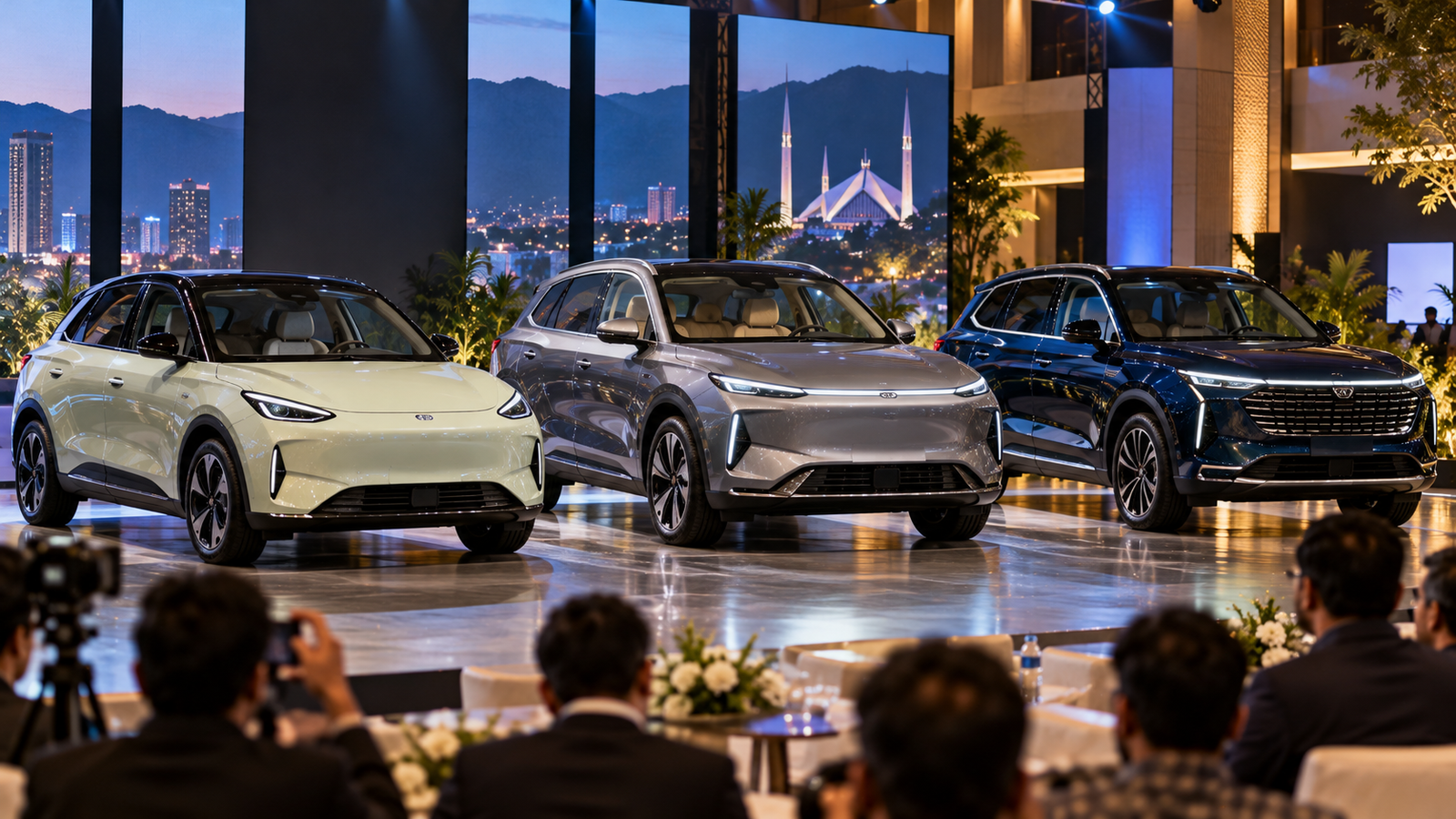
Pakistan Auto Policy 2026-31 could significantly change taxes, import duties, financing and export obligations across the country’s automotive industry. Detailed reports published on October 20 and 21, 2026 say Prime Minister Shehbaz Sharif gave in-principle approval to a draft five-year framework intended to increase competitiveness, encourage new-energy vehicles and connect incentives for automakers with measurable exports and domestic production.
The draft envisages a 1% sales tax for battery electric vehicles, 6% for range-extended electric vehicles and 9% for plug-in hybrids. It also outlines substantial reductions in import tariffs over the policy period, an expansion of financing limits for qualifying new-energy vehicles and a roughly $6 billion cumulative vehicle-and-parts export ambition. Manufacturers would face more direct requirements to export and localise parts, with incentives and penalties proposed to influence their performance.
However, in-principle approval of a draft is not the same as all tax changes taking legal effect. Dawn, Geo News, Express Tribune, ProPakistani and PakWheels describe further steps involving cabinet consideration, IMF engagement, the Economic Coordination Committee and, for some measures, parliamentary action. This article explains the reported proposals as of October 27, not a list of final enforceable tax rules.
Pakistan Auto Policy 2026–31: Key Facts
Policy: Draft Automotive and Auto Parts Manufacturing Policy 2026–31.
Latest detailed policy reporting: October 20–21, 2026.
Status: Prime minister’s in-principle draft approval reported; remaining approvals and implementation notifications must be verified separately.
Proposed sales tax for battery EVs: 1%.
Proposed sales tax for range-extended EVs: 6%.
Proposed sales tax for plug-in hybrids: 9%.
Tax treatment of conventional hybrids and petrol/diesel vehicles: Varies by category, displacement and the draft comparison.
Reported eventual basic customs-duty objective: 15% for specified conventional CBU categories by FY2030–31, subject to final rules.
New-energy vehicle financing proposal: Increase loan ceiling from Rs3 million to Rs10 million and extend a cited three-year repayment period to five years.
Five-year combined export goal: Approximately $6.01 billion in reported latest draft.
Automotive Development Levy: Proposed revenue above Rs232 billion over five years.
Other proposals: Mandatory exports, localisation requirements, industrial incentives and stronger vehicle testing.
Important warning: None of these headlines alone proves a new retail price, bank loan or tax exemption is currently available.
What Is the New Automotive Policy Trying to Achieve?
The government’s stated ambition is to move Pakistan’s auto industry toward stronger exports, more competitive production, greater domestic value addition and wider adoption of vehicles powered partly or entirely by electricity. For decades, a central debate around the sector has concerned how to balance protection of domestic assembly and parts manufacturing with affordability, quality and the choice available to consumers.
Under the proposed framework, access to some concessions would depend more directly on how much companies export and how successfully they use domestically made components. The policy also seeks lower import barriers over time. These tools pull in different directions: lower tariffs may help buyers by increasing competitive pressure, while mandatory local-content rules are intended to stimulate Pakistani manufacturing.
Whether they can work together depends on their design and implementation. The existence of targets is not proof that the country will reach them. Investors, assemblers, vendors and consumers will need final legal text and detailed schedules before assessing the actual commercial consequences.
Proposed EV and Hybrid Sales Tax Rates Explained
The widely reported October draft distinguishes among battery electric vehicles (BEVs), range-extended electric vehicles (REEVs), plug-in hybrid electric vehicles (PHEVs), ordinary hybrid electric vehicles (HEVs) and internal combustion engine (ICE) vehicles. That classification matters because the proposed tax treatment is not identical for all models that advertisers might describe as electrified.
BEVs would receive or retain a 1% sales-tax treatment under the draft. REEVs would have a proposed 6% rate, while PHEVs would have a proposed 9% rate. ProPakistani’s October 21 comparison suggests that conventional hybrids may continue to face existing sales-tax treatment, with rates depending on engine capacity. Petrol and diesel vehicles likewise do not all share one uniform rate across every category.
There is also a key caveat: a sales-tax percentage is one part of a vehicle’s overall price. Customs duties, other taxes, shipping, exchange rates, margins, local assembly status and specifications affect the final invoice. A lower proposed GST figure does not mean an EV will automatically cost 1% more than its manufacturing price or that buyers can claim the rate before appropriate legal notification.
Why Battery EVs, Range-Extended EVs and PHEVs Are Different
A battery electric vehicle runs on electricity stored in a rechargeable traction battery and does not rely on a conventional petrol engine for propulsion. A range-extended electric vehicle normally uses an electric drive system with an onboard engine or generator that can extend operating range. A plug-in hybrid combines charging from an external power source with an internal combustion powertrain, though technical configurations differ among models.
An ordinary hybrid uses both an engine and electric components but typically cannot be charged externally in the same way as a PHEV. These distinctions affect fuel and electricity consumption, charging needs, emissions and purchase decisions. Tax rules may classify vehicles according to legal technical definitions rather than marketing labels.
Buyers should therefore verify a specific model’s powertrain type and the final tax notification. Calling every hybrid an EV could lead to incorrect tax assumptions, particularly when the proposed rates differ by technology and engine capacity.
Will Import Duties on Cars Really Fall to 15%?
A prominent part of the draft is a plan to lower tariffs on imported vehicles and certain vehicle kits or components over the five-year horizon. PakWheels and Dawn reported a target of bringing basic customs duties for specified conventional vehicle categories toward 15% by FY2030–31. The actual effects would depend on the tariff lines covered and whether regulatory, additional or other duties are also revised.
An imported fully built car and a vehicle assembled locally from a completely knocked-down kit are treated differently in customs and industrial policy. Lower duties for one can increase competitive pressure while potentially affecting the economics of local assembly or component production. Changing duties on kits and raw materials can have additional consequences for domestic manufacturers.
A target for 2030–31 is not an immediate reduction to 15% on every vehicle arriving at a Pakistani port today. Buyers should continue to consult the applicable Federal Board of Revenue notifications and verified importer quotations rather than calculate a purchase price from a proposal alone.
Could EV Financing Increase to Rs10 Million?
Reporting on the current draft says policymakers proposed increasing the financing ceiling for eligible new-energy vehicles from Rs3 million to Rs10 million, while lengthening a three-year repayment period to five years. The proposal is intended to address one barrier to buying higher-cost EVs: the size and term of financing available to customers.
A higher financing ceiling does not mean a bank must lend Rs10 million to every applicant. Actual loans would still depend on credit evaluation, down payment, repayment capacity, banking regulations, financing costs and the product offered by a participating bank. Different lenders may also set their own criteria within regulatory limits.
This is an area where older draft reports contain different tenure references, including seven years. For this article, the later October 20–21 accounts are used for the five-year proposal. A final State Bank notice or operational financing circular would be necessary before describing the change as an active facility.
What Does the Proposed Automotive Development Levy Mean?
The draft proposes an Automotive Development Levy intended to generate more than Rs232 billion over five years. Its planned role is to help finance industrial development and export-related incentives, with rates differentiated across certain conventional vehicle categories. Reporting indicates cars up to 1,000cc would receive a zero-rate treatment in the relevant proposal, while higher-displacement vehicles could face additional charges.
A levy can provide funding for sectoral programmes but can also raise purchase or operating costs for affected consumers. The incidence of the charge depends on where it is collected and how manufacturers or dealers incorporate it into prices. The final rate table, definitions and implementation schedule will determine its practical impact.
The revenue figure is a projection, not cash already collected. Estimates are sensitive to vehicle sales, imports, exemptions and the final approved rate structure. It would be misleading to say the government has already earned Rs232 billion from the proposed levy.
Pakistan’s $6 Billion Auto Export Target
The latest October accounts describe a cumulative auto-sector export target of approximately $6.01 billion over the 2026–31 period, including vehicles and parts. Dawn reported a planned rise in annual export contributions as the policy moves through its five years, with manufacturers expected to meet progressively stronger obligations.
Exports are important because local firms can earn foreign exchange and build relationships within international automotive supply chains. But achieving the target would require competitive products, consistent quality, reliable delivery, compliance with destination-market standards and appropriate commercial demand. A numerical target alone cannot create overseas orders.
Earlier versions of the draft reported different export totals. That is a reason to distinguish the October proposal from older documents rather than silently combine their figures. For publication, readers should be told that the target is proposed and subject to any later revisions or approvals.
New Export Incentives and Penalties for Manufacturers
The draft would link benefits for manufacturers to their export performance. October reports describe a proposed incentive equal to 5% of export value, plus an additional incentive on the portion of exports exceeding the previous year’s performance. The proposed arrangement also includes penalties when manufacturers do not meet their required export targets.
According to Dawn’s reporting, firms that fail to achieve those targets for two successive years could face cancellation of manufacturing certificates under the proposed framework. Such provisions, if enacted, could materially change business incentives, but their operation would depend on legal definitions, appeals, exceptions and compliance procedures.
A balanced analysis recognises the government’s aim to encourage overseas sales while asking how smaller manufacturers, local vendors and new entrants would be treated. Incentives could support export investment, but poorly calibrated requirements might impose substantial costs. The effect cannot be established without final rules and evidence after implementation.
Local Auto Parts Industry Raises Concerns
The policy debate includes concerns from local parts makers. Dawn quoted Pakistan Association of Automotive Parts and Accessories Manufacturers chairman Abdul Rehman Aizaz warning that aggressive tariff reductions could expose local suppliers to competition they may struggle to withstand, potentially weakening domestic industrial capacity.
This perspective should be presented as an attributed industry concern, not an established outcome. Supporters of competition-oriented changes may argue that lower barriers can encourage efficiency, attract new entrants and improve vehicle choice. Parts makers, meanwhile, emphasise the need for investment, scale and predictable support to compete with imported components.
Both positions relate to a concrete policy question: how quickly tariffs should decline, and what measures should accompany that transition to protect viable production and employment while increasing competitiveness. Reporting only the government’s expected benefits or only the industry’s fears would be incomplete.
Mandatory Localisation and Domestic Value Addition
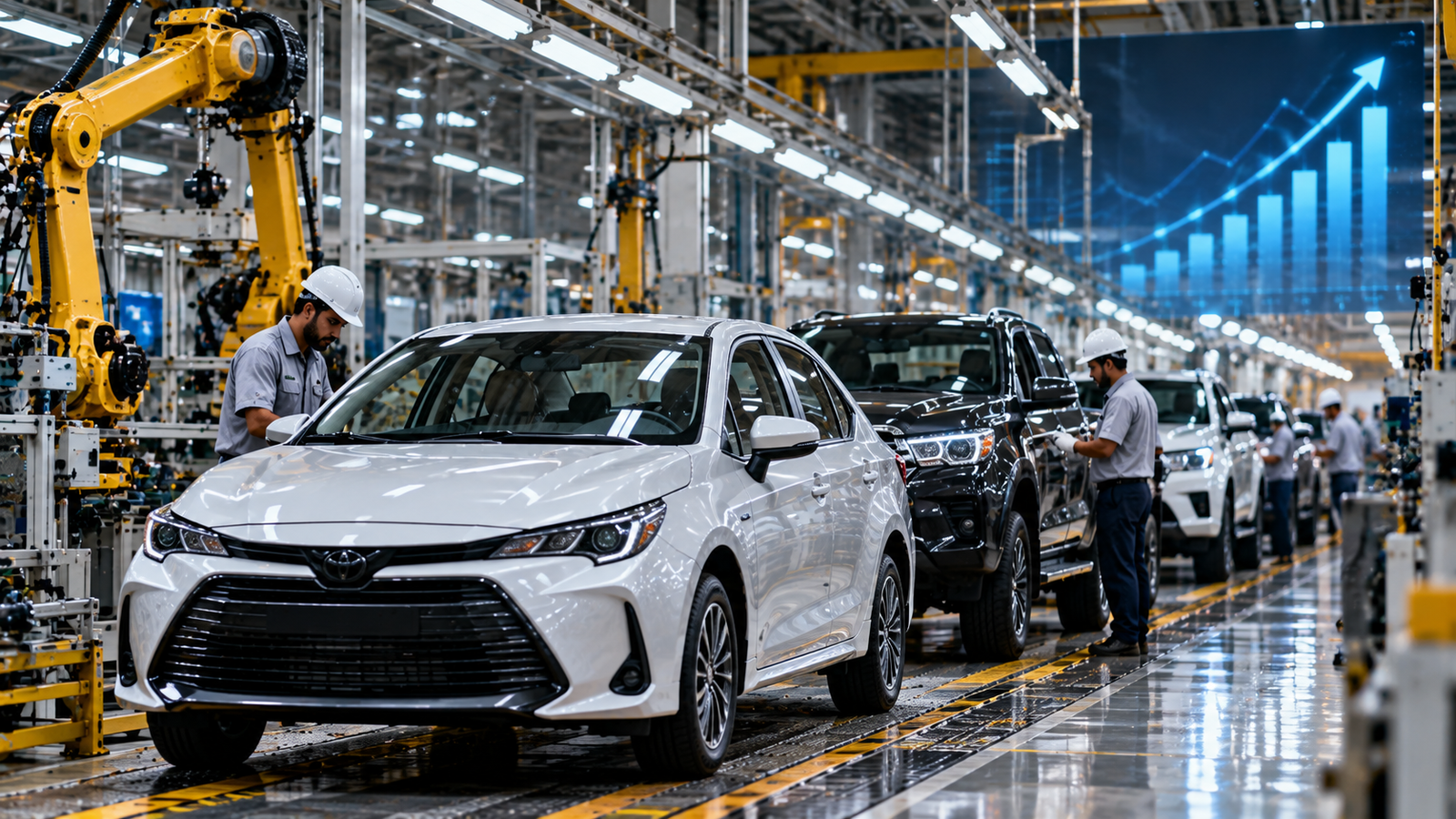
The proposed policy would strengthen expectations for manufacturers to use domestically produced components and meet local value-addition targets. Reports suggest that firms missing localisation requirements could lose some concessions. The aim is to push assembly operations beyond merely putting together imported kits and toward a deeper supply chain involving Pakistani businesses.
Localisation can create opportunities for metalworking, electronics, plastics, batteries and engineering services, but it also depends on whether domestic suppliers can meet cost and quality requirements at sufficient volume. A locally sourced part is not automatically competitive, just as an imported part is not automatically higher quality.
Success would require research, testing, finance, workforce skills and predictable orders. In its strongest form, localisation allows firms to sell to both domestic automakers and international customers. Actual progress should be measured using documented domestic value addition rather than claims about the nationality of a brand.
A New Automotive Testing Institute and Safety Standards
Dawn reported that the draft envisages establishing a Pakistan Automotive Testing Institute to strengthen testing, certification and regulatory oversight. It also refers to international vehicle safety standards, audits and research support. Such infrastructure could matter for consumer protection and for companies seeking to export components or vehicles to markets with demanding compliance requirements.
A testing institute’s value would depend on its technical capability, independence, accreditation and enforcement arrangements. Creating an organisation by policy declaration does not automatically demonstrate that cars on Pakistani roads have passed new crash tests. Nor does it prove that every imported vehicle complies with identical standards.
Consumers should continue checking model-specific safety features and available testing evidence. An international regulatory framework can improve oversight only when standards are implemented, monitored and enforced.
What Could the Policy Mean for Car Prices?
Some proposals could create downward pressure on certain vehicle prices over time, especially where reduced import duties lead to increased competition or lower input costs. Other measures, including levies and compliance obligations, might raise costs for some vehicles. Exchange rates, international prices, dealership margins and taxes will continue to influence what buyers ultimately pay.
For that reason, it is not defensible to promise that all Pakistani cars will become cheaper by a fixed percentage on a particular date. A manufacturer might change its price because of model upgrades or currency movements even if one duty is reduced. Existing stock may also have entered the country under earlier rules.
Buyers should treat claims of a nationwide instant price cut as unverified unless linked to a final government notification and a corresponding authentic vehicle price list. The proposed policy could change market conditions, but no uniform retail outcome follows automatically.
Environmental Impact and the EV Transition
The stated preference for new-energy vehicles reflects an attempt to reduce dependence on conventional fuel and improve environmental outcomes. EVs can have lower tailpipe emissions than petrol vehicles; battery EVs have no tailpipe emissions in normal operation. Yet their overall environmental impact also depends on electricity generation, battery production, vehicle lifespan and end-of-life management.
A transition also requires dependable charging, grid capacity, skilled service centres and consumer confidence. Different areas of Pakistan have different infrastructure and usage patterns, so uptake may vary. Offering favourable taxes can help market entry but does not resolve every practical issue.
The draft should therefore be understood as one component of a wider transport and industrial strategy, not an assurance that every future EV will be cheaper to operate or environmentally preferable in every possible use case.
Could the Policy Affect Auto Industry Jobs?
Increased exports and more local value addition could create opportunities in engineering, manufacturing, logistics and supporting services if firms successfully expand. At the same time, stronger competition and changes in import duties could put pressure on employers that depend on current protections. Effects would differ among assembly operations, parts vendors, dealerships and repair networks.
There is no sound basis to forecast an exact net number of jobs from draft policy figures alone. Employment outcomes depend on investment, productivity, sales demand, firm responses and the speed of any tariff changes. Assertions that the draft has already created or destroyed a specified number of positions would require separate evidence.
Workers, suppliers and policymakers will benefit from transparent monitoring of industrial outcomes as any new framework is implemented. Training and technology upgrades may matter as much as tax incentives for longer-term competitiveness.
What Remains Pending Before the Policy Takes Effect?
Multiple outlets reporting in October described the prime minister’s agreement to the draft or its broad principles. However, they also identified remaining stages involving the federal cabinet, economic-policy deliberations, consultation with the IMF and, for measures needing legislation, Parliament. The precise procedural sequence was described somewhat differently across reports.
The safest conclusion is that the proposed framework still requires the appropriate formal approvals and legal instruments before each tax or industrial obligation can be enforced. An in-principle endorsement can indicate political direction without settling every provision or implementation date.
Consumers should check FBR rules for tax and customs measures, State Bank notifications for banking changes, and relevant ministry or regulatory announcements for industry requirements. News outlets should date any later approval separately instead of retrospectively presenting the October draft as already operational.
What Businesses and Consumers Should Watch Next
The next useful developments will be an authenticated final policy document, cabinet decisions, notifications establishing specific tax rates and any financing rules issued to lenders. Automakers will also be looking for detailed export obligations, localisation measurements, levy administration and timelines for new testing or certification arrangements.
For consumers, the most practical information will come from official tax notifications and updated manufacturer price lists. For investors and parts suppliers, the key questions include stability of the tariff schedule, availability of incentives, compliance costs and clarity over imported component classifications.
By separating a policy proposal from an enacted rule, Mukhbir can report this potentially significant change without overstating its immediate effect on car buyers. Verified outcomes, rather than aspirations, should determine later headlines.
Conclusion
Pakistan Auto Policy 2026-31 proposes a broad reorganisation of how the country supports and regulates automotive manufacturing. The reported draft offers preferential tax treatment to certain new-energy vehicles, seeks lower import duties, proposes financing of up to Rs10 million for eligible vehicles and sets an approximately $6 billion five-year export ambition. It also introduces stricter export and localisation expectations and an Automotive Development Levy.
The proposals involve genuine trade-offs. Supporters see potential for competition, higher exports and wider EV adoption; local parts makers have warned about the effects of lower tariffs on domestic industrial capacity. Neither the predicted benefits nor the feared losses should be treated as certain.
As of this October 27 analysis, the most important publishing qualification remains unchanged: the prime minister’s in-principle draft approval does not establish that every proposed tax rate, loan limit or import tariff is already enforceable. The final approved framework and formal notifications will determine what changes in practice.
Frequently Asked Questions
Is Pakistan Auto Policy 2026–31 officially implemented?
The October reports describe in-principle approval of a draft, with further institutional and legal steps required. Each operative measure should be checked against final official notifications.
What is the proposed EV sales-tax rate?
The reported draft proposes or preserves a 1% sales-tax rate for battery electric vehicles, subject to applicable final rules.
What tax rates are proposed for range-extended EVs and PHEVs?
The October draft reports 6% for range-extended electric vehicles and 9% for plug-in hybrid electric vehicles.
Will every imported car face only 15% duty now?
No. The 15% figure is a proposed longer-term basic customs-duty objective for specified categories by FY2030–31, not a current blanket total tax rate.
Can buyers already get Rs10 million EV loans?
The draft discusses increasing the financing ceiling to Rs10 million. Eligibility and availability require a relevant final banking notification and lender terms.
What is the five-year auto export target?
The later October reports describe an ambition of approximately $6.01 billion across vehicles and auto parts. A target is not completed export revenue.
Why are parts manufacturers worried?
Industry representatives have raised concerns that tariff reductions could expose Pakistani parts suppliers to competition before they are sufficiently competitive.
Will the policy automatically make cars cheaper?
No. Actual retail prices depend on final taxes, duties, input costs, currency movements, competition and manufacturers’ pricing decisions.
About The Author