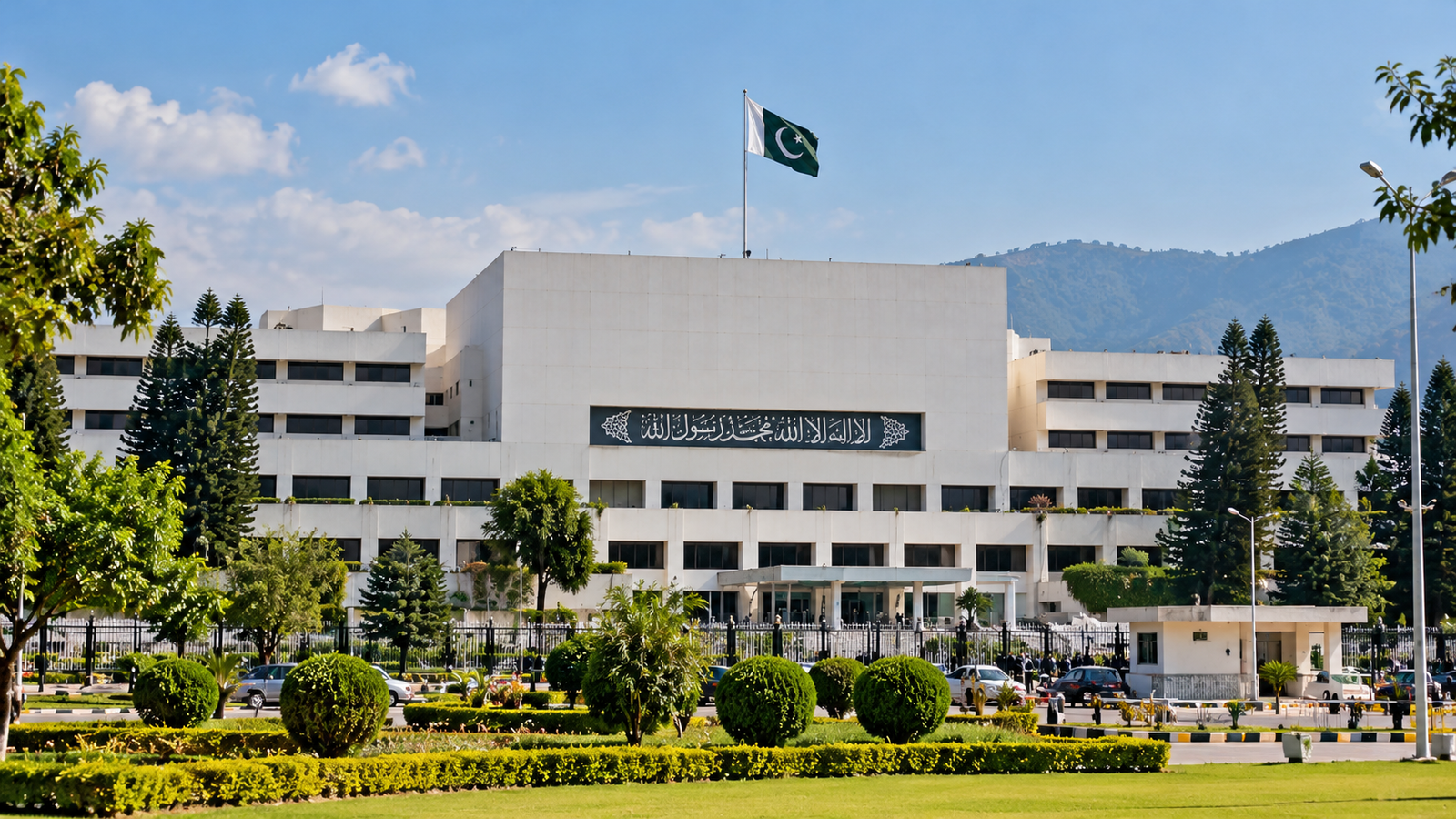
National Assembly session October 27 2026 is scheduled for 11:00am at Parliament House in Islamabad, according to the official National Assembly website. The Tuesday sitting forms part of the Assembly’s 30th session, which began on October 13, while a Public Accounts Committee subcommittee meeting is separately listed for the same day and time. The confirmed story at publication time is the scheduled parliamentary business—not the passage of any particular new law during today’s proceedings.
Pakistan’s lower house has been handling legislative proposals and government business during a period of attention to economic and administrative reform. Aaj English TV reported on October 25, citing parliamentary sources, that the session was expected to be extended until October 30 to deal with pending bills. That advance report should be distinguished from the Assembly’s published schedule and any formal sitting decisions.
For citizens, the most important question is what parliamentary institutions are due to discuss, where the public can verify proceedings, and how a draft bill moves toward law. This explainer reports the dated official schedule and contextual developments without attributing unconfirmed votes or statements to lawmakers.
National Assembly October 27 Session: Quick Facts
Institution: National Assembly of Pakistan.
Session: 30th Session, which commenced October 13, 2026.
Scheduled sitting: Tuesday, October 27, 2026.
Officially listed time: 11:00am Pakistan Standard Time.
Venue: Parliament House, Islamabad.
Speaker: Sardar Ayaz Sadiq, according to the Assembly’s official leadership page.
Concurrent committee item: 49th meeting of Sub-Committee-I of the Public Accounts Committee.
PAC meeting: 11:00am, Committee Room No. 2, first floor, Parliament House.
Departments referenced for PAC meeting: Ministry of Overseas Pakistanis and Human Resource Development and Ministry of Finance.
Context: Pending legislative business and proposals discussed during the October session.
Important limitation: Meeting listings do not establish that a bill was approved, a vote took place or a committee issued findings.
What Is Officially Confirmed for October 27?
The National Assembly’s official website lists a Tuesday, October 27 sitting at 11:00am. Its session page also identifies the date as part of the 30th session. Separately, the site’s ‘Today in National Assembly’ section identifies a meeting of the 49th PAC Sub-Committee-I, scheduled for 11:00am in Committee Room No. 2.
Those listings are stronger evidence than an unattributed social post or a news headline repeating rumours about legislative votes. They establish a schedule and institutional identity. They do not independently confirm that proceedings started precisely on time, that every agenda item was reached or that the entire sitting was completed.
The official Orders of the Day area is the best starting point for a precise sitting agenda. If the institution later publishes an amended order, the updated official document should take precedence over an earlier preview. For this article, subjects not authenticated in a dated agenda PDF have deliberately not been described as definite October 27 votes.
What Is an Order of the Day in Parliament?
An Order of the Day is the formal listing of business expected to be taken up during a parliamentary sitting. It can identify questions, motions, legislative items and other procedural matters, depending on the rules and the sitting. Readers can use it to distinguish intended business from actions actually completed.
An item appearing on the agenda does not mean it will automatically be debated or voted upon. Scheduling may change because of time limits, procedural decisions, quorum problems or business carried forward from earlier sittings. The House may also consider an item without ultimately passing the relevant bill.
Mukhbir’s reporting separates three stages: an item is listed for discussion; lawmakers actually take it up; and Parliament completes the legally required approval process. Conflating these steps can mislead readers about the current status of a proposal.
Why Is This Parliamentary Sitting Significant?
The October session has featured proposals and parliamentary discussion connected to the government’s broader economic, regulatory and administrative agenda. On October 25, Aaj English TV reported that government sources expected the session to continue until October 30 to address pending legislation and possible legal reforms. Those plans included items related to economic measures and laws being reconsidered after court decisions.
However, the report was sourced to parliamentary contacts and does not prove any particular proposal would pass on October 27. Likewise, statements about government priorities are not endorsements of their policy merits or evidence that opposition parties necessarily agreed to each provision.
The significance of the sitting lies in the scrutiny and decision-making responsibilities of elected representatives. The public interest is served by tracking the actual documents, debate and votes rather than predicting legislative outcomes.
Public Accounts Committee Subcommittee Meets on October 27
The National Assembly website also lists the 49th meeting of Sub-Committee-I of the Public Accounts Committee at 11:00am in Committee Room No. 2, Parliament House. The specified subject area relates to the Ministry of Overseas Pakistanis and Human Resource Development and the Ministry of Finance.
Parliamentary public accounts scrutiny can involve examination of expenditure, audit observations, departmental replies and the follow-up actions of public bodies. Committees support legislative oversight by scrutinising how authorised public resources are used and whether institutions respond appropriately to audit findings.
The scheduling notice, however, does not identify specific audit conclusions or financial wrongdoing. This article therefore does not allege misconduct by either ministry, nor does it claim that the subcommittee issued a report on October 27. Any future findings should be attributed to the relevant published committee record.
What Is the Public Accounts Committee’s Role?
The Public Accounts Committee is a parliamentary oversight body concerned with public expenditure and financial accountability. In practice, it can review audit materials, seek official explanations and recommend remedial action through established procedures. Its work differs from the National Assembly’s full-house legislative debate.
A subcommittee meeting may allow detailed discussion of matters that would be difficult to address during a general sitting. This does not mean every issue examined becomes a criminal allegation or court case. Audit objections, administrative errors, disputed figures and potential misconduct are different categories requiring careful terminology.
For readers following public finances, confirmed committee reports are a useful source of evidence. A mere meeting announcement is only a pointer to a future or concurrent oversight process, not a finding in itself.
What Bills Are Under Discussion in the Wider October Session?
The National Assembly’s legislative records show numerous 2026 bills at different procedural stages. Search listings include government bills laid before the house, proposals already passed by the National Assembly, and legislation that has progressed through the full parliamentary process. These categories are distinct and should not be blended into a single list of newly enacted laws.
Recent coverage includes the proposed Privatisation Commission (Amendment) Bill, 2026, intended to reorganise aspects of privatisation and public-private partnership administration. This separate proposal was introduced during the October session, but its presence in parliamentary coverage does not demonstrate that it was voted upon at the October 27 sitting.
When updating this article, editors should inspect the exact dated Orders of the Day and any official sitting bulletin. A general claim that ‘Parliament has passed several major reforms today’ would require evidence of the actual proceedings, which the morning schedule alone cannot supply.
How Does a Bill Become Law in Pakistan?
A bill is a proposed piece of legislation, not an operative statute. It can be introduced, referred for consideration, debated and amended. Depending on the relevant constitutional route, passage through the National Assembly may be only one stage before additional parliamentary and assent requirements are met.
In general, the exact procedure can differ according to the type of bill and the legislative chamber involved. Financial measures, constitutional amendments and ordinary bills do not necessarily follow identical rules. Some measures also involve the Senate, presidential assent and subsequent official publication.
For journalism, accuracy means naming the precise stage: introduced, referred, passed by one chamber, passed by Parliament, assented to or brought into force. If an article describes a proposal as enacted too early, readers may misunderstand current rights and obligations.
The Difference Between an Assembly Sitting and a Committee Meeting
A National Assembly sitting involves the full lower house conducting its formal business under parliamentary rules. Committees, by contrast, focus on defined sectors or oversight responsibilities and can examine topics in greater detail. Both are essential elements of parliamentary work, but their mandates and outputs differ.
The official October 27 schedule lists both a full-house sitting and a PAC subcommittee meeting at 11:00am. That apparent timing overlap should not be interpreted as an error without additional information: legislative institutions often manage multiple activities with different participants and rooms.
A committee’s recommendation also does not necessarily amount to a law. Its report may be considered by the House or another authority, depending on the nature of the matter. Readers should identify which body issued a decision and whether it has binding effect.
Why Quorum Matters in National Assembly Proceedings
Recent reporting shows that quorum has affected National Assembly business during the October session. Dawn reported on October 23 that an earlier sitting was adjourned after the required number of members was not present. That episode concerned the October 22 proceedings, not the October 27 sitting.
A quorum rule sets a minimum level of participation for conducting parliamentary business. If too few members are present under the applicable rules, proceedings may be paused or adjourned. This can change which agenda items are reached and whether planned votes take place.
It would be inaccurate to predict a quorum failure today solely because one occurred last week. The earlier episode is contextual background explaining why scheduling and completed outcomes may differ. Reporters should check the actual daily bulletin rather than assume the same situation has repeated.
What Are Government and Opposition Responsibilities?
Government legislators may introduce or support measures that they believe advance policy objectives, while opposition lawmakers can scrutinise proposals, seek information, raise objections or suggest amendments. Members’ positions can vary across individual bills. The parliamentary process provides opportunities to debate the merits of legislation before decisions are finalised.
Neutral reporting should record verifiable positions and quotations when they are available. It should not presume that every government proposal is beneficial or harmful, nor treat an opposition challenge as evidence that the proposal is unlawful. Legislative disagreement can involve policy choices, implementation costs, legal interpretation and distribution of public benefits.
For the October 27 preview, no unverified remarks have been attributed to any party leader or legislator. Future coverage can include their documented statements once the proceedings and debate records are available.
Why Parliamentary Oversight Matters for Citizens
Legislative scrutiny affects rules governing businesses, public institutions and daily life. Oversight committees can also seek explanations about the use of public funds. These functions make official parliamentary records relevant far beyond Islamabad’s political community.
Citizens may use the Assembly’s website to review session notices, orders of the day, bills and committee listings. These sources make it easier to distinguish an announcement from a completed decision. Journalists can improve public understanding by linking readers to original documents, identifying dates and avoiding dramatic claims that exceed the record.
Such transparency is particularly important when proposed laws touch public finances, civil administration or regulation. A clear account of procedure helps readers evaluate decisions on their substance rather than relying on competing political narratives.
What Is the Latest Parliamentary Context as of October 27?
The official website identifies the October 27 sitting as part of the Assembly’s 30th session and provides a contemporaneous notice for the PAC subcommittee. News reporting from October 25 said parliamentary sources expected an extension of the session until October 30. These pieces of information are compatible as context, but they come from different kinds of sources and need different levels of attribution.
The official listing is evidence of the scheduled Tuesday sitting. The extension claim is a reported expectation of the broader timetable. Neither, by itself, provides a verified account of what lawmakers said or passed during the sitting.
That distinction should remain visible in search headlines and social-media summaries. Mukhbir can publish this as a schedule and institutional explainer and update it once authenticated daily proceedings become available.
How to Follow the October 27 National Assembly Session
Readers can consult the National Assembly website’s Orders of the Day, session listings, bills database, questions and daily bulletin. An order of the day indicates proposed business, while subsequent official records can establish actual proceedings. Committee documents, when made available, can show whether public accounts questions were discussed or recommendations issued.
For breaking developments, established news organisations can provide timely reports, but specific legal-status claims should be checked against parliamentary records. Where a media report says a bill was passed, the precise bill title and chamber should be verified before repeating the claim.
A verified follow-up should carry a timestamp, since the situation can change through the day. The morning preview should not be silently rewritten into an evening results story without updating its date and sources.
What Remains Unconfirmed at Publication Time?
The official morning listings do not demonstrate that a particular bill has been passed, that a minister has made a specified statement or that the PAC subcommittee reached a conclusion. Nor do they establish final attendance, total sitting duration or the outcome of every listed matter.
Several political and legislative developments could occur during the day, but a responsible report should not predict them as facts. For instance, describing a planned discussion as a newly signed law or a committee review as proof of financial misconduct would mislead readers.
The safe and accurate position is straightforward: the National Assembly scheduled a Tuesday sitting at 11:00am, a PAC subcommittee meeting was separately listed, and readers can monitor authenticated parliamentary records for subsequent outcomes.
Conclusion
The National Assembly session October 27 2026 is a verified part of Pakistan’s ongoing parliamentary calendar. The official website listed an 11:00am sitting in Islamabad and a separate Public Accounts Committee subcommittee meeting related to the Ministry of Overseas Pakistanis and Human Resource Development and the Ministry of Finance.
The sitting comes amid attention to pending legislation and economic or administrative proposals. Nonetheless, scheduled business must not be confused with legislative approval or implementation. Mukhbir’s coverage focuses on the official record, parliamentary procedure and public oversight, without adopting a partisan argument or inventing outcomes before they are confirmed.
Readers looking for later developments should check the Assembly’s dated proceedings, orders and bill-status records rather than assuming the agenda predicts the result.
Frequently Asked Questions
When is the National Assembly sitting on October 27, 2026?
The official National Assembly website scheduled the Tuesday sitting for 11:00am Pakistan time.
Where is the sitting taking place?
At Parliament House in Islamabad, Pakistan.
Which parliamentary session is this?
The October 27 sitting is listed under the 30th session of the National Assembly.
What Public Accounts Committee meeting is scheduled?
The 49th meeting of PAC Sub-Committee-I, relating to the Ministry of Overseas Pakistanis and Human Resource Development and the Ministry of Finance.
Does listing a bill on the agenda mean it is approved?
No. Scheduling or introducing legislation is different from passage, assent and implementation.
Was the Assembly session reported to be extended?
Aaj English TV reported on October 25, citing parliamentary sources, that the government intended to extend the session until October 30. Any final changes should be checked in official notices.
Were any bills passed on October 27?
The morning scheduling sources used for this article do not verify a completed vote. Later official proceedings are needed for such a claim.
Where can readers check parliamentary updates?
Visit na.gov.pk and consult Orders of the Day, official bills, session bulletins and committee information.
About The Author