The Election Commission of Pakistan (ECP) has proposed amendments to election codes of conduct to address artificial intelligence-generated campaign material, deceptive deepfakes and automated social-media activity. According to a report published by Dawn on October 24, 2026, the commission circulated draft changes covering political parties, contesting candidates, news organisations and election observers. Stakeholders have been invited to submit comments by November 20.
The central distinction is that the measures remain proposals, not a final nationwide ban already in force. The draft aims to make it easier for voters to recognise synthetic political messages and to clarify responsibilities when AI is used in election coverage or campaigning. It also creates questions about practical enforcement, legitimate political speech and how platforms and regulators would distinguish harmful deception from transparent uses of AI.
What Has the Election Commission Proposed?
The ECP has put forward revisions to codes of conduct covering campaign communications, media reporting and election monitoring. The draft calls for disclosure of AI-generated political content, including synthetic video, images, audio and cloned voices. It also addresses the deliberate use of misleading material that could misrepresent individuals or interfere with voters’ understanding of an election.
The commission is seeking stakeholder feedback through November 20, 2026. That consultation period matters because wording, obligations and implementation details may change before any final code is issued. A report that says the commission ‘has banned all AI election content’ would therefore overstate the present status.
Why Is AI a Concern for Election Administration?
Generative AI tools can produce realistic speech, pictures and video at relatively low cost. A fabricated clip may appear to show a politician endorsing an idea, making a statement or taking an action that never occurred. Automated accounts can also amplify a message repeatedly, making a small or coordinated campaign look like genuine widespread public activity.
These possibilities create challenges for voters, journalists and election officials. Authentic material can be altered, genuine video can be wrongly described as fabricated, and misinformation may spread faster than corrections. The policy challenge is to discourage deception while preserving lawful expression, criticism and legitimate digital communication.
Mandatory Disclosure of AI Campaign Content
Under the draft described by Dawn, political parties and candidates would be expected to identify campaign material created or altered using AI. Examples include deepfake clips, computer-generated images, synthetic voices and other digital campaign content. A clear label could help people distinguish a real recording from an illustration or generated performance.
Labeling is not the same as forbidding every use of AI. Transparent campaign illustrations or production assistance may have different implications from secretly impersonating a real individual. The precise scope of disclosure duties will depend on the final adopted wording and any official compliance guidance.
Rules for Cloned Voices and Automated Calls
The proposed amendments specifically address AI-generated robocalls and voter messages using cloned voices. Such communications would need to make their synthetic nature clear at the beginning, according to the draft details reported by Dawn. This is intended to reduce the risk that recipients mistake automated impersonation for a direct message from a real politician or campaign representative.
Voice cloning can be especially persuasive when people receive short phone calls or audio notes without an easy way to inspect their origin. The rule’s effectiveness would depend on clear definitions, detection practices and a process for investigating disputed recordings.
Proposed Restrictions on Political Bots
The consultation draft would restrict political parties from using automated bots or networks of accounts to artificially increase likes, comments, shares or followers. The concern is not simply automation, but manufactured engagement designed to make public support look larger or more spontaneous than it is.
This distinction is important for political neutrality. A real supporter sharing a post, a campaign scheduling a transparent announcement and a covert network of coordinated fake accounts are different activities. Enforcement will need evidence of deceptive coordination rather than assumptions based on the popularity or unpopularity of a particular political position.
False and Defamatory Deepfake Statements
The proposed code addresses fabricated content intended to deceive voters or damage reputations through false statements. Dawn reported that the draft covers material targeting candidates, party leaders, supporters, election officials, judicial figures, public officials and the armed forces. The list reflects the proposed text rather than an assertion that such content has already been found in a particular campaign.
Questions around defamation and manipulated media require care. News organisations should not treat a damaging allegation as proven simply because a convincing video circulates online. They should also avoid declaring a genuine recording fake without verification. A documented source and an opportunity for relevant responses are important safeguards.
Record-Keeping by Parties and Candidates
The draft would require political parties to retain records of AI-assisted campaign material and provide them to the ECP when requested. Such logs could assist an investigation into where a synthetic message originated, how it was labelled and whether a campaign was responsible for distributing it.
However, the practical burden on organisations of different sizes has not been fully tested in the reporting reviewed. Clear retention periods, privacy safeguards and consistent standards would matter to implementation. The consultation process gives stakeholders an opportunity to address those questions before the language becomes final.
What Does the Draft Say About News Media?
The proposed rules cover print, broadcast and digital news organisations, as well as social-media influencers discussing elections. Under Dawn’s account, AI-altered electoral content would need explicit labeling. News organisations would also remain responsible for accuracy when using AI for tasks such as translation, virtual presentation or analytical production.
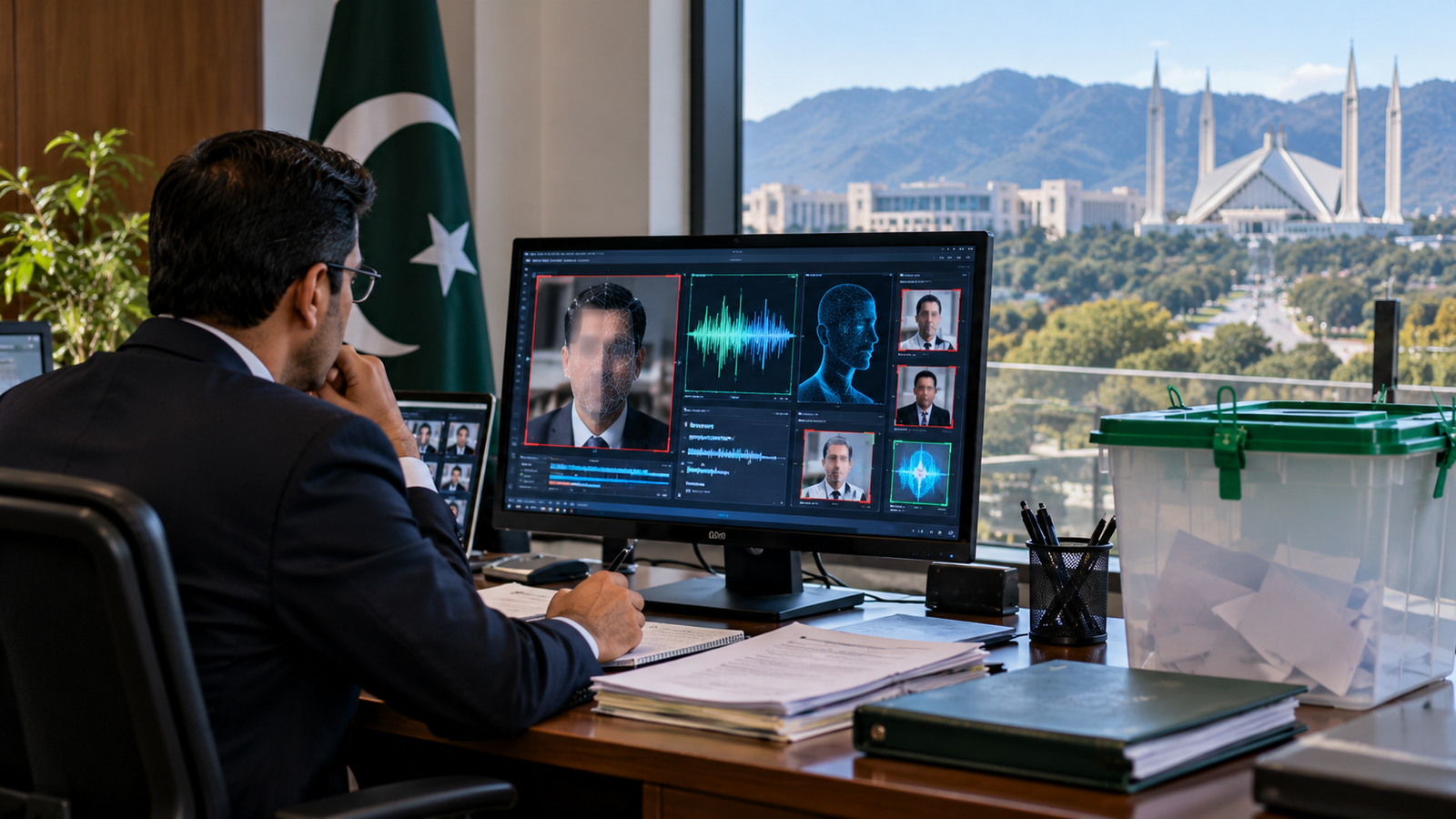
For Mukhbir, the editorial principle is straightforward: AI-generated imagery must not be passed off as an authentic photograph, and synthetic audio or video should never be presented as evidence of a real political statement without corroboration. The illustration accompanying this article is clearly labelled as conceptual, not a view of an actual ECP monitoring room.
What Are Election Observers Expected to Do?
Observers would be expected to identify and report suspected AI-generated misinformation and deepfakes to the election commission without helping to spread the deceptive content further. The draft also seeks to prevent fabricated or enhanced election photographs, videos and written observations being presented as genuine field evidence.
These expectations are relevant because monitoring groups often contribute to public confidence in election administration. Their reports need an identifiable method and a distinction between direct observation, third-party claims and computer-generated material. The final code will determine the precise obligations.
Which Regulators Could Be Involved?
Dawn reported that the proposed framework envisages monitoring roles for the Pakistan Electronic Media Regulatory Authority, the Social Media Protection and Regulatory Authority and the National Cyber Crime Investigation Agency. The agencies would provide compliance information to the ECP, which could seek removal or correction of misleading content under the proposed arrangements.
This description should not be confused with confirmation that every regulator has already begun using an identical new monitoring system. Operational responsibilities, jurisdiction and processes will need to be defined in final notices and applicable law.
What Is the Constitutional and Legal Context?
The commission’s reported draft cites Article 218(3) of Pakistan’s Constitution, which places responsibility on the ECP to organise and conduct elections honestly, fairly and in accordance with law. Election codes are a tool for explaining conduct expected from parties, candidates and other stakeholders during a campaign.
The ECP also previously established an AI Wing within its secretariat, with Business Recorder reporting an October 1 notification. That internal institutional initiative is separate from the new consultation on campaign conduct. Neither development should be described as an amendment to the Constitution itself.
The November 20 Feedback Deadline
The ECP has asked stakeholders to respond to the draft changes by November 20, 2026, according to the October 24 reporting. Interested political parties, media organisations and election observers should consult the commission’s own current notification for the submission process and any accompanying documents.
A feedback deadline is not an effective date. Until the ECP finalises and issues any revised rules, articles should continue to identify the content as proposed. Additional announcements could clarify exceptions, appeals, labeling requirements and enforcement mechanisms.
Possible Benefits and Implementation Questions
If well designed, clear disclosure requirements could help reduce confusion about manipulated political content and make political advertising more transparent. Record-keeping may improve accountability, while guidance for journalists and observers could discourage the accidental spread of misleading material.
At the same time, implementation must be technically realistic and applied consistently. AI detection systems are not infallible, and ordinary image editing or subtitling should not automatically be classified as deceptive manipulation. Transparent definitions, opportunities to contest mistaken decisions and adequate public information would help keep the policy from undermining legitimate speech.
How Voters Can Check Suspicious Election Content
Voters who encounter a dramatic recording should first look for its original source and date, rather than assuming a repost contains the full context. A short clip may omit preceding remarks, and a synthetic voice may imitate a familiar speaker. Reliable reporting, attributable official statements and publicly available full recordings can help resolve uncertainty.
People can also avoid forwarding material whose authenticity is unclear. Labels are useful but not conclusive: a missing AI label does not establish authenticity, while an AI label on an illustration does not necessarily mean deception was intended. The most dependable approach is to examine evidence rather than trust visual realism alone.
Pakistan Relevance and Global Context
The proposal directly concerns Pakistan’s election administration and the growing use of AI in public communication. Comparable debates are taking place internationally as election authorities and social platforms consider transparency for synthetic political advertising. The specific powers and obligations in Pakistan, however, must be grounded in domestic law and the ECP’s final code.
This story has clear relevance beyond party politics. Journalists, educators, civil-society groups and ordinary social-media users all encounter generated content. Mukhbir is reporting the consultation and its implications without taking a position for or against any political party or candidate.
What Happens Next?
The immediate milestone is the November 20 feedback deadline. After reviewing submissions, the ECP may publish revised wording, implementation guidance or a formal notification. Future coverage should check any final version against the current draft and explain what changed, when the rules take effect and who is covered.
There is no basis at this stage to report that an election has been postponed, a political party penalised under these proposed provisions or a particular AI advertisement removed because of the draft. Those would require separate, dated evidence.
Conclusion
Pakistan’s Election Commission has proposed new election-code provisions addressing deepfakes, cloned voices, synthetic campaign material, artificial engagement and the responsibilities of news media and observers. The measures were reported on October 24, 2026, and stakeholders have until November 20 to submit feedback.
The story is about an evolving regulatory proposal, not a set of final restrictions already imposed on political speech. Its significance lies in how election administrators seek to improve transparency without losing sight of evidence, due process and the legitimate exchange of political ideas. Mukhbir will update this account when an official final code or additional ECP guidance becomes available.
Frequently Asked Questions
Has Pakistan’s ECP banned all AI content in election campaigns?
No. The October 2026 measures are proposed amendments focusing on disclosure and deceptive uses of AI, and they remain subject to consultation.
What is the deadline for feedback?
The ECP requested feedback on the draft by November 20, 2026, according to Dawn.
Would political deepfake videos require labels?
Under the proposal, AI-generated and altered campaign material, including deepfake videos, would need clear disclosure.
What does the draft say about cloned voice calls?
AI voice calls and related outreach would have to disclose their synthetic nature at the beginning.
Are political social-media bots covered?
The draft seeks to restrict automated accounts used to fabricate engagement or misleading impressions of support.
What would media organisations have to do?
They would need to label AI-altered election content and remain responsible for the factual accuracy of AI-assisted reporting.
Does the proposal apply to election observers?
Yes. It describes duties to report suspected deepfakes and not fabricate or embellish observation evidence.
When will the new ECP AI rules come into force?
No final effective date was established in the October 24 report; the ECP has invited stakeholder feedback first.
About The Author