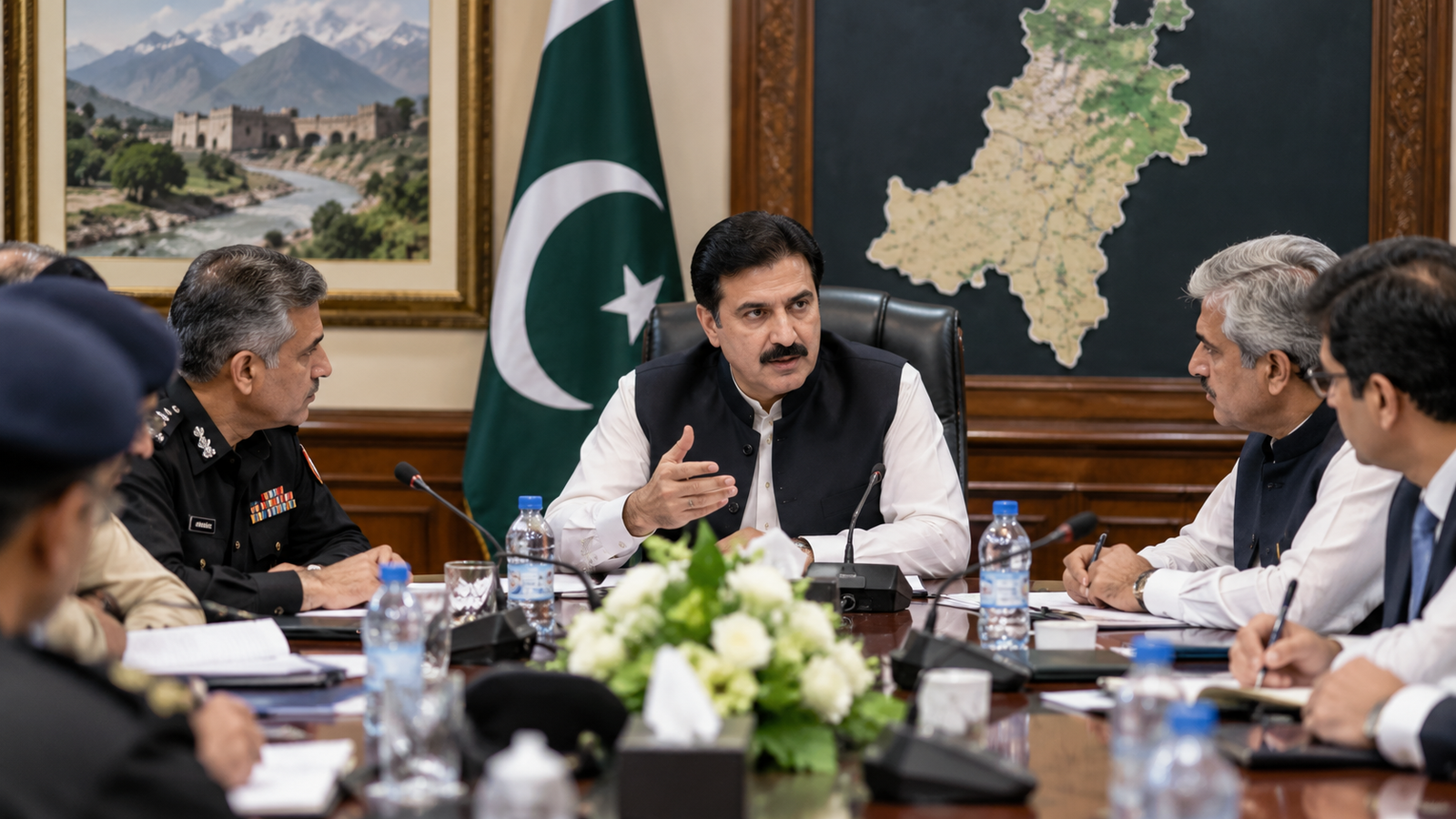
PESHAWAR, October 18, 2026 – KP Governor Faisal Karim Kundi says restoring peace and improving law and order are the most important priorities for Khyber Pakhtunkhwa’s advisory council. Speaking to journalists in Peshawar on Saturday, October 17, he outlined plans to strengthen the police, improve security in districts affected by terrorism, and expand healthcare services in underserved areas.
The remarks, reported by Dawn on October 18, come a week after the federal government imposed emergency measures and Governor’s Rule in the province. The decision remains politically disputed, with the federal government arguing that greater coordination is needed to confront militant violence and PTI challenging the intervention.
The governor’s proposals are significant, but they are not completed projects. The reports do not give confirmed budgets, start dates or final delivery schedules for the planned district improvements.
KP Governor Faisal Karim Kundi: Key Announcements
Speaking after attending the 59th convocation of the College of Physicians and Surgeons Pakistan in Peshawar, Governor Kundi identified peace, public safety and medical care as key areas of work.
He said major investment would be directed toward the police and that 10 to 12 districts affected by terrorism would be developed into model districts for peace and security.
He also highlighted better hospitals, modern medical facilities, improved conditions for healthcare workers and greater access to treatment in remote areas.
These are the governor’s stated priorities. No named list of the 10–12 districts, detailed project budget or completed construction work was announced in the reviewed October 18 report.
Why Is Restoring Peace the First Priority?
Khyber Pakhtunkhwa has faced serious security challenges, particularly in areas close to the border with Afghanistan. Attacks and threats have affected civilians, police and other security personnel.
For families, improved security means more than a government announcement. It can mean being able to travel safely, operate a shop, attend school and receive medical care without constant fear.
Governor Kundi said that action against those responsible for disturbing peace was necessary. He also recognised the efforts of people and institutions working against terrorism.
His statements reflect the provincial administration’s intended approach. They do not establish that violence has already ended or that every security challenge will be resolved within a fixed period.
Plans for 10 to 12 Security Model Districts
One of the more concrete parts of the announcement concerns developing 10 to 12 terrorism-affected districts into security models.
The idea suggests concentrating resources and coordination in areas where residents have experienced particular difficulties. Police capacity, intelligence, communication and local public services could all be relevant to such an effort.
However, Dawn’s report does not give a final list of selected districts or describe a detailed, approved scheme for each one.
It would therefore be misleading to announce that all 12 model districts are already operational. Their practical impact will depend on formal plans, staffing, funding and measurable changes in safety.
What Does More Investment in Police Mean?
The governor called for significant investment in the police force. Effective policing requires trained personnel, reliable equipment, safe working conditions and systems for responding to emergencies.
Additional resources can help, but the amount of money alone does not determine results. Police leadership, accountability, local knowledge and the trust of communities also matter.
In earlier remarks, Kundi said the government wanted to strengthen the police and Counter Terrorism Department. The October 17 comments place renewed emphasis on security at district level.
The reviewed report does not specify exactly how much money will be allocated, when new equipment will arrive or how many officers will be recruited.
Security and Public Trust Must Work Together
Residents are more likely to report risks and cooperate with authorities when they believe their concerns are heard and their rights respected.
That is why improved law enforcement works best with transparent procedures and reliable access to basic services. Community trust can help investigators identify threats while reducing unnecessary fear.
The governor’s plans will be judged not only by official statements but by conditions experienced by people living in affected districts.
Reliable public reporting should also distinguish allegations about individuals from proven criminal conduct. Political disagreement should not automatically be treated as evidence of involvement in terrorism.
What Is the Political Background?
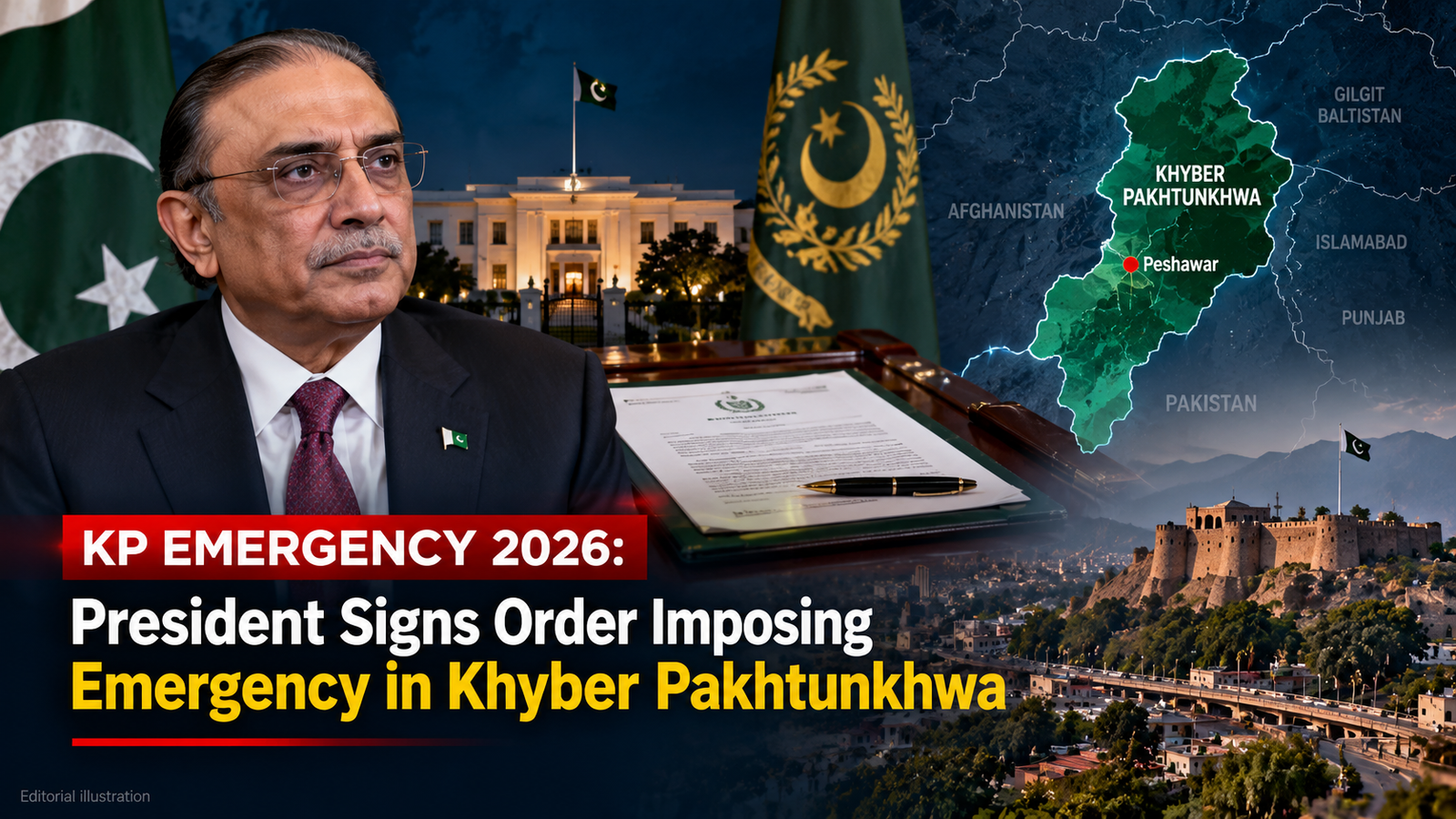
On October 11, the federal government imposed Governor’s Rule and emergency measures in KP, citing security challenges and disagreement with the previous provincial administration over counterterrorism cooperation.
President Asif Ali Zardari approved the intervention on the federal government’s recommendation. The emergency and Governor’s Rule changed how executive authority is exercised in the province.
The federal government says it was compelled to act because of the security situation. Prime Minister Shehbaz Sharif repeated that position on October 17.
Pakistan Tehreek-e-Insaf, whose provincial government was suspended, disputes the decision and argues that it undermines the province’s elected mandate. Legal challenges have also been reported.
Both positions are important background. The governor’s latest statement is about his administration’s announced priorities, not a final judicial decision on the constitutionality of Governor’s Rule.
What Is the KP Advisory Council?
The advisory council assists the governor’s administration during the current political arrangement. Government statements describe its role as supporting work on security, development and public services.
The October 17 remarks identify the council as the body that will focus on restoring peace, improving the province’s hospitals and responding to residents’ needs.
A council announcement is different from a law, a judicial ruling or a completed project. For any new initiative, official notifications and implementation details are needed.
Citizens will be interested in who is responsible for each promise, what public resources are allocated and when results can be evaluated.
Healthcare Is Also on the Agenda
Governor Kundi did not limit his remarks to security. He said the council would work to provide modern medical facilities and better hospitals, especially in underserved and remote communities.
He highlighted the difficulties residents face when they cannot easily reach quality treatment.
For many families, access to a doctor or hospital may involve a long journey and significant expense. Improving district-level care can therefore be important even when the wider political debate is focused on security.
The governor directed the health department to prepare a comprehensive plan to expand healthcare access. That direction is an announced administrative step, not confirmation that new hospitals have already opened.
Support for Doctors and Healthcare Workers
Kundi was speaking after a medical convocation, where he congratulated graduating doctors and recognised the importance of healthcare professionals.
He said doctors and other medical workers should have a dignified and supportive working environment. He also spoke about addressing their genuine concerns through consultation.
The governor said the administration wanted to create better professional opportunities and limit the departure of skilled workers, often described as brain drain.
Keeping healthcare workers in underserved areas may require reliable salaries, equipment, housing, safety and opportunities to develop their careers. The announcement did not provide a completed employment package or final recruitment figures.
Why Remote Communities Need Attention
Healthcare and security problems can reinforce one another. A community that faces dangerous roads or poor transport may struggle to get patients to a hospital.
Likewise, weak public services may make it harder for residents to feel that government institutions are working for them.
The governor’s emphasis on both peace and medical care suggests that his administration wants to address more than one part of everyday life.
The challenge will be to turn broad goals into measurable action, particularly in locations where public institutions have historically had limited reach.
What Did the Governor Say About Medical Education?
Kundi praised the College of Physicians and Surgeons Pakistan for its role in training medical specialists and supporting the profession.
He urged young doctors to serve communities in need with professionalism, ethical responsibility and care.
This is particularly relevant to remote districts where specialist medical attention can be difficult to find.
However, graduation ceremonies and appeals to doctors do not by themselves guarantee an increase in the number of specialists working in these communities. Staffing and facilities need separate planning.
What Does the Federal Government Say?
Prime Minister Shehbaz Sharif has defended the emergency measures, saying the federal government believed it needed to intervene after security cooperation and dialogue failed.
Federal officials have argued that stronger coordination between Islamabad and the provincial administration is necessary to tackle terrorism.
This is the federal government’s explanation for its decision. Critics, including PTI leaders, have rejected that interpretation and questioned the impact on provincial democracy.
A neutral article must present these claims as political positions where evidence or legal decisions remain contested.
How Has PTI Responded to Governor’s Rule?
PTI has criticised the suspension of its provincial government and challenged the emergency arrangements through political and legal channels.
The party argues that elected representatives should govern the province and disputes the federal government’s account of why the intervention was necessary.
Opposition concerns about constitutional rights and the duration of emergency governance are separate from the question of whether residents need improved safety.
The latest governor statement does not end the legal dispute or indicate that PTI has withdrawn its objections.
What Should Residents Expect Next?
The governor’s announcements provide several points to watch: a detailed security plan, a confirmed list of proposed model districts, police investment decisions and a healthcare improvement programme.
For residents, measurable results would include safer travel, reliable policing, quicker emergency responses and easier access to medical services.
The administration may publish more detailed plans, but those steps should be reported when officially confirmed rather than predicted as accomplished.
Independent observation, clear public information and respect for legal processes will be important in assessing the promised changes.
Why This News Matters
The October 17 statement is a new governance update following an already reported constitutional and political crisis.
Its main public-interest value is practical: what the new administration says it will do about security and healthcare.
It should not be confused with a fresh presidential order imposing Governor’s Rule, nor with proof that the proposed 10 to 12 model districts already exist.
For Mukhbir readers in Pakistan and abroad, the essential distinction is between promises, formally approved programmes and results people can verify on the ground.
Conclusion
KP Governor Faisal Karim Kundi has placed peace and law and order at the top of his administration’s agenda. He says the council will support greater investment in the police and plans for 10 to 12 terrorism-affected districts, while also seeking improved hospitals and working conditions for doctors.
His announcement comes as the federal government and PTI remain divided over Governor’s Rule in Khyber Pakhtunkhwa.
The next meaningful developments will be specific budgets, implementation plans, officially named districts and independently assessable outcomes. Until then, these measures should be described as priorities and proposals, not completed achievements.
Frequently Asked Questions
Who is the current KP governor?
Faisal Karim Kundi is the governor of Khyber Pakhtunkhwa, according to the October 18, 2026 reporting.
What is Governor Faisal Karim Kundi’s top priority?
He says restoring peace and maintaining law and order are his advisory council’s top priorities.
How many districts are included in the governor’s security plan?
He discussed developing 10 to 12 terrorism-affected districts as model areas for peace and security. A final district list was not given in the report.
Has the police investment been completed?
No completed investment amount or delivery schedule was established in the reviewed report. The governor announced an intention to invest heavily.
What healthcare changes did the governor propose?
He called for better hospitals, modern medical facilities, improved working conditions for doctors and more access to healthcare in remote districts.
When was Governor’s Rule imposed in KP?
The federal government imposed Governor’s Rule and emergency measures on October 11, 2026.
Does PTI support Governor’s Rule?
No. PTI has opposed the intervention and challenged its legal and political basis.
Does the governor’s announcement mean peace has been restored?
No. It outlines intended priorities. Whether conditions improve will depend on implementation and verified results.
About The Author