The Reko Diq project delay 2030 scenario has drawn renewed attention after a November 2, 2026 report said production at Pakistan’s major copper-gold venture could begin two years later than originally targeted. Dawn, citing government sources and industry insiders, reported that security challenges in Balochistan and tensions in the wider region might affect the project schedule. Crucially, Barrick Mining Corporation has not officially announced 2030 as a revised first-production date. Its latest formal project update, issued on April 2, confirmed a slowdown in development and an extended review until mid-2027. The Canadian company said it continues to believe in the mine’s long-term value while reassessing security, financing, scope, capital requirements and the timetable. Reko Diq remains one of Pakistan’s most important proposed mining investments, with substantial implications for Balochistan, public-sector shareholders, employment and future copper exports. The distinction between a reported possible delay and a confirmed new target is essential for investors and readers evaluating the project’s prospects.
Reko Diq Project Delay 2030: Key Facts
Location: Chagai district, Balochistan, Pakistan.
Minerals: Copper and gold.
Operator and principal investor: Barrick Mining Corporation.
Previously targeted first production: End of 2028.
Reported possible new production year: 2030.
Official Barrick confirmation of 2030: None identified as of November 2, 2026.
Company review announced: February 5, 2026.
Official extension and development slowdown: March 26 and April 2, 2026.
Current official review period: Through mid-2027.
Barrick ownership: 50%.
Balochistan government ownership: 25%.
Pakistani state-owned enterprise ownership: Combined 25%.
Phase 1 capital estimate in April Barrick statement: $5.6 billion to $6.0 billion.
Phase 2 capital estimate: $3.3 billion to $3.6 billion.
Combined earlier disclosed estimates: Approximately $8.9 billion to $9.6 billion, excluding financing-cost capitalization.
Initial processing plan: 45 million tonnes of ore annually.
Phase 2 processing plan: 90 million tonnes annually.
Workforce reported currently retained: Approximately 700 permanent and 2,000 contract workers.
Potential peak construction employment: 7,500 jobs, based on project projections.
Potential operations employment: Around 4,000 positions, based on projections.
Project status: Development and review; not yet producing copper or gold commercially.
What Happened in the November 2 News Report?
Dawn’s Business and Finance Weekly reported that production at Reko Diq could shift from 2028 to 2030 if security conditions and regional circumstances do not improve. The newspaper relied on government and industry sources rather than a fresh formal timetable issued by Barrick. It also reported that the company had not provided a new official construction schedule. That is the central distinction in the story. A news headline can accurately say the project may face a two-year delay, but it should not say Barrick has definitively postponed the mine until 2030. Investors should watch for a formal company disclosure that addresses the results of its review and updates cost or production guidance.
What Has Barrick Officially Confirmed?
In an April 2, 2026 statement, Barrick said it would slow development activity while keeping the project under active management. The company extended its review through mid-2027 to assess security developments, financing, capital expenditure, project scope and scheduling. Barrick also stated that it continued to see long-term value in the copper-gold resource and intended to maintain community and social programmes in Pakistan. Its March 26 statement had already warned that revised operating conditions could affect previously announced budgets and the timeline. Neither official announcement assigned a confirmed 2030 production date. The most reliable reading is that the original 2028 target is under pressure while the revised timetable remains to be determined.
Why Is Security Part of the Assessment?
Barrick identified worsening security concerns in Pakistan and the wider region as reasons for extending its review. The November 2 newspaper report referred to ongoing security issues in Balochistan and the conflict involving neighbouring Iran as factors affecting investor confidence and project planning. These are attributed operational concerns, not an allegation that any particular civilian or institution deliberately caused the delay. Large mining projects require transport, workforce access, equipment delivery and long-term commitments from contractors and lenders. Developers may review those exposures when conditions change. The company is assessing risks before committing fully to construction, while official statements continue to recognise the project’s potential.
Is the Reko Diq Mine Closed?
Reko Diq is not an operating commercial copper-gold mine that has suddenly shut down production. It is a major development project whose planned first production had been targeted for the end of 2028. Barrick has slowed its development pace but said it remains under active management. Dawn reported that site research, administration and community initiatives were continuing. This difference prevents a common misunderstanding: delayed construction work does not mean existing commercial copper output has stopped, because the project had not entered full production. Statements about a mine closure or the loss of an operating export business would therefore be inaccurate without entirely different evidence.
How Much Is the Reko Diq Project Expected to Cost?
Barrick’s April 2 official update restated previously disclosed Phase 1 capital costs of between $5.6 billion and $6.0 billion and Phase 2 costs of between $3.3 billion and $3.6 billion, on a 100% project basis and excluding capitalised financing costs. Those ranges imply a combined preliminary estimate of roughly $8.9 billion to $9.6 billion. Dawn’s November 2 article used a rounded central estimate of about $9.1 billion, with Phase 1 around $5.6 billion and Phase 2 around $3.5 billion. The figures are not an announcement that the entire amount has already been spent. They represent development capital estimates that may be revised as the review progresses.
Are Reports of an Additional $10 Billion in Costs Confirmed?
No. Dawn cited sharply different views about the financial implications of extended delay. One industry source warned of potential extra costs as high as $8 billion to $10 billion, while another source with connections to the project considered that estimate unrealistic and suggested an increase of about 10%, equivalent in their assessment to hundreds of millions rather than billions. These are competing opinions, not final revised cost guidance from Barrick. Mukhbir should not describe a $10 billion cost increase as a completed fact. The authoritative measure will be an updated company capital budget or a verified project financing disclosure after the ongoing review.
Who Owns the Reko Diq Project?
Barrick Mining Corporation holds a 50% interest in the venture. The Balochistan provincial government owns 25%, and three Pakistani state-owned entities collectively hold the remaining 25%. The state-linked companies are Pakistan Petroleum Limited, Oil and Gas Development Company Limited and Government Holdings Private Limited. This structure makes the project significant for both international private capital and public-sector stakeholders in Pakistan. Ownership shares indicate participation in the venture but do not automatically translate into an immediate cash dividend for citizens. Future distributions will depend on project financing, construction, operating performance and the applicable shareholder arrangements.
Why Is Balochistan’s Stake Important?
The provincial government’s direct equity interest gives Balochistan a formal role in a project located within its territory. Potential long-term benefits include revenues, employment opportunities, infrastructure and community programmes if the mine is developed successfully. However, equity ownership does not mean the province is already receiving the full projected lifetime cash flow. The project still requires major capital investment and eventually profitable operations. Local communities may reasonably want clear information about training, procurement, environmental management and the distribution of benefits. Those matters should be evaluated using official project commitments and independently measurable results rather than political promises alone.
What Does Reko Diq Contain?
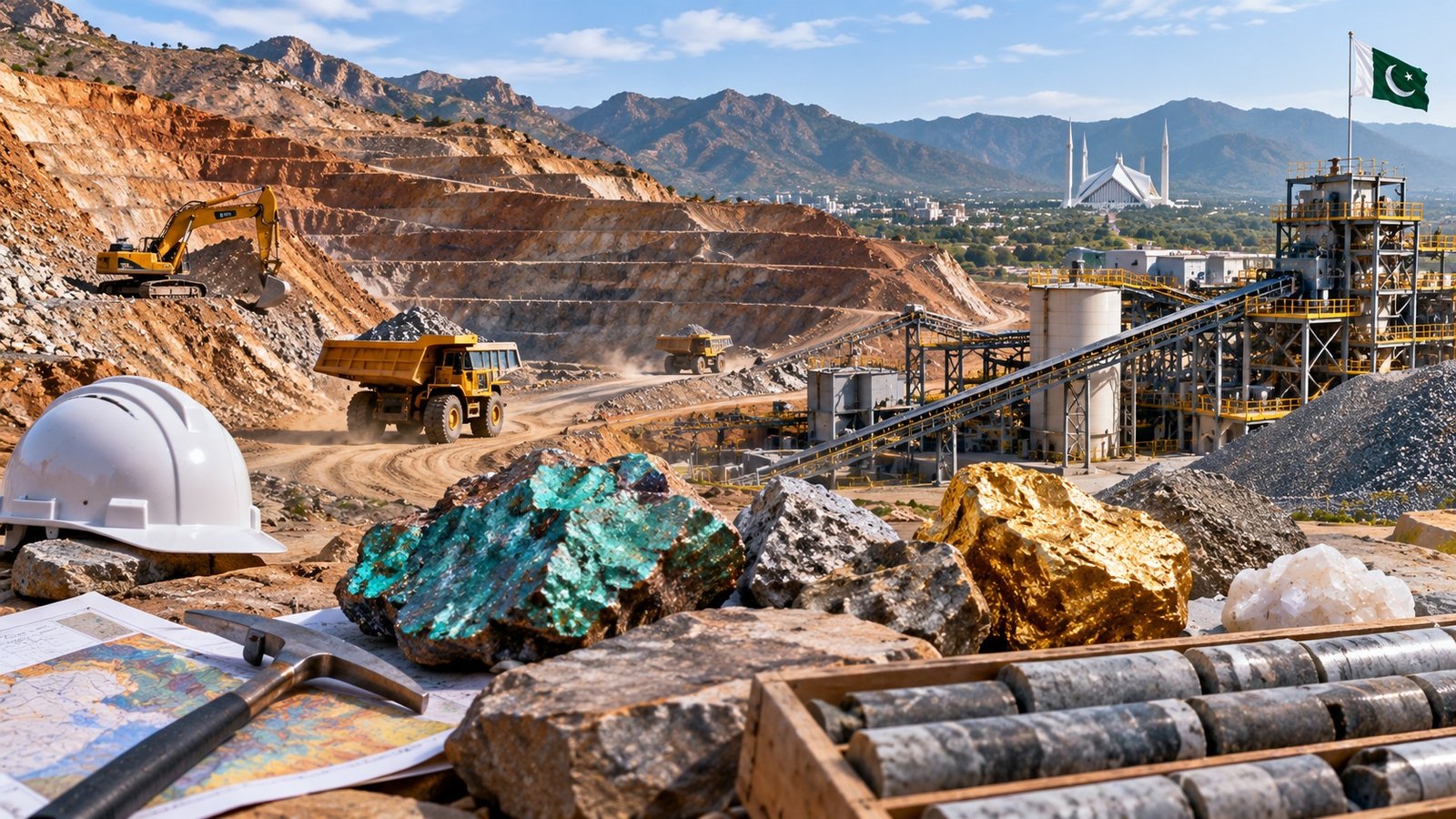
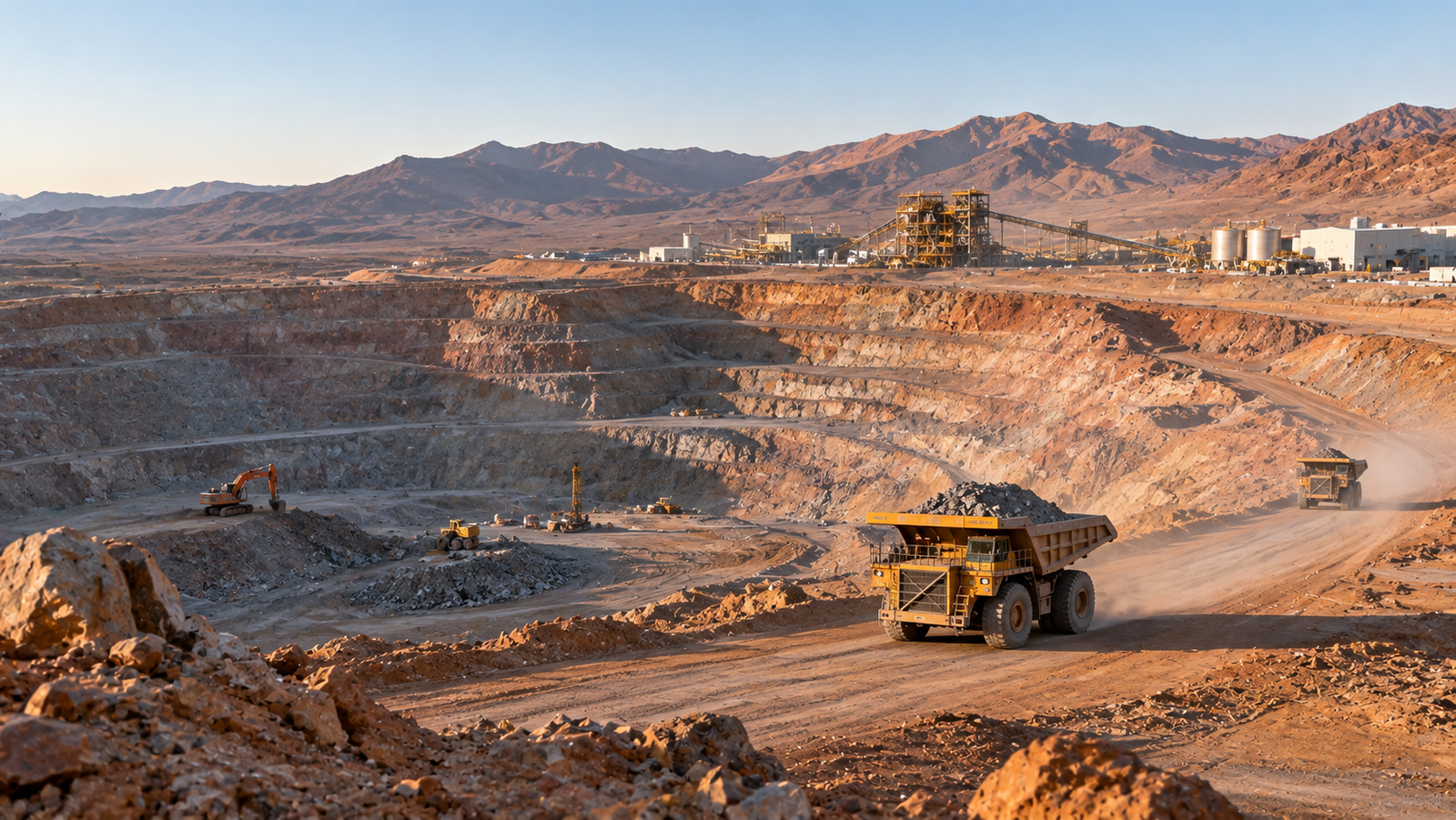
Reko Diq is a major undeveloped copper-gold deposit in the Chagai district of Balochistan. The proposed operation involves an open-pit mine and a processing plant that would produce copper-gold concentrate. Copper is used in electrical infrastructure, manufacturing and technologies associated with electrification, while gold has industrial and financial uses. The deposit’s scale has attracted interest because developing it could create export earnings over many years. Resource potential is not the same as proven commercial output, however. A project must complete construction, commissioning and production before its economic value becomes measurable in sales and financial results.
How Much Ore Could the Mine Process?
Project planning has described an initial ore-processing capacity of approximately 45 million tonnes a year, with a second phase potentially doubling that figure to about 90 million tonnes annually. Ore-processing tonnage is not the same as the weight of pure copper or gold produced: the amount of recoverable metal depends on ore grades, recovery processes and operating conditions. These plans remain subject to the company’s review of technical scope and costs. Reports discussing future export values should therefore avoid converting tonnes of ore directly into tonnes of finished copper without a verified technical basis.
When Was First Production Originally Expected?
Barrick and the Reko Diq joint-venture shareholders announced in April 2025 that the updated feasibility study and conditional development capital had been approved, with first production targeted for the end of 2028. The company reiterated that target when describing its previously disclosed capital plans in early 2026. After security conditions changed, Barrick began reviewing the project in February 2026 and later extended that process. The November 2 report raises the possibility of first production slipping to 2030. Because the company has not yet issued a revised start date, the 2028 target should be described as its earlier plan, not a guaranteed operating date.
What Does the Mid-2027 Review Deadline Mean?
Mid-2027 is the period through which Barrick expects to continue its detailed assessment of the project, according to its April statement. This is not the same as a confirmed restart date for all construction activities, nor is it a promise that the mine will begin producing in that year. The company said the review would consider the security environment, capital budget, financing, scope and timetable. Once that process produces firm conclusions, Barrick may issue further market guidance. An investor or news outlet should therefore watch official company filings and exchange disclosures rather than rely only on informal estimates of when construction will accelerate.
Are Workers Still Employed at the Site?
Dawn reported that management had retained approximately 700 permanent employees and about 2,000 contract workers despite reduced development activity. The newspaper also said some third-party service contracts had been allowed to expire. These figures describe reported current staffing arrangements and should not be confused with the much larger workforce projected for peak construction. The report attributed continued research, administration and community work to people familiar with site operations. Barrick’s official position is that the development remains under active management. Any later workforce change needs to be checked using a dated company or reliable labour report.
How Many Jobs Could Reko Diq Eventually Create?
Project projections cited by Dawn refer to approximately 7,500 positions at peak construction and around 4,000 ongoing jobs when the mine is operational. These are anticipated employment levels, not current vacancies or guaranteed recruitment numbers. A construction project often uses different skills from a producing mine, including civil works, equipment installation, logistics, geology, processing operations, maintenance and administrative functions. The actual number of jobs depends on the final schedule, contracting arrangements and investment approvals. Mukhbir does not invent a recruitment portal or promise immediate employment based on these forecasts.
What Would a Delay Mean for Investors?
An extended timeline may increase financing and holding costs, postpone revenues and require lenders to revise assumptions about future cash flows. It can also affect supplier contracts and the value of an investment opportunity. However, the direction and size of those effects depend on final engineering and commercial decisions, commodity prices and the cost of capital. Project partners may respond by phasing work, updating budgets or modifying financing arrangements. The existence of risk does not establish that the investment has failed. Barrick has stated its continued belief in the project’s long-term value, while acknowledging that important parameters require further assessment.
What About the Reported $1 Billion Already Invested?
A source familiar with the project told Dawn that nearly $1 billion had been invested in the venture. The report attributed the estimate rather than presenting a newly audited financial statement. Expenditure to date may cover studies, early works, equipment, project development and social programmes, but the complete allocation cannot be reconstructed from that quotation alone. It should also not be compared mechanically with full project costs without examining financing and accounting definitions. An updated official capital-spending disclosure would be more authoritative. The reported investment nevertheless underscores why stakeholders have a strong interest in determining a workable path forward.
Could Reko Diq Increase Pakistan’s Exports?
A producing mine could eventually generate export revenue through copper-gold concentrate. That prospect is one reason the project is discussed as a major national investment. The actual export contribution would depend on production volumes, metal prices, processing and sales contracts, operating costs and the project’s start date. A potential 2030 delay could postpone these benefits, but it would not establish a precise loss of export earnings without a detailed financial model. The project does not currently provide the full production revenue projected for its future operating life. Economic claims should therefore be presented as conditional forecasts rather than achieved national income.
How Long Could the Mine Operate?
Dawn’s November 2 report said an updated feasibility assessment used a base mine life of approximately 37 years, compared with an earlier 40-year scenario influenced by the planned increase in throughput. It also noted that exploration might eventually extend the economic life, possibly considerably. These are planning scenarios, not a guarantee that commercial operations will last for exactly 37 or 80 years. Mine life can change as reserves, costs, commodity prices and technical plans are updated. Readers should distinguish a feasibility-study projection from a confirmed production record or a proven future return.
What Does the $74 Billion Cash-Flow Estimate Mean?
The November 2 coverage quoted a projected free cash flow of around $74 billion over 37 years under long-term commodity assumptions. This is a model-based projection, not cash already received by Barrick, Balochistan or the Pakistani state. Cash flow reflects assumptions about metal prices, operating costs, capital expenditure and production. Those assumptions may change, particularly if the project timeline or budget is revised. It would be inaccurate to treat the $74 billion figure as an immediate national income windfall or a guaranteed government share. Future technical reports and financial disclosures should provide the basis for updated forecasts.
Why Local Processing Is Being Discussed
One industry source cited by Dawn expressed concern about the share of copper-gold output that might be processed within Pakistan, suggesting a figure of 30% to 35% for some processing activities. This was an attributed industry view, not a final officially verified operating agreement. Processing more material domestically can potentially support jobs and technical capabilities, but it also requires infrastructure, energy and commercial competitiveness. Any assessment should identify which steps occur at the mine, which occur elsewhere and what value they add. Mukhbir does not portray a disputed forecast as proof that the operator has already exported unprocessed material.
Will the Company Abandon Reko Diq?
The reviewed evidence does not establish an abandonment decision. Barrick has repeatedly described its belief in the project’s long-term potential while slowing development and reassessing risks. Dawn also quoted people associated with the operation who expressed confidence that work would continue. Nonetheless, confidence does not substitute for a final construction schedule or financing decision. The responsible editorial position is that the project remains active under management, but its delivery timetable and budget are uncertain. Assertions that it has definitely been cancelled—or that every milestone remains unchanged—would go beyond the available evidence.
How Does Regional Tension Affect Major Mining Projects?
Large mines depend on specialised equipment, cross-border logistics, insurance, financing and worker safety over many years. Conflict or uncertainty in a nearby region can make planners reconsider transport and scheduling assumptions, even when the proposed mine itself has not begun operating. Barrick directly cited security developments in Pakistan and the wider region in its official statements. The November 2 report linked the discussion to tensions involving Iran. These are business-risk considerations requiring careful attribution. Reporting should avoid blaming a whole community or implying that all investment in Balochistan has stopped because one project’s schedule is being reviewed.
What Role Might the Pakistan Minerals Investment Forum Play?
Dawn reported that Barrick chairman John L. Thornton was expected to attend the Pakistan Minerals Investment Forum 2026 in Islamabad later in November. An appearance at an industry event might provide a venue for meetings and discussion of the project’s outlook. However, the expected visit does not guarantee a new financing agreement, final production date or immediate construction restart. The presence of officials or executives at a forum is not equivalent to an approved contract. Mukhbir should report any future announcement only after confirming the date and content through a credible company, government or forum source.
What Would Investors Need to See Next?
The most useful evidence would be Barrick’s formal review outcome, an updated capital budget, financing arrangements, a revised construction schedule and a clear first-production target. Additional information about contracts, workforce changes and local community programmes could help explain the implementation outlook. Because the company is publicly traded, its official statements and regulatory filings are important sources. Government shareholders may also issue relevant disclosures under their own reporting obligations. Investors should not rely on a single anonymous estimate as definitive guidance, especially when credible sources offer widely divergent views about possible cost overruns.
Why the Story Matters for Balochistan
Reko Diq has the potential to become an important source of employment, investment activity and public revenue in Balochistan if it is successfully developed. Local communities also have an interest in environmental protection, water management, infrastructure and fair access to opportunities. The project’s scale makes delays relevant to provincial economic planning, but projected benefits should not be presented as already delivered. Barrick has said it intends to continue its community and social programmes during the review. Future reporting can examine measurable outcomes and verified commitments rather than focus solely on production figures or competing political narratives.
How to Read the Competing Delay Estimates
The November 2 reporting includes several levels of certainty. Barrick’s slowdown and extended review are confirmed by company releases. A possible shift to 2030 is a newspaper report based on sources. The scale of additional costs is debated among industry participants. The ongoing employment and site activity figures are reported by the newspaper but not independently audited in the article. Keeping those categories separate prevents headlines from exaggerating the evidence. For Mukhbir, clear language such as ‘could’, ‘reported’, ‘according to the company’ and ‘not yet confirmed’ is appropriate wherever the underlying information is conditional.
Does the Report Change the Ownership Structure?
No ownership change was confirmed as part of the November 2 story. Barrick remains the 50% partner in the structure described by the company, with Balochistan and Pakistani state-owned firms holding the remaining half. The newspaper included a suggestion from an industry source that a consortium of local companies could acquire a minority stake, but a suggestion is not a completed share sale or approved restructuring. Any change would require credible transaction documents and likely formal announcements. The current article therefore retains the existing reported equity structure and treats proposals for new investors as opinions rather than transactions.
Could Copper Prices Change the Outlook?
Global copper and gold prices can influence the expected revenue of a future mining project. Higher prices may strengthen a project’s economic case, while lower prices or higher costs can reduce projected returns. Nonetheless, changes in market prices do not by themselves resolve engineering, security or financing requirements. The mine’s actual profitability would depend on ore grades, recovery, operating efficiency and capital expenditure as well as commodity prices. This article does not predict a specific copper or gold price or recommend an investment based on commodity forecasts. It explains why long-term assumptions matter to project evaluations.
What Happens After Mid-2027?
Barrick has said it will update the market following the outcome of its extended review. The company might confirm a revised construction schedule, adjust capital estimates or report other findings. No particular result can be assumed in advance. Even after a review, an infrastructure project may require additional financing and commercial decisions before returning to full development pace. The key news task will be comparing future official guidance with the earlier end-2028 target and the November 2 report about a possible 2030 start. That will determine whether the two-year delay becomes an officially confirmed schedule change.
Conclusion
The Reko Diq project delay 2030 scenario is a significant development in Pakistan’s mining investment outlook, but it remains a reported possibility rather than a final announcement by Barrick Mining Corporation. The company has formally confirmed that development activity has slowed and that a comprehensive review will continue through mid-2027. Reko Diq’s multibillion-dollar capital requirements, 50% Pakistani public-sector ownership and potential employment and export benefits make the future timetable important to many stakeholders. For now, the mine remains in development, with no verified revised first-production date. Clear company updates, financing disclosures and operational milestones will provide the evidence needed to judge when production may begin.
Frequently Asked Questions
Has Reko Diq officially been delayed to 2030?
No. Dawn reported on November 2 that production could slip to 2030, but Barrick has not officially confirmed that revised date.
What was the original production target?
The previously announced first-production target was the end of 2028.
Why is Barrick reviewing the Reko Diq project?
Barrick cited security risks and the need to reassess financing, capital requirements, project scope and scheduling.
When will Barrick’s project review end?
The company’s April 2 statement says its extended review will continue through mid-2027.
How much could Reko Diq cost?
Barrick’s earlier estimates put Phase 1 at $5.6–6.0 billion and Phase 2 at $3.3–3.6 billion, subject to further review.
Who owns the Reko Diq mine?
Barrick holds 50%, the Balochistan government holds 25%, and three Pakistani state-owned companies jointly hold 25%.
Have all workers been laid off?
No. Dawn reported that around 700 permanent and 2,000 contractual workers were retained while development activity slowed.
Is Reko Diq producing commercial copper and gold now?
No. The mine remains a development project and has not reached its planned commercial production stage.
About The Author