PTA Telecom Fines 2026 became a major regulatory issue after Pakistan’s National Assembly Standing Committee on Information Technology and Telecommunication questioned why penalties imposed on telecommunications companies remained unrecovered while consumers continued to report poor internet and mobile service. At the committee’s November 3 meeting in Islamabad, Pakistan Telecommunication Authority (PTA) Chairman Major General (retired) Hafeez ur Rehman said five show-cause notices had been issued to operators during the preceding three months. He told lawmakers that court stay orders obtained by relevant operators were delaying the recovery of imposed amounts. Members highlighted unreliable internet connections in Karachi, Islamabad, smaller towns and remote districts, including signal interruptions affecting WhatsApp calls. The PTA chairman attributed some rural service disruptions to prolonged electricity outages that could last 12 to 16 hours daily and described network improvement work following the 5G spectrum auction. The official National Assembly statement cited about 2,300 tower upgrades and a Karachi-specific figure of approximately 70% for 5G services. Crucially, five notices do not necessarily mean five different companies were penalized, and the November meeting release does not establish the exact unrecovered sum or the identities of every recipient. This article explains what the regulator told parliament, what remains uncertain and why consumers should distinguish a regulatory notice from a final legal finding.
PTA Telecom Fines 2026: Key Facts
Main event: 25th meeting of the National Assembly Standing Committee on Information Technology and Telecommunication.
Meeting date: Tuesday, November 3, 2026.
Publication date: Wednesday, November 4, 2026.
Location: Committee Room 7, Parliament House, Islamabad.
Chairperson: MNA Syed Amin ul Haq.
PTA chairman: Major General (retired) Hafeez ur Rehman.
Regulatory action reported: Five show-cause notices in the preceding three months.
Recovery issue: Court stay orders delayed collection of imposed amounts, according to PTA’s briefing.
Verified combined fine amount for these five notices: Not provided in the November 3 press release.
Specific operators behind each notice: Not named in that release.
Reported complaints: Weak or unstable mobile and internet services, including WhatsApp call drops.
Cities highlighted: Karachi and Islamabad, alongside smaller towns and remote districts.
Rural power outages cited by PTA: Around 12–16 hours daily in certain areas.
Improvement directions: Operators instructed to address quality-of-service shortfalls; further surveys used to assess progress.
Network-upgrade figure: About 2,300 towers upgraded to support 5G, according to the PTA briefing.
Karachi 5G statement: Approximately 70% of services rolled out, as described by the PTA chairman; not a nationwide coverage percentage.
Other parliamentary topic: Electronic Transactions Amendment Bill 2026 deferred pending consultations.
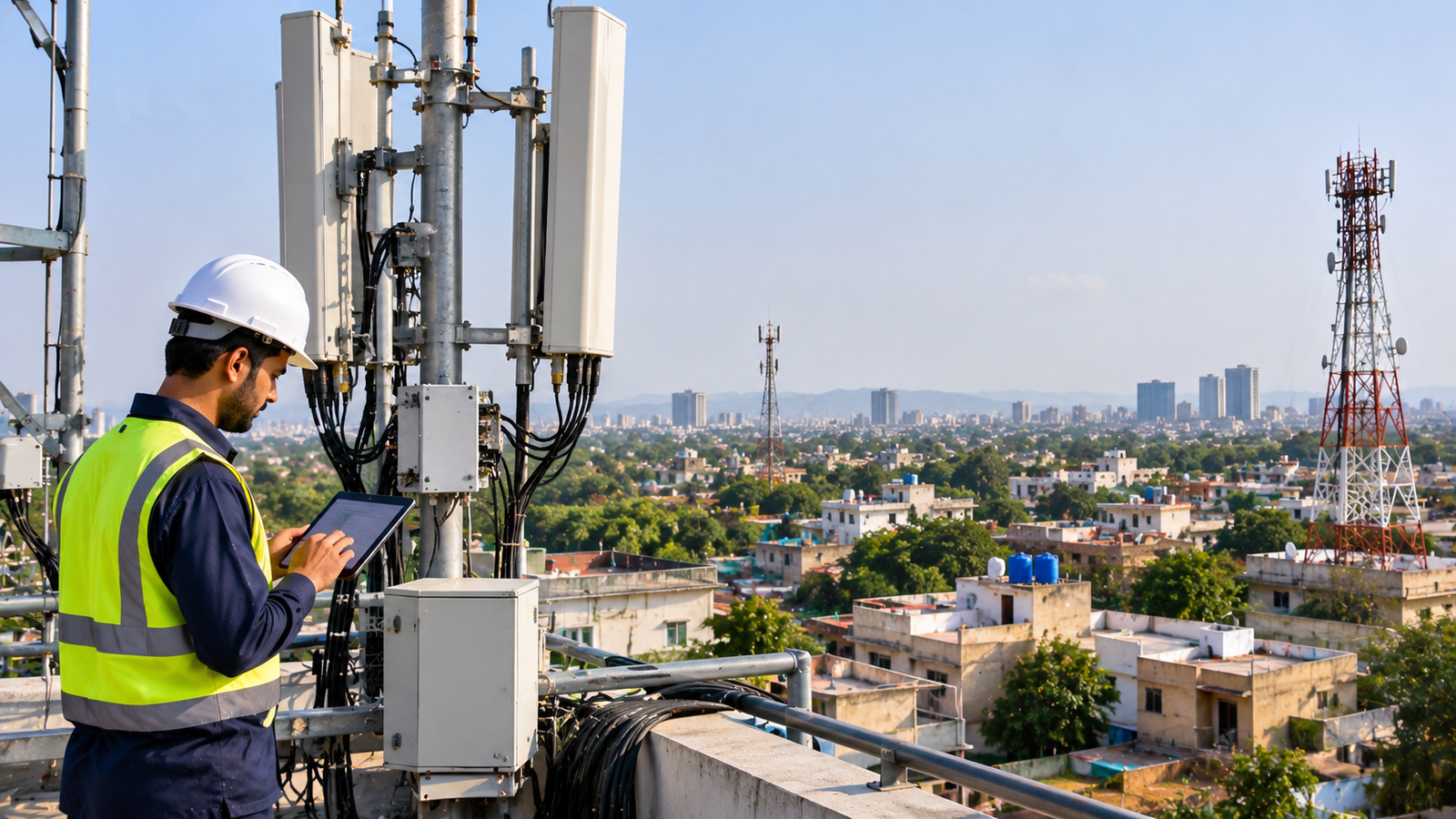
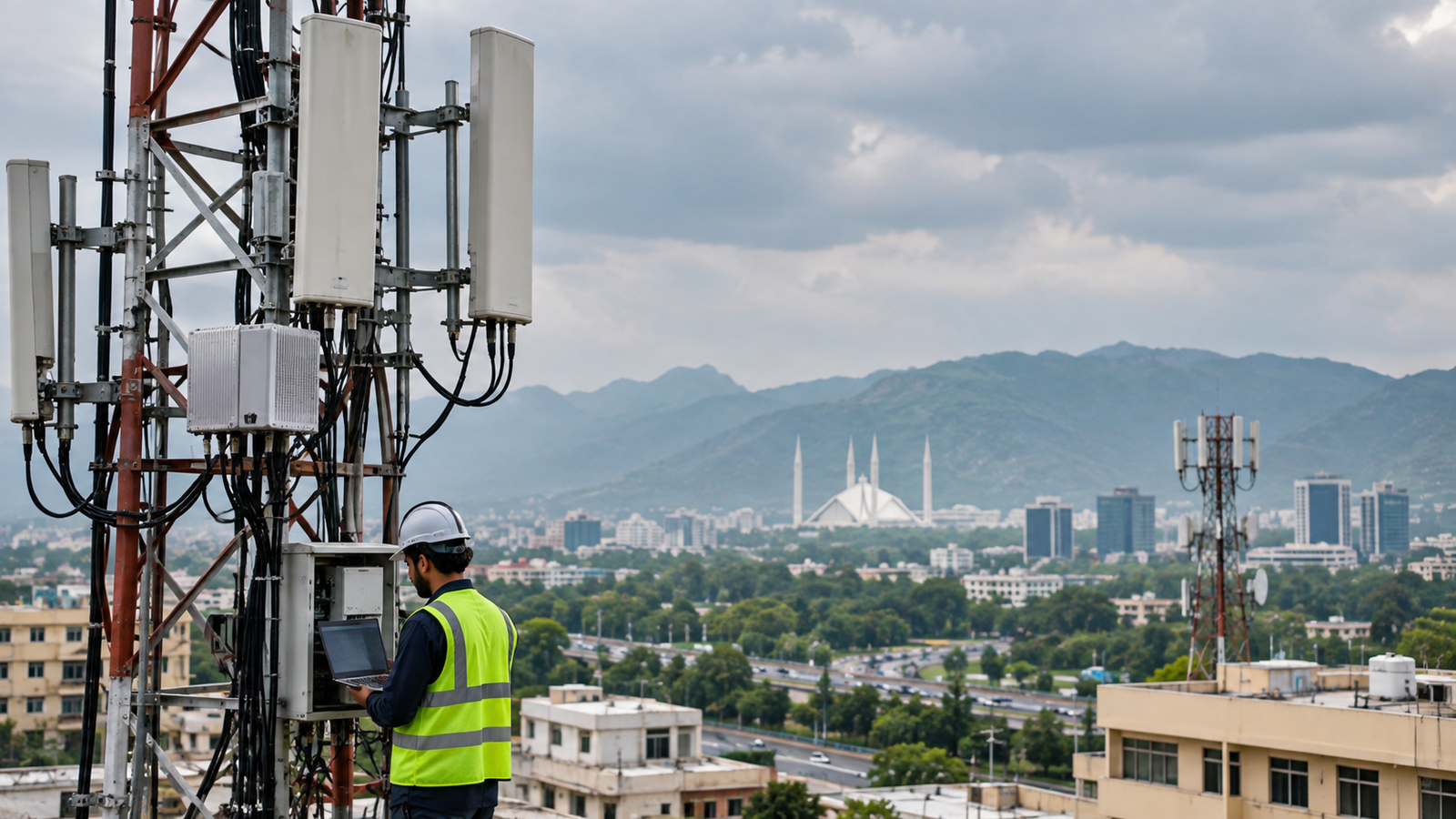
Featured image: AI illustration, not original hearing footage.
What Happened at the November 3 National Assembly Telecom Meeting?
The committee met on November 3 under the chairmanship of Syed Amin ul Haq to examine continuing problems with mobile and internet connectivity. Its official statement describes members’ concern that service quality had not reached an acceptable standard despite repeated parliamentary scrutiny. PTA representatives outlined surveys, directions to operators, show-cause notices and the difficulty of collecting penalties while cases remained before courts. The discussion also included electricity-related disruptions and 5G infrastructure work. This was a public parliamentary oversight hearing, not a trial establishing guilt against every telecom operator. The most important supported outcome is that lawmakers asked questions and the regulator explained the steps it had taken and the legal obstacles it faced.
Why Are PTA Telecom Fines Still Unrecovered?
According to the PTA chairman’s briefing, concerned operators had challenged penalties in court and secured stay orders that delayed recovery. A stay order can temporarily restrict the implementation of a disputed regulatory decision while legal proceedings continue. It does not, by itself, mean a court has permanently canceled the penalty or confirmed that the regulator’s original decision was correct. The committee heard that these disputes complicate enforcement. The official November 3 statement did not set out a complete schedule of individual penalty amounts, case numbers or final judgments. Therefore, describing the entire outstanding balance as permanently lost would overstate the evidence. The supported fact is delayed recovery linked to pending legal proceedings.
How Many Show-Cause Notices Did PTA Issue?
The National Assembly press release records the PTA chairman saying that five show-cause notices were issued over the three months before the meeting. This counts regulatory notices, not necessarily separate companies. One operator might receive more than one notice, and the official release does not identify the recipients individually. A show-cause notice generally asks a regulated entity to answer an alleged compliance issue before authorities determine appropriate further action. The existence of a notice is an important procedural fact but is not automatically a final determination of wrongdoing. Mukhbir uses the exact official quantity and period without inventing names, locations or the financial value attached to each case.
Were Five Different Telecom Companies Penalized?
The official committee record says five show-cause notices were issued to telecom operators; it does not establish that five different companies each received a separate notice. Some secondary headlines present the number as if it were a confirmed count of operators, which is not supported by the wording of the primary source. Readers should distinguish the number of notices from the number of companies. Nor should popular operator names be assigned to individual notices merely because they are familiar to Pakistani consumers. Until PTA releases recipient-level records, Mukhbir will not identify specific firms as parties to these five actions.
What Is a PTA Show-Cause Notice?
A show-cause notice is a formal step through which the regulator can require a telecommunications operator to explain an apparent deficiency or alleged breach. It gives the recipient a chance to present its position before further regulatory decisions are made under applicable rules. A notice is therefore different from a final recoverable fine, a judicial conviction or a service suspension. In its official briefing, PTA described a process of inspecting network quality, asking operators to make improvements and carrying out further surveys. Notices were issued when shortfalls persisted. Describing this sequence accurately helps readers understand why an enforcement story can remain unresolved even after regulatory action has begun.
What Did PTA Tell Lawmakers About Quality-of-Service Surveys?
The chairman said PTA conducts surveys in different areas to identify network performance problems and communicates the findings to relevant companies. Operators are then directed to address deficiencies. The November meeting record discusses a three-month improvement period in affected cases, followed by further assessment and potential show-cause notices if quality remains unsatisfactory. An earlier September committee release described a 30-day period in a previous briefing, so the two statements should not be silently merged into a single universal rule for all cases. The exact timeline depends on the relevant procedure and direction. The common thread is measurement, a chance for corrective work and subsequent regulatory follow-up.
Why Is Internet Quality a Public-Interest Issue in Pakistan?
Reliable internet and mobile connectivity affect communication, remote work, digital payments, education, emergency coordination and everyday business. The committee reported that users faced disruptions not only in smaller districts but also in major cities. When calls fail or mobile data becomes unstable, people may lose time or be unable to complete important tasks. However, a parliamentary complaint does not establish that every subscriber in Pakistan experiences identical network conditions. Performance can vary by operator, neighborhood, building, handset and time of day. The significance of the hearing is that the committee considered persistent service-quality concerns serious enough to require further explanation from the regulator.
Which Cities Were Mentioned in the Committee’s Complaints?
The November 3 official statement specifically mentioned Karachi and Islamabad as examples of major urban areas where service users still encountered problems. Members also discussed smaller cities and remote districts, with some locations said to have very limited connectivity. The examples show that lawmakers viewed the issue as nationwide in scope, but the release does not publish a verified city-by-city quality ranking. It would be misleading to declare one city the worst or to claim every network in a named city failed completely. A useful follow-up would examine PTA’s dated survey results and identify the specific services, areas and performance metrics concerned.
Why Were WhatsApp Call Drops Specifically Mentioned?
Committee members drew attention to signal interruptions that affect internet-based voice calls, including those made through WhatsApp. Such calls depend on mobile or fixed broadband data quality, latency and the stability of the connection. A call may break because of inadequate coverage, network congestion, a local device problem or other technical factors. The meeting record identifies WhatsApp call drops as a concern raised by lawmakers; it does not establish a technical finding that the WhatsApp service itself caused the failures. Reporting should distinguish the experience consumers described from the underlying engineering cause, which needs measurements and operator-specific troubleshooting.
How Can Long Electricity Outages Disrupt Telecom Towers?
Mobile towers and associated network equipment require electricity. Backup batteries, generators and power management systems can help, but their endurance depends on site design, maintenance, fuel supply and the duration of outages. PTA’s chairman told lawmakers that some rural areas experience electricity cuts lasting around 12 to 16 hours daily, adversely affecting tower operations. That is an attributed explanation for part of the service problem rather than a complete technical diagnosis of every outage. Some towers may have adequate backup power while others have constraints. Improving power resilience can be one part of network performance work alongside coverage expansion, maintenance and capacity upgrades.
Does a Power Cut Explain Every Internet Outage?
No. The PTA chairman identified prolonged power shortages as one major factor, particularly in rural locations. Other possible technical causes include damaged transmission links, congested cells, weak indoor signals, hardware faults and local maintenance. The November 3 statement does not quantify the share of all Pakistani outages caused by electricity disruption. It would therefore be inaccurate to say that the entire internet-quality problem is exclusively due to loadshedding, or to deny that it can be an important factor in some areas. Credible reporting treats the explanation as a claim made during the regulator’s briefing and identifies the need for location-specific measurements.
What Did PTA Say About Karachi’s 5G Rollout?
The PTA chairman told the committee that approximately 70% of 5G services in Karachi had been rolled out and that roughly 2,300 towers had been upgraded to support the technology. This was a statement from the official meeting and should retain that attribution. The released summary does not explain precisely how the 70% figure was calculated, which geographic boundary or operator network it covered, or whether the 2,300 towers were all situated in Karachi. As a result, the figure cannot be responsibly converted into a claim that 70% of Pakistan’s population already has working 5G. Availability for an individual user also depends on device compatibility, packages and local radio conditions.
Does 2,300 Upgraded Towers Mean 2,300 New Towers?
Not necessarily. The committee record says approximately 2,300 existing telecom towers had been upgraded to support 5G. Upgrading a site can involve replacing or adding radio equipment, antennas, backhaul or other systems; it is not automatically the construction of a new physical tower. Nor does the number alone measure active 5G subscribers, speed or coverage quality. Mukhbir reports it as an upgrade figure from the PTA briefing without inventing a national completion percentage. A clearer performance picture would require the number of operational 5G sites, population served and verified user-experience measurements, none of which are fully disclosed in the committee summary.
Can 5G Upgrades Fix Existing 4G and Calling Problems?
Network modernization may improve capacity or efficiency in some areas, but installing 5G-capable equipment does not automatically resolve every mobile voice or 4G data problem. Service quality also depends on backhaul capacity, power availability, coverage planning, device settings and maintenance. Some consumers may not own compatible devices or have access to 5G service. The PTA chairman expected ongoing infrastructure work and spectrum-related improvements to contribute to better service quality over time. That is a forward-looking assessment, not verified evidence that WhatsApp call drops or poor signal coverage disappeared after the meeting.
What Happened at the Earlier September Committee Hearing?
The National Assembly’s September 10 statement also recorded dissatisfaction with mobile and internet quality. The committee sought detailed information about notices, fines, recovered amounts and outstanding balances, and wanted operator representatives involved in the discussion. The earlier release mentioned fines up to Rs350 million under applicable rules and described how litigation could delay enforcement. These details help establish continuity in parliamentary scrutiny. They should not be treated as a November 3 confirmation that a particular operator currently owes Rs350 million. A maximum possible fine and a verified outstanding liability are different concepts.
How Much Money Has PTA Failed to Recover?
The official November 3 meeting statement confirms that recovery of imposed amounts remained pending due to court stays, but it does not provide a reconciled total covering the five recent notices. Earlier September coverage discussed historical penalties and amounts in different time periods. Those older figures should not be attached to the latest five notices without documentary evidence that the datasets match. A reliable breakdown would need the operator, case date, penalty imposed, amount collected, balance outstanding and current legal status. This article deliberately avoids an invented combined recovery figure. The unanswered financial question remains important for parliamentary oversight.
Were the Telecom Operators Found Guilty in Court?
The November 3 record does not establish final judicial findings against each company associated with the disputed penalties. The regulator’s allegation, an administrative penalty, a court stay and a final court ruling represent different procedural stages. Operators may challenge regulatory decisions through legal channels, and courts determine the effect of those challenges under applicable law. Mukhbir does not assume that seeking a stay order establishes wrongdoing or bad faith. Equally, the existence of litigation does not automatically cancel all regulatory concerns. A balanced account explains the reported enforcement obstacle while preserving the distinction between an unresolved dispute and a legally established outcome.
What Could Consumers Do When Mobile Internet Is Unreliable?
Consumers can start by noting the location, date, time, service type and nature of a connection problem. Checking whether the issue occurs in multiple locations or devices may help identify whether it is local. Reporting repeated service faults to the relevant operator through its official support channels can create a documented complaint. If a matter is not resolved, users can consult the PTA’s current official consumer complaint procedures. They should avoid sharing account passwords, verification codes or sensitive personal data with unofficial troubleshooting accounts. These are general practical steps, not a guarantee of reimbursement or an allegation that a particular company is breaching its licence.
Can Customers Demand Refunds for Poor Internet Service?
A reported service deficiency does not by itself establish that every customer is automatically entitled to a refund. Compensation or adjustment rights depend on the applicable contract, terms of service, consumer rules and the specific circumstances. Users who believe they were charged for unavailable service can review their package conditions and raise an official complaint with the provider. Any escalation should rely on current regulator guidance. Mukhbir does not invent a newly announced nationwide refund program from the November parliamentary meeting, because none is confirmed in the source. The committee’s discussion concerns regulatory oversight and service quality rather than a completed compensation order.
How Does Poor Connectivity Affect Online Businesses?
Businesses using online payment systems, delivery platforms, cloud software or customer messaging depend on stable connectivity. Slow data and interrupted calls can cause missed transactions, longer response times and operational disruption. Freelancers and remote workers may face similar difficulties during meetings or file transfers. These are plausible economic effects of unreliable service, but the November 3 meeting did not publish a verified calculation of nationwide losses from the cited complaints. A separate economic study would be needed to quantify the impact. The hearing nonetheless demonstrates why internet quality is a business issue as well as a convenience for smartphone users.
What Does This Mean for Pakistan’s Freelancers and Students?
Students attending online classes and workers using video conferencing or cloud-based services may be especially affected by unstable connections. The effect varies with location, network, package and the requirements of the activity. A dropped call can be inconvenient; a lengthy outage during an examination, deadline or client meeting can have greater consequences. The official parliamentary summary does not measure these groups’ financial losses or identify particular institutions affected. Mukhbir includes them to explain the public significance of reliable networks, not to assert specific incidents that were never documented in the hearing.
How Could the Regulatory Process Improve Accountability?
A transparent sequence of network surveys, written improvement directions, follow-up inspections and appropriate enforcement may help clarify whether operators are meeting applicable performance obligations. Parliamentary requests for fine and recovery details can also make oversight more specific. However, the effectiveness of penalties depends on legal procedures, implementation capacity and whether corrective infrastructure work takes place. The committee record alone does not demonstrate that consumers will see faster service within a particular number of days. A credible future assessment would examine repeated measurements from the same locations, published enforcement outcomes and operational changes rather than relying solely on the number of notices issued.
Is This Story About the Government or a Particular Political Party?
The central development is a regulator’s briefing to a parliamentary standing committee. Committee members expressed concerns, and PTA officials explained the regulatory and infrastructure challenges they reported. Those facts do not establish wrongdoing by any political party, minister, government institution or individual. The same meeting addressed a separate Electronic Transactions Amendment Bill, but that legislative matter should not be confused with telecom penalty recovery. Mukhbir describes official roles and documented statements without attributing secret motives, assigning party blame or presenting criticism as its own unsupported conclusion. Public-interest reporting can examine service failures while remaining neutral about political actors.
What Was Discussed About the Electronic Transactions Amendment Bill?
During the same November 3 meeting, the committee deferred consideration of the Electronic Transactions Amendment Bill 2026 because consultation between the government and the Pakistan Peoples Party was continuing. This was a separate legislative agenda item. Its postponement did not cause the court stays on telecom fines and did not constitute a new regulation changing mobile internet packages. The connection is institutional: both topics were discussed by the Standing Committee on Information Technology and Telecommunication. Separating them prevents readers from assuming that a pending electronic transactions law has already altered the authority’s powers or consumer service rights.
What Can Be Verified About the Five Notices and 5G Figures?
The National Assembly’s November 3 press release is the primary basis for the five-notice count, court-stay explanation, cited electricity outages, Karachi-specific 5G statement and tower-upgrade figure. Associated Press of Pakistan and Business Recorder carried substantially consistent accounts. What remains unavailable in the summarized material is the detailed list of notice recipients, the fine associated with each notice, exact unpaid totals and the methodology behind the 70% Karachi rollout figure. Reporting can be detailed without pretending those gaps have been resolved. Readers should be able to tell which numbers came from the regulator’s briefing and which questions require a future official document.
What Happens Next for PTA and Telecom Operators?
The parliamentary committee may continue to seek clarification about service-quality measures, penalty recoveries and infrastructure upgrades. Court proceedings may change the status of individual disputed amounts, and PTA could publish new survey findings or operator-specific notices. None of those developments has a guaranteed timetable in the November 3 statement. A future Mukhbir update should identify the exact date, operator or region involved, distinguish newly issued notices from final penalties, and cite any court judgment before describing a matter as resolved. The central questions are whether networks improve in measurable ways and whether the legal status of disputed recoveries becomes clearer.
Conclusion
PTA Telecom Fines 2026 highlights the gap between identifying telecom service deficiencies and securing enforceable regulatory outcomes. The November 3 National Assembly committee hearing recorded five show-cause notices in the preceding three months and the PTA chairman’s explanation that court stays had delayed recovery of imposed amounts. Lawmakers also raised concerns over unreliable connectivity in major and smaller cities, while PTA pointed to lengthy rural power cuts and ongoing 5G-related network upgrades. The meeting did not establish that five distinct companies had been penalized, did not disclose a verified combined unpaid sum and did not prove that upgraded towers had already resolved users’ complaints. The most useful next steps for public reporting are dated operator-specific enforcement records, court outcomes and measurable quality-of-service results.
Frequently Asked Questions
What happened with PTA telecom fines in November 2026?
At a November 3 parliamentary hearing, PTA said recovery of imposed amounts was delayed because relevant telecom operators had obtained court stay orders.
How many show-cause notices did PTA issue?
The PTA chairman reported five notices in the preceding three months. This does not necessarily mean five separate companies.
Which telecom operators received the notices?
The November 3 official committee press release does not identify individual recipients of all five notices.
How much money is still owed in telecom fines?
The official November briefing did not provide a verified combined outstanding amount for the five notices.
Why is internet service quality still a concern?
Lawmakers cited poor connectivity and dropped calls; PTA identified infrastructure deficiencies and prolonged rural electricity outages among the factors.
What did PTA say about 5G in Karachi?
The chairman described roughly 70% rollout of Karachi 5G services and approximately 2,300 tower upgrades, without detailing a national coverage percentage.
Did court stays permanently cancel the fines?
The committee described delayed recovery. A stay order is not, by itself, a final ruling that permanently invalidates a penalty.
What can consumers do about frequent network problems?
Keep records of problems, contact the operator through official support and consult PTA’s current consumer complaint channels if necessary.
About The Author