Pakistan vs Sri Lanka ODI 2026 ended in an emphatic eight-wicket victory for Sri Lanka at Lahore’s Gaddafi Stadium on Tuesday, October 27, as fast bowler Dilshan Madushanka claimed five wickets for 34 runs to dismiss the hosts for 110 in 25.3 overs. Sri Lanka reached 114 for two in 18.1 overs, with Kamindu Mendis unbeaten on 62. The result confirmed Sri Lanka’s place alongside Pakistan in the tri-series final on October 31 and eliminated England before the last league fixture. On October 28, the International Cricket Council (ICC) also reported Pakistan batting coach Mike Smith’s support for Babar Azam despite his failure to score a half-century in four tournament innings.
Pakistan vs Sri Lanka ODI 2026: Match Summary
Competition: Pakistan, England and Sri Lanka ODI tri-series 2026.
Fixture: Fifth group-stage match.
Date played: October 27, 2026.
Venue: Gaddafi Stadium, Lahore, Pakistan.
Toss: Sri Lanka won and chose to field.
Pakistan innings: 110 all out, 25.3 overs.
Sri Lanka innings: 114/2, 18.1 overs.
Result: Sri Lanka won by eight wickets.
Top Pakistan scorer: Babar Azam, 29 off 33 balls.
Top Sri Lanka scorer: Kamindu Mendis, 62 not out from 60 balls.
Best bowling: Dilshan Madushanka, 5/34 in 8.3 overs.
Other Sri Lanka wickets: Sahan Arachchige 2/24; Asitha Fernando, Eshan Malinga and Dunith Wellalage one each.
Finalists: Pakistan and Sri Lanka.
Remaining league fixture: Sri Lanka vs England, October 29.
Scheduled final: Pakistan vs Sri Lanka, October 31, Gaddafi Stadium, Lahore.
How Sri Lanka Won the Match
Sri Lanka captain Kusal Mendis decided to bowl after winning the toss, and his attack made early progress. Dilshan Madushanka dismissed Fakhar Zaman for five and wicketkeeper Saad Baig for five, while Asitha Fernando removed Maaz Sadaqat for eight. Pakistan were 46 for three inside the powerplay. Babar Azam looked to rebuild but never received enough sustained support from the middle order. Once Salman Ali Agha fell, the innings lost further momentum. Pakistan were eventually bowled out in just 25.3 overs, leaving Sri Lanka a target of 111 that required less than four runs an over over the full 50-over allocation.
Dilshan Madushanka’s Match-Winning Five-Wicket Spell
Madushanka produced figures of 8.3 overs, one maiden, 34 runs and five wickets, a career-best ODI return reported by Reuters. His left-arm pace created pressure in the opening overs and accounted for important wickets across the innings. Early dismissals prevented Pakistan from establishing a stable platform, while later wickets ensured the lower order could not extend the total significantly. Madushanka’s figures should be understood within the collective bowling effort: Sri Lanka’s supporting bowlers maintained pressure, and timely wickets from other members of the attack disrupted Pakistan’s attempts to rebuild. The performance earned the bowler player-of-the-match recognition in independent match reports.
Pakistan’s Batting Collapse: Why 110 Was Not Enough
Pakistan’s total of 110 came from 25.3 overs, meaning the team did not use nearly half its allotted 50-over innings. The scoring rate alone was not the primary issue: losing wickets in clusters prevented partnerships from developing. The PCB match report states that the side lost seven wickets for 49 runs following Salman Ali Agha’s dismissal. Small contributions from Hasan Nawaz, Arafat Minhas and Shaheen Shah Afridi delayed the end, but none could produce the long recovery needed for a competitive ODI score. A team defending 110 must take wickets rapidly, particularly against batters able to rotate strike and punish loose deliveries.
Babar Azam Scores 29 but Misses Another Fifty
Babar Azam scored 29 from 33 deliveries, including five boundaries, making him Pakistan’s leading run-scorer in the match. His innings ended when Eshan Malinga trapped him lbw. The ICC reported on October 28 that Babar had compiled 118 runs across four tri-series innings without reaching fifty. Those figures explain the discussion around converting promising starts into larger scores. A short run without a half-century does not alone establish that a player’s technique or overall ability has deteriorated. It does, however, provide a measurable point of focus for Pakistan’s preparations, especially after a game where the team was dismissed so early.
Batting Coach Mike Smith Backs Babar Azam
In its October 28 report, the ICC said Pakistan batting coach Mike Smith was not concerned by Babar’s recent returns and believed a substantial innings could be close. The coach’s comments provide an important counterpoint to criticism based solely on a sequence of low scores. Smith’s position is a documented assessment by a member of the team management, not an independent guarantee that Babar will perform in the final. Readers should consider both facts: Babar has made starts in the tournament without crossing fifty, and his coach remains confident in him. The player’s performance on October 31 will be decided on the field rather than by expectations.
Kamindu Mendis Guides a Comfortable Chase
With only 111 needed, Sri Lanka could approach the chase without taking unnecessary risks. Kamindu Mendis anchored the innings and finished unbeaten on 62 from 60 balls, striking eight fours and two sixes according to independent scorecards. Sri Lanka reached 114 for two with 191 balls remaining in its allotted 50 overs. Pavan Rathnayake finished unbeaten on 23. The result was convincing on the scoreboard, but the final will be a new match with potentially different conditions and team decisions. The October 27 victory should not be treated as proof that Sri Lanka will win the title.
How the Result Changed the ODI Tri-Series
Before the match, Pakistan had already qualified for the final by winning their opening three fixtures. Sri Lanka needed another positive result to secure a place, and the eight-wicket win booked their ticket. England’s elimination followed despite having a scheduled final league match against Sri Lanka on October 29. Reuters and the PCB confirm that the October 31 final will feature Pakistan and Sri Lanka at Gaddafi Stadium. The remaining league fixture can still provide practice and an opportunity to assess player combinations, but it will not change the identities of the finalists. That distinction matters for accurate coverage of the tournament table.
How Pakistan Entered the Game Unbeaten
Pakistan beat Sri Lanka by 37 runs in Rawalpindi on October 18, then defeated England by 87 runs on October 20. On October 25, they recovered from a difficult chase to edge England by one wicket in Lahore. The three results had already secured final qualification before the rematch with Sri Lanka. Losing on October 27 therefore ended Pakistan’s unbeaten run but did not remove their chance to win the tournament. In the final, the team will seek to restore batting stability and produce a more complete performance across both innings.
Sri Lanka’s Momentum Before the Final
Sri Lanka’s route to the final has featured contrasting results. They lost their first meeting with Pakistan but produced a remarkable chase of 430 against England in Rawalpindi on October 22, winning by two wickets. Their subsequent victory over Pakistan came through bowling rather than a high-scoring batting performance. That range is useful evidence of the team’s ability to compete in different match situations. But it would be premature to infer from two group-stage performances that Sri Lanka will necessarily dominate the final. Conditions, bowling discipline and how each team manages pressure can alter the outcome.
Key Areas Pakistan May Review
Pakistan’s staff may examine the dismissals of the top order, the lack of extended batting partnerships and the speed at which wickets fell after the powerplay. The coaching group may also consider the balance between attacking shots and risk management in a 50-over contest. These are analytical questions arising from the scorecard, not reports that selectors have already changed the playing XI. The side remains qualified for the final, so coaches have an opportunity to assess the defeat without needing to win another group game. Any confirmed squad changes or fitness decisions should be reported only after an official announcement.
What Sri Lanka’s Bowling Performance Reveals
Sri Lanka’s attack used a combination of left-arm pace, right-arm seam and spin. Madushanka made the headlines, but the supporting wickets were important in preventing Pakistan’s middle order from recovering. Sahan Arachchige took two wickets for 24 runs, with Asitha Fernando, Eshan Malinga and Dunith Wellalage each claiming one. Disciplined bowling can be more effective than relying on one standout spell because the batters have fewer opportunities to release pressure. The final may offer different conditions or selections, so the tactical advantage shown in this group fixture is not automatically transferable to October 31.
What Does Babar’s Form Mean for the Final?
Babar’s 118 runs across four innings reflect contributions but no major individual score, as noted by the ICC. Cricket form is often assessed through a longer sequence and the nature of the batting conditions, not only the latest score. His 29 was the highest Pakistan innings on October 27, which underscores the team’s collective struggles. Support from his batting coach suggests management is not treating the recent sequence as an emergency, although the final remains an important test of Pakistan’s batting depth. Predictions about a century or another failure would be speculation and are not part of verified reporting.
What Is at Stake on October 31?
Pakistan and Sri Lanka will contest the ODI tri-series title at Gaddafi Stadium on Saturday, October 31. Pakistan will be seeking to convert home advantage and earlier successes into a trophy. Sri Lanka can draw confidence from defeating the hosts in Lahore and from its remarkable chase against England. Both teams must start the final from zero, regardless of points or results in earlier fixtures. The exact playing XIs, toss and weather conditions should be checked on match day. This article does not imply the final has already been played or that either side is guaranteed to win.
When Is Sri Lanka vs England’s Remaining Match?
Sri Lanka are scheduled to play England on Thursday, October 29 at Gaddafi Stadium, Lahore. It is the last group-stage fixture before the final. Reuters reported that England had already been eliminated following the October 27 result, so the fixture cannot change the two confirmed finalists. It may nevertheless matter for individual performances, squad evaluation and team preparation. Readers following the final should rely on the PCB tournament schedule for any updated times or venue announcements. No result for the October 29 fixture is presented here because that match had not yet taken place at the article’s publication date.
Where Can Fans Check the Official Scorecard?
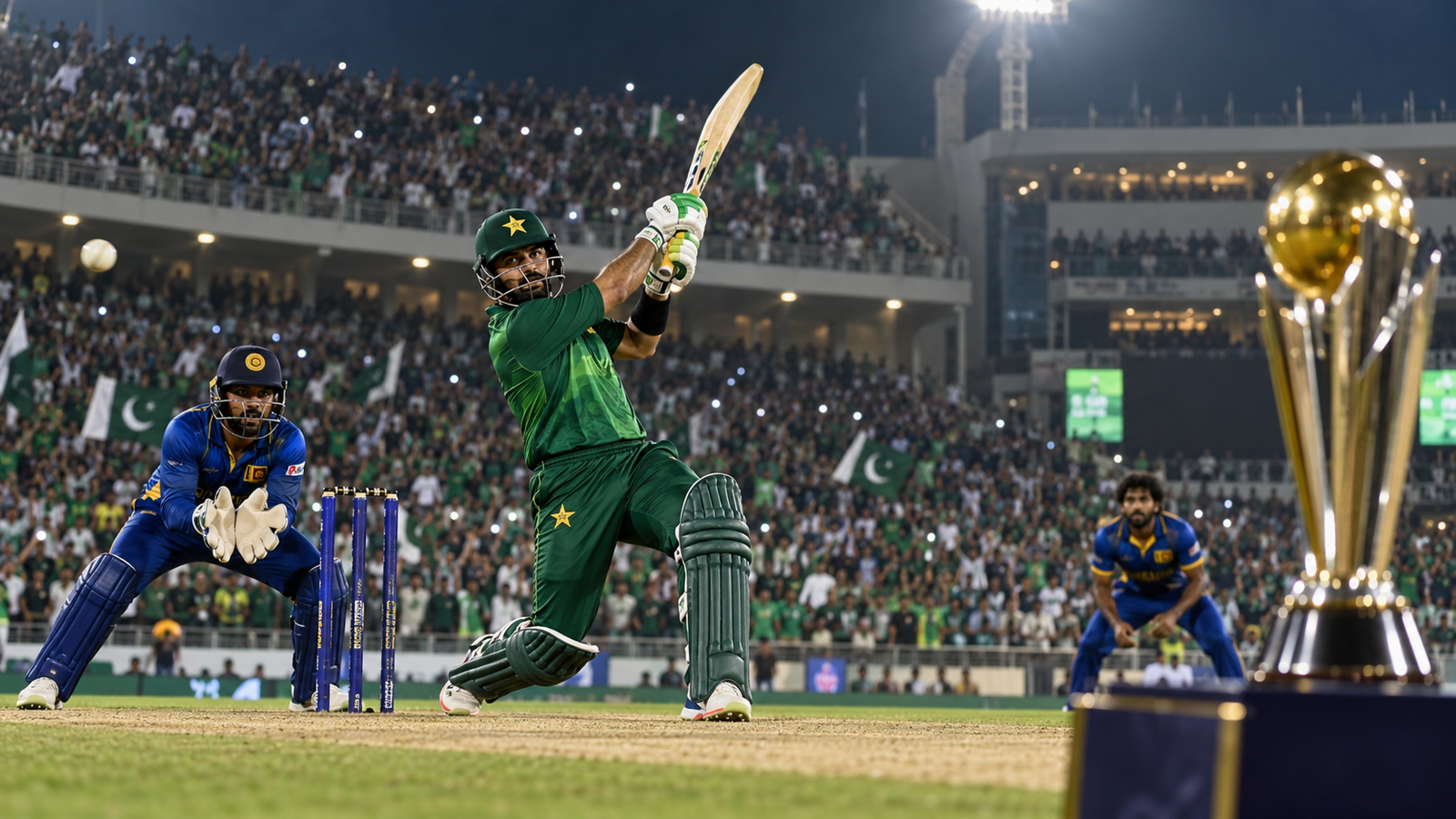
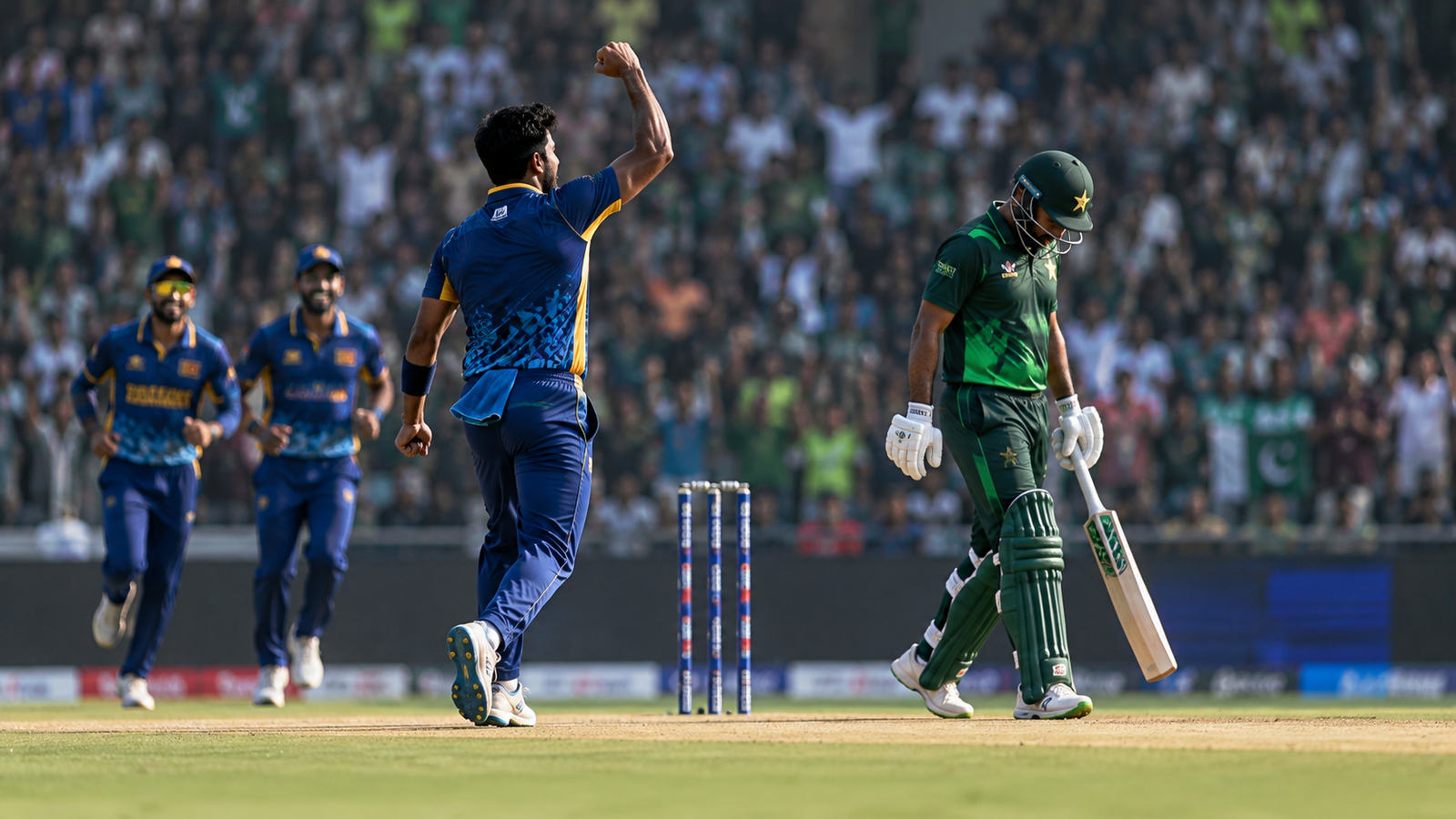
The Pakistan Cricket Board provides the match scorecard for the fifth ODI tri-series fixture, including the toss, batting figures, wickets, bowlers and venue. Its match report also confirms the result and final qualification. The ICC’s October 28 article supplies the latest reported comments from Pakistan’s batting coach. These sources are preferable to unsourced social-media screenshots that may mix previews with completed results. Fans should verify subsequent team news and the final’s live score through the PCB or a recognized cricket match centre. An illustrative featured image should never be represented as authentic coverage of the match.
Why This Story Matters Beyond One Match
A strong international cricket rivalry, a major home tournament and the prospect of a title match generate interest across Pakistan, Sri Lanka and the broader cricket audience. The game also illustrates how quickly momentum can change in ODI cricket: Pakistan won their first three matches but were bowled out for 110 against a team they had previously defeated. For sports readers, the important conclusion is not a sweeping judgment about a player or national team, but the documented result and the tactical questions it raises for the next fixture. Strong journalism can analyze a defeat without sensationalism or unsupported attacks on players.
Conclusion
Sri Lanka’s eight-wicket win over Pakistan on October 27 was built on Dilshan Madushanka’s five-wicket spell and an unbeaten 62 from Kamindu Mendis. Pakistan’s total of 110 exposed batting difficulties, although their place in the October 31 final was already secure. The ICC’s October 28 report adds context through batting coach Mike Smith’s support for Babar Azam, who has scored 118 runs in four tri-series innings without a half-century. Pakistan and Sri Lanka now prepare for another meeting in Lahore, where the tournament title will be decided. Future outcomes remain open and will require separate match reporting.
Frequently Asked Questions
Who won Pakistan vs Sri Lanka ODI on October 27, 2026?
Sri Lanka defeated Pakistan by eight wickets at Gaddafi Stadium in Lahore.
What was Pakistan’s total against Sri Lanka?
Pakistan were all out for 110 in 25.3 overs.
What score did Sri Lanka make in the chase?
Sri Lanka reached 114 for two in 18.1 overs.
How many wickets did Dilshan Madushanka take?
He took five wickets for 34 runs in 8.3 overs.
How many runs did Babar Azam score?
Babar made 29 from 33 balls, Pakistan’s highest individual score in the match.
Who scored the most runs for Sri Lanka?
Kamindu Mendis top-scored with an unbeaten 62.
Which teams qualified for the ODI tri-series final?
Pakistan and Sri Lanka qualified; England were eliminated before the last group fixture.
When and where is the 2026 ODI tri-series final?
Pakistan and Sri Lanka are scheduled to play on October 31 at Gaddafi Stadium, Lahore.
About The Author