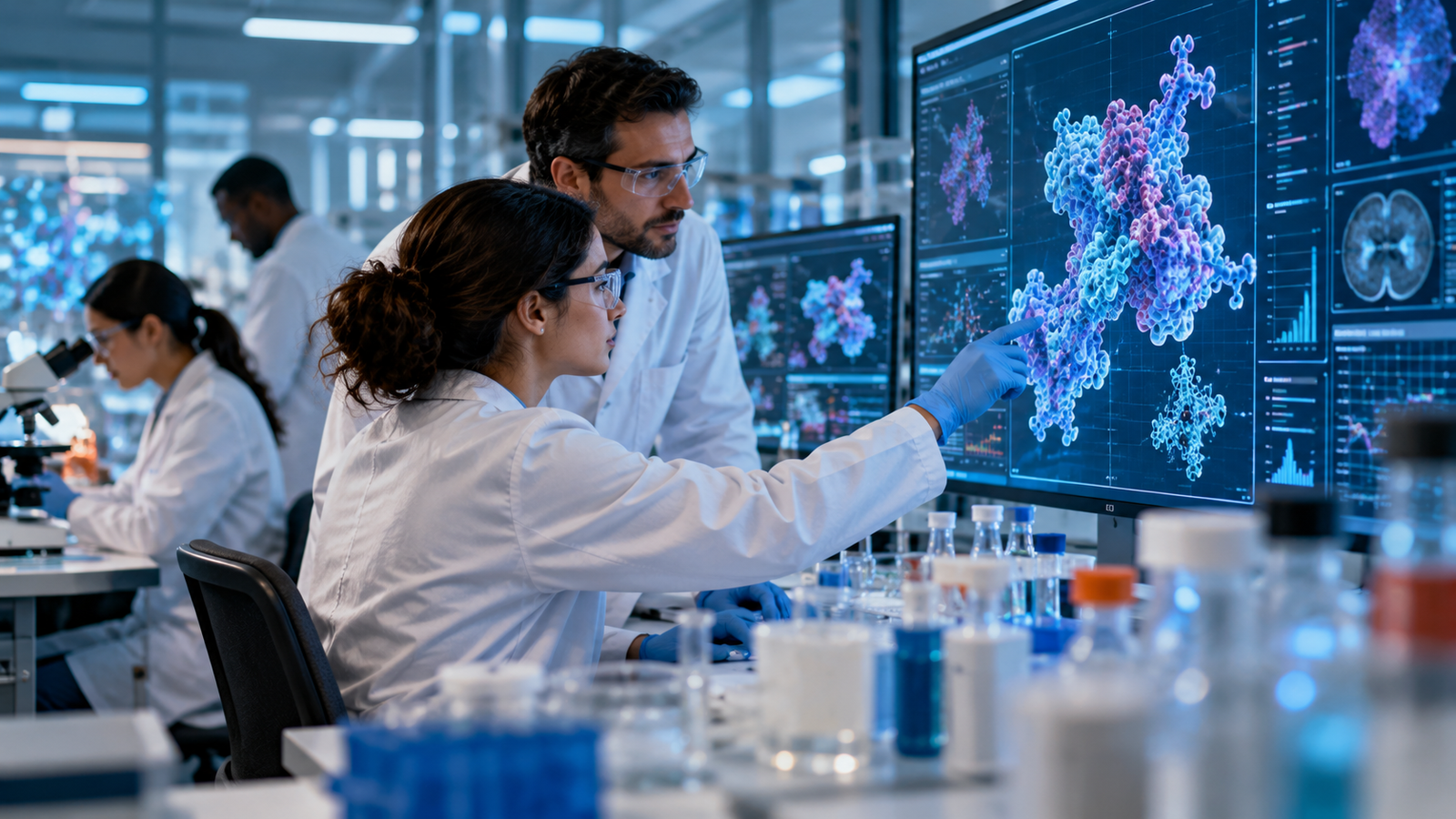
Atlas Bio funding 2026 has reached $12.5 million after the Swiss artificial intelligence and biotechnology startup emerged from stealth on October 27 with a new $10 million seed round led by Swedish venture capital firm Creandum. The previously undisclosed $2.5 million pre-seed investment was led by First Momentum Ventures and LEA Partners. Atlas Bio is developing an AI foundation model that simulates how different virtual patients may respond to experimental treatments before conventional Phase II clinical studies. The company says its approach could make drug development faster and less expensive, but these ambitions do not establish that AI simulations can already replace regulated human clinical trials.
Atlas Bio Funding 2026: Key Facts
Company: Atlas Bio, a Swiss technology and biotechnology startup.
Original news date: October 27, 2026.
Mukhbir publication date: October 28, 2026.
New seed financing: $10 million.
Lead seed investor: Creandum.
Previously unannounced pre-seed financing: $2.5 million.
Pre-seed lead investors: First Momentum Ventures and LEA Partners.
Total disclosed funding: $12.5 million.
Founders: Simon Romanski, Sebastian Bayer and Dominik Hartl.
Reported founding year: 2024.
Core product: AI foundation model for virtual, or in silico, clinical-trial simulations.
Training scale: Approximately two million human-tissue RNA readouts, according to company and investor statements.
Proposed simulation duration: About 12 weeks.
Research focus: Predicting drug response and safety signals before Phase II trials.
Reported commercial traction: Work with a top-ten global pharmaceutical company, according to investor Creandum.
Independently established replacement of clinical trials: Not confirmed.
Company valuation: Not disclosed by the sources reviewed.
What Did Atlas Bio Announce?
Atlas Bio officially introduced its approach to virtual drug trials and disclosed a financing package consisting of a $10 million seed round plus a separate earlier $2.5 million pre-seed round. The latest financing was led by Creandum, while First Momentum Ventures and LEA Partners led the previously undisclosed financing. Reuters described the funding as $12.5 million in total, but the more detailed financing breakdown reported by Tech.eu and Startup Researcher makes it clear that the full amount should not be described as a single fresh seed cheque. The transaction supports a startup trying to address uncertainty in clinical drug development, not a proven replacement for medicine testing in real patients.
Why the $10 Million Seed and $12.5 Million Total Are Different
Investment headlines sometimes combine a new funding round with earlier funds raised by a company. Here, the new seed financing is $10 million. An additional $2.5 million had been secured previously and was made public alongside the seed announcement. Adding them produces cumulative disclosed funding of $12.5 million. These figures do not reveal the startup’s valuation, how much equity investors received, its annual revenue or whether it is profitable. They also do not mean that $12.5 million must be immediately spent on one trial. The distinction matters for readers comparing startup investment announcements across markets and company stages.
Who Founded Atlas Bio?
Startup coverage identifies Simon Romanski, Sebastian Bayer and Dominik Hartl as the founders of Atlas Bio in 2024. Romanski serves as chief executive officer, Bayer as chief technology officer and Hartl leads the company’s scientific strategy. The business combines expertise in AI, software engineering and biomedical science. Investor Creandum reports that the founding team includes former Google experience and researchers familiar with drug development. Their backgrounds help explain the company’s interdisciplinary approach, but a successful track record in technology or laboratory research does not in itself validate an AI system’s clinical predictions. That requires carefully documented testing against evidence from real-world outcomes.
What Problem Is Atlas Bio Trying to Solve?
Pharmaceutical development involves multiple stages of research and clinical testing, and candidate medicines can fail after substantial time and money have already been invested. Phase II trials generally explore effectiveness and safety in groups of patients with the condition being studied. Creandum says Phase II trials can take two to three years, cost $20 million or more and have a failure rate around 70%. Other brief coverage used much higher cost estimates, so these numbers should be interpreted as source-attributed broad industry estimates rather than a universal bill for every trial. Actual cost depends on disease, trial design, locations and patient recruitment.
How the Virtual Patient AI Model Is Designed to Work
Atlas Bio says it has trained an AI foundation model on approximately two million RNA readouts from human tissue. RNA activity provides clues about which genes are being expressed in biological samples. By learning patterns in these molecular measurements, the company aims to represent aspects of human biology and simulate how virtual cohorts may respond to a drug with a known mechanism. Researchers could compare prospective treatment effects across different diseases or patient groups before making expensive decisions about conventional trials. This is a model-based prediction of biological response, not a treatment administered to actual people or a direct clinical measurement of a drug’s efficacy.
Why RNA Readouts Matter in Drug Discovery
RNA provides information about how genetic instructions are being used by cells under particular conditions. A large collection of RNA measurements can reveal recurring patterns across tissues and biological states that may help models distinguish relationships among pathways and diseases. The startup argues that learning from biology rather than only from prior drug-treatment datasets can make its model more adaptable across different treatments. Nevertheless, the quality of training data, representation of diverse patient populations and real-world validation remain critical. Even a model trained on millions of measurements can miss biological mechanisms, clinical confounders or unexpected adverse effects not adequately represented in its data.
What Does a 12-Week Simulation Mean?
The company describes a proposed simulation process that can take roughly 12 weeks, compared with the much longer timetable associated with some clinical studies. The comparison indicates the speed of an analytical workflow, not a certified replacement for the legal, ethical and scientific requirements of human clinical research. A simulation may inform trial selection, study design or the choice of patient groups without independently determining whether a medicine should be authorized for sale. The duration for a specific client’s project may differ from the marketed example. Investors and healthcare readers should not equate a completed model run with a successful Phase II trial.
Could Virtual Trials Reduce Animal Testing?
Atlas Bio and its investors suggest that more informative simulations might help researchers avoid some experiments or identify better studies before animal testing and human trials. A Basel-based biotechnology company was reportedly able to reconsider planned animal studies after using Atlas simulations, according to company-related reporting. Such examples are interesting but should be attributed to their sources and evaluated against full scientific and regulatory evidence. Requirements for animal studies vary by jurisdiction and type of medicine. Neither the funding announcement nor the investor commentary demonstrates that an AI model has universally eliminated the need for animal or human testing.
Can AI Replace Phase II Clinical Trials Today?
No regulatory decision identified in the current sources establishes that Atlas Bio’s virtual trials can routinely replace Phase II studies required for drug approvals. A model can generate useful hypotheses and potentially improve which medicines reach clinical testing, but demonstrating actual benefits and safety in people is a separate matter. Clinical research must account for outcomes, rare adverse reactions, patient differences and quality of evidence. Any broad replacement would require extensive external validation and acceptance by the relevant drug regulators. For now, descriptions such as ‘aims to replace’ and ‘could improve trial design’ are more accurate than saying that clinical trials have already been abolished.
What Has Atlas Bio Reported About Customers?
Creandum states that Atlas Bio is already under contract with a pharmaceutical company ranked among the world’s ten largest, and is in discussions with more than a dozen other large drugmakers. The investor also describes a case where simulation results suggested a different medical indication for a drug candidate that had previously been set aside. These are statements from an interested investor and should be labelled accordingly. The identity of the pharmaceutical client, full study protocol, independent peer-reviewed outcomes and commercial contract value were not established in the sources reviewed. Negotiations with additional companies do not mean signed deals or realized revenue.
What Will Atlas Bio Do With the Funding?
Tech.eu reports that the startup intends to expand its scientific and commercial teams, strengthen validation of its platform and bring additional enterprise clients onto the system. These uses correspond with the needs of a scientific software company: improving model reliability, maintaining secure workflows and demonstrating that analyses are useful to drug-development teams. The announcement did not disclose a verified allocation of each dollar to staffing, computing, marketing or clinical research. It also did not establish a fixed date when simulations will be approved as a complete substitute for clinical trials. Any specific budget percentages or profitability targets would therefore be speculative.
Why Creandum’s Investment Attracts Attention
Creandum is a European venture capital firm known for backing technology companies at earlier stages. Reuters noted its history as an early investor in Spotify and Trade Republic. In this case, Creandum led Atlas Bio’s seed round and partner Katharina Wilhelm joined the startup’s board, according to Tech.eu. The firm’s public investment thesis emphasizes the possibility that biological simulations could improve drug-development decisions. Such support may give the startup capital, networks and strategic advice. It is not an independent demonstration that every technical claim is correct or that the company will become a commercial success.
AI in Drug Development: The Difference Between Design and Trials
Some AI biotechnology systems focus on finding molecules or predicting protein structures. Atlas Bio targets another problem: forecasting what an existing candidate might do in a patient population. These approaches operate at different points in the drug-development pipeline. A useful molecule design still requires tests to establish pharmacology, safety and efficacy, while a simulation of trial outcomes depends on reliable biological assumptions and validation against observed outcomes. The company hopes its approach will help determine which drugs, diseases and patient groups deserve further investigation. That is an important research ambition, but it should not be confused with an approved medicine or demonstrated therapeutic benefit.
What Are the Scientific Risks of Virtual Patients?
A virtual patient is an analytical representation, not a human being experiencing a treatment. Simulations can be influenced by gaps or biases in biological data, incorrect assumptions about how diseases work and differences between laboratory measurements and clinical outcomes. A model may produce a convincing prediction that fails when evaluated in a real population. Drug effects can also vary with age, genetics, other medical conditions, concurrent medication and adherence. Transparent validation, reproducible methods, independent evaluation and careful handling of uncertainty are therefore essential. Claims of accuracy should be supported by disclosed testing rather than relying only on examples described by the company or its backers.
What About Patient Data and Privacy?
Creandum says Atlas Bio’s model learns from human tissue RNA data and can make predictions without requiring sensitive patient treatment records in the way some conventional approaches might. That could be useful for reducing certain data-access barriers, but it does not automatically prove that every dataset is anonymous, legally usable or free of privacy risks. Research involving human biological information still needs appropriate safeguards and licensing. Enterprise clients may have additional security and compliance requirements. Before deploying a platform widely, organizations should assess how datasets were collected, what information is retained, and how model outputs are shared and audited.
How Could This Affect Pharmaceutical Business Models?
If virtual simulations eventually help identify unlikely drug candidates earlier, pharmaceutical companies may avoid spending as much on studies with low prospects. Models could also help identify alternative diseases where a treatment might be useful, potentially influencing portfolio decisions. However, there is no independently verified industry-wide cost reduction from Atlas Bio’s platform yet. Buyers will consider predictive accuracy, integration with their existing research process, legal responsibility and the cost of the service. For a startup, enterprise adoption can involve long sales cycles and extensive technical validation. Funding supports these efforts but does not establish predictable revenue.
Why Switzerland Is Relevant to AI Biotechnology Startups
Switzerland combines pharmaceutical research, universities, scientific institutions and sophisticated technology businesses, making it a logical environment for research-focused startups. Atlas Bio’s development highlights how teams can combine computational tools with specialist knowledge of medicine and molecular biology. Still, its fundraising should not be treated as proof that Swiss biotech investment is uniformly rising, or that every startup in the sector has similar access to capital. Investors make decisions based on specific teams, technology and commercial prospects. International competition also remains substantial, particularly among companies providing drug-discovery software, biological foundation models and clinical research analytics.
What Does This Story Mean for Pakistan and South Asia?
Atlas Bio’s funding is a global startup and scientific development with indirect relevance to universities, biotechnology researchers and entrepreneurs in Pakistan and South Asia. It shows that investment can be directed toward specialist tools addressing complicated problems in biomedical research. Researchers in the region may study similar questions about computational biology, data science, safe AI deployment and clinical-trial design. However, the company has not announced a verified Pakistan investment, local office, partnership or patient trial in the sources reviewed. The story should therefore not be framed as an immediate domestic healthcare breakthrough or a treatment becoming available to patients in Pakistan.
What Makes This Funding Round Important to Global Startup Investors?
The investment sits at the intersection of AI infrastructure and healthcare development, but it has a different risk profile from consumer software. A product may need years of scientific validation before its predictions become widely trusted. Successful technical demonstrations also may not translate directly into sustainable enterprise revenue. Investors will examine the quality of datasets, scientific leadership, client adoption and regulatory developments in addition to the amount raised. The $12.5 million cumulative financing is evidence of investor backing, not a public-market valuation or a promise of future returns. Readers should distinguish announced fundraising from clinical evidence and commercial performance.
What Should Readers Watch Next?
The next developments to watch include publication of validation results, additional pharmaceutical partnerships, clearer descriptions of model performance and future regulatory guidance on computational evidence. Reuters reported that results from an initial trial-related analysis were expected within approximately six weeks of the October 27 announcement, according to the company’s statements. A target date is not proof that the results will arrive as predicted or demonstrate effectiveness. Independent scientific scrutiny and details of how real clinical outcomes compare with the simulations will be more informative than marketing claims alone. The startup’s new money should help it pursue these milestones, but they remain unverified future events.
Conclusion
Atlas Bio’s October 2026 announcement brings its total disclosed funding to $12.5 million, comprising a new $10 million Creandum-led seed round and $2.5 million in earlier pre-seed capital. The Swiss startup is using an AI model trained on roughly two million RNA readouts to explore virtual trials before expensive Phase II studies. Its proposed 12-week simulations could become useful for drug-development decisions, but replacing regulated clinical trials requires a much stronger body of independent evidence. The most significant immediate facts are the financing, the disclosed technical approach and the company’s intended next phase of validation and enterprise growth.
Frequently Asked Questions
How much funding did Atlas Bio announce in 2026?
Atlas Bio disclosed $12.5 million in cumulative funding, including a new $10 million seed round and an earlier $2.5 million pre-seed round.
Who led Atlas Bio’s $10 million seed round?
Swedish venture capital firm Creandum led the latest seed investment.
Which investors backed the earlier pre-seed round?
First Momentum Ventures and LEA Partners led the previously unannounced $2.5 million pre-seed financing.
What does Atlas Bio’s AI platform do?
It aims to simulate drug responses in virtual patient groups to help pharmaceutical researchers evaluate candidates before Phase II trials.
What data is the AI model trained on?
The company says its foundation model uses approximately two million RNA readouts from human tissue.
Can Atlas Bio already replace all human clinical trials?
No. Its claims describe a proposed application and do not establish regulatory approval to replace human clinical trials broadly.
How long does the company say a simulation takes?
Atlas Bio describes a roughly 12-week workflow, but that is not equivalent to obtaining clinical approval for a drug.
Has Atlas Bio confirmed a launch or investment in Pakistan?
The reviewed sources contain no verified Pakistan launch, local investment or announced pharmaceutical partnership.
About The Author