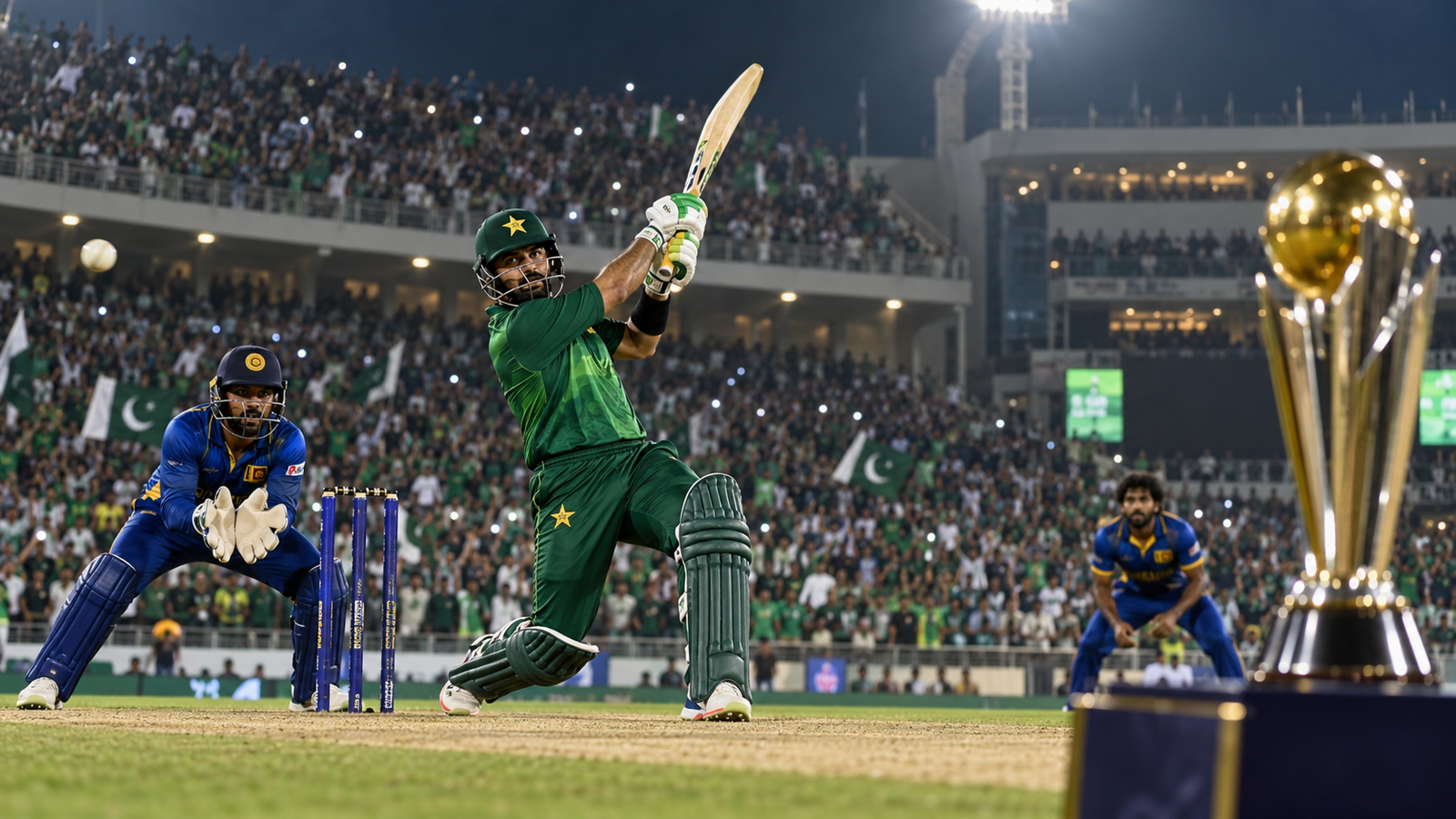
Pakistan vs England ODI 2026 produced one of the most dramatic finishes in the ongoing tri-nation series when Shadab Khan struck an unbeaten 113 to turn a seemingly lost match into a one-wicket victory at Lahore’s Gaddafi Stadium on October 25. Chasing 242, Pakistan fell to 154 for nine before Shadab and last batter Haris Rauf combined in an unbroken, record-setting 89-run partnership to complete the chase in 47.1 overs.
The result was confirmed by the Pakistan Cricket Board (PCB), the International Cricket Council (ICC) and the match scorecard, with further reporting published on October 26. Shadab faced 96 deliveries and struck 13 fours and five sixes, while Haris finished seven not out from 19 balls. Pakistan ended on 243 for nine after England made 241 all out in 46.4 overs.
The rescue also booked Pakistan a place in the tri-series final scheduled for October 31. It was not simply a narrow win: the tenth-wicket partnership broke a 51-year record for the highest last-wicket stand in a successful men’s ODI run chase. The following report separates the verified scorecard facts from the broader significance of an extraordinary contest.
Pakistan vs England ODI 2026: Match Summary
Competition: Pakistan, England and Sri Lanka ODI tri-series 2026.
Fixture: Fourth match, Pakistan versus England.
Date: Sunday, October 25, 2026.
Venue: Gaddafi Stadium, Lahore.
Toss: Pakistan won the toss and elected to field.
England: 241 all out in 46.4 overs.
Pakistan: 243 for nine in 47.1 overs.
Result: Pakistan won by one wicket with 17 balls remaining.
Player of the match: Shadab Khan.
Shadab Khan: 113 not out off 96 balls, including 13 fours and five sixes.
Haris Rauf: Seven not out off 19 balls.
Tenth-wicket stand: 89 unbeaten runs.
Ben Duckett: 105 off 111 balls for England.
Shaheen Shah Afridi: Four wickets for 46 runs.
Series implication: Pakistan secured a place in the October 31 final.
Source note: These scores and milestones were checked against PCB and ICC match materials.
How England Reached 241 After an Early Collapse
England’s innings began badly against Pakistan’s seam attack. Captain Shaheen Shah Afridi struck early, dismissing Tom Banton and Joe Root, and the visitors slid to 52 for four. The early damage forced England’s middle order to rebuild rather than accelerate immediately.
Ben Duckett anchored the recovery with a century, making 105 off 111 balls. His innings featured ten fours and two sixes. Sam Curran supported him with 42, and their partnership stabilised the innings after the top-order losses. At the other end, Pakistan continued to find wickets to prevent England from turning the recovery into a much larger total.
England eventually finished with 241 in 46.4 overs. Gus Atkinson contributed an unbeaten 36 lower down the order. The score gave England a defendable target, particularly on a day when the visitors’ bowlers would later reduce Pakistan to nine wickets down with a considerable number of runs still required.
Shaheen Shah Afridi’s Four-Wicket Spell
Shaheen’s bowling was central to Pakistan’s ability to restrict England to 241. He returned four wickets for 46 runs in 8.4 overs. His early dismissals limited England’s opening momentum, and he came back to finish the innings by removing debutant Henry Crocombe.
The match also carried a personal milestone for the left-arm fast bowler. PCB reporting says Shaheen became the fastest Pakistan pacer to reach 150 ODI wickets, a mark he approached at the start of the contest. The earlier pre-match PCB release placed him on 149 wickets in 79 appearances. A wicket in this game took him to 150, surpassing the appearance count recorded for other leading Pakistan pace bowlers.
Arafat Minhas and Razaullah also took two wickets apiece, while Haris Rauf claimed one. The shared effort mattered because it left Pakistan chasing 242 rather than a larger total after Duckett had given England a route to recovery.
Pakistan’s Chase Started With Trouble
The run chase opened with early losses. Fakhar Zaman made ten, Saim Ayub six and Babar Azam ten, leaving Pakistan at 31 for three. Wicketkeeper Saad Baig briefly counterattacked with 32 from 22 balls, hitting seven boundaries, but his dismissal left the chase vulnerable.
Salman Ali Agha contributed 26 and Hasan Nawaz added 15, yet neither established a partnership capable of taking Pakistan close to the target. Arafat Minhas fell for one. When Shadab entered the innings, Pakistan were 103 for six in the 24th over and were already at risk of losing the match.
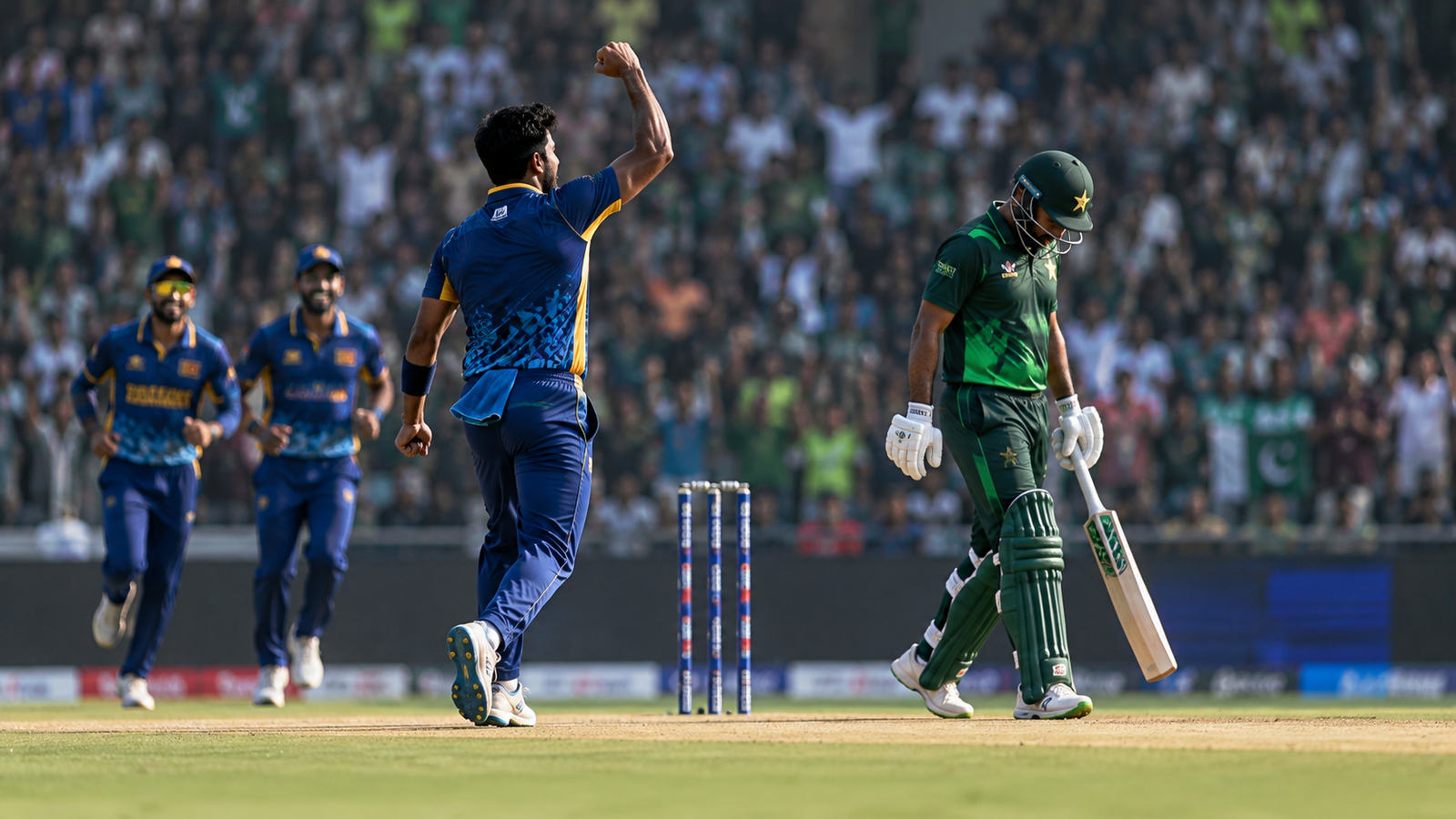
The situation worsened with further dismissals. By 33.5 overs, Pakistan had collapsed to 154 for nine. They needed 88 more runs with only their final wicket intact. On an ordinary scorecard, that position heavily favours the bowling side; what followed became the defining story of the match.
Shadab Khan’s 113 Not Out: How the Comeback Happened
Shadab’s innings combined calculated scoring with late boundary hitting. He had already helped arrest Pakistan’s slide before Haris Rauf walked to the crease. With no wickets left to spare, the pair concentrated on extending their stay and collecting runs without taking unnecessary risks.
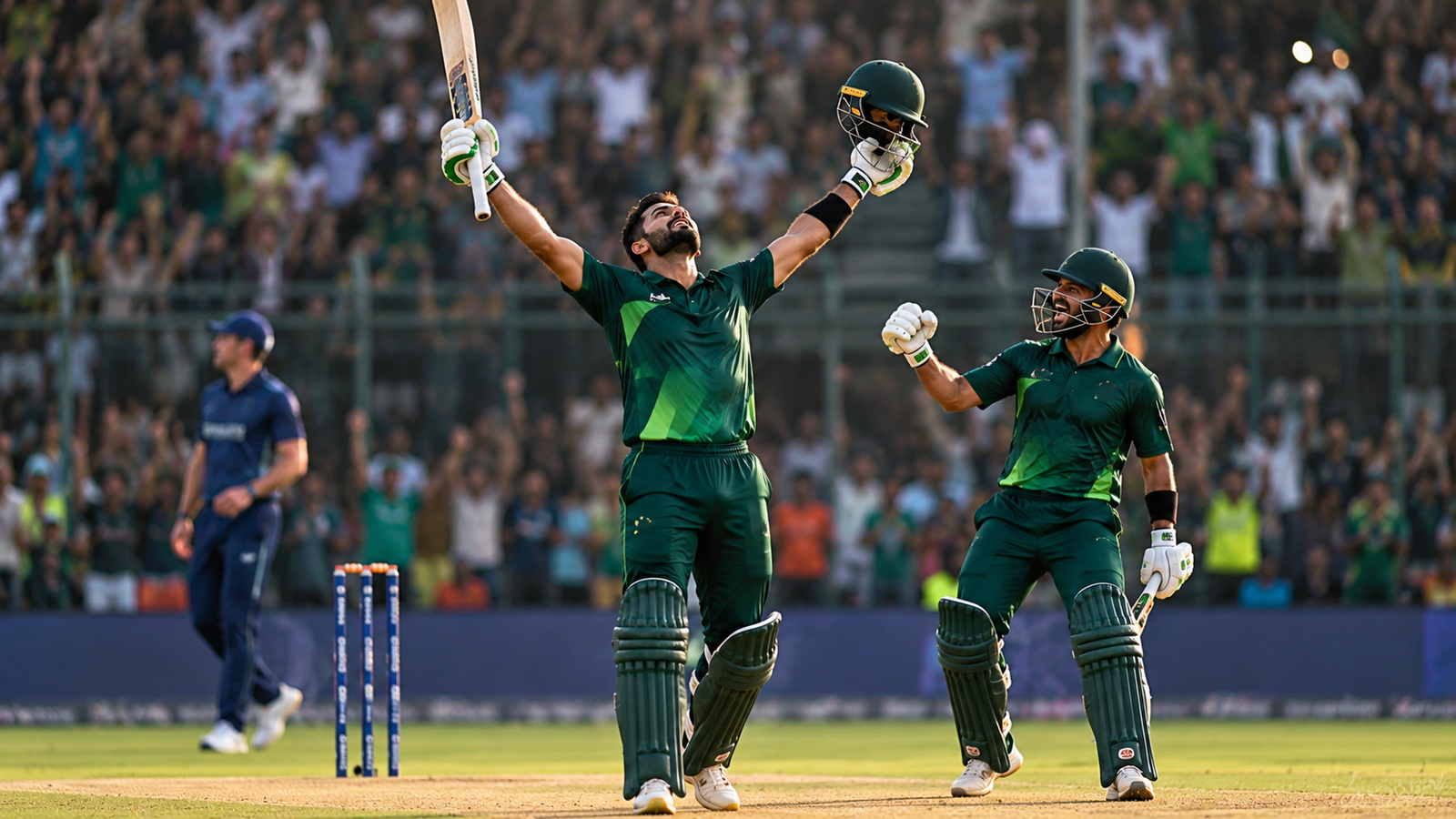
As the target came into view, Shadab accelerated. The all-rounder reached his maiden ODI century and remained unbeaten on 113 from 96 balls. His 13 fours and five sixes accounted for the majority of the scoring pressure he placed on England’s bowlers. He was named player of the match for a performance that would have seemed extraordinarily unlikely when Pakistan lost their ninth wicket.
The innings was historic for another reason. PCB described 113 not out as the highest individual score by a batter at number eight or lower in men’s ODI cricket. This individual achievement accompanied the team’s successful chase, making the rescue significant beyond its immediate result.
Why the 89-Run Last-Wicket Stand Was a Record
The unbroken partnership between Shadab and Haris added 89 runs for the tenth wicket. According to the ICC, it became the highest last-wicket stand in a successful men’s ODI run chase. The previous mark was an unbeaten 64 made by West Indies batters Deryck Murray and Andy Roberts against Pakistan at the inaugural World Cup in 1975.
That historic context explains why the ICC framed the 2026 innings as breaking a record that had stood for 51 years. There have been larger tenth-wicket partnerships in ODI matches generally, but the crucial qualification is that this was a partnership in a successful chase. Omitting that qualification would overstate the record.
Haris contributed only seven runs, but his ability to remain at the crease for 19 balls was decisive. Last-wicket partnerships depend on both batters, not just the one scoring most heavily. Each survived delivery kept Pakistan’s route to victory alive.
The Dramatic LBW Review That Changed the Finish
The late stages contained a moment when England appeared to have won. With Pakistan still short of the target, Gus Atkinson struck Shadab on the pads and the umpire gave him out leg before wicket. Had the decision stood, Pakistan would have been all out, ending the chase.
Shadab reviewed the call. Replays and UltraEdge indicated an inside edge, causing the on-field decision to be overturned. He remained at the crease and immediately continued attacking the bowling, eventually completing his century.
The incident shows why contemporary match coverage emphasised the contest’s dramatic finish. It should not be characterised as proof that an official deliberately made an incorrect call. The Decision Review System exists precisely so technology-assisted reassessment can correct an on-field judgment under the playing conditions.
Haris Rauf Hit the Winning Boundary
Despite Shadab’s dominant innings, Haris Rauf was the batter who struck the final boundary. Facing England debutant Henry Crocombe in the 48th over, Haris drove the ball for four to secure the win. Pakistan finished on 243 for nine in 47.1 overs, with 17 deliveries unused.
The scoreline was unusual because the last-wicket batter remained unbeaten and contributed directly to the winning shot, while his partner carried the bulk of the chase through a century. Haris’ contribution went beyond his seven runs; he provided the time and support that allowed Shadab to keep scoring.
For Pakistan, the ending completed a recovery from nine down for 154. For England, it meant conceding an unlikely defeat after repeatedly taking wickets and reaching a position from which a win appeared close.
Ben Duckett’s Century Deserved Recognition
Although Pakistan’s comeback dominated headlines, England’s Ben Duckett played an important innings. His 105 from 111 balls rescued his team after four early wickets and prevented an even smaller total. Supported by Sam Curran, he gave England a credible platform to compete.
A balanced match report should acknowledge both innings. Duckett’s century set the target that Pakistan had to chase, and the visiting bowlers then took nine wickets to put their team in a winning position. The failure to take the last wicket does not erase their earlier contributions.
England will also examine their execution against a lower-order partnership that continued through the closing overs. Bowling tactics, field placements and risk management all become central questions in a match where one side was heavily favoured before losing the final phase.
What the Win Means for the Tri-Series Final
The result secured Pakistan’s place in the ODI tri-series final, scheduled for October 31, 2026. It was Pakistan’s third consecutive win in the competition, keeping the hosts unbeaten through their first three appearances. PCB said England had lost all three of their matches at that stage.
Pakistan’s presence in the final was confirmed by the October 25 result. The identity of the opposing finalist should be described according to subsequent official results, not inferred from incomplete group-stage information. As of the dated event covered here, Sri Lanka remained part of the ongoing tri-series schedule.
For the team, the successful chase offered momentum but also pointed to problems in the top and middle order. A last-wicket victory can inspire confidence while exposing vulnerabilities that stronger future opponents may seek to exploit.
How Historic Is Pakistan’s One-Wicket ODI Victory?
PCB described the result as Pakistan’s ninth one-wicket victory in ODI cricket. The margin alone is unusual because the winning side must preserve its final wicket while reaching the target. Here the context makes the performance more remarkable: the hosts required 88 additional runs after losing nine wickets.
The ICC additionally ranked the 89-run stand as the fourth-largest tenth-wicket partnership in men’s ODI history, though it was the largest in a successful chase. These are two different record categories and should be reported separately.
Shadab’s individual batting record from number eight or lower provides a third dimension. The combination of a maiden century, a record last-wicket stand and qualification for a final makes the match one of the series’ standout moments without needing unsupported claims about being the greatest match ever played.
Tactical Lessons From the Chase
The match underlined how quickly momentum can change in one-day cricket. England’s seamers and spin bowlers initially exploited Pakistan’s batting problems and had reduced the home side to 154 for nine. At that point, every additional delivery without a dismissal shifted some pressure back to the fielding team.
Shadab’s ability to manage the strike, protect the lower-order partner when possible and select boundary opportunities created the conditions for the comeback. Haris’ survival was equally necessary. England’s challenge became keeping enough pressure on the recognised batter while giving the last man opportunities to make mistakes.
These observations are tactical interpretations of the verified scorecard rather than claims about private dressing-room instructions. A proper analysis can discuss phases of play without attributing motives to individual players or coaches unless they have said so publicly.
The Value of All-Rounders in Modern ODI Cricket
Shadab is known as an all-rounder, and his innings illustrated how a player selected for multiple skills can influence an ODI far beyond his expected batting position. On this occasion, he did not take a wicket with the ball, finishing with none for 31 from seven overs, but his batting became the decisive factor.
Modern white-ball teams value flexible line-ups because a lower-order player capable of defending and attacking can extend a chase after early wickets. It would be inaccurate, however, to assume every number-eight batter can routinely produce an unbeaten century. This was an exceptional performance precisely because it is rare.
Pakistan’s selectors and team management may draw confidence from Shadab’s batting depth, but the top-order collapses should still be assessed independently. One extraordinary rescue does not eliminate the need for consistent batting throughout the line-up.
Pakistan and England Fans React to a Remarkable Finish
The last-wicket win triggered widespread celebration among Pakistan supporters and extensive reaction across sports media and social platforms. Dawn published a separate report on the social-media response, reflecting the match’s capacity to attract public attention beyond regular scorecard readers.
The excitement is understandable: the result combined a home-ground atmosphere, a dramatic reversal of fortunes and individual records. But public reaction should not be mistaken for measurable nationwide opinion without representative evidence. A viral reaction is a snapshot of highly engaged fans, not a survey of every cricket follower.
For publishers, the strongest verified headline remains Shadab’s 113 and the 89-run winning partnership. Speculative dressing-room stories, unsupported allegations about players or exaggerated crowd claims add little to the factual achievement.
Full Pakistan vs England ODI 2026 Score Highlights
England’s leading contributors: Ben Duckett 105 from 111 balls; Sam Curran 42; Gus Atkinson 36 not out. Pakistan’s leading bowlers: Shaheen Shah Afridi four for 46, Arafat Minhas two for 26, Razaullah two for 38 and Haris Rauf one for 55.
Pakistan’s batting: Shadab Khan 113 not out, Saad Baig 32, Salman Ali Agha 26, Hasan Nawaz 15, Fakhar Zaman 10, Babar Azam 10, Razaullah eight, Haris Rauf seven not out, Saim Ayub six, Shaheen Shah Afridi four and Arafat Minhas one. Extras contributed 11.
The official final scores are England 241 all out from 46.4 overs and Pakistan 243 for nine from 47.1 overs. Readers seeking a ball-by-ball breakdown or full bowling figures should use the PCB or ICC scorecard linked below.
Conclusion
Pakistan’s one-wicket victory over England on October 25, 2026 stands out for its extraordinary recovery from 154 for nine. Shadab Khan’s unbeaten 113, supported by Haris Rauf in an unbroken 89-run final-wicket partnership, completed the chase of 242 and secured the hosts’ place in the tri-series final.
The ICC confirmed that the stand broke a 51-year record for the highest tenth-wicket partnership in a successful men’s ODI chase. Shaheen Shah Afridi’s four wickets and Ben Duckett’s century were significant parts of the contest, ensuring this result was more than a story of a single batting performance.
This October 26 follow-up records the confirmed match result and milestones. It does not present the upcoming final’s outcome as known or reproduce speculative claims about future fixtures.
Frequently Asked Questions
Who won the Pakistan vs England ODI on October 25, 2026?
Pakistan won by one wicket at Gaddafi Stadium, Lahore, chasing England’s 241 and finishing at 243 for nine in 47.1 overs.
How many runs did Shadab Khan score?
Shadab scored an unbeaten 113 from 96 balls, hitting 13 fours and five sixes.
What was the record tenth-wicket partnership?
Shadab Khan and Haris Rauf added 89 unbeaten runs, the highest last-wicket stand in a successful men’s ODI run chase.
How many runs did Haris Rauf make?
Haris remained seven not out from 19 deliveries and struck the winning boundary.
Who was named player of the match?
Shadab Khan was named player of the match for his unbeaten century.
Who scored a century for England?
Ben Duckett made 105 off 111 deliveries before being dismissed.
How many wickets did Shaheen Shah Afridi take?
Shaheen claimed four wickets for 46 runs and reached the 150-wicket ODI milestone.
Did Pakistan qualify for the tri-series final?
Yes. The victory confirmed Pakistan’s place in the final scheduled for October 31, 2026.
About The Author