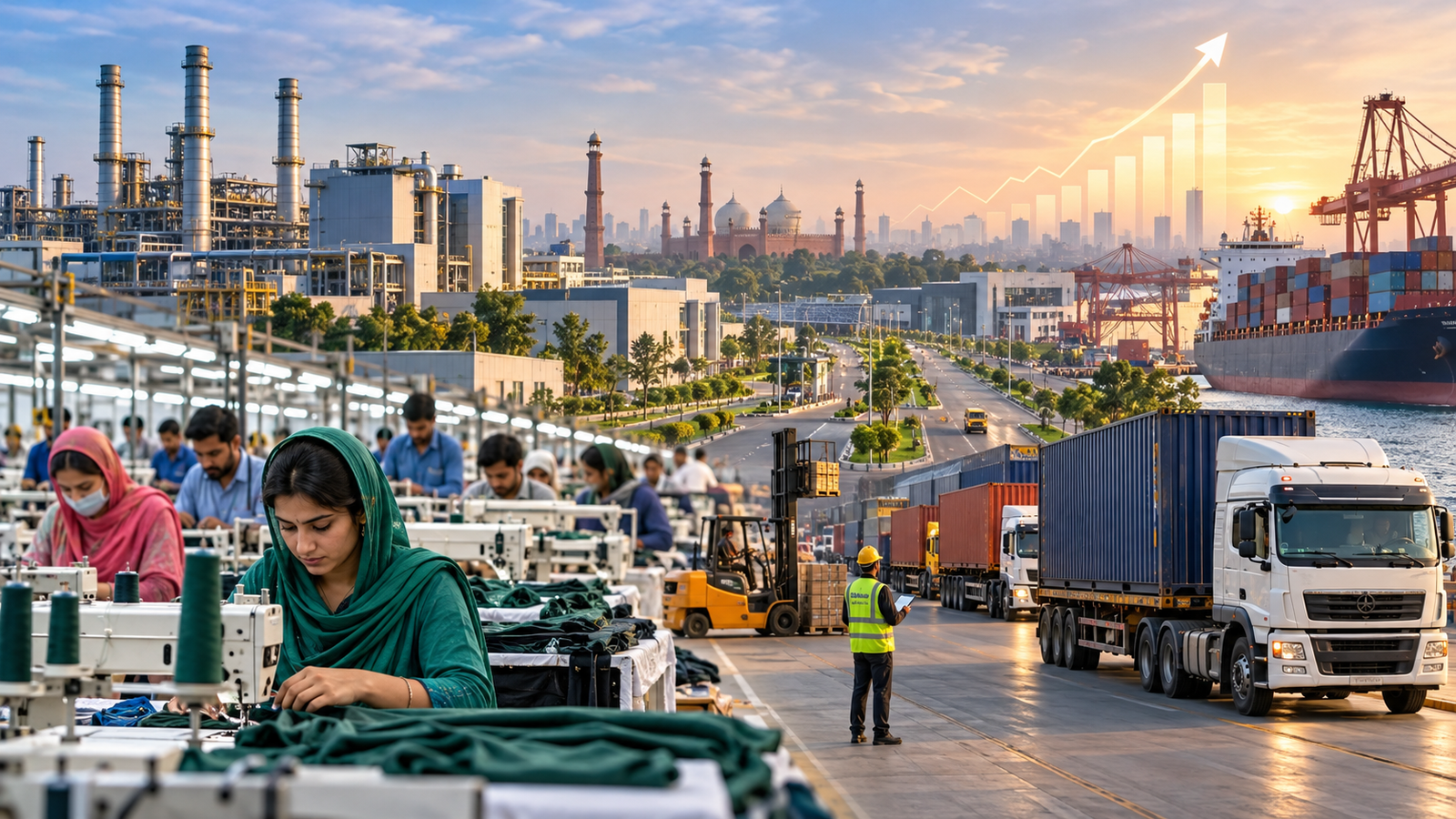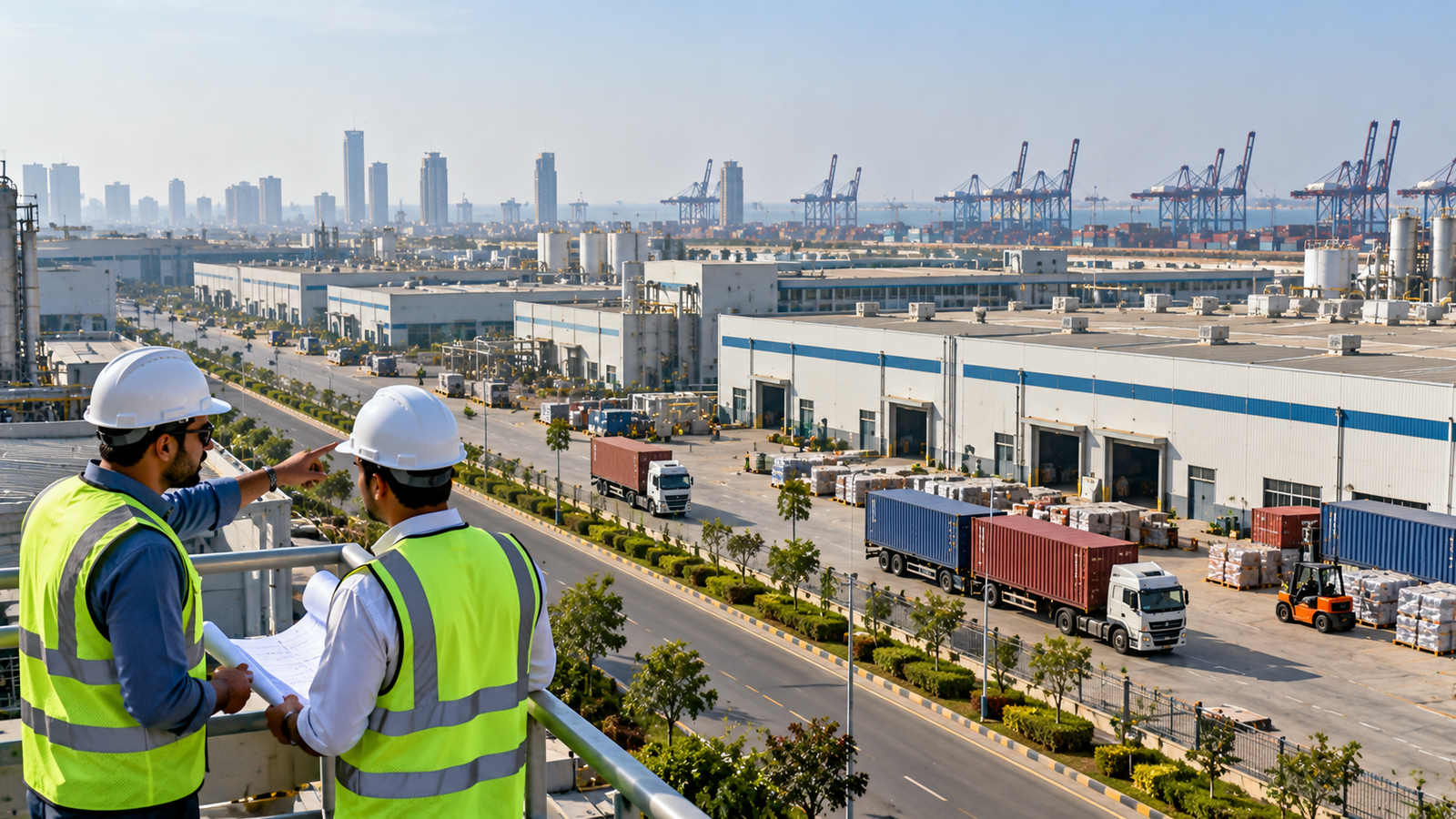
Pakistan’s Board of Approvals for Special Economic Zones has approved Karachi Industrial Park (KIP) as a federal Special Economic Zone (SEZ), marking a regulatory milestone intended to attract industrial investment, increase export-oriented production and support technology transfer. The decision was taken on October 23, 2026, at the board’s 11th meeting chaired by Finance Minister Muhammad Aurangzeb, according to an official Finance Division statement released through the Press Information Department.
The meeting also approved general eligibility criteria for possible government-funded utilities and infrastructure serving privately developed economic zones, as well as a land lease policy for public-sector industrial estates in Punjab. These decisions may make investment planning easier, but they do not establish that a particular foreign investor has signed a contract, that factories have begun operating or that a specific number of jobs has already been created.
What Was Approved for Karachi Industrial Park?
The Board of Approvals accepted Karachi Industrial Park’s application for designation as a federal Special Economic Zone. The government described the proposed zone’s objectives as attracting export-oriented industrial investment, encouraging technology transfer, supporting value addition and generating employment. Radio Pakistan, Dawn, Business Recorder and Express Tribune reported the same core decision, citing the federal announcement.
The approval concerns KIP’s legal and administrative status. The sources reviewed do not provide a verified list of tenants, a finalized infrastructure construction timetable, the exact number of industrial plots now occupied or a binding value for new investment commitments. Those details would require subsequent official disclosures or project-level documentation.
When and Where Was the Decision Made?
The 11th meeting of the Board of Approvals took place in Islamabad on Friday, October 23, 2026, chaired by Finance and Revenue Minister Muhammad Aurangzeb. The official release says the board first confirmed the previous meeting’s minutes before considering three substantive agenda matters. The resulting approvals were reported by Pakistani news outlets on October 23 and 24.
Other participants included Federal Minister for Board of Investment Qaiser Ahmed Sheikh, Planning Minister Ahsan Iqbal, Commerce Minister Jam Kamal Khan and other senior representatives of federal and provincial bodies. Their attendance demonstrates inter-agency participation, but it should not be interpreted as evidence that all participating ministries have separately approved any future investment agreement.
What Is a Special Economic Zone?
A Special Economic Zone is a designated industrial area operated under a particular legal and administrative framework intended to facilitate investment and production. Depending on the applicable law and specific approvals, SEZs may offer defined infrastructure arrangements, investment facilitation and eligible incentives. The purpose is commonly to improve the conditions under which firms establish or expand industrial activity.
SEZ designation does not automatically mean that every company operating nearby qualifies for all possible benefits. Eligibility depends on the law, zone rules, investor status and subsequent official procedures. Businesses considering an investment should obtain the current regulatory terms rather than rely on a broad assumption that all taxes, duties or operating costs have been removed.
Why Karachi Industrial Park Matters for Pakistan’s Economy
Karachi is a major centre of Pakistani commerce, manufacturing and logistics. A planned industrial zone connected to the country’s broader export economy could make it easier for manufacturers to locate operations and interact with suppliers and markets. In principle, well-serviced industrial land can help firms plan factories, warehouses and production facilities more efficiently.
However, location alone does not guarantee business success. Investors will assess energy reliability, transportation costs, labour availability, regulatory processes and access to customers. The KIP approval is therefore best understood as a policy and investment-facilitation milestone whose economic results will become clear only as projects proceed.
Export-Oriented Manufacturing and Value Addition
The Finance Division said the zone aims to attract businesses focused on exports, technology transfer and value addition. Export orientation means producing goods or services that can compete in overseas markets, rather than relying entirely on domestic sales. Value addition refers to the processing, manufacture or improvement that increases the economic value of an input.
In practice, an export-focused industrial zone could support stronger supply chains if factories secure orders, meet quality standards and deliver goods at competitive prices. These are potential outcomes, not documented completed exports from the newly approved zone. Any future claim about additional export revenue should be supported by dated production and trade records.
Why Technology Transfer Is Part of the Plan
Technology transfer can occur when investment brings new machinery, manufacturing processes, technical expertise or operational methods into a local industry. Partnerships between domestic and overseas companies may also support workforce training and the development of supplier capabilities. The federal statement identifies technology transfer as an objective for Karachi Industrial Park.
The October approval does not name a particular foreign technology provider or confirm a specific new production line. Measuring successful transfer would require details about real projects, training, equipment installation and productivity. This distinction is essential when an investment announcement contains aspirational economic language.
Government Infrastructure Criteria for Private SEZs
In a separate decision, the Board of Approvals endorsed general eligibility criteria for possible government provision of utilities and related infrastructure up to the designated ‘zero point’ of privately established Special Economic Zones. According to the official announcement, the framework operates under the Special Economic Zones Act, 2012 and covers consideration of infrastructure such as road access and utility connections.
The central point is that eligibility will be evaluated case by case. The decision does not promise that the government has automatically agreed to finance every road, electricity connection or utility requirement for all private SEZs. Investors will need to examine project eligibility and the actual approval and funding arrangements.
What Does the ‘Zero Point’ Mean?
The government’s press release refers to the designated zero point as the boundary or connection point up to which certain infrastructure provision may be considered under the new criteria. It serves as an administrative reference for evaluating where public responsibility for specified external services may end and where a zone developer’s responsibilities may begin.
The release does not give a technical engineering definition applicable to every site or announce the cost-sharing arrangement for a named private-zone project. Any investment plan should use the relevant project documents and official infrastructure terms before assuming public funding will cover particular equipment or construction expenses.
Punjab’s New Land Lease Policy
The board also approved a land lease policy for public-sector SEZs and industrial estates in Punjab. The federal statement says the policy is designed to encourage investment through long-term leasing, lower upfront land costs and promote better use of public industrial land. This is a separate initiative from Karachi Industrial Park’s federal SEZ approval.
A lease can reduce the initial cash requirement compared with buying land outright, depending on rental terms, duration, permissions and other obligations. The announcement did not establish one uniform rent, lease length or plot rate for all estates. Businesses should obtain the official policy documents and the applicable terms for their particular location.
How Might Investors Benefit?
Investors generally look for predictable access to land, reliable infrastructure, clear permissions and a functioning market for their products. An approved zone framework and more structured consideration of utility provision may make project planning easier. Similarly, long-term lease options can change how much capital a business needs at the start of a manufacturing venture.
Nonetheless, the financial return on any investment remains uncertain. Market demand, cost of borrowing, energy availability, imports of machinery, competition and execution delays can alter outcomes. The government’s decisions should not be treated as a guaranteed investment yield or a recommendation to buy shares in any specific company.
Will the Approval Create New Jobs?
Employment generation is an explicit objective in the federal announcement. Industrial investment can create demand for factory employees, engineers, maintenance personnel, logistics workers and suppliers once projects are built and become operational. Additional activity may also support indirect employment in nearby businesses.
But no confirmed job-creation total was provided in the October 23 statement. An announcement of a goal is not equivalent to completed hiring. Job numbers should be reported only when a company or responsible authority provides verifiable workforce plans or actual employment records.
Does This Confirm Foreign Direct Investment?
No specific foreign direct investment amount or signed international investment contract is established by the cited approval announcement. Federal SEZ status may help officials market the area to investors, but a concrete FDI claim requires information on the investor, financing terms, investment period and project status.
A reader may encounter social-media headlines describing billions of dollars of new factories immediately after a government approval. Without project-level evidence, those figures are speculative. Mukhbir is therefore separating the confirmed board decision from any future investment announcements.
How Does the SEZ Act 2012 Fit In?
The federal release explicitly places the new criteria for possible public infrastructure provision under the Special Economic Zones Act, 2012. That framework helps define the administrative basis for SEZ-related decisions and the treatment of qualifying investments. Relevant rules, regulations and formal approvals will govern how any benefit is implemented.
Readers should not infer specific tax holidays or duty exemptions from the latest press release when those terms are not stated. A legal framework can be amended and may apply differently according to investor status and the nature of the project. Businesses should consult the current law and qualified professional advisers for binding eligibility questions.
What About the Wider Industrial Development Agenda?
The Board of Approvals considered three related but distinct measures: the Karachi Industrial Park designation, criteria for government-supported external infrastructure at private SEZs, and Punjab’s land lease policy. Together, they reflect a policy focus on making industrial projects easier to develop and helping public and private investment move toward operational production.
The measures address structural barriers, but they do not by themselves resolve all challenges affecting industry. Macroeconomic conditions, electricity supply, transportation and export demand remain important. A complete analysis should recognise the government’s stated goals while evaluating later outcomes against independent economic data.
What Businesses Should Verify Before Committing Capital
Potential investors should check the current SEZ designation and official documentation, available plots, infrastructure delivery commitments, financing terms, licensing requirements and the legal entity responsible for zone administration. They should also confirm whether any incentive applies to their industry and whether separate approvals are needed for factory construction or operations.
No verified online investment application link or fixed parcel price was included in the October 23 announcement. Companies should avoid sending fees or personal information through unofficial sites claiming special access to newly approved industrial plots. The appropriate official channels should be established before entering commercial negotiations.
What Happens Next for Karachi Industrial Park?
The next meaningful developments would include published operating arrangements, infrastructure plans, verified investor agreements, factory construction milestones and records of actual production or employment. These updates would help determine whether the policy decision is generating measurable industrial activity.
The October 23 announcement is a starting point for evaluating those outcomes. It does not provide a project-completion date, factory-opening date or investment volume. Mukhbir will describe later milestones according to their documented status, distinguishing announced intentions, signed agreements, construction and completed operations.
Why This Matters for Pakistan and International Investors
Pakistan’s industrial competitiveness depends partly on its ability to provide suitable infrastructure and clear investment procedures. A federal SEZ approval in Karachi could draw attention from domestic and international firms seeking export-oriented manufacturing locations. The accompanying infrastructure criteria and Punjab lease framework are also relevant to companies evaluating locations beyond Karachi.
International relevance lies in Pakistan’s approach to industrial investment and trade development. Yet the significance of the decisions should be assessed through actual capital commitments and economic results, not by assuming that every potential foreign investor will participate.
Conclusion
On October 23, 2026, Pakistan’s Board of Approvals granted Karachi Industrial Park federal Special Economic Zone status. At the same meeting, it approved case-by-case eligibility criteria for possible public infrastructure support to private SEZs and a land lease policy for public-sector industrial estates in Punjab. The measures are intended to support industrialisation, exports and more effective land use.
For investors, the confirmed news is a change in the official investment framework. The longer-term effects—new factories, technology transfer, exports and jobs—remain goals that require implementation and evidence. Mukhbir will continue to distinguish regulatory approvals from actual commercial achievements.
Frequently Asked Questions
Has Karachi Industrial Park received federal SEZ approval?
Yes. Pakistan’s Board of Approvals approved Karachi Industrial Park as a federal Special Economic Zone on October 23, 2026.
Who chaired the approval meeting?
Finance Minister Muhammad Aurangzeb chaired the 11th meeting of the Board of Approvals for Special Economic Zones.
Why was Karachi Industrial Park approved?
The government says the designation aims to attract export-oriented industry, support technology transfer, promote value addition and generate employment.
Did the government announce an investment amount?
No specific new investment commitment or dollar amount was confirmed in the official approval release.
How many jobs have been created by the decision?
No verified job total was announced. Employment generation is an objective, not a completed outcome.
Will the government fund utilities for all private SEZs?
No. New general eligibility criteria allow possible support up to a designated zero point on a case-by-case basis.
What land policy was approved for Punjab?
The board approved a long-term land lease policy for public-sector SEZs and industrial estates intended to reduce upfront costs and improve land use.
What should investors check next?
They should verify official zone documentation, available infrastructure, lease or land terms, project-specific approvals and any applicable statutory incentives.
About The Author