Two Pakistani passengers travelling from Karachi to Thailand were prevented from boarding their flight on October 17, 2026, after immigration officials questioned their stated travel plans. According to a Federal Investigation Agency (FIA) spokesperson quoted by Pakistani news organisations, the men described an intention to enter into a same-sex marriage in Thailand and later pursue plans to live in Europe. The case has attracted national attention and prompted questions about what happened at the airport, how immigration screening works and what Thailand’s marriage laws actually allow.
Reports identify the passengers by the first names Shahid and Khalil, with hometowns in Muzaffargarh and Sialkot respectively. The central confirmed action was an immigration offloading, meaning the travellers were not allowed to take the planned flight. That is different from a verified formal arrest: the reports reviewed do not establish that the men were charged with a crime, appeared in court or were placed under arrest. This distinction matters as some online headlines used more dramatic language than the underlying FIA account supported.
What Happened at Karachi Airport?
FIA Immigration officials at Jinnah International Airport stopped two passengers travelling to Thailand on Pakistani passports and tourist visas, according to a statement reported by The News and Express Urdu. Officials sought further scrutiny of the men’s stated purpose of travel and reported plans for onward travel to Europe. The agency said immigration personnel routinely examine travellers’ documents and declared reasons for a journey under applicable procedures.
The reports placed the incident on Saturday, October 17. The pair did not depart on their intended flight. However, publication of the agency’s version does not independently establish that every personal statement attributed to either traveller is accurate or complete. Readers should separate the fact of offloading from allegations and explanations attributed to interviews with immigration personnel.
Who Were the Two Passengers?
The FIA account, as reproduced by multiple newspapers, identified one passenger as Shahid, a resident of Muzaffargarh, and the other as Khalil, a resident of Sialkot. News reports described them as holding Pakistani passports and tourist visas for Thailand. Their full identities, immigration records and personal histories have not been independently established in the public sources reviewed for this article.
Because the case involves personal relationships and a sensitive immigration encounter, Mukhbir is not publishing addresses, personal photographs or unverified social-media profiles. The existence of an official account does not remove the need to avoid unnecessary exposure of private individuals who have not been shown to face criminal charges.
What Did the FIA Say About Their Travel Plans?
According to The News, citing an FIA spokesperson, Shahid told immigration officials that he had previously lived in Europe and intended to travel to Thailand with Khalil to marry. The account said the two expected to pursue recognition of that marriage and plans to live together in Europe. Express Urdu also reported that authorities were examining the purpose of the visit and the possibility of onward migration.
These are statements attributed to an agency account, not a verified marriage application or an approved immigration plan. There is no evidence in the reports reviewed that the men had already married, submitted successful family-visa applications or secured European residence on the basis of a marriage. Such outcomes would depend on separate documentation and the laws of the relevant jurisdictions.
Did the Two Men Know Each Other Since 2017?
The FIA spokesperson’s account said Khalil told officers that he and Shahid had met in 2017 and remained in contact afterward. Some social-media narrations said their meeting occurred online, but the independently reviewed reporting does not provide sufficient corroboration for the specific platform or circumstances of the first encounter.
A further detail widely repeated in coverage is an alleged monthly financial contribution of about Rs 60,000 from Shahid to Khalil. That amount was presented as something Khalil told immigration officials. The reports did not include independent banking evidence, so it should not be described as a transaction verified by the newsroom. Nor is there a reliable basis to publish speculation about either traveller’s past marriages or private relationships.
Were Shahid and Khalil Arrested or Offloaded?
The clearest description from major news coverage is that both passengers were offloaded from their flight for further immigration scrutiny. In aviation and immigration reporting, offloading means an individual is removed from or not permitted to board a planned departure. It does not inherently imply arrest, detention under criminal law or the filing of a case.
Some headlines circulated on websites and social-media pages described the pair as arrested, but the FIA-attributed narrative cited by The News and Express Urdu does not confirm a formal criminal arrest or identify a registered FIR against the passengers. Unless police or court records establish otherwise, a news headline should say ‘offloaded’ rather than ‘arrested.’
Why Did the FIA Stop Their Journey?
The agency’s reported explanation focused on questions about the passengers’ travel purpose, their plan for a marriage in Thailand and potential further travel to Europe. The press reports do not disclose a complete written immigration decision, all documents examined or the precise statutory ground relied on in the individual screening. It would therefore be inaccurate to claim that a court ruled their intended marriage unlawful or that a specific criminal offence had been proved.
Immigration screening at departure points can involve verifying documentation and travel purpose. However, the standards used in this particular encounter, and whether either person contested the decision, are not fully documented in the available reports. Public scrutiny can reasonably ask for clarity about procedure while avoiding unsupported conclusions about the travellers themselves.
Is Same-Sex Marriage Legal in Thailand?
Yes. Thailand began implementing marriage equality nationwide on January 23, 2025, after changes to its civil and commercial law allowed two individuals to marry regardless of gender. Thailand’s government and Tourism Authority documented the start of legal registration under the new framework. This is a confirmed legal development and is distinct from the allegations surrounding the Karachi airport travellers.
Legal recognition of same-sex marriage does not mean every visitor can marry without documents. Foreign nationals may need to satisfy civil registration requirements, including proof of identity, marital status and other records required by the relevant Thai authorities. The fact that Thailand recognises same-sex marriage does not establish that either of the passengers had completed the necessary steps.
Does Marriage in Thailand Automatically Give Someone a European Visa?
No. A marriage registered in Thailand would not automatically grant entry, residence, citizenship or a family visa in Denmark or another European country. Each destination’s immigration and family-reunification rules can impose separate conditions concerning lawful residence, relationship recognition, documentation, income and eligibility.
The FIA account referred to a reported plan to live in Europe after marriage, but it did not identify an approved application. News coverage should not turn a stated intention into an accomplished immigration outcome, and readers should consult official immigration guidance for the particular destination rather than relying on viral claims.
Why the Difference Between Allegation and Fact Matters
The story’s core public-interest issue is an exercise of immigration authority at a major Pakistani airport. Coverage can accurately report the date, institution, flight destination and FIA’s stated reasons without adopting every claimed private detail as an established fact. The report also does not justify concluding that the travellers engaged in criminal conduct solely because of the relationship or marriage plan attributed to them.
Words such as ‘arrested,’ ‘charged’ and ‘convicted’ have specific meanings and should not be exchanged with ‘offloaded.’ In a sensitive case, precision also protects the rights of individuals and helps readers understand what the state has actually done. Publishing an invented portrait or passing off an AI-generated checkpoint scene as real footage would undermine that standard.
Public Interest, Privacy and Responsible Reporting
News coverage of airport offloading cases can help the public understand immigration screening, overseas travel and conflicting legal frameworks. It also carries privacy risks when the individuals involved have no confirmed criminal charge. The public value of documenting an official decision does not require exposing private addresses, alleged personal histories or social-media accounts.
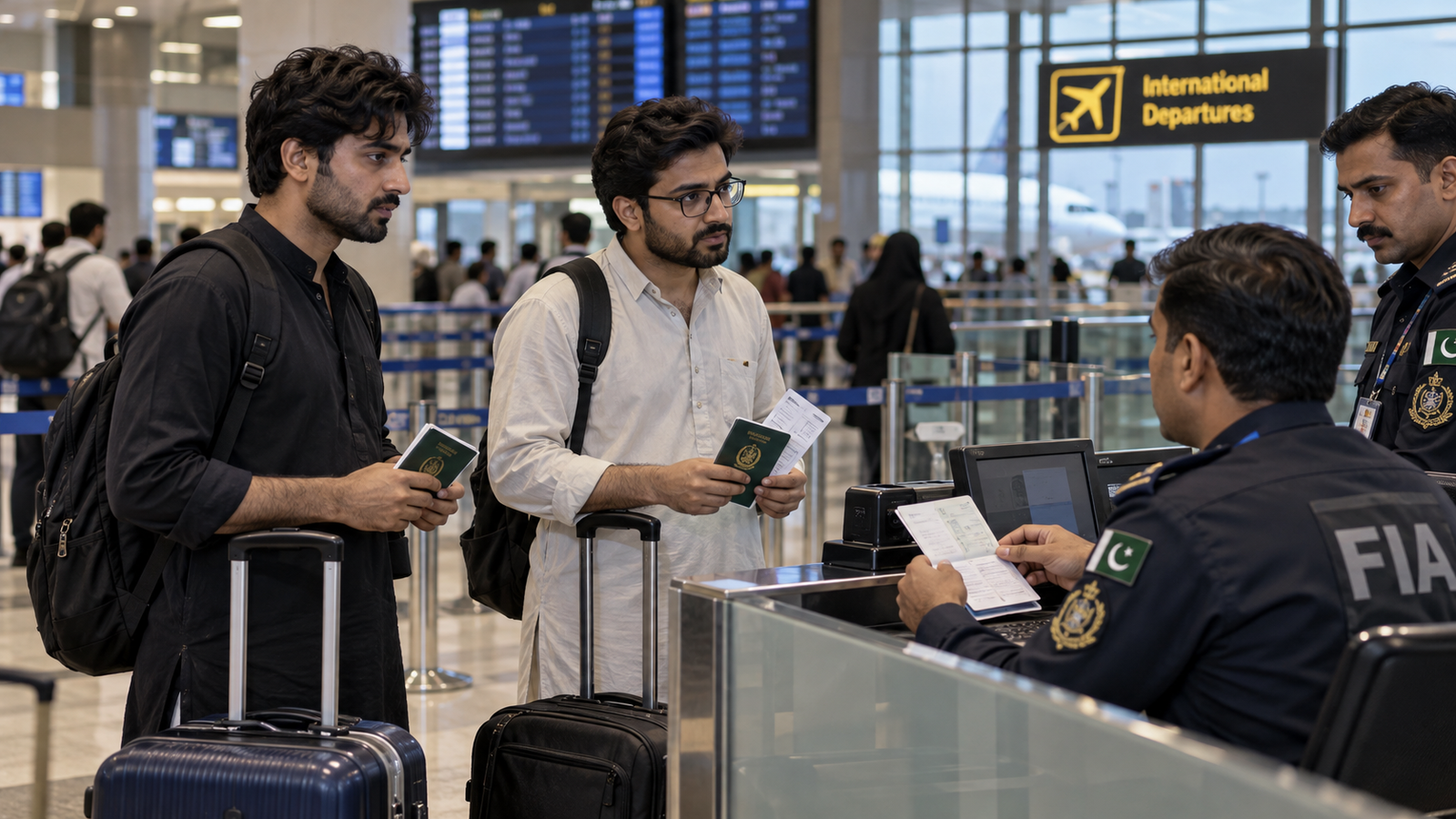
A neutral editorial illustration can show the airport screening environment without claiming to depict the actual passengers. If a newsroom uses an AI-generated image, the caption should clearly identify it as illustrative. Sensational or mocking language is unnecessary to explain the incident and can obscure the factual questions about government action and travel requirements.
What Remains Unclear?
The precise written ground for offloading, whether the passengers had any appeal or review option, whether they later travelled, and whether the agency took any subsequent legal action were not established in the sources reviewed as of October 20, 2026. The reports also do not prove details about past marriage or divorce, an approved European family visa, or a particular social-media meeting platform.
Further news should be based on an identifiable FIA statement, court filing, or reliable reporting with explicit attribution. Until then, the case is best described as two passengers being stopped from flying after officials questioned their reported travel plans.
Conclusion
The FIA’s offloading of two Pakistani men at Karachi airport on October 17, 2026, is supported by reporting from major Pakistani outlets citing an agency spokesperson. Shahid and Khalil were reportedly travelling to Thailand on tourist visas, with officials saying they discussed marriage and possible onward residence in Europe. Thailand’s marriage equality law is real and has been in effect since January 2025, but it does not guarantee any European immigration status.
The most important reporting distinction is also the simplest: offloading is confirmed in the available media accounts, while a formal arrest, conviction or completed marriage is not. Mukhbir will update the story if reliable records establish additional developments.
Frequently Asked Questions
Who were the two passengers offloaded at Karachi airport?
Reports quoting the FIA identified them by the first names Shahid, from Muzaffargarh, and Khalil, from Sialkot.
When were they offloaded?
The incident was reported on Saturday, October 17, 2026, at Jinnah International Airport, Karachi.
Where were they travelling?
They were reportedly scheduled to travel to Thailand on Pakistani passports and tourist visas.
Why did FIA stop them?
According to an FIA spokesperson quoted in newspapers, immigration officers wanted further scrutiny of their stated marriage plans and possible onward travel to Europe.
Were they arrested?
The reports reviewed confirm offloading from a flight but do not establish a formal arrest or a criminal charge.
Is same-sex marriage legal in Thailand?
Yes. Thailand’s marriage equality legislation took effect on January 23, 2025.
Did the two passengers already get married?
No completed marriage was documented in the sources reviewed. Officials described a reported future plan.
Would a Thai marriage automatically qualify someone for a European family visa?
No. Immigration status depends on the rules and approval processes of the relevant destination country.
About The Author