The Election Commission of Pakistan (ECP) has announced that Islamabad’s long-delayed local government elections will be held on December 20, 2026. The new timetable, issued on October 21, follows a five-member commission’s decision to conduct the polls under the Islamabad Capital Territory Local Government Act, 2015. The move brings a defined election programme to a capital that has been without an elected local government since the previous body’s term expired in February 2021.
According to Radio Pakistan, the Associated Press of Pakistan (APP) and Dunya News, candidates will submit nomination papers from November 2 to 6, with further scrutiny and appeal stages scheduled before a final list of contestants is published. Polling is set for 8 a.m. to 4 p.m. on December 20. These are announced future dates, not completed election results. The programme can be updated by competent authorities, and voters should use any later ECP notification as the controlling record.
Islamabad Local Government Election Schedule: Key Dates
The ECP schedule reported by Dunya News includes the public notice inviting nominations on October 30, 2026. Nomination papers can be filed between November 2 and 6, and the preliminary candidate list is due on November 7. Returning officers will scrutinise papers from November 9 to 13. Appeals against nomination decisions may be lodged from November 14 to 18, with decisions expected between November 19 and 23.
The final candidates list is scheduled for November 25, followed by allocation of election symbols on November 26. Polling is planned for December 20 between 8 a.m. and 4 p.m. Official results are due to be announced between December 21 and 24, according to APP and Dunya News. Each stage matters because eligibility, candidate selection and campaigning depend on completing the prescribed administrative steps.
Why Did the ECP Order a Fresh Programme?
On October 21, a five-member ECP bench headed by Chief Election Commissioner Sikandar Sultan Raja considered the prolonged absence of elected local government in Islamabad. The commission directed its office to prepare and issue an election programme under the relevant constitutional provisions, the Elections Act, 2017, and the ICT Local Government Act, 2015. Senior officials from the Interior Ministry and capital administration attended the proceedings.
The order was a procedural decision about how to conduct elections under the law currently in force. It did not announce the outcome of the forthcoming vote or assign seats to any party. Subsequent official reporting confirmed that an election schedule was released, making this a more concrete development than the earlier instruction alone.
What Happened to the Previous Local Government?
Islamabad’s previous elected local government term ended in February 2021. The capital has experienced repeated attempts to organise another poll, with proposed legal changes, constituency arrangements and administrative questions affecting earlier schedules. ECP officials told the October hearing that delimitation work had been carried out six times and election programmes issued on four occasions.
The long interval matters for residents because elected municipal bodies provide a route for local representation and oversight of civic services. But it would be inappropriate to reduce a complex series of legal and administrative developments to an unsupported accusation that a single person or institution caused every delay. Reporting should explain the record and identify each authority’s documented position.
Why Is the 2015 Islamabad Local Government Law Being Used?
Dawn reported that a January 2026 amendment ordinance proposed changing the capital’s municipal structure, including a shift toward three town corporations. The ordinance later lapsed in September before replacement legislation was enacted. The ECP concluded that elections should proceed under the 2015 Act, which remained legally in force, rather than rely on provisions from the expired ordinance.
The legal distinction is central to the story. An ordinance that has lapsed does not automatically continue to govern the poll simply because preparatory work was performed under it. At the hearing, the Interior Ministry raised concerns about reverting to the earlier structure, while the commission expressed the view that constituency delimitation would not necessarily have to be discarded. Those positions are part of the recorded proceedings, not editorial judgements about the government or commission.
What Does the Constitution Require?
The ECP cited Articles 140A, 218(3), 219 and 220 of Pakistan’s Constitution, alongside Section 219 of the Elections Act, 2017, and provisions of the ICT Local Government Act. Article 140A concerns local government, while the Election Commission exercises constitutional responsibilities for organising elections in accordance with law. Section 219(4) of the Elections Act refers to holding local government polls within 120 days after the prior body’s term expires.
This statutory framework explains why the extended delay has received close attention. Legal questions about timing or implementation should be discussed with reference to the actual provisions and ECP orders, rather than interpreted as evidence of partisan wrongdoing without supporting findings.
What Will Happen During the Nomination Process?
Prospective candidates must follow the ECP’s published nomination timetable and submit the prescribed documents to the appropriate returning officers. The scrutiny period provides an opportunity for election officials to examine whether candidates meet the applicable legal requirements. Decisions can then be challenged during the specified appeal window, before the final candidate list and election symbols are issued.
The announced dates give candidates a planning framework, but specific forms, fees, eligibility rules and returning-officer locations should be checked from official ECP material. This article does not invent an online application portal or guarantee that filing can be completed through a particular website.
When Will Islamabad Residents Vote?
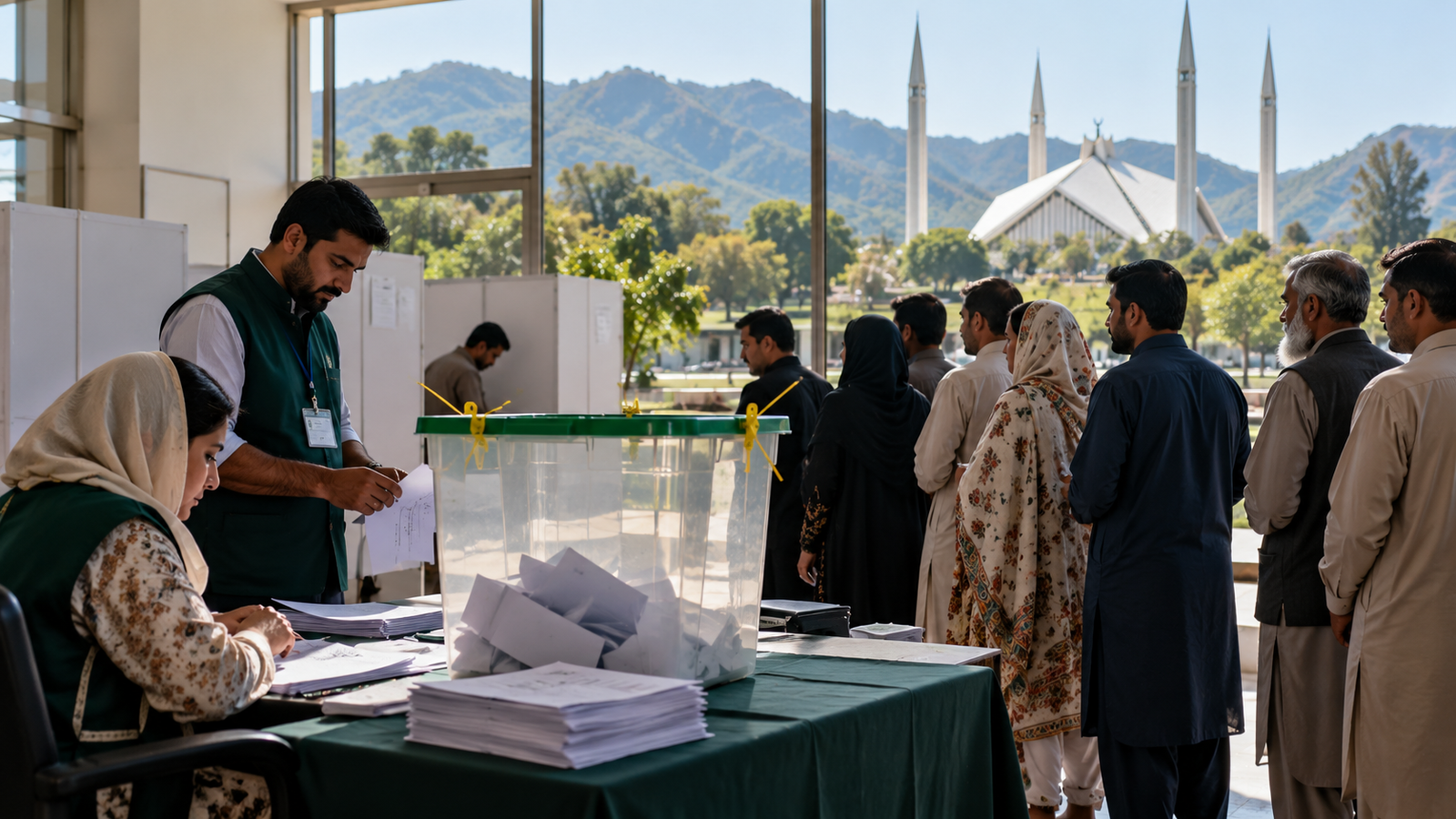
Polling is scheduled for Sunday, December 20, 2026, between 8 a.m. and 4 p.m., according to Dunya News. The exact polling station and electoral roll details for individual residents should come from current Election Commission arrangements. The ECP’s announced timetable also places publication of the results between December 21 and 24.
Readers should distinguish the polling date from the date results become official. Election-night reports may describe unofficial counts, whereas final notifications depend on the legal tabulation process. No candidate, party or electoral outcome can be declared in advance.
What Are Local Government Elections?
Local government elections allow residents to choose representatives for institutions closer to everyday civic administration than national or provincial legislatures. Depending on the legal structure, those bodies may have roles connected to municipal services, local planning, public spaces and community concerns. Their precise powers come from applicable local government legislation, not simply from the label ‘local council’.
For Islamabad residents, the restoration of an elected local government could strengthen channels for civic representation. The actual distribution of administrative responsibilities will depend on the 2015 Act, related rules and the authorities responsible for implementing them. An election schedule is the first stage; effective service delivery is a separate question.
What Changes Followed the 2026 Ordinance?
The 2026 amendment ordinance altered the proposed administrative structure for the capital and prompted additional delimitation work. Dawn reported that the ordinance expired on September 6 before Parliament enacted replacement legislation. Election officials told the October hearing that the most recent delimitation lists had been finalised on October 14.
Those developments created uncertainty about which provisions would apply to a fresh election. The ECP’s October 21 decision settled the immediate framework for proceeding under the 2015 law. That should not be interpreted as a final settlement of every possible legal dispute or administrative challenge that might emerge during implementation.
What Did the Interior Ministry and ECP Say?
The October hearing included Interior Secretary Ahmed Raza Sarwar and representatives of Islamabad’s administration. According to Dawn, officials reviewed the sequence of legislation, rules and constituency work. The interior secretary voiced concern that reverting to the 2015 legislation could require preparatory work to be repeated, while the chief election commissioner indicated that existing delimitation work need not necessarily be lost.
Including these positions helps readers understand an institutional disagreement about procedure without assigning political motives. The final operative development was the commission’s direction to issue a legally compliant programme and the subsequent announcement of polling dates. Neither statement alone establishes how every operational issue will be handled.
What Election Rules Apply to Officials and Campaigns?
APP reported that the ECP’s schedule placed restrictions on specified government activities and public office-holders’ participation in election campaigning. Dunya News also reported that prior approval from the commission would be required for transfers and postings of certain government officials in Islamabad following the election programme. These measures are intended to support administration of the contest under the applicable code of conduct.
The exact prohibitions and exemptions should be read from the commission’s formal notification. An election code applies through legal rules, not a news summary, and readers should avoid assuming that every official activity is barred. Alleged violations, if any arise, should be attributed to documented complaints or rulings rather than treated as proven.
What Should Voters Check Before Polling Day?
Residents who intend to vote should verify their voter registration, constituency and assigned polling station through the official ECP channels when the current electoral information is available. They should also note the announced voting hours and any identification requirements specified by the commission. Official notifications are more reliable than social posts circulating unverified polling locations.
Voters should not rely on a previous election’s ward boundaries or candidate list without checking for updates. Constituency delimitation has been a major part of Islamabad’s election history, and individual eligibility depends on the applicable electoral roll. This article does not supply invented registration deadlines, polling station addresses or candidate names.
What Is the Political Significance of the Poll?
Local elections concern the right of Islamabad residents to choose representatives responsible for municipal governance. They also test electoral administration after several postponements. Political parties and independent candidates may compete under the applicable rules, but the election’s practical significance is not limited to party competition: community representation and everyday services matter to voters regardless of affiliation.
Mukhbir does not endorse any party or candidate in this report. Assessments of the government, opposition or Election Commission should be grounded in documented actions, public legal requirements and clearly attributed statements. The news is about an official electoral schedule, not a prediction of who will win.
What Could Change Before December 20?
Election timetables can be affected by formal court orders, administrative notifications or other legally authorised steps. As of October 22, the confirmed published schedule sets December 20 as polling day. There is no basis to state that polling has already taken place or that the programme has been permanently guaranteed against future changes.
Future coverage should check the ECP’s official notifications before updating nomination dates, constituencies, polling arrangements or results. Readers may also follow APP and other established outlets for coverage that attributes developments to named official sources. Speculation about cancellation should not be published as a decision.
Conclusion
Islamabad’s local government elections are now scheduled for December 20, 2026, under a programme announced by the Election Commission on October 21. The nomination process starts in early November, scrutiny and appeals follow, and official results are expected by December 24. The decision relies on the ICT Local Government Act, 2015, after the expiry of a 2026 amendment ordinance complicated previous preparations.
For residents, the central public-interest development is the return of a defined election timetable after years without an elected local council. Whether the process proceeds unchanged will depend on official implementation. Mukhbir will distinguish confirmed ECP notices, reported institutional positions and any future changes, while keeping its Politics coverage independent and factual.
Frequently Asked Questions
When are Islamabad local government elections scheduled?
The ECP has scheduled polling for December 20, 2026.
What time will voting take place?
Dunya News reported polling hours of 8 a.m. to 4 p.m. on December 20.
When can candidates submit nomination papers?
Nomination papers are scheduled to be received November 2–6, 2026.
When will nomination papers be scrutinised?
Scrutiny is scheduled for November 9-13, 2026.
When will the final candidate list be published?
The announced programme sets November 25 for the final candidates list and November 26 for election symbols.
When will official results be announced?
APP reported a results announcement window ending December 24, 2026.
Which law governs the Islamabad local government polls?
The ECP ordered the process under the ICT Local Government Act, 2015, alongside the Constitution and Elections Act, 2017.
Why were Islamabad local elections delayed?
The process faced repeated changes involving legislation, constituency delimitation and election schedules after the previous local body’s term ended in February 2021.
About The Author