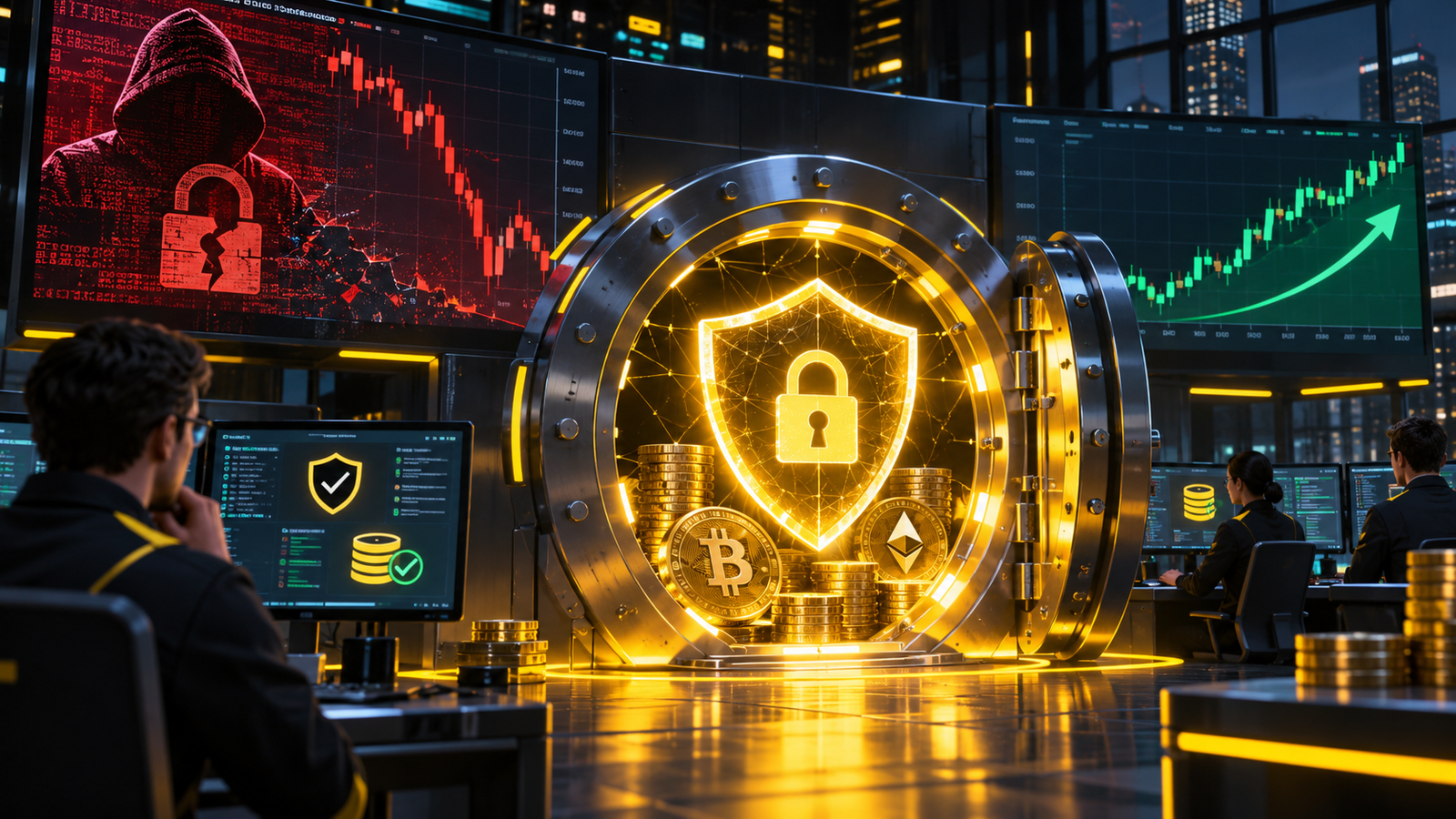
Binance hack recovery 2026 has advanced after the cryptocurrency exchange said it had replenished approximately 95% of affected token assets following a record $6.3 billion theft on October 29. In a November 1 security update, Binance reported that the ten major affected tokens were backed by reserves at a 1:1 ratio and that it was working to source the remaining less-liquid assets. The exchange previously allocated more than $6.34 billion in company resources to protect users, drawing on its Secure Asset Fund for Users (SAFU), Futures Insurance Fund and corporate treasury. That commitment is not the same as recovering all stolen assets from the attackers. Separately, Binance said industry partners had frozen roughly $3 billion in implicated assets on-chain. The FBI attributed the attack to North Korea-linked TraderTraitor activity in an October 31 public alert. Binance began reopening withdrawals in phases on November 1, while Reuters reported billions of dollars in customer outflows as the service resumed. This article separates confirmed financial commitments, replenishment progress, frozen funds and law-enforcement attribution.
Binance Hack Recovery 2026: Quick Facts
Incident time: Around October 29, 2026, 20:05 UTC.
Exchange: Binance.
Reported stolen assets: Approximately $6.3 billion.
Affected infrastructure: Binance hot wallets, according to its official update.
Funds allocated by Binance: More than $6.34 billion.
Initial replenishment: About 80%, reported October 30.
Later replenishment: About 90%, reported October 31.
Latest official replenishment: Approximately 95%, reported November 1.
Outstanding assets: Roughly 5%, mainly less-liquid tokens.
Top ten assets Binance says are fully backed: BTC, ETH, USDT, BNB, SOL, USDC, XRP, USD1, RLUSD and ZEC.
Assets reportedly frozen on-chain: Approximately $3 billion.
Customer loss policy: Binance promises to absorb financial impact, not transfer it to users.
Withdrawal resumption: Began in phases on November 1, 2026.
Reported early net withdrawals: Around $3.64 billion during first nine and a half hours, according to Reuters.
Attribution: FBI identified North Korea’s TraderTraitor activity on October 31.
Technical investigation: Continued; Binance promised a post-incident report.
Important distinction: Funds set aside, tokens replenished and stolen assets frozen are different measures.
What Happened During the Binance Cyberattack?
Binance’s October 30 incident statement described unauthorized withdrawals from the exchange’s hot wallets around 20:05 UTC on October 29. The company estimated the overall loss at approximately $6.3 billion in digital assets. Hot wallets are systems connected to online infrastructure to facilitate transactions, unlike cold storage that is designed to remain isolated from routine online access. Binance’s preliminary investigation pointed to a compromised engineering laptop and unauthorized access to operational infrastructure, while the company said it had not found evidence that wallet private keys were directly exposed. These statements are preliminary findings, and the company has said that a complete technical postmortem will follow its investigation.
Has Binance Completely Recovered the $6.3 Billion?
Not in the sense that all stolen cryptocurrency has been returned by the people responsible. The verified development is that Binance has allocated sufficient corporate and protection resources to cover the estimated incident value and has replenished most affected token balances. The November 1 company announcement put replenishment at approximately 95%, with the remaining 5% described as less-liquid assets still being sourced through markets and over-the-counter channels. The earlier allocation of more than $6.34 billion does not establish that every token had already been purchased or restored in kind. Nor does freezing some suspect funds mean they were necessarily recovered and released to the rightful owners.
What Does 95% Asset Replenishment Mean?
Replenishment means replacing token balances or reserves affected by the theft using other resources. The process may involve purchases of the same digital assets in the open market, trades with professional counterparties and existing company holdings. This differs from retrieving the exact cryptocurrency units that attackers moved away from compromised wallets. In its November 1 announcement, Binance said the remaining 5% consisted mostly of assets outside the ten leading tokens listed in its update. Those tokens can be difficult to purchase quickly in large amounts without materially affecting market prices. The company reported progress but did not declare the full token-replenishment process complete.
Why Did Binance Set Aside More Than $6.34 Billion?
Binance says it intends to absorb the losses rather than make users bear the financial consequences. On October 30, the exchange announced that more than $6.34 billion was earmarked from company resources, including its SAFU reserve and corporate treasury. The stated sum exceeds the approximate $6.3 billion estimated loss, providing an indication of its financial commitment. The distinction between reserved funds and completed replacement remains important: allocating resources is a balance-sheet decision, while repurchasing affected token amounts and reconciling reserves require separate execution. The company’s promise should be attributed as its position, not presented as an independently audited statement that every possible customer impact has been resolved.
What Is Binance SAFU?
The Secure Asset Fund for Users, commonly known as SAFU, is Binance’s user-protection reserve. It is intended to help address exceptional incidents affecting the exchange’s users. Binance says that SAFU resources, along with its own treasury and portions of the Futures Insurance Fund, are being used to restore financial backing after the breach. These sources have different purposes and governance conditions, which is why they should not be described as a single unrestricted account. A protection reserve is relevant to customer confidence, but it does not make cryptocurrency trading risk-free or substitute for independent evaluation of exchange controls.
What Is the Futures Insurance Fund?
A futures insurance fund is designed to support mechanisms associated with derivatives trading risks, and its regulatory or operational treatment differs from ordinary customer spot holdings. Binance’s recovery communications identified part of its Futures Insurance Fund among the resources used to replenish affected balances. The exchange also indicated that a remaining balance would be retained in line with applicable requirements. It would be misleading to claim that the entire fund had been drained or that every customer was being compensated from futures contributions alone. The official recovery plan draws on several identified pools of company resources.
Were Approximately $3 Billion of Stolen Assets Frozen?
Binance reported that blockchain partners and asset issuers helped freeze about $3 billion in implicated assets on-chain during the initial response. Some digital asset issuers can freeze tokens under their control when legally and technically appropriate, which may prevent certain stolen balances from being transferred. However, frozen assets are not necessarily returned to an exchange or individual customer immediately. Ownership claims, legal processes and technical requirements can affect recovery. The $3 billion freeze figure should not be added to the $6.34 billion allocated by Binance as though it represents a separate confirmed gain to customers, because such figures describe different stages of mitigation and may overlap.
Who Does the FBI Say Was Responsible?
On October 31, the US Federal Bureau of Investigation issued a public cyber alert attributing the theft of more than $6 billion from Binance to North Korea-linked TraderTraitor activity. The FBI said it was observing efforts to convert stolen virtual assets, primarily into Ethereum, and warned industry participants about potential use of decentralized finance and instant-swap services for laundering. This is an official law-enforcement attribution. The FBI did not release every underlying piece of investigative evidence in its public alert, and the attribution should be clearly credited to the agency rather than framed as an independent finding by Mukhbir.
What Is the TraderTraitor Group?
TraderTraitor is the name used by US authorities for specific malicious cyber activity linked to North Korea. The October 31 alert associates the group with the Binance theft and urges cryptocurrency service providers to help disrupt transactions from known implicated addresses. Public reporting also connects TraderTraitor activity to the broader Lazarus-linked ecosystem, but technical attribution can involve overlapping terminology and different investigative assessments. A responsible report uses the exact FBI description and avoids claiming to know the identity of every individual attacker. The investigation and efforts to follow the stolen assets remain ongoing.
How Could the Attackers Move So Much Cryptocurrency?
Blockchain networks can allow large digital asset transfers to occur rapidly once an attacker gains effective control over transaction-authorizing systems. Binance’s initial description discussed an engineering-laptop compromise that may have enabled unauthorized transactions through service infrastructure. Other reporting describes automated withdrawals and attempts to conceal traces. These are descriptions of a complex security incident, not proof that any specific employee intentionally cooperated with attackers. The company has not released its promised final technical report, so details of the exploit chain and any additional compromised components should be treated as provisional. The central verified fact is that unauthorized hot-wallet withdrawals occurred.
What Is a Hot Wallet and Why Does It Matter?
A hot wallet is a cryptocurrency custody mechanism that remains connected to networked systems to support frequent transfers. Exchanges use such infrastructure because customers expect deposits and withdrawals to be processed efficiently. The connectivity also creates operational security risks that must be managed through access controls, monitoring, segregation and emergency procedures. Cold storage typically involves stronger separation from routine internet access but may be slower for transactions. Binance’s report identifies its hot-wallet systems as affected. The distinction helps readers understand the infrastructure involved without assuming that every Binance wallet or private key was compromised.
Did Binance Suspend Withdrawals?
Yes. Binance temporarily stopped withdrawals while it investigated the incident, contained the compromised infrastructure and checked whether services could resume safely. Its November 1 recovery announcement set out a phased reopening that began that day across selected networks and tokens. Deposit services remained available according to the company’s update. Pausing withdrawals was an operational response to a major security incident; it does not, by itself, mean all balances were lost. Conversely, reopening services does not mean the technical investigation or final asset replenishment is complete. Users should check the current network status for specific assets before relying on an outdated general announcement.
Which Withdrawal Networks Reopened First?
Binance’s November 1 announcement listed phased service restoration for networks including Bitcoin, Ethereum, BNB Smart Chain, Tron, Solana, XRP Ledger and several others. Eligibility depended on the specific asset and network combination, with the exchange stating that it would prioritise services according to customer demand and security readiness. Some requests could experience delays during the initial restart. Users should check the official withdrawal interface rather than assume a network mentioned on November 1 remains available without interruption on every subsequent date. Network status can change as platforms complete additional checks.
What Did Reuters Report About Customer Withdrawals?
Reuters reported on November 2 that approximately $3.64 billion left Binance on a net basis in the first nine and a half hours after withdrawals partially reopened. It described about $4.6 billion in gross outflows against around $1 billion in deposits during the measured period. Net outflows represent the difference between withdrawals and deposits, not an additional hack or a new theft. Analysts cited in the report characterised the volume as modest relative to Binance’s total assets, while acknowledging that institutional investors might reconsider exchange security practices. These numbers are time-specific market observations rather than a prediction of total withdrawals.
How Did Crypto Markets React?
The breach generated anxiety across digital asset markets and contributed to wider discussions about custody risks. Reuters reported declines in major cryptocurrencies and notable outflows from US spot Bitcoin exchange-traded funds during the period surrounding the incident. Market prices can respond to numerous influences at once, so it would be inaccurate to attribute every price movement solely to the Binance attack. Some assets recovered from earlier lows as withdrawal services returned. A balanced report should describe dated market movements rather than invent a fixed percentage loss or suggest that prices will necessarily move in one direction next.
What Are Proof of Reserves?
Proof of Reserves, or PoR, refers to methods exchanges use to help customers assess whether specified assets are backed by corresponding reserves. Binance published a new snapshot connected with its October 31 recovery update and said more detailed cryptographic proofs would follow once computation was complete. The November 1 announcement stated that ten major affected tokens had full reserve backing. PoR can provide useful transparency, but a snapshot is not identical to an independent audit of every liability, internal control or future financial risk. Readers should distinguish the exchange’s published verification tools from a conclusion that all possible operational concerns have been settled.
Which Ten Tokens Were Fully Backed?
Binance identified BTC, ETH, USDT, BNB, SOL, USDC, XRP, USD1, RLUSD and ZEC as the ten affected assets with full reserve backing under its November 1 update. The company was still sourcing other affected tokens with lower liquidity. The fact that these major assets were fully backed is an important part of the recovery story, but it does not justify claiming that every token supported by the platform had already been fully replenished. Investors should read the announcement as a dated status report and verify any newer information through the official exchange channels.
What Is the Difference Between Frozen and Recovered Crypto?
Freezing a token means restricting its movement under the mechanisms available to an issuer or relevant infrastructure. Recovery means that legal and operational control of stolen property has been returned to the rightful party. The two are not equivalent. An exchange may also replenish users using its own resources while law enforcement continues trying to recover stolen assets. That creates a third category: customer protection achieved through a replacement allocation. This distinction explains why reports about $3 billion frozen and more than $6.34 billion allocated should not be combined to claim that the exchange has retrieved over $9 billion or earned a profit from the incident.
Are Binance Users Guaranteed No Loss?
Binance has publicly committed to absorb the direct financial impact of the stolen funds and said customers should not bear the loss. That is a strong company assurance, but an editorial report should present it as Binance’s commitment. Users may still encounter withdrawal delays, market volatility or service disruptions unrelated to whether their token balances are financially backed. The company continues technical remediation, and operational conditions can change. Readers should not interpret a promise concerning this specific security incident as a blanket guarantee against trading losses, future cyberattacks or losses arising from other activities.
What Does This Mean for Pakistani Crypto Investors?
Many readers in Pakistan follow global cryptocurrency platforms and may wonder whether their funds are affected. The available official statements concern Binance’s global incident and do not provide a verified count of Pakistani customers who suffered direct losses. It would be irresponsible to invent a national compensation total or claim that local funds are exempt from all possible risks. Users in Pakistan should check their own balances, available network withdrawal status and official security notices. Questions about service-provider regulation are separate from the exchange’s global asset-replenishment announcement. No new Pakistani government refund programme has been confirmed in these sources.
How Should Users Respond to Fake Refund Messages?
Cybercriminals can exploit a highly publicised breach by sending phishing messages disguised as support announcements or compensation instructions. A legitimate exchange should not require customers to hand over seed phrases or passwords to claim protection. Users should navigate independently to the official website or application, verify the source of a security announcement and use the established support channel rather than a link in an unsolicited chat. They should be especially cautious of offers promising immediate refunds in return for a transfer fee. Binance itself has warned users to rely on official channels while it completes the recovery process.
Why Institutional Investors Are Watching Closely
Professional traders and institutional investors often manage large positions and need reliable custody, settlement and withdrawal infrastructure. The Binance incident shows that even major exchanges can face severe operational security challenges. Reuters reported that analysts expected some institutional customers and market makers to become more cautious about cryptocurrency custody risks following the breach. That does not prove all such investors are leaving the market or that every platform faces the same vulnerabilities. It illustrates the importance of examining operational resilience, counterparty exposure, incident disclosure and contingency planning in addition to quoted trading fees.
How Exchanges Can Strengthen Security
The Binance investigation has focused attention on controls around privileged access, engineer devices, withdrawal authorisation and operational monitoring. General risk-reduction measures can include limiting access to sensitive systems, requiring multiple approvals for major transfers, segregating environments, continuously reviewing permissions and testing incident-response plans. These are broad cybersecurity principles, not a claim that any one missing control definitively caused the Binance attack. The precise exploit chain remains subject to the exchange’s postmortem and law-enforcement investigation. Security lessons should be assessed from final technical evidence rather than rumours circulating immediately after a breach.
What Happens to the Remaining Five Percent?
As of the November 1 official update, Binance said it was purchasing the remaining approximately 5% of affected assets through market and over-the-counter channels. The company described these tokens as comparatively illiquid, meaning large purchases may be more difficult to complete quickly at prevailing prices. There was no confirmed deadline in that announcement for full replacement of every remaining token. A subsequent status report could change the figure, so the November 2 article should identify its information cut-off explicitly. Until a newer official confirmation emerges, saying that all affected token balances have been fully replenished would go beyond the evidence.
Will Binance Publish a Full Incident Report?
Binance says it will release a detailed post-incident report after its investigation is complete. Such a document may clarify how the attack developed, what systems were affected and what safeguards have changed. The company has already described preliminary findings but has not yet delivered the complete technical account in the official updates reviewed here. An independent assessment will need to compare the final report with blockchain evidence and law-enforcement information where available. News outlets should not write an exact exploit narrative as proven before those findings are published. Transparency about what remains unknown is essential to credible technology reporting.
How the FBI and Industry Partners Are Working on Recovery
The FBI, US Secret Service and Internal Revenue Service Criminal Investigation urged relevant private-sector participants to block or trace transactions involving the addresses associated with TraderTraitor activity. Blockchain analytics firms and token issuers can assist by following transaction trails or limiting certain tokens under applicable processes. These measures may reduce the ability of attackers to liquidate stolen holdings, although blockchain tracing does not automatically secure a criminal conviction or return funds to users. The FBI’s public alert focuses on disrupting laundering and gathering assistance from service providers. It should not be expanded into unsupported accusations against unrelated companies or individuals.
Could This Incident Change Crypto Regulation?
Large cybersecurity events can prompt regulators to review exchange custody, incident reporting and operational safeguards. Reporting on the attack describes renewed interest in how digital asset companies manage hot wallets and communicate with customers. Specific new laws or enforcement actions should be reported only if authorised institutions actually announce them. The October 29 breach does not itself create a new worldwide rule or prove that every government has adopted the same policy. For Pakistan, any implications for local regulation would require separate official statements from the relevant authorities rather than inference from global market reaction.
Why the Timing of Updates Matters
The status changed rapidly between October 30 and November 1. Binance first discussed about 80% coverage, then announced roughly 90% replenishment, followed by approximately 95% as services began reopening. Reports published on different days may therefore appear inconsistent without being false at the time they were written. A responsible story must give the announcement date beside each percentage. The November 2 article uses the latest official status found at the time of verification, not the earliest figure repeated by viral posts. If a later official update confirms full replenishment, a new dated revision should replace the current 95% statement.
What Is the Main Takeaway for Crypto Users?
The essential facts are that Binance reported a $6.3 billion theft, committed more than $6.34 billion of company and protection resources, replenished about 95% of affected assets by November 1 and resumed withdrawals gradually. The FBI attributed the theft to North Korea-linked TraderTraitor activity. The stolen cryptocurrency itself has not all been returned, and the technical investigation remains underway. Readers should avoid treating corporate financial coverage as a guarantee that every service is fully restored or every operational risk has disappeared. Verified exchange notices, network availability and appropriate account security remain important.
Conclusion
Binance has made substantial progress in responding to the October 29, 2026 cyberattack, but reports that the exchange has fully recovered all stolen funds overstate what was confirmed by November 2. The company allocated more than $6.34 billion to absorb an estimated $6.3 billion theft and said approximately 95% of affected token reserves had been replenished by November 1. Around $3 billion of implicated assets had reportedly been frozen on-chain, and withdrawal services were returning in phases. The FBI publicly attributed the attack to North Korea-linked TraderTraitor activity. The remaining asset replacement, detailed technical investigation and any final recovery of stolen funds still require further updates. Mukhbir will keep these separate milestones clear to readers.
Frequently Asked Questions
Was Binance hacked for $6.3 billion in October 2026?
Yes. Binance officially reported approximately $6.3 billion in unauthorized hot-wallet withdrawals on October 29.
Has Binance recovered every stolen dollar?
No. It allocated resources to cover losses and reported 95% token replenishment, which is different from recovering every stolen asset.
How much money did Binance allocate to cover losses?
The exchange said it set aside more than $6.34 billion from protection and corporate resources.
What percentage of assets had been replenished by November 1?
Binance’s November 1 update reported about 95% replenishment, with 5% of less-liquid tokens still outstanding.
Did partners freeze $3 billion in stolen cryptocurrency?
Binance reported approximately $3 billion frozen on-chain, although freezing assets is not the same as recovering them.
Who did the FBI blame for the Binance cyberattack?
The FBI attributed the theft to North Korea-linked TraderTraitor activity in its October 31 public alert.
Can Binance users withdraw funds again?
Binance began restoring withdrawals in phases on November 1, with availability depending on the selected token and network.
Are Pakistani Binance users confirmed to have lost a specific amount?
No reliable Pakistan-specific loss figure was established in the reviewed official and Reuters reporting.
About The Author