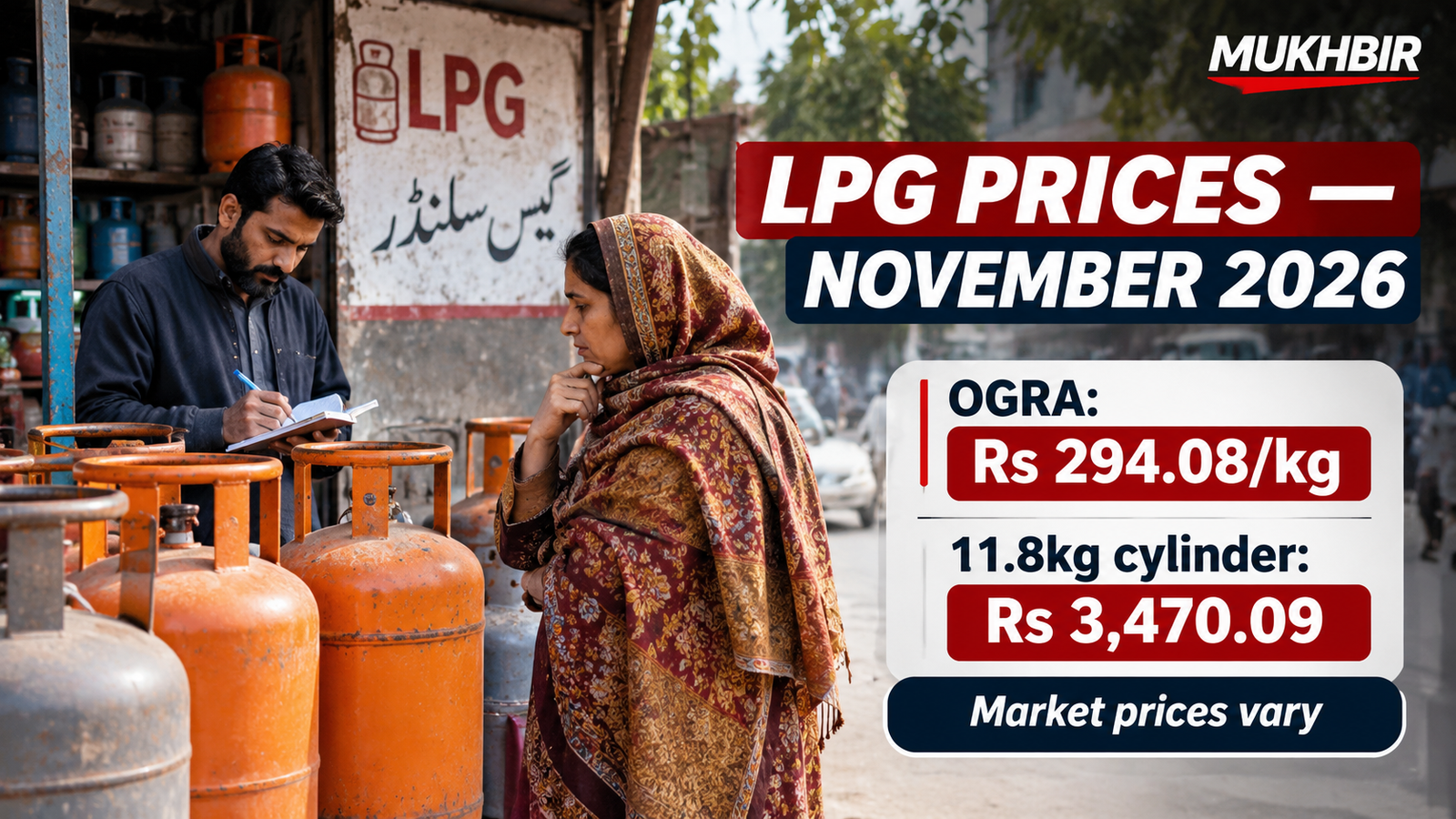
The LPG price in Pakistan November 2026 has increased under a fresh notification from the Oil and Gas Regulatory Authority (OGRA), adding to household energy costs at a time of reported supply disruption. The official consumer price is approximately Rs294.08 per kilogram, while a standard 11.8-kilogram domestic cylinder costs Rs3,470.09 from November 1, up Rs173.86 from October’s Rs3,296.23. That regulated rate differs sharply from some reported open-market prices: Dawn reported that LPG was being sold for as much as Rs630 per kilogram in certain areas, more than twice the official level, while company-operated franchises were charging as much as Rs400 in some instances. These higher figures are market observations, not new OGRA-approved rates. The difference matters for families who depend on cylinders for cooking and businesses that use LPG for daily operations. This article explains the officially notified prices, how they are calculated and why reported market prices may be much higher.
LPG Price in Pakistan November 2026: Quick Facts
Official OGRA consumer rate: Rs294.08 per kilogram (rounded).
Exact rate cited by Business Recorder: Rs294.07 per kg based on the notified per-tonne value; reporting rounds differently.
Standard 11.8kg cylinder: Rs3,470.09.
October 2026 cylinder price: Rs3,296.23.
Increase per domestic cylinder: Rs173.86.
Monthly LPG consumer-price increase: About 5.27 percent.
Increase per kilogram: Approximately Rs14.73 to Rs14.74, depending on rounding.
Effective date: November 1, 2026.
OGRA notification date: October 31, 2026.
Official notified price per tonne: Approximately Rs294,075.
Reported open-market price: Up to Rs630 per kg in some areas, according to Dawn.
Reported company-operated franchise price: Up to Rs400 per kg in some locations, according to Dawn.
Reported commercial cylinder (45.4kg equivalent): Approximately Rs13,351, as calculated from the notified rate.
Main official price drivers: Saudi Aramco contract price and the rupee-dollar exchange rate.
Saudi Aramco contract-price change reported by OGRA: Increase of 6.47 percent.
Average exchange-rate movement reported by OGRA: Decrease of approximately 0.12 percent.
Important distinction: Official prices and reported street prices are not interchangeable.
What Did OGRA Announce for November 2026?
OGRA’s notified LPG prices page lists a specific notification for November 2026. Contemporary reports from Business Recorder and The News reproduce the main rates: approximately Rs294.08 per kilogram and Rs3,470.09 for an 11.8kg domestic cylinder. The new prices came into effect on November 1 following the October 31 announcement. The monthly change is roughly Rs14.73 per kilogram, reflecting the increase in the applicable benchmark and pricing calculation. Journalists should use the actual notification as the primary rate reference and distinguish a rounding difference of one paisa from a substantive disagreement. For practical consumer reporting, Rs294.08 per kg and Rs3,470.09 per household cylinder are the relevant headline figures.
November Versus October LPG Prices
In October, the officially notified rate was around Rs279.34 per kilogram and Rs3,296.23 for the standard domestic cylinder. November’s corresponding figures are approximately Rs294.08 and Rs3,470.09. That means a household buying the same size cylinder pays Rs173.86 more under the new notified rate. The increase is about 5.27 percent month over month. This change applies to the official benchmark, not to every transaction in the market. Where retailers already charge substantially above the notified ceiling, a household’s actual bill may reflect shortages or local market conditions as well as the monthly rate revision. The official comparison should not be used to normalize unofficial prices.
Why Is LPG Reportedly Selling at Rs630 per Kilogram?
Dawn’s November 1 report described a severe gap between OGRA’s official retail rate and prices observed in the open market. It cited charges reaching Rs630 per kilogram, while company-linked franchises reportedly sold LPG for up to Rs400 in some circumstances. The newspaper connected the shortage with disruptions to imports amid the Iran conflict and border-related supply difficulties. These figures describe reported transactions or market observations, not a nationally applicable retail tariff. Prices can differ by seller and location. Any article claiming a universal Rs630 rate throughout Pakistan would be misleading. Consumers should compare the actual amount charged with the current official notification and retain receipts where possible.
Official LPG Rate Versus Open-Market Rate
A regulated price is the figure notified by the sector regulator, whereas a quoted open-market price is what a seller may reportedly charge in a particular situation. The two should be presented side by side rather than blended into one average. For November 2026, OGRA’s rate is roughly Rs294 per kilogram, yet Dawn reported open-market charges of up to Rs630 per kilogram. The second figure is over twice the first. That does not mean OGRA approved a doubling of the consumer price. It instead highlights reported supply and enforcement concerns. A credible comparison clearly identifies the date, source, cylinder weight and whether the figure is a regulated rate or a reported retail observation.
How Much Does an 11.8kg LPG Cylinder Cost?
The standard domestic cylinder commonly used in national pricing reports contains 11.8 kilograms of LPG. Under the November notification, its price is Rs3,470.09. This is an officially notified rate rather than a prediction of what every retailer will charge. A buyer should also distinguish the cost of gas from deposits or separate hardware charges for a cylinder and its regulator where those are relevant to a transaction. An advertised rate that fails to specify whether it includes a cylinder deposit can be confusing. Consumers comparing offers should ask about the refill quantity, applicable price and any legitimately separate charges before paying.
What Is the Price of a Commercial LPG Cylinder?
The News reported that a standard 45.4kg commercial-cylinder equivalent would cost around Rs13,351 in November, up by roughly Rs669 from the preceding month. This amount follows the notified per-kilogram rate and the larger cylinder weight. Restaurants, food stalls, bakeries and other enterprises may use LPG in their operations, making the increase a business expense as well as a household issue. However, a particular business may have different cylinder arrangements, delivery charges or contractual supply terms. Reporters should not imply that OGRA has established a completely separate universal commercial price without checking the notification. The calculated amount provides a practical benchmark for comparison.
Why Did OGRA Raise LPG Prices?
OGRA links the monthly producer and consumer pricing mechanism to the Saudi Aramco contract price and the average U.S. dollar exchange rate. According to its October 31 explanation, the relevant Saudi Aramco benchmark rose by about 6.47 percent, while the average exchange rate decreased slightly by approximately 0.12 percent. The combined effect contributed to the notified price increase. This shows why domestic LPG prices may change even without a new tax announcement. The dollar-linked international benchmark is important because Pakistan depends on imported LPG to meet much of its demand. Changes in global prices and supply conditions can therefore affect the domestic market.
How the Iran Supply Disruption Affects Pakistan
Dawn’s October 30 editorial discussed disrupted LPG supplies linked to the closure of the Iran border and the broader conflict. It noted that a substantial share of Pakistan’s LPG demand is supplied through imports, including flows associated with Iran. Restrictions or interruptions to cross-border movement can reduce available volumes in domestic markets. The newspaper also explained that bringing more cargo by sea may be difficult under prevailing regional conditions. Such disruptions do not establish a single cause of every price charged at every shop, but they help explain why the market has been under strain. Actual import volumes and relief measures should be verified through subsequent official updates.
Does the Iran Conflict Explain All Price Differences?
A supply disruption can contribute to rising prices, but it is not sufficient evidence to accuse an individual retailer, company or government officer of intentionally causing a shortage. Market conditions may also reflect transport costs, local inventories, demand and the ability of enforcement authorities to apply the notified rate. Dawn reported that officials had earlier expressed concerns about possible irregular supply practices and had called for coordinated action. Those reported concerns should remain attributed, not converted into proven allegations against unnamed businesses. To understand the full price gap, regulators would need timely evidence on available supply, distribution, trading conditions and retail transactions.
Why Winter Demand Matters
LPG demand often becomes more sensitive as colder weather arrives, particularly in households that rely on cylinders for cooking or heating. Businesses may also adjust fuel consumption according to seasonal activity. An increase in demand during a period of disrupted supply can create additional pressure on prices and availability. That does not mean an exact future price can be predicted. If imports recover, local shortages may ease; if disruption persists, conditions may remain difficult. Readers should treat forecasts as conditional rather than assume that every winter month necessarily brings an identical increase. The next official rate will depend on the applicable pricing calculation and market conditions at that time.
How LPG Prices Affect Household Budgets
Families using LPG instead of piped natural gas face the cost of refilling cylinders for cooking and other approved domestic needs. A Rs173.86 rise in the notified 11.8kg cylinder price is a direct increase in the cost of the same volume of fuel. The financial burden becomes more pronounced where actual retail charges exceed the regulated benchmark. Households with limited incomes may need to budget carefully, but it would be inappropriate to tell families to use unsafe substitutes or skip essential heating and cooking precautions. Accurate price information helps people distinguish an official monthly change from unusually high quotes in their local markets.
What About Restaurants and Small Businesses?
Restaurants, bakeries, tea stalls and other small enterprises that use LPG may face higher fuel bills from both the new notified rate and localized availability constraints. Some businesses might adjust operating expenses or purchasing arrangements in response. The impact differs according to how much LPG they use and whether they have access to another approved energy source. It would be speculative to claim that all food prices have already risen by a fixed percentage as a direct result of this notification. Business owners can use the official per-kilogram rate as a reference while checking supply contracts and the full cost of a refill.
What Is an LPG Producer Price?
The producer-price figure quoted in OGRA coverage is an amount per tonne used within the regulator’s pricing calculation. For November, Dawn described a figure of approximately Rs294,075 per tonne compared with around Rs279,341 in October, although regulatory price tables include different classifications of producer and consumer components. The practical figure for household readers remains the officially notified consumer rate and cylinder price. When reporting LPG prices, mixing per-tonne, per-kilogram and cylinder measures without labels can cause confusion. A tonne contains 1,000 kilograms, but the figures should still be read in the context of their specified supply-chain stage.
What Role Do Taxes and Margins Play?
The News reported that the notified LPG price structure includes a petroleum levy, GST and marketing, distribution and transportation margins. These charges and margins form part of the regulatory calculation and can change over time through official policy decisions. Consumers generally need the final notified rate rather than an isolated tax figure to understand the current cost of a standard refill. Claims that a particular new tax alone caused the full November increase would need evidence from the actual notification. In the reporting reviewed, OGRA specifically connected the monthly price movement to Saudi Aramco’s benchmark and exchange-rate inputs.
Could LPG Distributors Go on Strike?
Dawn reported a warning from an LPG association about the possibility of strike action from November 16 in response to a new policy. This should be framed as a reported warning or proposal rather than a confirmed nationwide shutdown. As of the November 1 reporting date, November 16 is still in the future, and there is no basis to claim that the threatened action has already occurred. Association statements and government responses may change, so an updated article should recheck the position closer to the date. News outlets should avoid language that unnecessarily alarms consumers or encourages panic buying based only on a conditional warning.
What Has the Government Said About Supply?
Reporting in late October described officials discussing steps to address LPG shortages and the impact of reduced cross-border flows. Dawn reported that the petroleum minister had addressed supply disruption in the National Assembly and referred to efforts to increase seaborne imports. Other coverage discussed action against suspected irregular inventory management. Announced efforts are not proof that supplies have normalized or that all affected districts have received additional volumes. A responsible update would identify actual volumes delivered, dates of arrival and retail-price effects when official figures become available. The public needs measurable changes, not only promises or generalized assurances.
Are Prices the Same in Every Pakistani City?
OGRA publishes the nationwide notified benchmark, but media reports suggest that actual market conditions differ between locations. Availability, logistics and local retail behavior can create widely differing quoted prices in practice. An isolated observation in one city cannot be treated as a verified rate for Karachi, Lahore, Islamabad, Peshawar, Quetta and smaller districts simultaneously. Mukhbir therefore uses the officially notified figure for the national price and labels higher market prices as reported in certain areas. Readers seeking a current quote should check their local authorized supplier and, when necessary, compare it with the regulator’s notification.
How to Check the Official November LPG Notification
The most reliable starting point is OGRA’s official website, which maintains a list of LPG notified prices by month. The November 2026 notification is identified on that page. Readers can compare the effective date, consumer price per kilogram and standard cylinder amount against the prices quoted by a seller. Independent reporting by Business Recorder and The News provides corroboration of the main figures. Unofficial price calculators and social posts may round the numbers differently or fail to distinguish a market quote from the legal benchmark. Always check the date of a displayed rate because the monthly notification may change.
What Should Buyers Do if a Retailer Quotes More?
Consumers can ask the retailer to clarify the weight of LPG being sold, the refill price and whether separate charges relate to actual equipment rather than the fuel itself. Keeping the purchase receipt and noting the location, date and amount can help if a price complaint becomes necessary. Reports about above-notified prices should be made through the appropriate official complaint mechanisms rather than confronting workers or assuming an individual employee controls supply conditions. The availability and details of complaint channels should be checked on OGRA’s current official website. Mukhbir does not invent a hotline or guarantee a particular enforcement result.
Safe LPG Cylinder Use Remains Essential
Price pressure should not lead consumers to compromise on gas-cylinder safety. Use cylinders, regulators and hoses suitable for LPG and have equipment inspected by a qualified professional where appropriate. Cylinders should be handled upright and away from sources of heat, and users should avoid checking for leaks with a flame. If a leak is suspected, avoid ignition sources and follow recognized emergency guidance. Unauthorized cylinder modifications or makeshift refilling can be hazardous. These precautions are general safety guidance, not claims that a specific shop or manufacturer in the current price story has breached safety requirements.
How Pakistan’s LPG Supply Chain Works
LPG reaches end users through local production and imports, storage facilities, distributors and retailers. Price and availability depend on several connected stages, which means disruption upstream can affect multiple locations. The regulator’s notified price is only one part of the consumer experience; physical product must also be available through functioning delivery channels. Demand from households and commercial customers can vary by region and season. An improved supply picture would require dependable imports, efficient distribution and credible market supervision. A meaningful news update should distinguish physical shortages from financial price changes rather than treating them as the same issue.
What Could Happen to December LPG Prices?
December’s official rate cannot be established from the November notification alone. It will depend in part on future Saudi Aramco contract prices, exchange-rate inputs and any relevant adjustments to the regulatory formula. Market retail quotes may also respond to supply conditions independently of the notified benchmark. Forecasting a certain increase or decrease without those future inputs would be speculation. Readers should look for OGRA’s next official notification and date-specific news reporting. The current November 1 story documents the rate in force now, the October comparison and the reported market gap; it does not predict a guaranteed future price.
Why This Story Matters for Pakistan’s Economy
LPG is an important fuel for households and businesses, particularly where natural-gas connections are limited or unreliable. Higher costs affect everyday budgets, while shortages can disrupt small enterprises and commercial kitchens. The unusually large difference between notified and reported market prices also raises questions about the practical effectiveness of supply and retail arrangements. These are public-interest concerns that can be discussed without assigning unproven motives to specific actors. For economists and businesses, the situation demonstrates how international energy prices, regional trade disruption and domestic distribution conditions can interact in an import-dependent market.
What Readers Should Watch Next
The next useful indicators are confirmed LPG import volumes, any updates from the Petroleum Division or OGRA, changes in retail availability and the outcome of discussions with LPG distributors. Reports about strike plans should be checked for follow-up announcements rather than carried forward as inevitable. Consumers should also look for updated official prices if new notifications are issued. Mukhbir will distinguish the regulated rate from local street quotes and report changes with clear timestamps. Tracking those practical developments will make the story more useful than repeating an undated claim that LPG is simply becoming expensive.
Conclusion
The LPG price in Pakistan November 2026 has risen to approximately Rs294.08 per kilogram under OGRA’s latest notification, bringing the official cost of an 11.8kg domestic cylinder to Rs3,470.09. The cylinder costs Rs173.86 more than in October. At the same time, Dawn reports that market shortages have driven some local quotes to as much as Rs630 per kilogram, well above the notified rate. These prices have different meanings and should not be conflated. The price gap and supply challenges matter to households and businesses, especially with colder weather approaching. Further updates should rely on official notifications and dated, location-specific market evidence.
Frequently Asked Questions
What is the LPG price in Pakistan in November 2026?
OGRA’s notified consumer rate is approximately Rs294.08 per kilogram from November 1, 2026.
How much does an 11.8kg LPG cylinder cost?
The officially notified November price is Rs3,470.09 for an 11.8kg domestic cylinder.
How much did the LPG cylinder price increase?
The price rose by Rs173.86 from Rs3,296.23 in October to Rs3,470.09 in November.
Is the official LPG price Rs630 per kilogram?
No. Rs630 per kilogram is a high open-market rate reported in some areas, not the OGRA-notified nationwide price.
Why did OGRA increase LPG prices?
OGRA cited higher Saudi Aramco contract prices and the applicable exchange-rate calculation.
Why are some shops charging much more?
News reports describe supply disruptions and shortages, although prices and circumstances vary locally.
What is the estimated 45.4kg commercial-cylinder price?
The News reported approximately Rs13,351 based on the November notified rate.
Where can I verify official LPG prices?
Visit OGRA’s official LPG notified prices section and select the November 2026 notification.
About The Author