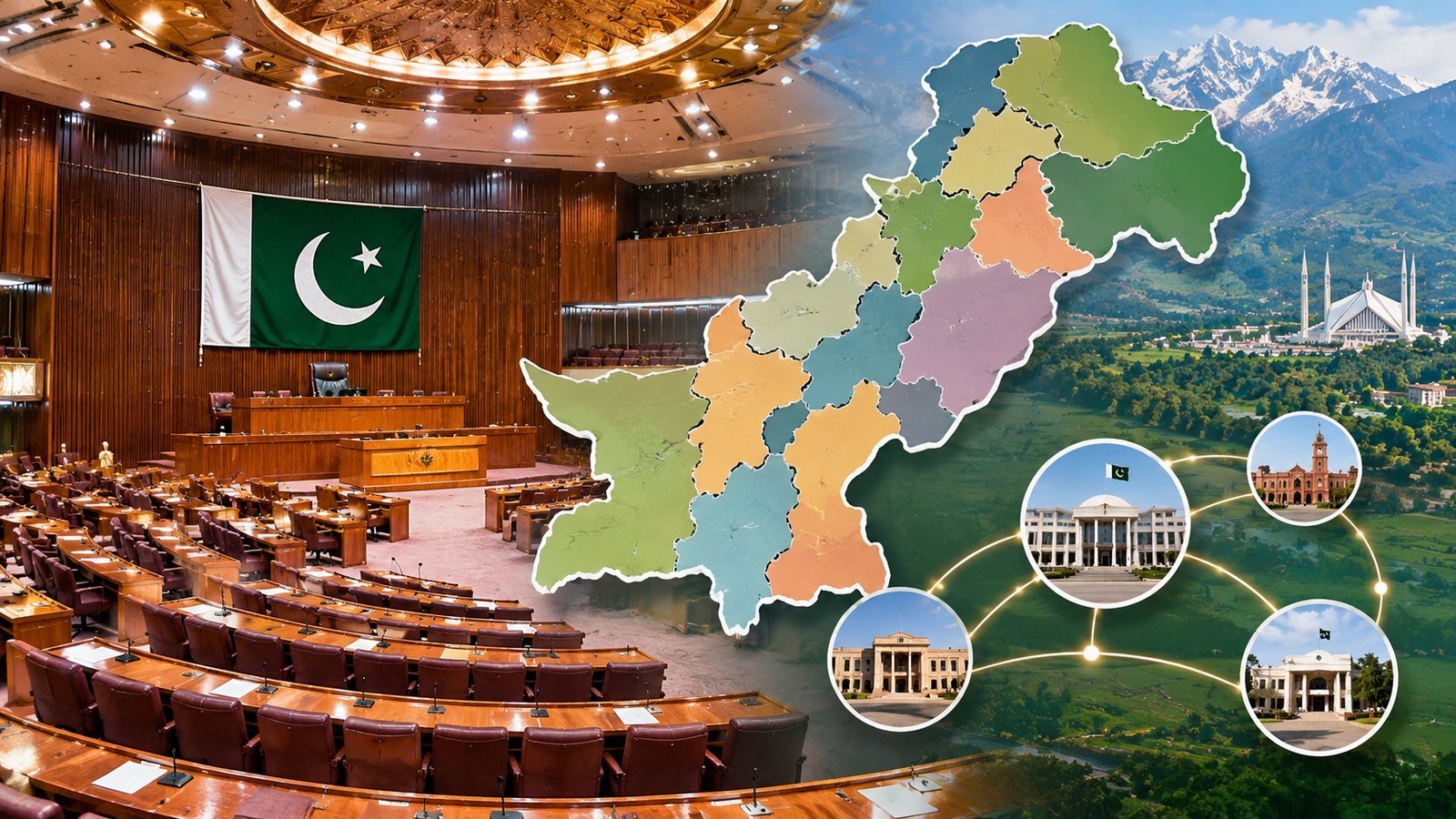
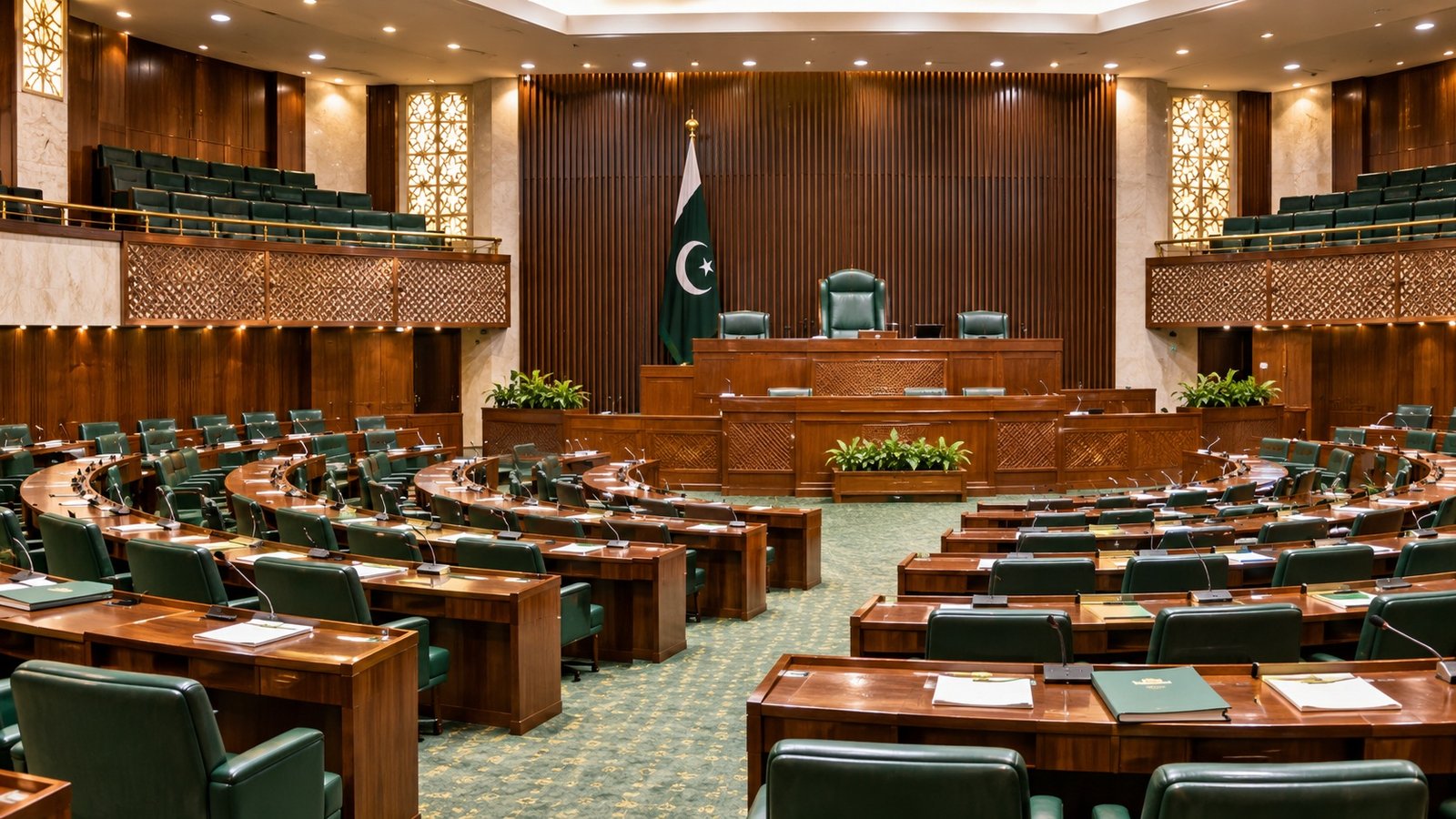
Pakistan’s National Assembly passed 24 bills during its 30th session, held from October 13 to October 30, 2026, in a period of significant legislative activity that also included the unanimous approval of a motion to constitute a Parliamentary Committee on Electoral Reforms.
The National Assembly Secretariat said the approved legislation consisted of 17 government bills and seven private members’ bills. A further 16 bills were introduced during the session, while lawmakers also adopted three resolutions and dealt with hundreds of parliamentary questions and notices.
The figures were made public in a statement issued by the National Assembly on November 5 and reported by several Pakistani news organisations on November 6. The information provides a factual snapshot of the lower house’s recent work and the legislative steps that followed the session.
The development is notable not simply because of the number of bills passed, but also because the session involved consultations among parliamentary parties. According to the National Assembly Secretariat, select committee meetings examined reservations raised by government coalition partners and opposition members, with consultations helping build agreement on a number of issues.
The unanimous motion on electoral reforms is another important part of the parliamentary record. It signals that lawmakers have formally agreed to establish a forum for discussing changes to the electoral framework. It does not, by itself, mean that specific electoral amendments have already been finalised or enacted.
For citizens, the central question is what happens after parliamentary approval: which bills complete the remaining constitutional steps, what changes they introduce, and whether parliamentary committees can turn discussion into practical reforms.
Key Facts: What Happened During the 30th Session?
The National Assembly’s published account and independent reporting provide the following verified details:
The 30th session took place from October 13 to October 30, 2026.
A total of 24 bills were passed: 17 government bills and seven private members’ bills.
Seven of the government bills were transmitted to the Senate, while 10 were sent to the President for assent.
Of the seven private members’ bills, five were transmitted to the Senate and two were sent to the President.
Another 16 bills were introduced: nine government bills and seven private members’ bills.
A motion to constitute a Parliamentary Committee on Electoral Reforms was adopted unanimously.
The House passed three resolutions.
Ministers and parliamentary secretaries answered 298 questions raised by lawmakers.
Of 17 Calling Attention Notices taken up, 15 received responses in the House, while two were referred to the relevant standing committees.
These figures describe the work of the National Assembly during the session. They should not be interpreted as meaning that all 24 bills had already become enforceable laws by October 30. Bills may need to pass through the other parliamentary house or receive presidential assent, depending on their status and the applicable constitutional procedure.
How the 24 Bills Were Processed
The 24 bills passed during the session came from two categories: government legislation and private members’ legislation. Government bills are introduced by ministers or on behalf of the government, while private members’ bills are brought forward by individual members of parliament who are not acting as the government’s legislative sponsor.
The distinction is important because it shows that the session’s legislative work was not limited to proposals originating from the executive. Seven of the bills passed were private members’ bills, demonstrating that individual lawmakers also contributed to the legislative agenda.
The National Assembly Secretariat reported that seven government bills were transmitted to the Senate and 10 were forwarded to the President for assent. In the case of private members’ bills, five were sent to the Senate and two to the President.
These next steps matter. Pakistan has a bicameral Parliament, consisting of the National Assembly and the Senate. Depending on the type of bill and constitutional requirements, legislation may need consideration by both houses before it can be presented for presidential assent. A bill being passed by the National Assembly is therefore an important stage, but it should not automatically be described as a fully enacted law.
The public should also distinguish between bills passed and bills introduced. Sixteen additional bills were introduced during the same session, but introduction is not the same as approval. Those proposals remain part of the legislative process and may require debate, committee scrutiny, amendments and voting before their status changes.
Electoral Reforms Committee: Why the Unanimous Motion Matters
One of the session’s notable decisions was the unanimous adoption of a motion regarding the constitution of a Parliamentary Committee on Electoral Reforms. The motion creates a parliamentary route for lawmakers to discuss the electoral system and consider possible improvements.
Electoral rules affect how elections are administered, how voters are registered, how constituencies are organised, how candidates and political parties participate, and how disputes are handled. A parliamentary committee can provide a forum for representatives to examine these matters, hear different views and consider proposals before any legislative changes are put forward.
The unanimous approval of the motion is significant as a procedural development because it indicates agreement in the House to establish a committee for this purpose. However, unanimity on forming a committee should not be confused with agreement on every possible reform. Members may hold different positions on voter registration, delimitation, election administration, campaign rules, transparency, technology and dispute resolution.
The next stage will be to clarify the committee’s membership, terms of reference, timetable and working process. The News reported on October 31 that the proposed panel was expected to include 30 parliamentarians: 20 from the National Assembly and 10 from the Senate, with party representation linked to their numerical strength in the respective houses. The final membership and formal notification remain separate steps from the motion’s approval.
A committee can only contribute effectively if it gives participating parties and relevant stakeholders an opportunity to present evidence and proposals. Public confidence will depend not only on the formation of the panel but also on the transparency of its discussions and the clarity of any recommendations it eventually makes.
Parliamentary Consultation and the Role of Committees
The National Assembly Secretariat said that select committee meetings were convened to examine reservations and objections raised by government coalition partners and opposition members about proposed legislation. It said sustained consultation and negotiations helped build consensus on most issues.
Committees are a central part of parliamentary work because they allow members to examine proposals in greater detail than is usually possible during a full House sitting. A committee may review the wording of a bill, seek explanations from ministries, consider stakeholder concerns and recommend amendments.
This process can improve legislation by identifying practical problems before a bill is finalised. It can also give members from different political parties an opportunity to raise questions and negotiate changes. However, committee consultation does not remove the need for open debate, voting and scrutiny in the House.
The reported use of select committees during the 30th session offers an example of how parliamentary consultation can be used to address disagreements. It is important to report this as the Secretariat’s account of the process, rather than assume that every party supported every bill or that all reservations were resolved in the same way.
For the public, the value of committee work is ultimately measured by the quality of laws, the clarity of their implementation and whether they address the issues they were designed to resolve.
Question Hour and Parliamentary Oversight
Legislation is only one part of a parliament’s responsibility. Lawmakers also question ministers, seek information from government departments and raise matters that require official responses.
During the 30th session, 298 questions submitted by members were answered by ministers and parliamentary secretaries, according to the National Assembly’s published account. The House also took up 17 Calling Attention Notices. Fifteen received responses from ministers or parliamentary secretaries, while two were referred to the relevant standing committees for further consideration.
Question Hour and Calling Attention Notices are tools of parliamentary oversight. They allow elected representatives to ask about public services, government programmes, administrative decisions and matters affecting their constituencies. Their effectiveness depends on questions being answered accurately and on relevant ministries providing information in a timely manner.
The Secretariat said the Speaker directed relevant ministers and parliamentary secretaries to be present during Question Hour. Senior officials from concerned ministries were also asked to remain available in the galleries during Question Hour and proceedings on Calling Attention Notices, so members could receive timely and authentic answers.
These arrangements can help improve the flow of information between parliament and government departments. The broader test, however, is whether questions lead to follow-up action, policy clarification or solutions to issues raised by citizens.
What the Session’s Figures Do – and Do Not – Tell the Public
The passage of 24 bills is a measurable indicator of legislative activity, but the number alone cannot establish whether every law is effective, fair or beneficial. To assess the quality of legislation, citizens need to know what each bill changes, which groups are affected, how implementation will work and whether sufficient resources are available.
The same principle applies to the 16 bills introduced during the session. Their introduction shows that lawmakers placed additional proposals before the House, but it does not mean those proposals have been approved. Their future progress will depend on the relevant parliamentary procedures.
The electoral reforms motion also needs to be understood precisely. It authorises the process of constituting a parliamentary committee; it does not amount to a completed package of election reforms. Any future recommendations will need to be examined, debated and processed through the appropriate legal and constitutional channels.
Balanced political reporting should therefore separate procedural milestones from final outcomes. It should identify which institution made a decision, when it happened, what was approved and what steps remain. It should also distinguish official statements from independent assessment.
In this case, the National Assembly’s figures are supported by reporting from Dawn, The Express Tribune and Business Recorder. The core details – 24 bills passed, the split between government and private members’ bills, the introduction of 16 further bills and the unanimous electoral reforms motion – are consistent across those accounts.
Why This Matters for Democratic Institutions
Parliament is responsible for making laws, representing citizens and holding the executive accountable. A session that includes legislation, committee work, questions and notices illustrates several parts of that role operating at the same time.
Consultation between parliamentary parties can help build support for legislation and reduce the risk that important proposals move forward without adequate consideration. At the same time, a healthy parliamentary system requires space for disagreement. Opposition scrutiny, debate, amendments and public explanation are not obstacles to democratic work; they are part of the process through which laws can be tested.
The proposed electoral reforms committee could become particularly important if it provides a structured forum for reviewing issues that influence public trust in elections. Its credibility will depend on fair representation, access to relevant information, transparent proceedings and recommendations that can be assessed by the public.
Parliamentary performance should not be judged only by the number of bills passed. It should also be assessed through the quality of debate, the accuracy of government responses, the accessibility of information and the real-world results of legislation after implementation.
For citizens, following these stages is more useful than treating a headline figure as a final verdict on the performance of any political party. The institutional process — from introduction and committee scrutiny to passage, assent and implementation — is what determines how parliamentary decisions affect everyday life.
What Happens Next?
The next steps differ according to the status of each bill. Legislation transmitted to the Senate must follow the relevant parliamentary process there, while bills sent to the President require the appropriate consideration for assent. The National Assembly’s published breakdown identifies where the bills were sent after passage, but the figures alone do not establish the final status of every measure after November 5.
For the electoral reforms committee, attention will turn to its formal constitution, membership and terms of reference. Once established, the committee may begin reviewing proposals and hearing views from parliamentarians and relevant stakeholders. Any recommendations would then need to be considered through the appropriate parliamentary and constitutional processes.
The 16 bills introduced during the session may also return to the House or relevant committees for further consideration. Their progress will depend on the business schedule and the procedures followed for each proposal.
The public can follow these developments through official National Assembly records, bill-status pages, committee announcements and reliable parliamentary reporting. Checking the status of a bill is especially important before describing it as a law in force.
Conclusion: Measuring Parliament Through Process and Results
Pakistan’s National Assembly passed 24 bills during its 30th session, including 17 government bills and seven private members’ bills. It also introduced 16 additional bills, adopted three resolutions, answered 298 parliamentary questions and unanimously approved a motion to constitute a Parliamentary Committee on Electoral Reforms.
The figures show a busy legislative session and a process that, according to the National Assembly Secretariat, included consultations to address reservations raised by coalition and opposition members. The next stages — Senate consideration, presidential assent, committee formation and implementation — will determine how these decisions translate into law and policy.
The electoral reforms committee provides an opportunity for parliamentarians to examine the rules and institutions that shape elections. Its value will depend on meaningful participation, transparent work and recommendations grounded in evidence.
For Mukhbir readers, the key takeaway is straightforward: the session produced important parliamentary milestones, but each bill and reform proposal must be followed through its full legal and institutional journey. Neutral reporting means recognising the work completed, identifying the steps still pending and avoiding claims that go beyond the verified record.
Frequently Asked Questions
How many bills did Pakistan’s National Assembly pass in its 30th session?
The National Assembly passed 24 bills during the session held from October 13 to October 30, 2026.
How many government bills were passed?
A total of 17 government bills were passed by the National Assembly.
How many private members’ bills were passed?
Seven private members’ bills were passed during the session.
What happened to the 17 government bills after passage?
Seven were transmitted to the Senate and 10 were sent to the President for assent.
What is the Parliamentary Committee on Electoral Reforms?
It is a parliamentary forum intended to examine electoral matters and consider possible reforms. Its formation motion was approved unanimously.
Does the unanimous motion mean electoral reforms are already finalised?
No. It approves the process of constituting a committee; specific reforms would require further examination and legal steps.
How many additional bills were introduced during the session?
Sixteen bills were introduced: nine government bills and seven private members’ bills.
How many parliamentary questions were answered?
Ministers and parliamentary secretaries answered 298 questions raised by lawmakers, according to the National Assembly’s account.
About The Author