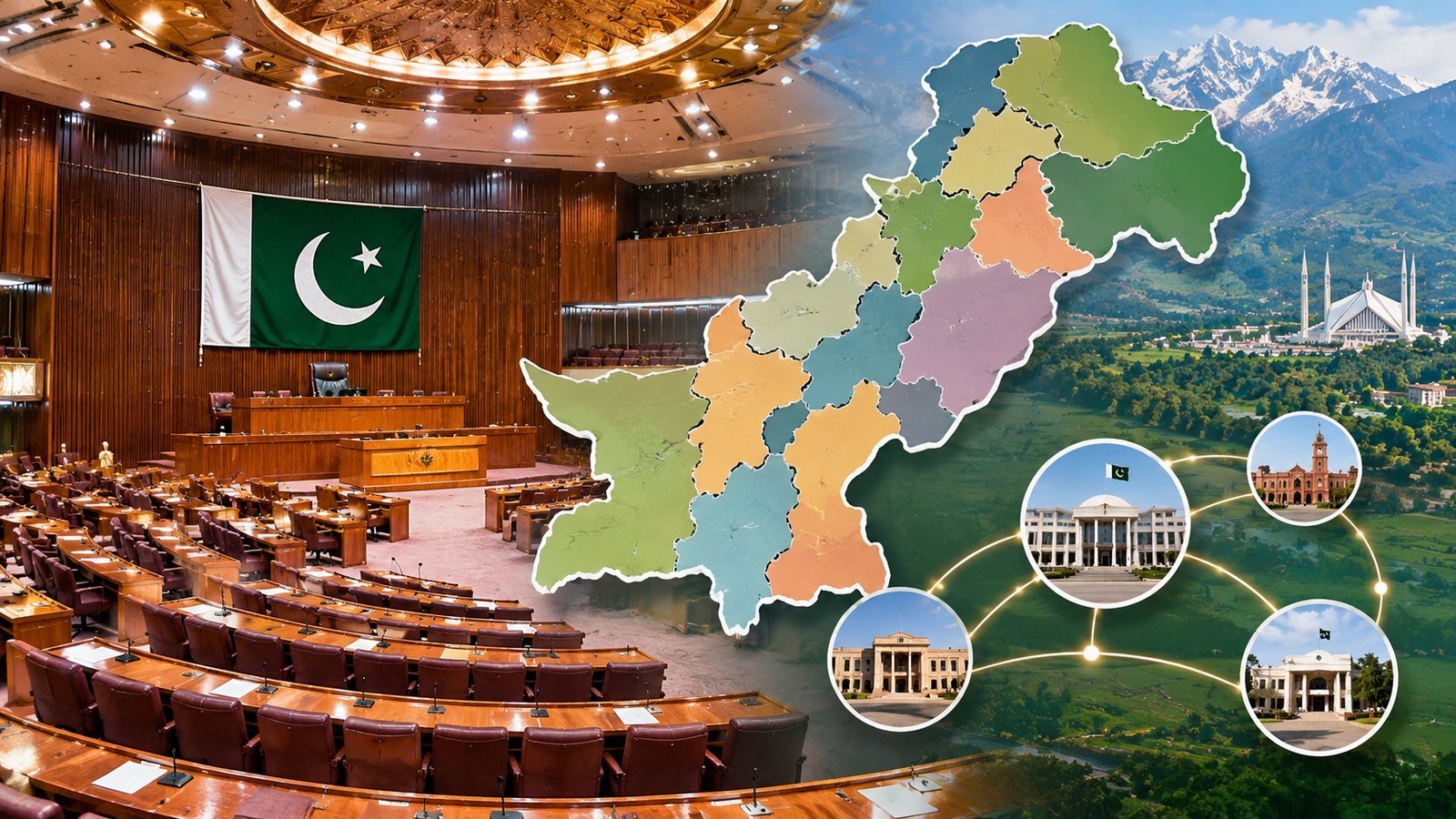
The Electronic Transactions Amendment Bill 2026 was deferred again by Pakistan’s National Assembly Standing Committee on Information Technology and Telecommunication at its meeting on November 3, with the government seeking more time to complete consultations with the Pakistan Peoples Party (PPP). The committee met in Parliament House, Islamabad, under the chairmanship of MNA Syed Amin ul Haq. According to the National Assembly’s official press release, a Ministry of Law and Justice representative said discussions with the PPP were at an advanced stage and that consensus on the proposed amendments was expected soon. The committee agreed to reconsider the bill at its next meeting rather than proceed without the consultations. The development was reported by Business Recorder on November 4, 2026. The legislation has not been passed or rejected in the cited proceedings, and no final approval date was announced. The committee also raised serious concerns about weak internet service, signal drops and stalled recovery of penalties from telecommunications operators, showing that digital governance and connectivity were both under parliamentary scrutiny. The underlying text of every negotiated amendment was not established in the meeting release, so precise future rights, duties or penalties should not be presented as already enacted.
Electronic Transactions Amendment Bill 2026: Key Facts
Bill: The Electronic Transactions (Amendment) Bill, 2026.
Underlying law: Electronic Transactions Ordinance, 2002.
Meeting date: Tuesday, November 3, 2026.
Coverage date: Wednesday, November 4, 2026.
Committee: National Assembly Standing Committee on Information Technology and Telecommunication.
Chair: Syed Amin ul Haq, MNA.
Venue: Parliament House, Islamabad.
Government ministry asking for time: Ministry of Law and Justice representative.
Political party involved in further consultations: Pakistan Peoples Party (PPP).
Outcome: Consideration deferred until the committee’s next meeting.
Bill approved: No approval established in this meeting.
Bill rejected: No rejection established in this meeting.
Confirmed date for final passage: Not announced.
Separate committee concern: Continuing poor internet service quality.
PTA update: Five show-cause notices issued to operators over the preceding three months, according to the reported briefing.
Penalty recoveries: Court stay orders were cited as an obstacle.
Infrastructure: PTA briefing discussed 5G tower upgrades.
Image: AI-generated illustration, not original meeting footage.
What Happened to the Electronic Transactions Amendment Bill on November 3?
At the 25th meeting of the National Assembly Standing Committee on Information Technology and Telecommunication, the Electronic Transactions Amendment Bill 2026 was taken up for consideration but not advanced to approval. A representative of the Ministry of Law and Justice requested more time for talks with the PPP. The ministry indicated that negotiations were progressing and that a consensus version could be brought to lawmakers afterward. The committee accepted the request and postponed consideration until its next meeting. This is a procedural delay, not a parliamentary vote to defeat the legislation. The National Assembly’s November 3 press release establishes the outcome directly, while Business Recorder’s November 4 story provides contemporary reporting of the same proceeding.
Why Was the Electronic Transactions Amendment Bill 2026 Deferred?
The stated reason was unfinished consultations over proposed amendments. The Ministry of Law and Justice told the standing committee that collaboration with the PPP was underway and had reached an advanced stage. Members therefore did not proceed with the version before them. Consensus-building can be important when legislation must navigate a parliamentary committee and subsequent voting stages. However, no official source reviewed for this article provides a date by which agreement is guaranteed. Mukhbir describes the ministry’s optimism as an expectation voiced to the committee, rather than evidence that a final political deal has already been reached.
What Did the National Assembly’s Official Statement Say?
The National Assembly press release dated November 3, 2026, identifies the committee meeting, its chair and the government’s request. It states that consultations with the Pakistan Peoples Party were ongoing and that agreed amendments would be presented after the process was complete. The committee consequently deferred consideration until its next meeting. The release also records discussion of poor telecom service quality and a briefing by the Pakistan Digital Authority. It is the primary official evidence for the central news. The release does not publish a final revised clause-by-clause text of the proposed changes, so the article does not invent precise provisions based on commentary about the bill.
Who Chairs the National Assembly IT and Telecom Committee?
The November 3 meeting was chaired by Syed Amin ul Haq, a member of the National Assembly. The Standing Committee on Information Technology and Telecommunication examines relevant legislation, ministry matters and issues affecting the country’s digital and communications sectors. A committee chair manages proceedings but does not individually enact a bill. Decisions involve committee deliberation, government presentations and further parliamentary steps when needed. Reporting the chair’s role accurately avoids implying that the delay was a decision by one person alone. The formal record attributes the postponement to the committee following the ministry’s request for further consultation.
Why Is the Pakistan Peoples Party Involved?
PPP representatives had previously raised concerns about proceeding without completing consultation through the party’s legislative process. Earlier National Assembly committee statements indicated that some members objected to advancing the proposal before a political consensus emerged. On November 3, the Law and Justice Ministry said discussions with the PPP were already underway. Such negotiations may reflect legitimate differences about language, scope or legislative procedure, but the official November release does not identify every contested clause. It would be speculative to state that the PPP demanded any specific digital restriction or financial concession without a reliable documentary source. The documented issue is consultation and agreement before renewed committee consideration.
Has the Government Withdrawn or Rejected the Bill?
No. Deferral should not be confused with withdrawal, rejection or passage. The November 3 committee statement says the bill will be considered at a later meeting after the consultations are completed. A withdrawn bill would require a separate official procedural action, while rejection or passage would depend on the applicable voting and legislative process. Nothing in the reviewed release establishes either outcome. This distinction is important for search readers who encounter headlines claiming the proposed legislation has been ‘blocked’ or ‘approved.’ A more accurate summary is that the committee postponed its consideration and expects a revised or mutually agreed proposal to return.
What Is the Electronic Transactions Ordinance, 2002?
Pakistan’s Electronic Transactions Ordinance, 2002, forms part of the legal framework recognizing certain electronic records and transactions. Legislation concerning electronic documents, signatures and authentication can matter to businesses, public agencies and users of online services. The 2026 proposal seeks to amend that existing legal framework, but its eventual effect depends on the final text enacted, if any. The bill’s mere introduction or committee discussion does not replace the current ordinance. Businesses should not treat unapproved proposed clauses as binding legal requirements. For compliance decisions, the operative legislation and official notifications—not a draft headline—remain the appropriate reference points.
What Changes Could the Amendment Introduce?
Earlier committee discussions described a need to strengthen authentication mechanisms and update a framework built for a rapidly expanding range of electronic transactions. Those statements communicate the policy rationale, not a complete enacted list of new powers or obligations. The November 3 press release confirms the consultation process but does not disclose a final agreed amendment text. Accordingly, Mukhbir cannot responsibly claim that specific forms of identity verification, platform controls, fees or penalties have already been approved through this bill. Those questions should be reassessed after the revised proposal is published and parliamentary action progresses.
Why Do Electronic Transaction Laws Matter to Pakistan?
Electronic transactions underpin many routine activities, including submitting digital records, conducting online business and verifying documents. Clear legal rules can help organizations understand when electronic records and authentication methods are recognized. At the same time, poorly understood changes can produce uncertainty for consumers and businesses. The policy challenge is to update the framework for current technology while keeping obligations clear and enforceable. The committee’s deferral indicates the legislative proposal remains under political consideration, rather than being ready for immediate implementation. Readers should separate this policy context from any claim that the bill already changes how every digital payment or mobile application operates.
Does the Delay Affect Online Banking or Digital Payments Today?
The committee’s decision alone does not establish an immediate change to the legal status of ordinary online banking or digital payments. Existing laws, financial regulations and applicable service agreements continue to govern those activities unless they are formally amended. The bill’s final text may eventually influence aspects of electronic records or authentication, but the specific effect cannot be assumed from an announcement of deferral. Mukhbir has not found an official directive telling users to stop digital transactions because of this meeting. Readers should avoid treating a parliamentary delay as an announcement that bank applications, electronic transfers or mobile wallets have become invalid.
How Could the Proposed Law Matter to Startups and Freelancers?
Digital businesses and freelancers may depend on reliable rules for remote agreements, electronic documents and verification processes. Future legislative changes could affect paperwork, compliance expectations or the acceptability of particular methods, but those outcomes remain conditional on the final enacted text. The November 3 meeting did not announce a new blanket requirement for every startup or a fee for freelancers. The immediate business relevance is policy uncertainty and the need to monitor official updates. Startups can review existing compliance obligations while awaiting specific draft provisions instead of making costly changes in response to unverified social-media interpretations.
Why Is Political Consensus Important in Parliamentary Committees?
Parliamentary committees allow members to question officials, review drafts, propose revisions and identify concerns before a measure proceeds. Consultation with political parties can help establish which wording is acceptable and which matters need further examination. The existence of disagreement does not by itself prove misconduct or bad faith by any participant. In this case, the committee repeatedly emphasized consultations before proceeding. A fair account describes the government and PPP positions as recorded in official statements without assigning blame for the delay. Any claim of secret conditions, private deals or a predetermined result would require separate credible evidence.
Had the Bill Been Delayed Before November 2026?
Yes. The National Assembly’s earlier committee notices and reporting show that the Electronic Transactions Amendment Bill 2026 had been deferred on previous occasions while consultations remained incomplete. September reporting discussed another postponement and the need to address concerns raised by coalition partners. The November meeting therefore represents a continuation of a legislative process already experiencing delay. The exact number of deferrals should only be stated with a complete dated procedural record, because different sources may count meetings or formal postponements differently. For this article, ‘delayed again’ is supported without asserting an unverified cumulative tally.
What Happens at the Committee’s Next Meeting?
According to the National Assembly’s November 3 record, the proposed amendments agreed through consultations are expected to return for committee consideration and further directions. Members could examine the wording, seek explanations, recommend changes or decide how to proceed under the applicable rules. This expectation is not a guarantee that consensus will be achieved by a particular date. The release did not establish a final approval timetable. Mukhbir should report the next meeting’s actual agenda and decisions when they are officially available, rather than prematurely announcing that the law will take effect immediately after the meeting.
What Steps Remain Before the Bill Can Become Law?
A committee’s consideration is only part of the broader legislative process. Depending on the applicable parliamentary procedure, a bill may require recommendations, passage through relevant chambers and other constitutionally required formalities before legal commencement. The exact route for this government bill must be checked against its current legislative status. The November 3 deferral does not itself enact amendments to the Electronic Transactions Ordinance. Publication of a final law and any associated commencement provisions would be more reliable evidence of operative change than comments forecasting consensus. For legal certainty, individuals and organizations should consult the enacted text and official notifications.
Why Did Lawmakers Also Criticize Pakistan’s Internet Quality?
The same committee meeting focused on persistent complaints about internet connectivity. According to the official press release and Business Recorder, members expressed dissatisfaction that service quality had not improved sufficiently despite continuing parliamentary attention. Poor connections were reported in large cities as well as smaller towns and remote areas. The committee mentioned signal interruptions affecting everyday applications such as WhatsApp. Those discussions concern telecommunications service performance and should not be presented as proof that the Electronic Transactions Amendment Bill caused the disruption. The two issues appeared in the same meeting but are legally and operationally distinct.
What Did PTA Say About Telecom Operators and Penalties?
Business Recorder reported that the Pakistan Telecommunication Authority chairman told members that five show-cause notices had been issued to operators over poor service quality in the preceding three months. The reporting said penalties could not readily be recovered while operators had court stay orders. A notice is not the same as a final judicial finding of liability, and a stay order is part of legal procedure rather than automatic proof that a regulator’s decision is incorrect. The relevant facts concern the PTA briefing and the committee’s questions. Specific operator identities, final penalty amounts or court outcomes should not be invented when they are not established in the accessible meeting record.
How Do Power Cuts Affect Mobile and Internet Signals?
PTA’s chairman attributed some service interruptions to prolonged electricity outages, particularly in rural districts where he described power cuts lasting roughly 12 to 16 hours daily. Telecom towers need dependable power and supporting equipment to operate consistently. When backup systems are limited or outages persist, connection stability can deteriorate. These remarks provide an official explanation offered during the hearing, not an independent technical audit of every network failure. Other factors may also contribute to service quality. Mukhbir attributes the statement to PTA and does not conclude that power cuts explain all reported problems across every city or telecom company.
What Did the Committee Hear About 5G Rollout?
The PTA briefing also discussed upgrades to telecommunications infrastructure following the 5G spectrum auction. The official release refers to progress in Karachi and approximately 2,300 tower upgrades supporting 5G technology. Business Recorder reported the chairman’s indication that around 70 percent of 5G services in Karachi had been rolled out. These are statements conveyed in the meeting, not independently measured nationwide coverage statistics. A tower upgrade does not necessarily guarantee a particular consumer will have 5G service at a specific address. Publication should avoid converting a city-specific briefing into a claim that 70 percent of Pakistan has full 5G coverage.
What Is the Pakistan Digital Authority’s Master Plan?
The Pakistan Digital Authority briefed the committee on the National Digital Master Plan, describing priorities for digital society, digital economy and digital governance. The official release said the plan had been developed through consultations and approved by the National Digital Commission. This briefing was part of the committee’s broader oversight agenda. It should not be confused with a provision inside the pending Electronic Transactions Amendment Bill. The plan’s projected economic benefits are policy expectations, not audited gains already delivered. Reporting can explain the ambition of digital transformation while keeping forecasts, legislative proposals and current conditions clearly separate.
How Could Digital Legislation Affect Government Services?
Electronic records and authenticated transactions are relevant to online government applications and other public services. Updated legislation might eventually help clarify administrative processes, provided its provisions are properly drafted and enacted. But the specific proposed amendments discussed on November 3 were still being negotiated. There is no verified basis to announce that a new national digital identity system, compulsory app or revised fee began that day because of this bill. An evidence-based article identifies the public-sector significance of electronic transactions while reserving detailed claims for the final published text and any implementing rules.
Are Privacy and Data Protection Rules Being Changed?
Digital laws can intersect with privacy, cybersecurity and data governance, but the November 3 committee release does not supply a settled set of privacy provisions within the Electronic Transactions Amendment Bill 2026. It would therefore be misleading to describe the deferral as a completed change to citizens’ data protections or online surveillance rules. Any specific effects on consent, information sharing, oversight or enforcement must be evaluated against the actual bill text and the final enacted law. Mukhbir does not infer new powers for state agencies or new restrictions on users merely because an electronic transactions amendment is being discussed.
What Does the Delay Mean for the Digital Economy?
The immediate consequence is that the proposed legislative changes will not advance through that committee at this meeting. For the wider digital economy, the episode illustrates how policy reform can depend on parliamentary consultation and clear agreement over text. Businesses may welcome predictability, but a speedy enactment is not the only measure of good legislation; scrutiny and clarity also matter. Any direct investment or GDP impact attributed to this specific deferral would be speculative without an economic assessment. The committee separately heard ambitious digital economy forecasts, which are not proof that the pending bill will generate those outcomes.
Is This a Government Versus Opposition Dispute?
The official account identifies consultations between the government and PPP over the draft amendments. That does not justify framing every disagreement as a confrontation between the government and the parliamentary opposition, nor does it establish that negotiations have broken down. Earlier proceedings reflected concerns about party-level consultation. The November 3 account says discussions were advanced. A neutral interpretation is that lawmakers postponed consideration while political partners worked toward an agreed text. Mukhbir does not endorse one party’s account or attribute hidden motivations without evidence. Parliamentary reporting should reflect the documented statements and actions rather than dramatic labels.
What Remains Unverified About the Amendment Bill?
The final negotiated clause-by-clause wording, an agreed committee approval date, the ultimate vote, the precise date of enactment and any future implementation requirements are not established in the official materials reviewed for November 4. Some commentary may speculate about impacts on digital signatures, online banking or identity verification, but those implications require the actual amendments and legal context. The source-backed facts are the committee’s deferral, the requested PPP consultation and the separate telecom oversight discussion. Stating these boundaries helps readers distinguish a developing parliamentary story from a completed legal reform.
How Should Mukhbir Update This Story Later?
A substantive follow-up should identify the next committee meeting date, any formally released revised bill text, whether PPP consultations concluded and what recommendation or decision committee members made. If the bill later progresses, coverage should distinguish committee approval from passage by parliament and commencement of the law. Government statements should be attributed and compared with the official legislative record. For claims about penalties, rights or business compliance, the relevant enacted clauses should be cited rather than guessed. This approach will keep the article accurate and useful for search readers who return as the parliamentary process develops.
Conclusion
The Electronic Transactions Amendment Bill 2026 remains pending after Pakistan’s National Assembly IT and Telecom Standing Committee deferred consideration on November 3. The government requested more time to complete consultations with the Pakistan Peoples Party, and lawmakers agreed to revisit the measure at a later meeting. The decision neither passes nor rejects the bill. The same hearing also highlighted continuing public concerns about internet service reliability, PTA regulatory actions and digital infrastructure. Until the negotiated text and next parliamentary decisions are published, the most accurate description is an ongoing legislative process rather than a change already taking effect. Mukhbir will separate documented committee outcomes from proposals, expectations and possible future business implications.
Frequently Asked Questions
What happened to the Electronic Transactions Amendment Bill 2026?
The National Assembly IT and Telecom Standing Committee deferred its consideration on November 3, 2026, pending consultations with PPP.
Was the bill passed or rejected?
Neither outcome was announced in the cited committee proceedings. Consideration was postponed.
Why was the bill delayed again?
The Ministry of Law and Justice requested more time to complete consultations with the Pakistan Peoples Party over proposed amendments.
Who chaired the committee meeting?
MNA Syed Amin ul Haq chaired the November 3 meeting of the Standing Committee on Information Technology and Telecommunication.
Does the delay immediately change online banking rules?
No immediate change to online banking rules is established by the committee deferral alone.
When will the bill be approved?
No final approval date was confirmed. The committee expects to take the measure up at a later meeting.
What else did the committee discuss?
Members discussed weak internet service, PTA notices and penalty recovery, 5G infrastructure and the Pakistan Digital Authority’s master plan.
Where can readers verify the decision?
The National Assembly’s November 3 press release and Business Recorder’s November 4 report document the committee’s decision.
About The Author