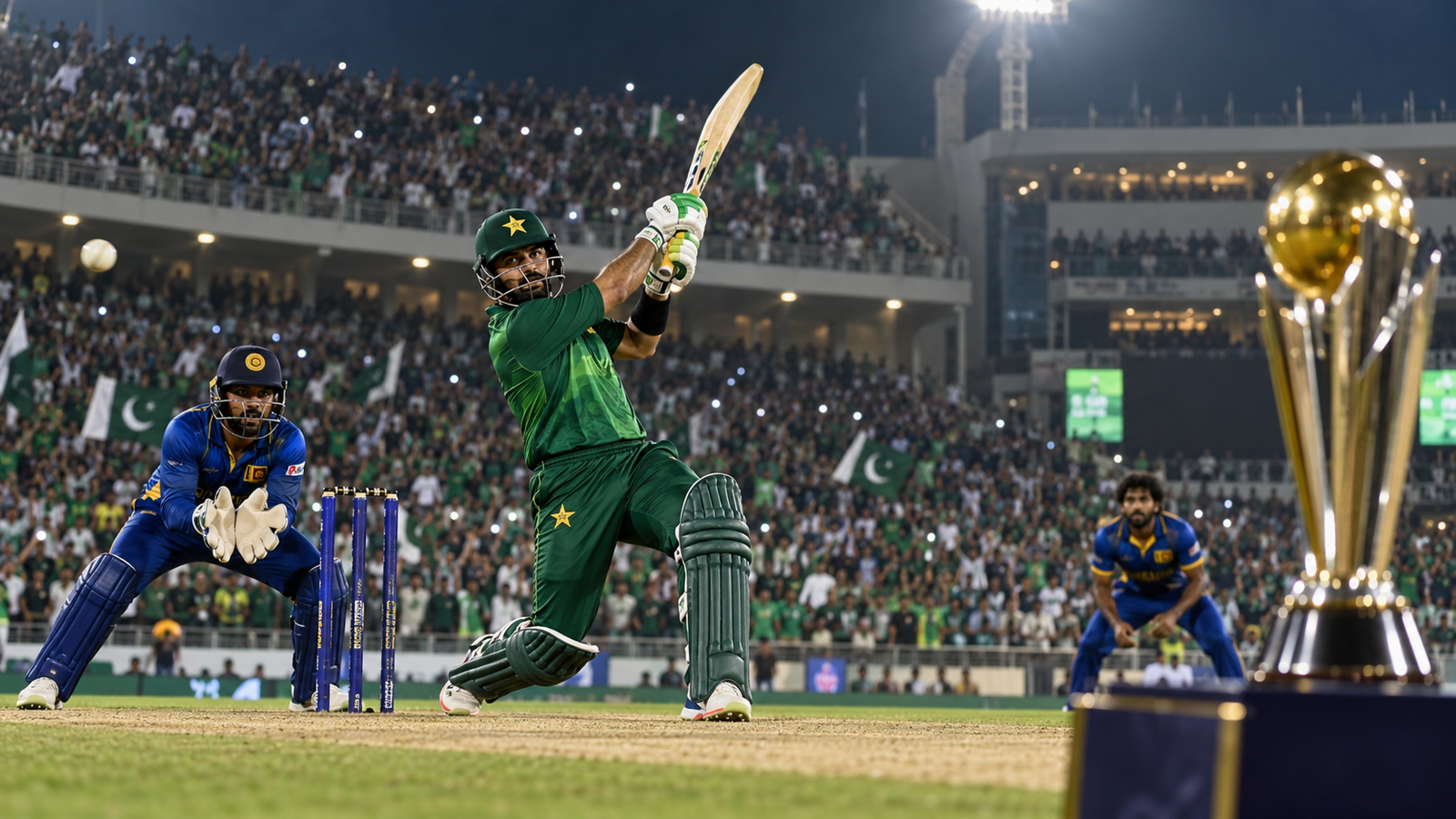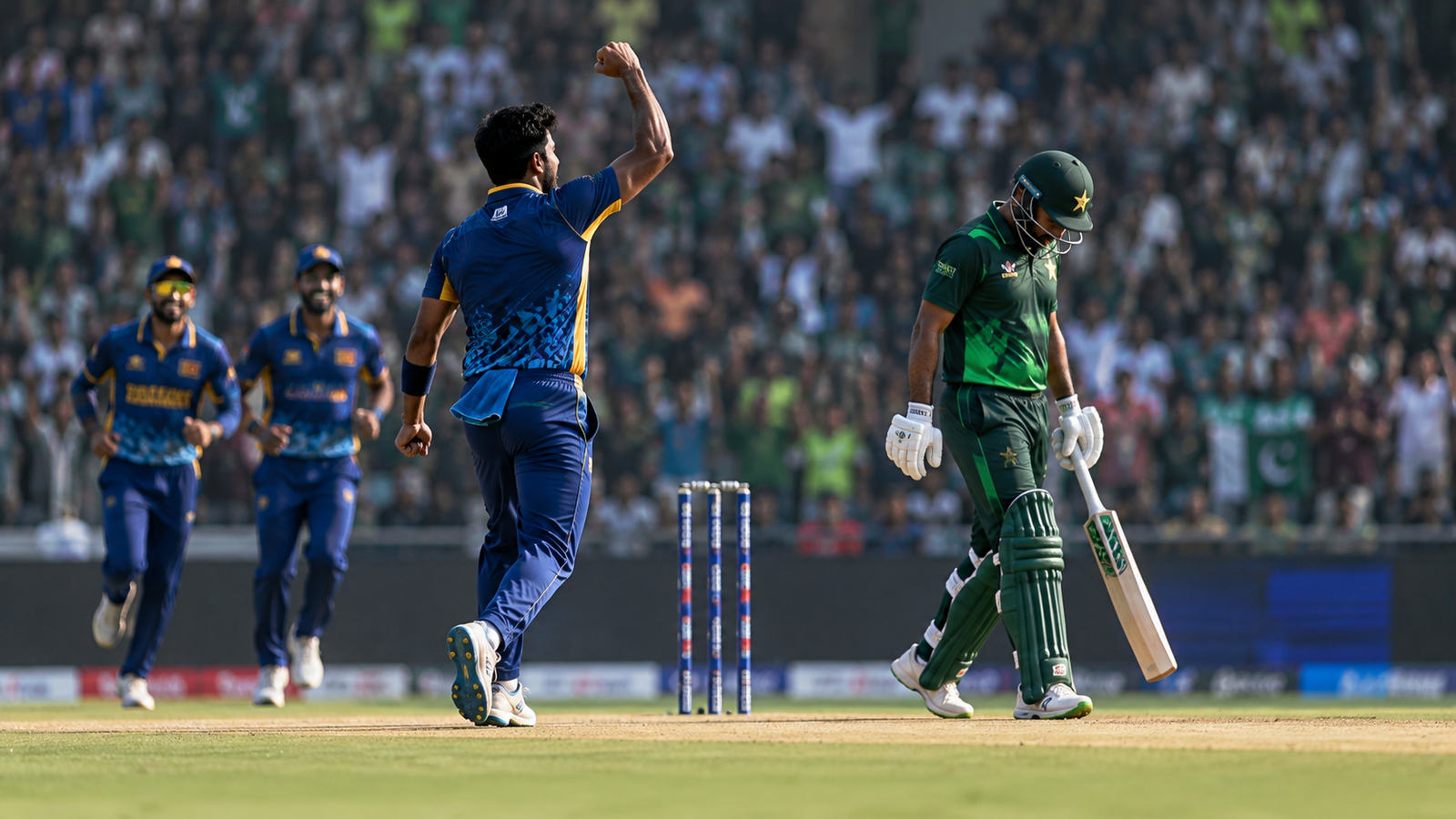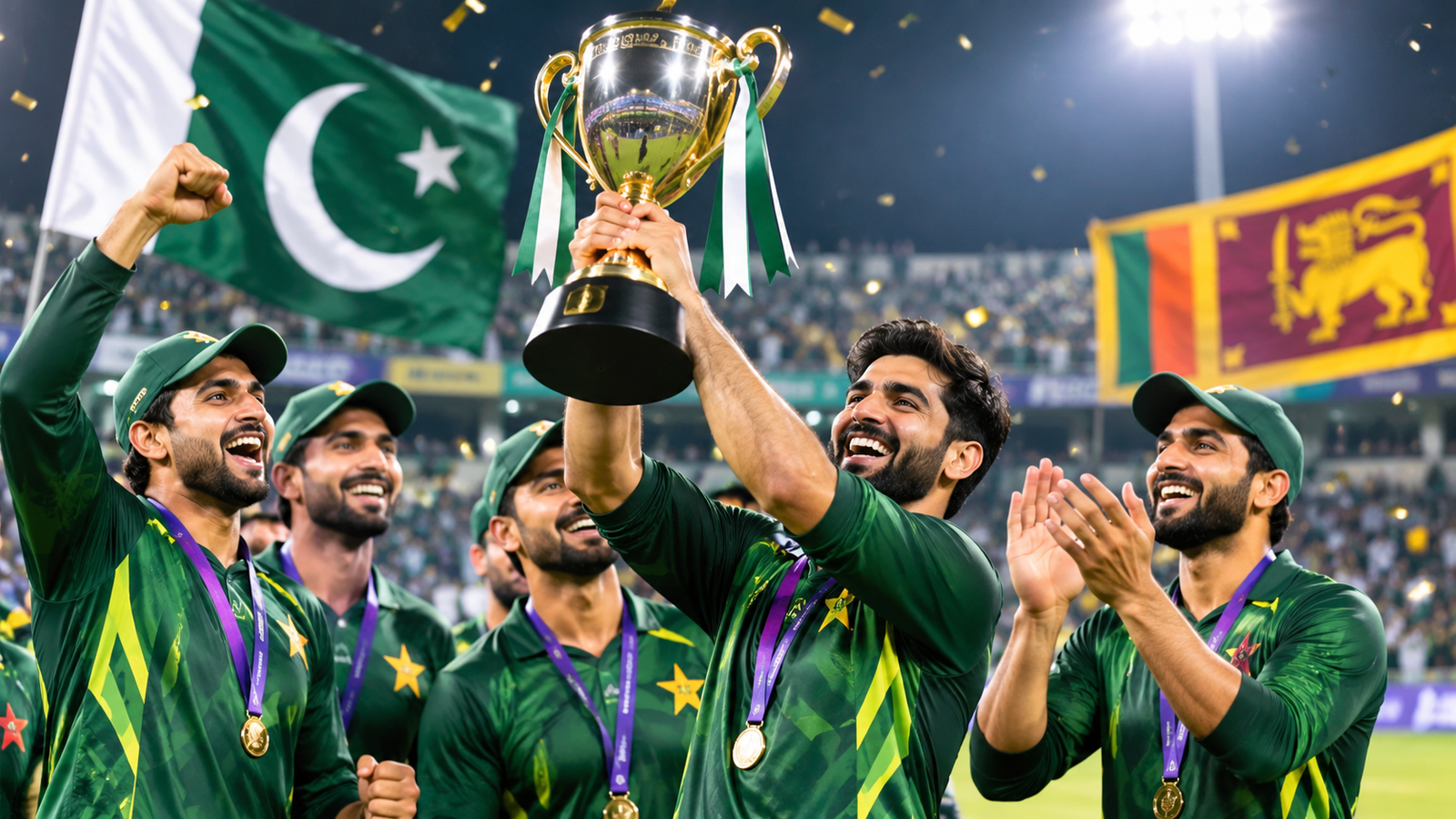
Pakistan won the ODI tri-series final 2026 after defeating Sri Lanka by three wickets at Gaddafi Stadium in Lahore on October 31. Chasing 326 to lift the trophy, Pakistan reached 331 for seven in 48.3 overs with nine balls remaining, according to the Pakistan Cricket Board (PCB) and International Cricket Council (ICC). Fakhar Zaman struck an outstanding 127 from 99 balls, while wicketkeeper Saad Baig contributed 74 and all-rounder Arafat Minhas played a decisive 61 off only 31 deliveries. Sri Lanka had posted 325 for eight after Kamindu Mendis made 131 and Pavan Rathnayake scored 77. Pakistan captain Shaheen Shah Afridi sealed the victory with a six. Fakhar was named player of the match, while Arafat Minhas received the player-of-the-series award. The result completed a memorable home tournament featuring England, Pakistan and Sri Lanka and gave the hosts a major victory ahead of the next ODI World Cup cycle.
Pakistan ODI Tri-Series Final 2026: Match Summary
Date: Saturday, 31 October 2026.
Venue: Gaddafi Stadium, Lahore, Pakistan.
Tournament: Pakistan ODI Tri-Series 2026 (Pakistan, Sri Lanka and England).
Result: Pakistan beat Sri Lanka by three wickets.
Sri Lanka innings: 325/8 in 50 overs.
Pakistan innings: 331/7 in 48.3 overs.
Target: 326 runs.
Balls remaining: Nine.
Pakistan captain: Shaheen Shah Afridi.
Sri Lanka captain: Kusal Mendis.
Toss: Pakistan won and elected to field.
Player of the Match: Fakhar Zaman (127 from 99 balls).
Player of the Series: Arafat Minhas.
Key Pakistan batting: Saad Baig 74; Arafat Minhas 61; Hasan Nawaz 37 not out.
Key Sri Lanka batting: Kamindu Mendis 131; Pavan Rathnayake 77; Avishka Fernando 38.
Pakistan leading bowling returns: Salman Ali Agha 2/44; Shaheen Shah Afridi 2/50; Haris Rauf 2/60; Naseem Shah 2/80.
Sri Lanka leading bowler: Dilshan Madushanka 3/63.
Decisive partnership: Arafat Minhas and Hasan Nawaz added 94 for the sixth wicket.
Sources: PCB match report, ICC tournament coverage, official scorecard and Reuters.
How Pakistan Won the ODI Tri-Series Title
Pakistan’s three-wicket victory came after an eventful chase that included an early collapse, a long recovery and another late shift in momentum. Sri Lanka looked capable of defending 325 after taking two early wickets, but Fakhar Zaman and Saad Baig built a 149-run stand for the third wicket. Once both were dismissed, the target again looked difficult, with the required rate increasing and Pakistan five wickets down for 230. Arafat Minhas joined Hasan Nawaz and changed the chase with a counterattacking partnership. Pakistan eventually crossed the target in the 49th over, as Shaheen Shah Afridi hit the winning six. The PCB described the chase as the joint-highest successful pursuit in an ODI final.
Sri Lanka Post 325 After Kamindu Mendis Century
Having been asked to bat first, Sri Lanka scored 325 for eight in 50 overs. Kamindu Mendis led the innings with 131 off 128 balls, while Pavan Rathnayake made 77 from 65 deliveries. Avishka Fernando contributed 38, helping the side build an opening partnership of 87 with Kamindu. Kamindu and Rathnayake then added 146, providing the platform for a total well above 300. Those partnerships were particularly important because Pakistan managed to limit Sri Lanka’s scoring at the close of the innings. The hosts took six wickets in the final ten overs as Sri Lanka added 87. The innings represented a strong batting effort but ultimately left a target Pakistan were able to reach.
Kamindu Mendis Makes His Maiden ODI Hundred
Kamindu Mendis produced the outstanding Sri Lankan batting performance, scoring 131 from 128 deliveries with 12 fours and two sixes. The innings was his first ODI century and helped Sri Lanka maintain control through much of the middle overs. His partnerships with Avishka Fernando and Pavan Rathnayake created the foundation for a formidable total. A century in a major final is significant even when the player’s team does not win, and Kamindu’s contribution should be recognized independently of the outcome. He was eventually dismissed by Shaheen Shah Afridi. The hosts’ response with the bat ensured that Sri Lanka’s strong first-innings display did not translate into the tournament title.
Why Sri Lanka’s Final Ten Overs Mattered
Sri Lanka were 238 for two after 40 overs, leaving an opportunity to push toward an even larger score. Pakistan fought back with regular wickets, and the visitors finished on 325 for eight. The PCB’s match report records that Sri Lanka scored 87 in the last ten overs while losing six wickets. Salman Ali Agha took two for 44, Shaheen Shah Afridi two for 50, Haris Rauf two for 60 and Naseem Shah two for 80. Those figures show how wickets were shared through the attack rather than being taken by one specialist alone. A final total of 325 was still competitive, but Pakistan’s ability to prevent a more explosive finish proved valuable.
Pakistan Lose Two Early Wickets in the Chase
Pakistan’s pursuit began poorly when Maaz Sadaqat was dismissed for five and Babar Azam fell for a five-ball duck. The hosts slipped to 14 for two, creating immediate pressure in a chase that required more than six runs an over. Dilshan Madushanka was responsible for both early breakthroughs, giving Sri Lanka reason to believe their target could be defended. However, Pakistan’s innings did not end with that setback. Fakhar Zaman and Saad Baig remained at the crease, absorbed the early pressure and gradually rebuilt. Their recovery was one of the match’s decisive phases because it prevented Sri Lanka from exploiting the two quick wickets.
Fakhar Zaman’s 127 Leads the Comeback
Fakhar Zaman delivered a superb match-winning innings of 127 off 99 balls, striking 11 fours and six sixes. It was his 12th ODI century. The left-handed opener had entered the final following a modest run of scores earlier in the tournament, making his performance particularly notable. Rather than letting the opening wickets force a defensive approach, Fakhar balanced risk with strong scoring throughout a difficult chase. He shared a 149-run third-wicket stand with Saad Baig and later added 57 alongside Salman Ali Agha. Although he was dismissed before the finish, his contribution placed Pakistan in a position from which the lower middle order could complete the job.
Saad Baig’s Maiden ODI Fifty Makes a Difference
Wicketkeeper-batter Saad Baig played a crucial supporting role with 74 runs from 75 balls. The innings was his maiden ODI half-century and included 11 boundaries. At a time when Pakistan had lost two early wickets, Saad helped Fakhar rebuild without abandoning scoring opportunities. Their partnership was worth 149 runs and turned a dangerous position into a serious pursuit of Sri Lanka’s total. Saad was eventually dismissed by Maheesh Theekshana, but the balance of the chase had improved considerably. For a developing ODI player, a contribution of this scale in a final provides meaningful international experience, although one innings does not guarantee future selection.
The 149-Run Partnership That Revived Pakistan
The third-wicket stand between Fakhar Zaman and Saad Baig was central to the successful chase. From 14 for two, they added 149 runs, guiding Pakistan to 163 before Saad’s dismissal. A partnership of that size in a 326-run chase does more than repair the scoreboard: it consumes overs while keeping the asking rate within reach. The two batters used different strengths, with Fakhar providing the more forceful stroke play and Saad ensuring that wickets did not continue to fall in clusters. Pakistan still needed substantial runs when the stand ended, but the early crisis had passed. Without the partnership, the required target would have become far harder to chase.
Why Arafat Minhas Was the Late-Innings Hero
Arafat Minhas produced a powerful 61 from 31 balls, including three fours and four sixes, at a strike rate of nearly 197. He arrived with Pakistan needing a strong finish after the top-order recovery had been interrupted. His attacking approach helped prevent the required rate from becoming overwhelming. Arafat did not finish unbeaten, but his innings changed the chase and provided the decisive acceleration. He was also named player of the series, reflecting contributions beyond this single final. The performance offers a strong example of how a lower-middle-order batter can influence a modern ODI through rapid scoring and intelligent partnerships rather than only protecting wickets.
Hasan Nawaz’s Unbeaten 37 Helps Complete the Chase
Hasan Nawaz played an equally important but differently paced role, finishing not out on 37 from 45 balls. While Arafat Minhas attacked, Hasan helped maintain the partnership and ensured that Pakistan had a set batter at the crease. Their sixth-wicket stand added 94 runs. Such partnerships are often remembered for the most spectacular strokes, but the batter preserving the chase can be just as influential. Hasan’s unbeaten contribution meant that Pakistan retained continuity through late wickets, including Arafat’s dismissal with the total on 324. The hosts then completed the target through a final burst from their captain. Hasan’s score should be understood in the context of the partnership, not judged by strike rate alone.
Shaheen Shah Afridi Hits the Winning Six
Pakistan captain Shaheen Shah Afridi finished the contest with a six, confirming a three-wicket victory. The skipper ended unbeaten on six from three balls, while Hasan Nawaz remained on 37. The winning stroke offered a dramatic conclusion to the chase after Pakistan had lost two quick wickets at 324. Shaheen also contributed with the ball, taking two wickets for 50 runs during Sri Lanka’s innings. His role therefore spanned captaincy, bowling and the final runs. The image of a captain hitting a winning six is a memorable sporting moment, but the victory was built through the larger collective efforts of Fakhar, Saad, Arafat, Hasan and the bowling unit.
Who Won Player of the Match?
Fakhar Zaman received the player-of-the-match award following his 127 from 99 balls. The choice reflects the importance of a century in a high-pressure chase, particularly one that began at 14 for two. His innings accounted for a substantial share of Pakistan’s runs and gave the team a platform to pursue the target. Awards are determined through the match’s official process, so the designation is a verified result rather than Mukhbir’s independent ranking. Others, notably Arafat Minhas and Saad Baig, also made significant contributions. The recognition of one player does not diminish the influence of the rest of the team.
Who Was Player of the Series?
Arafat Minhas was named player of the series, according to the PCB’s official report. His award came after notable contributions over the tournament as well as the explosive half-century in the final. Cricket statistics across a multi-match competition recognize consistency, bowling returns, batting influence and the ability to change results at important moments. The award may strengthen his standing as an all-round option, but future team selections are separate decisions. For readers, it is worth distinguishing the two honors: Fakhar Zaman was player of the match for his final-winning hundred, while Arafat Minhas was player of the series.
How Pakistan Reached 331 for Seven
The official scoreboard shows Pakistan finished on 331 for seven after 48.3 overs. Apart from Fakhar’s 127, Saad’s 74 and Arafat’s 61, Hasan Nawaz scored an unbeaten 37 and Salman Ali Agha added 17. Maaz Sadaqat contributed five, while Babar Azam and Faheem Ashraf were dismissed without scoring. Shaheen Afridi’s unbeaten six completed the chase. There were four extras, recorded as wides in the detailed scorecard. The mixture of major partnerships and low individual scores illustrates why the victory was not straightforward. Pakistan needed both the long recovery from the top order and a rapid finish from players lower in the lineup.
Sri Lanka Bowlers and the Final Result
Dilshan Madushanka was Sri Lanka’s leading wicket-taker with three for 63, while Asitha Fernando claimed two for 72. Maheesh Theekshana and Dunith Wellalage took one wicket each. The attack put Pakistan under early pressure and later removed important batters, but the hosts maintained enough momentum to finish the chase. A bowling return can be impressive even in defeat, particularly when a side is defending a total above 300 and facing an opponent willing to take risks. Sri Lanka’s bowlers had opportunities as the match tightened, yet Pakistan’s sixth-wicket partnership shifted the balance. A balanced match report recognizes the visitors’ effort instead of portraying the result as one-sided.
Was This a Record ODI Final Chase?
The PCB reported that Pakistan’s pursuit of a 326-run target matched the highest successful chase in an ODI final. It also described the innings as Pakistan’s sixth-highest ODI chase and the third-highest successful chase recorded at Gaddafi Stadium across ODI matches there. These records underline the magnitude of the performance. Such rankings depend on the precise match category and statistical definitions, so they should be attributed to the PCB rather than expanded into an unsupported claim of the highest chase in all ODI history. The central record confirmed by the board is the joint-highest successful chase in an ODI final.
Why the Home Tri-Series Title Is Significant
Pakistan won a home ODI tri-series after earlier unsuccessful home final appearances, with AFP reporting defeats in the finals of the 1994, 2004 and 2025 tournaments. The October 31 result therefore has significance beyond an individual international win. The competition brought three teams together, producing varying conditions, difficult run chases and some high-scoring encounters. Pakistan benefited from facing both England and Sri Lanka in quick succession and then winning a high-pressure final at home. A tournament title is a measurable achievement, but its future value will depend on whether the team can sustain similar performances in subsequent international series.
How the Tournament Worked
The Pakistan ODI tri-series featured the hosts, Sri Lanka and England in a double round-robin league phase, followed by a final between the top two teams. Each country faced the other two sides twice. Pakistan beat Sri Lanka in Rawalpindi on October 18, defeated England on October 20, and won another close contest against England on October 25. Sri Lanka beat Pakistan on October 27 in Lahore to secure its own final place, while England closed the league phase with a win over Sri Lanka. The final offered Pakistan an opportunity to respond to that earlier defeat at the same ground. The competition’s format created a distinct title-winning match rather than a routine bilateral series.
Pakistan Recover From Their October 27 Defeat
Four days before the final, Sri Lanka defeated Pakistan by eight wickets at Gaddafi Stadium after dismissing the hosts for just 110. The reversal on October 31 was striking: Pakistan successfully chased more than 325 against the same opponent. Both results are part of the tournament’s record and show how sharply ODI matches can differ depending on partnerships and bowling spells. It would be wrong to suggest that the previous loss guaranteed a particular response or that the result alone settles every question about team consistency. Nevertheless, a win in the final after a heavy league defeat is a meaningful achievement for Pakistan’s squad and supporters.
The Importance of Lahore’s Gaddafi Stadium
Gaddafi Stadium provided the setting for the concluding league matches and the final, bringing the title contest to one of Pakistan’s best-known cricket venues. The match ended under floodlights with the home team securing a dramatic chase. The PCB emphasized the venue’s place in ODI chasing records. Hosting major international games can attract public interest in the sport and provide a visible stage for emerging players. The final also drew attention because its score changed substantially through different phases, from Sri Lanka’s commanding middle overs to Pakistan’s early wickets and late acceleration. The quality of the contest, not just the crowd atmosphere, makes the match memorable.
What This Means Ahead of the ODI World Cup
The ICC described the tri-series as offering useful preparation before the next men’s ODI World Cup. Pakistan can take confidence from scoring 331 in a major chase, while also recognizing weaknesses that appeared with early wickets and in the previous group-stage defeat. The tournament gave younger batters such as Saad Baig and Arafat Minhas opportunities in a demanding setting. Future team selection and tactics will depend on a wider body of performances, fitness and official decisions. One title cannot guarantee success at a global tournament, but it provides relevant evidence of how a team can respond to pressure in a 50-over match.
The Broader Sports Story in Pakistan
Major international cricket results often carry strong public interest across Pakistan and the broader South Asian audience. A home tri-series trophy, a century by an established opener and an all-round performance from a younger player provide several legitimate storylines. For Mukhbir, the most useful coverage connects those developments to the scoreboard and official awards instead of relying only on emotional celebration. Fans can appreciate the victory while still recognizing Kamindu Mendis’s century and Sri Lanka’s strong innings. This balance reflects cricket as a competitive international sport and keeps the article informative for readers who support either team.
How to Verify the Final Score
The most authoritative sources for this result are the Pakistan Cricket Board’s October 31 match report and the International Cricket Council’s account. Both confirm Pakistan’s three-wicket victory, Fakhar Zaman’s 127 and the crucial role of Arafat Minhas. Detailed scorecards from cricket statistics services confirm the innings totals, deliveries and wickets. Readers should check that any social-media image or short video refers to the October 31 final rather than the earlier October 27 group match. A match result does not change after completion, but errors in individual statistics may appear in rapidly shared graphics. Referencing the scorecard is the simplest way to prevent such mistakes.
Why This Result Should Replace the Earlier Match Preview
A match preview written before the first ball can report the fixture, toss, teams and expectations, but it cannot describe the actual winner. The final has now concluded, and the completed scoreboard is available. Mukhbir should therefore publish a post-match result report with Pakistan’s confirmed victory rather than present the previous toss-only article as the latest update. If the earlier preview remains online, it can be linked to the result with a prominent update timestamp. This avoids confusion for search users who want to know who won the Pakistan vs Sri Lanka final. The key new facts are the three-wicket result, 331 for seven and the winning contributions from Fakhar, Arafat and others.
Conclusion
Pakistan’s ODI tri-series final 2026 victory over Sri Lanka was a dramatic achievement built on a century, two vital partnerships and a late acceleration. Sri Lanka posted 325 for eight through Kamindu Mendis’s 131 and Pavan Rathnayake’s 77, but Pakistan chased 326 to reach 331 for seven in 48.3 overs. Fakhar Zaman scored 127, Saad Baig made 74, Arafat Minhas struck 61 and Hasan Nawaz finished on 37. Captain Shaheen Shah Afridi ended the contest with a six. Pakistan won by three wickets with nine balls remaining. Fakhar earned player of the match and Arafat was player of the series. The result gave Pakistan a memorable home ODI tri-series title.
Frequently Asked Questions
Who won Pakistan vs Sri Lanka ODI final 2026?
Pakistan defeated Sri Lanka by three wickets in Lahore on October 31, 2026.
What was the score in the ODI tri-series final?
Sri Lanka scored 325 for eight in 50 overs; Pakistan reached 331 for seven in 48.3 overs.
How many runs did Fakhar Zaman score in the final?
Fakhar Zaman scored 127 runs from 99 balls, including 11 fours and six sixes.
Who was Player of the Match?
Fakhar Zaman received the player-of-the-match award for his 127-run innings.
Who won Player of the Series?
Pakistan all-rounder Arafat Minhas was named player of the series.
How many runs did Arafat Minhas score in the final?
He hit 61 from just 31 balls and shared a 94-run stand with Hasan Nawaz.
Who scored a century for Sri Lanka?
Kamindu Mendis scored 131 runs from 128 balls, his maiden ODI century.
Who hit the winning runs for Pakistan?
Captain Shaheen Shah Afridi hit the winning six with nine balls remaining.
About The Author