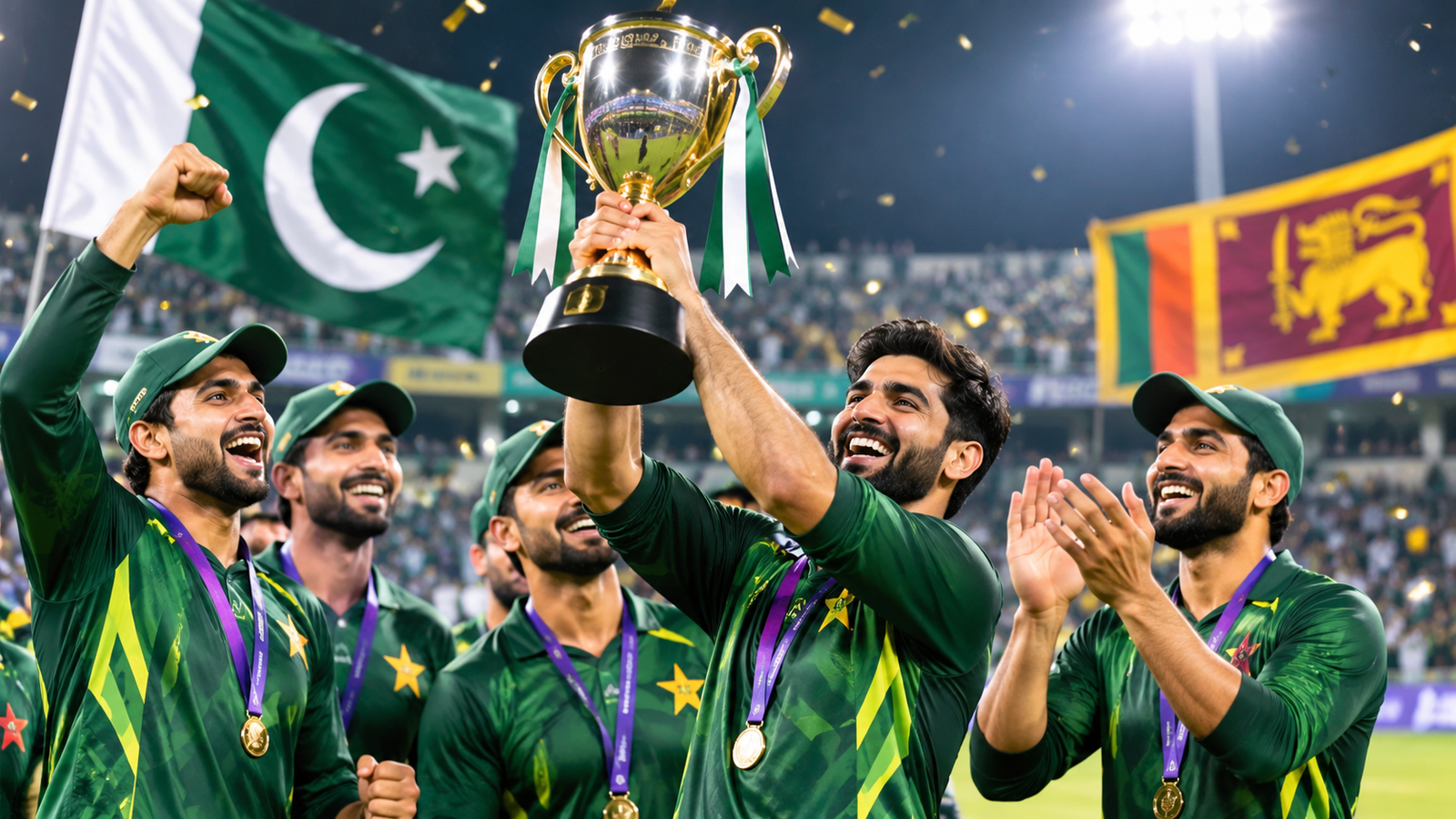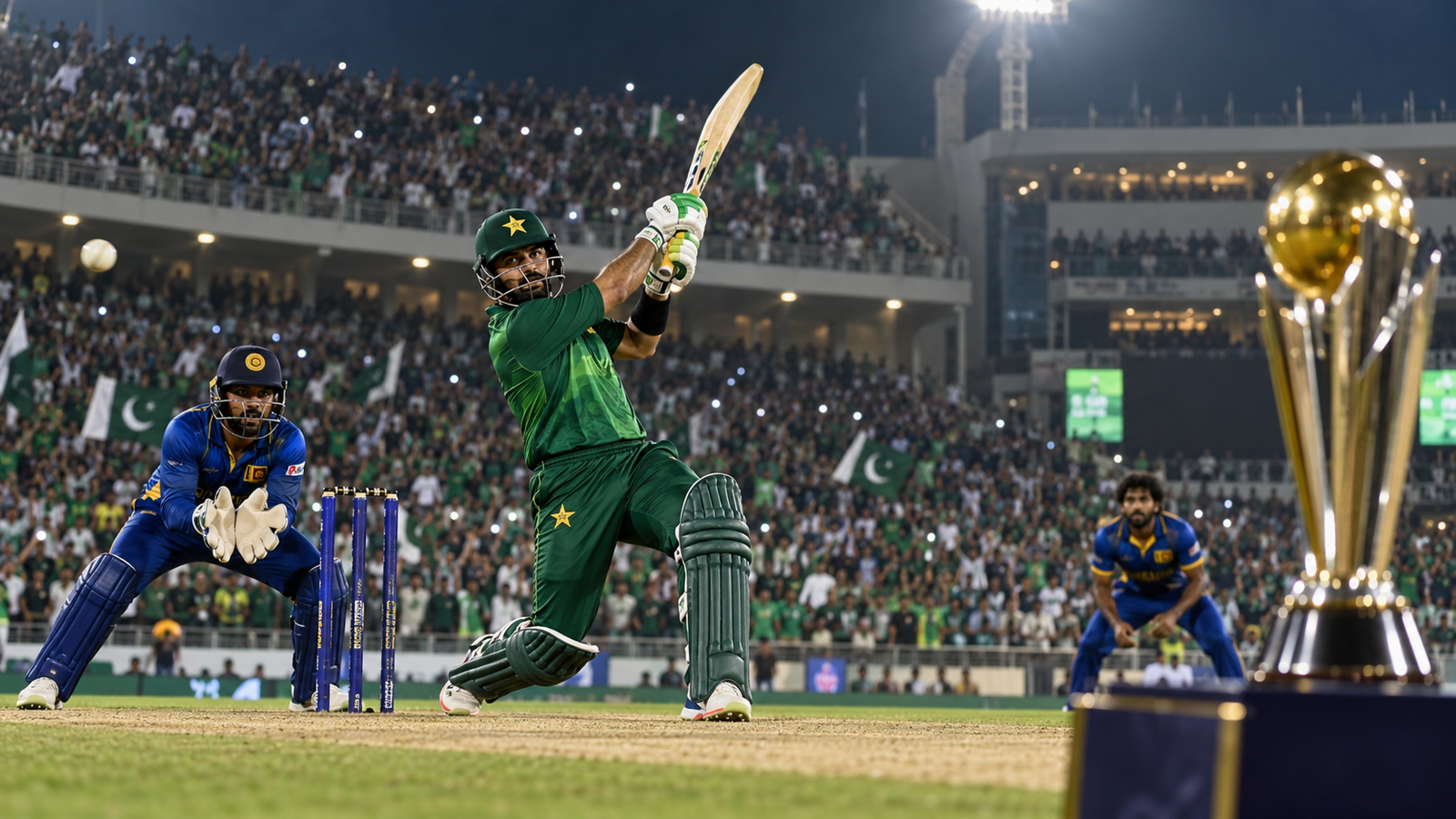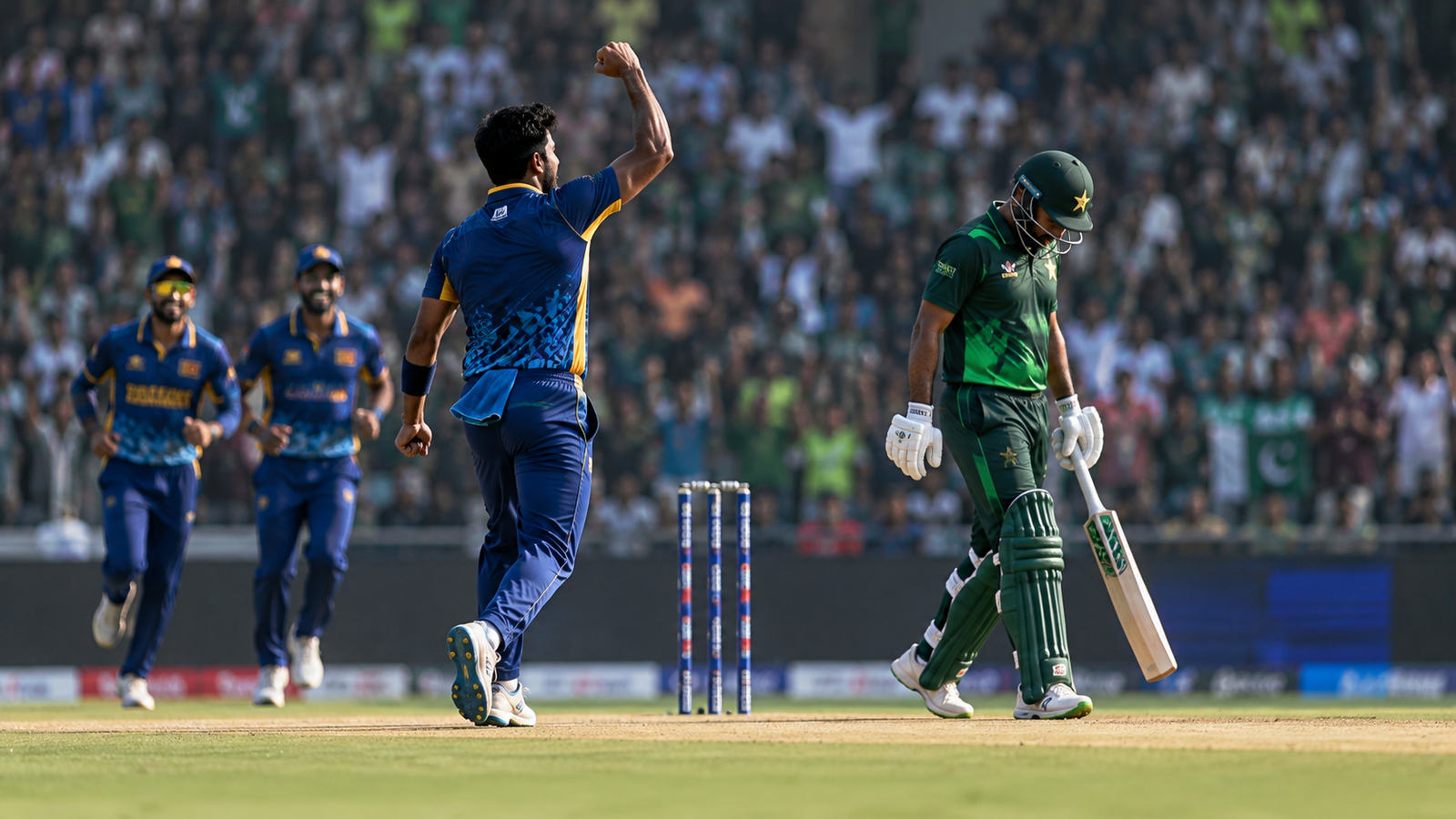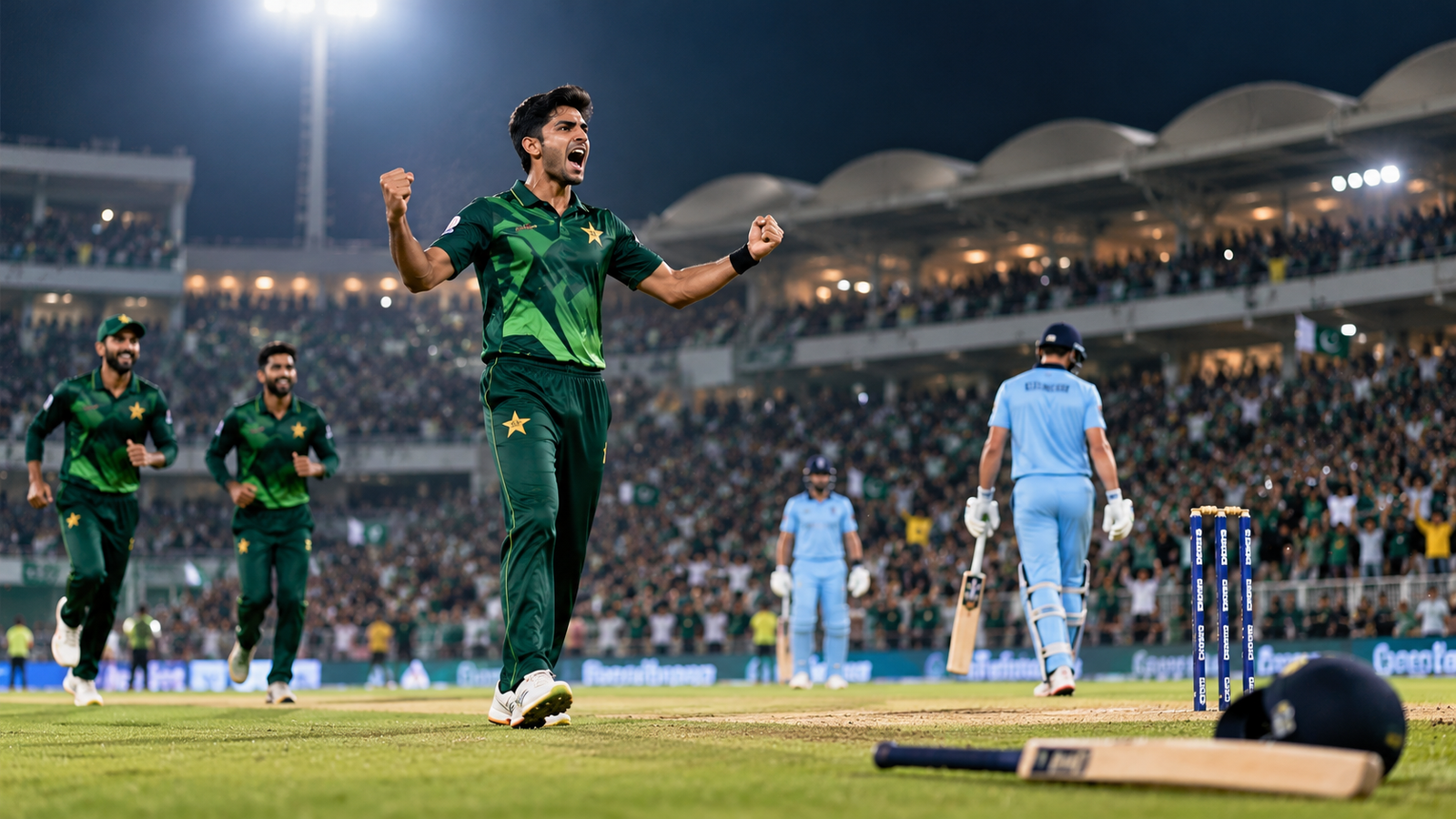
Pakistan secured an emphatic 87-run victory over England in their ODI tri-series encounter at Rawalpindi Cricket Stadium on October 20, 2026, thanks to a remarkable all-round performance from 21-year-old Arafat Minhas. Pakistan posted 302 for nine from 50 overs before dismissing England for 215 in 38.4 overs. Minhas scored 59 off 58 balls and then claimed six wickets for 40 runs, earning Player of the Match recognition and becoming one of a select group of Pakistani cricketers to register a fifty and a five-wicket haul in the same men’s ODI.
The Pakistan Cricket Board (PCB) confirmed that the result was the country’s largest ODI victory over England by runs since 2005. The win followed Pakistan’s 37-run success against Sri Lanka on October 18 and gave the hosts two victories from their opening two matches of the three-team tournament. The result also highlighted the value of a developing all-rounder as Pakistan prepares for future international competitions, including the 2027 Cricket World Cup.
Pakistan vs England ODI: Full Match Result
England won the toss and chose to field first in Rawalpindi. Pakistan made 302/9 in their allotted 50 overs, recovering from a difficult early position to establish a challenging target. England required 303 to win but were all out for 215, leaving a margin of 87 runs. PCB’s full scorecard and post-match release independently establish the totals, overs and winning margin.
The contest was the second fixture in the ODI tri-series involving Pakistan, England and Sri Lanka. It took place on Tuesday, October 20, not October 21: the latter is the date of this follow-up article. Using the original match date helps readers distinguish fresh reaction from when the performance actually occurred.
Arafat Minhas Delivers a Career-Defining All-Round Performance
Minhas made 59 from 58 deliveries, striking nine fours according to the official PCB scorecard. He came in with Pakistan needing a recovery and played an important role in restoring momentum. His innings helped turn pressure into a competitive total, but his contribution was not confined to batting. He returned with his left-arm spin and took six wickets while conceding 40 runs, dramatically weakening England’s chase.
The ICC noted that this was just his fifth ODI appearance and 12th senior international match. Producing a match-winning batting contribution and taking six wickets in the same game is unusual even for established internationals. His performance was particularly significant because England began their run chase positively and appeared capable of threatening Pakistan’s total before the middle-order collapse.
How Pakistan Recovered After Early Wickets
Pakistan’s innings got off to a poor start when Fakhar Zaman was dismissed without scoring from the first ball he faced. Saim Ayub made eight, while Babar Azam added 34 and Salman Ali Agha scored 16. At 81/4 and later 133/5, the hosts needed a substantial partnership and a stronger finish to prevent England from controlling the game.
Hasan Nawaz provided that recovery with 79 from 74 balls, including four sixes. Minhas contributed a fluent 59 and the pair built the platform for a total above 300. Faheem Ashraf then added 39 from 26 balls, while the lower order supported the closing overs. Pakistan’s final 302/9 reflected an effective collective recovery rather than one batter carrying the entire innings.
Why Hasan Nawaz’s 79 Was Important
Hasan Nawaz entered at a moment when the hosts were vulnerable. His 79 came at better than a run a ball and included boundaries that lifted the scoring rate against England’s attack. The partnership with Minhas gave Pakistan enough time to regroup before accelerating through the latter part of the innings.
It is easy to focus only on the six-wicket haul because of its rarity, but the batting recovery was essential to the victory. England ultimately lost by 87 runs, yet a significantly lower Pakistani total would have changed the tactical pressures of the chase. The two innings together made the bowlers’ work more effective.
England’s Chase: Strong Start Followed by Collapse
England’s openers began the pursuit confidently and assembled a 91-run partnership. Ben Duckett and Tom Banton helped build an initial platform, but England struggled to maintain partnerships after the opening stand was broken. Minhas’s left-arm spin became decisive as wickets fell in clusters. England eventually finished 215 all out in the 39th over.
England captain Harry Brook acknowledged after the match that the batting unit had been too cautious against Pakistan’s spin bowlers and failed to sustain its start, according to the ICC. This is the captain’s assessment rather than a definitive explanation for every dismissal. Pakistan’s bowlers deserve credit for maintaining pressure while England’s batters will examine shot selection and partnership building.
Six for 40: How Rare Is Arafat Minhas’s ODI Feat?
The ICC reported that Minhas became only the third Pakistan men’s player to score a half-century and take at least five wickets in the same ODI, following Shahid Afridi and Abdul Razzaq. It also identified the achievement as only the 25th occurrence in the history of men’s ODIs at the time. Such a combination requires a player to make two substantial contributions in different disciplines in a single match.
The PCB described his 6/40 as the second-best ODI bowling figures by a Pakistan player on home soil, behind Shoaib Akhtar’s 6/16 against New Zealand in Karachi in 2002. These comparisons are based on official PCB and ICC reporting and apply to the specific statistical categories stated; they should not be shortened into a claim that 6/40 is Pakistan’s second-best bowling return in all ODIs worldwide.
What Pakistan’s Captain Said About Minhas
Pakistan captain Shaheen Shah Afridi praised Minhas after the win and described him as a proper all-rounder with strong potential, according to the ICC. He also said Pakistan had played some good cricket but needed to improve further as the team looks ahead to the next Cricket World Cup.
Those comments underscore that one outstanding individual performance can be both a cause for optimism and a reminder that consistency matters. Pakistan’s batting had to overcome early losses, and the captain’s message did not suggest that a successful result removed all weaknesses. Young players often need sustained international opportunities before their long-term role becomes clear.
Pakistan’s Position in the ODI Tri-Series
Pakistan started the tournament with a 37-run win against Sri Lanka at Rawalpindi on October 18. The win over England followed two days later, giving the hosts two victories from their first two games. The tournament also provides scheduled matches in Lahore, allowing teams to test line-ups and combinations across different conditions.
The ICC’s published schedule lists England against Sri Lanka in Rawalpindi on October 22, followed by Pakistan against England at Gaddafi Stadium, Lahore, on October 25. Pakistan is scheduled to face Sri Lanka again on October 27. The final is set for October 31. These are scheduled fixtures, not completed results, and any subsequent changes should be checked against updated official notices.
Upcoming Pakistan vs England ODI in Lahore
Pakistan and England are due to meet again on October 25 at Lahore’s Gaddafi Stadium. For England, the rematch offers a chance to improve batting partnerships and respond to the spin challenge that proved costly in Rawalpindi. Pakistan will be looking for consistency from the top order after requiring a significant middle-order recovery in the latest game.
The rematch is not guaranteed to follow the same pattern. Pitch conditions, toss outcomes, selection choices and the form of individual players can all affect the contest. Coverage should focus on the confirmed schedule and the lessons of October 20 rather than predicting an inevitable result.
What the Win Means for Pakistan’s 2027 World Cup Plans
Pakistan’s preparation for the ICC Men’s Cricket World Cup 2027 is a longer-term process built around identifying reliable combinations of batters, bowlers and all-rounders. Minhas’s display provided a compelling example of the balance a genuine all-rounder can offer: middle-order runs and wicket-taking spin in the same game.
Yet selection for a future international tournament has not been guaranteed by this single match. Fitness, form, team requirements and later performances will all affect choices. The ICC reported that the Pakistan captain spoke positively about the talent available while emphasizing further improvement. For a balanced sports article, that distinction matters more than declaring a young player permanently established after one spectacular outing.
How England Can Respond
England’s innings demonstrated both the promise of a positive opening partnership and the vulnerability that can follow when wickets fall in quick succession. Brook’s public comments pointed to batting approach against spin as an area for review. The remaining fixtures offer an opportunity to make tactical adjustments and examine how players handle pressure in the middle overs.
Pakistan’s victory should be reported clearly without implying that England lacks talent or that one match determines the wider strength of either side. ODI outcomes can swing sharply with partnerships, individual performances and changing conditions. Fair analysis can acknowledge Pakistan’s superior performance on the night while preserving the context of a multi-match competition.
How the Match Was Reported Internationally
The PCB and ICC both featured Minhas’s innings and six-wicket haul prominently, while international newspapers described England’s dramatic batting collapse. The Guardian’s match report emphasized the turnaround from England’s strong opening to their inability to reach the 303 target. This breadth of coverage reflects the unusual nature of a player contributing heavily with both bat and ball in the same 50-over match.
The strongest primary sources remain the PCB scorecard and its official match report, supplemented by ICC statistical analysis. Where a commentary piece uses terms such as ‘collapse’ or ‘breakthrough,’ the underlying scores and wickets allow readers to judge the description against a documented result.
The Bigger Picture for Pakistan Cricket
Pakistan’s victory offered a positive result for home supporters and valuable experience for a squad preparing for future international challenges. Rawalpindi hosted the early matches while Lahore is scheduled to stage later fixtures and the final. The tri-series format brings together teams with different bowling attacks and batting approaches, providing a useful setting for evaluating ODI strategies.
The major achievement on October 20 was the complete team result supported by one exceptional all-round display. Hasan Nawaz’s batting, Faheem Ashraf’s late runs and Pakistan’s bowling work combined to create the margin. Minhas deserved the headline because of the rarity of his performance, but the match was also a reminder that international victories normally rest on more than one contribution.
Conclusion
Pakistan defeated England by 87 runs at Rawalpindi Cricket Stadium on October 20, 2026, after scoring 302/9 and dismissing the visitors for 215. Arafat Minhas starred with 59 runs and six wickets for 40, achieving a rare Pakistan ODI milestone recognized by the ICC. The hosts have now won both of their opening tri-series matches, following their earlier success against Sri Lanka.
The result creates momentum for Pakistan but does not decide the tournament’s remaining fixtures. England still has opportunities to recover, while Minhas will seek to build on an extraordinary match. The scheduled October 25 rematch in Lahore gives both sides another chance to test their ODI plans. Mukhbir will follow verified scores and official updates as the series continues.
Frequently Asked Questions
Who won the Pakistan vs England ODI on October 20, 2026?
Pakistan defeated England by 87 runs at Rawalpindi Cricket Stadium in the ODI tri-series.
How many runs did Pakistan score against England?
Pakistan scored 302 for nine wickets in 50 overs.
How many runs did England score?
England were dismissed for 215 in 38.4 overs while chasing 303.
How many wickets did Arafat Minhas take?
He took six wickets for 40 runs with left-arm spin.
How many runs did Arafat Minhas score?
Minhas scored 59 runs from 58 balls, including nine fours.
What ODI record did Arafat Minhas achieve?
He became the third Pakistan men’s cricketer to score a fifty and take five or more wickets in one ODI, according to the ICC.
Who else contributed runs for Pakistan?
Hasan Nawaz made 79, while Faheem Ashraf added 39.
When is Pakistan’s next ODI against England?
The sides are scheduled to play again on October 25, 2026, at Gaddafi Stadium in Lahore.
About The Author