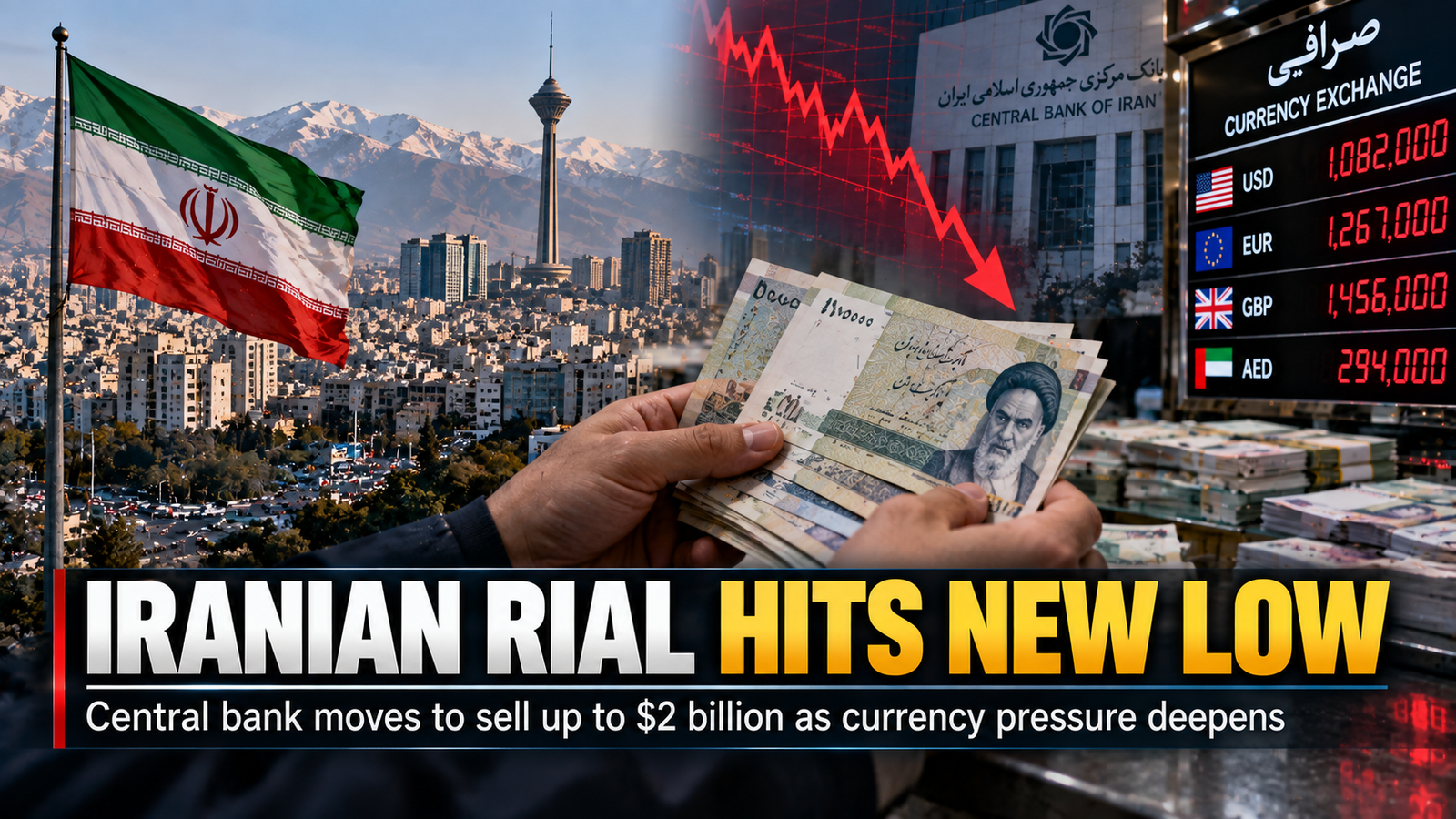
Iran’s rial fell to a new low on October 3, 2026, as the country’s central bank moved to inject up to $2 billion into the foreign-exchange market in an effort to support the currency.
Reuters reported that the US dollar was selling for about 2.688 million rials on the free market, compared with around 2.632 million a day earlier. A second market tracker, alanchand.com, showed the dollar at roughly 2.695 million rials.
State television said state banks had begun selling foreign currency as part of the central bank’s support operation.
The move comes as Iran faces severe economic pressure from US sanctions, a naval blockade affecting oil exports and inflation running above 70%.
For ordinary Iranians, the currency decline is making rent, food and other basic needs harder to afford while pushing more savers toward dollars, other hard currencies and gold.
What Happened to the Iranian Rial?
The rial weakened further against the US dollar on Saturday, extending a decline that has accelerated over the past year. Reuters said the currency has lost more than half its value over the last 12 months.
That kind of depreciation has broad consequences. Imported goods become more expensive.
Businesses face higher costs when they need foreign currency to buy machinery, medicines, components or raw materials. Households also lose purchasing power because domestic prices often rise alongside a weaker currency.
Why the Central Bank Is Selling Dollars
Iran’s central bank is trying to reduce pressure on the rial by increasing the supply of foreign currency in the market.
State television said state banks had begun selling up to $2 billion.
The basic logic is straightforward: if more dollars become available, the shortage of hard currency can ease and the pace of rial depreciation may slow. However, currency intervention is usually most effective when markets believe the underlying economic pressures are also improving.
If demand for dollars remains very high, central-bank support can provide only temporary relief.
Why the Rial Is Under So Much Pressure
The currency is being hit by several forces at once.
US Sanctions
Sanctions restrict Iran’s access to international finance, trade and foreign currency.
They also make it more difficult for Iranian companies to receive payments, move money and access global banking channels.
Oil Export Pressure
Oil exports are one of Iran’s most important sources of foreign currency.
Reuters reported that a US naval blockade is cutting into that financial lifeline.
When oil-export revenue falls, fewer dollars and other hard currencies enter the economy.
That puts additional pressure on the rial.
Very High Inflation
Inflation above 70% means prices are rising rapidly.
High inflation tends to weaken confidence in a local currency because people expect the money they hold today to buy less in the future.
That can encourage households and businesses to convert savings into foreign currency or gold.
The Search for Safe Havens
Reuters reported that many Iranians are moving savings into dollars, other hard currencies and gold.
This is a common response when people expect further depreciation.
But it can create a feedback loop.
The more people rush to buy dollars, the more pressure there is on the local currency.
That can make central-bank intervention harder and more expensive.
What the Central Bank Says
Mehdi Darabi, an adviser to the central bank governor on foreign-exchange affairs, said part of the rial’s weakness reflected what he described as pessimistic and misleading forecasts from US officials.
He told state television that the current decline was temporary and argued that outside messaging was being used to influence expectations around the currency.
That is the Iranian central bank’s position.
It does not remove the underlying economic pressures from inflation, sanctions and weaker access to oil-export revenue.
Why Confidence Matters in a Currency Crisis
Currencies are influenced by more than trade and interest rates.
Expectations matter too.
If businesses and households believe a currency will keep losing value, they may try to convert money into dollars quickly.
That can intensify the decline.
Central banks therefore try to manage both the supply of foreign currency and public confidence.
The challenge for Iran is that confidence is being tested by inflation, sanctions and uncertainty over future oil revenue.
Impact on Ordinary Households
A weaker rial affects daily life quickly.
Food and Medicine
Any imported ingredient, medicine or agricultural input can become more expensive when the rial falls.
Even locally produced goods may rise in price if they depend on imported machinery, fuel or components.
Rent and Housing
Reuters said many Iranians are already struggling with basic necessities and rent.
High inflation makes housing costs harder to manage because wages often fail to rise at the same pace as prices.
Savings
Households holding savings in rials can see their real purchasing power shrink rapidly.
That is one reason hard currencies and gold become more attractive during periods of instability.
Impact on Iranian Businesses
Businesses face several problems when the rial weakens.
Imported inputs become more expensive.
Pricing becomes harder because costs can change quickly.
Companies may delay investment if they are uncertain about the exchange rate.
Firms that earn foreign currency may benefit in some cases, but sanctions can make it difficult to access or transfer those earnings.
Smaller businesses are often hit especially hard because they have fewer ways to hedge against currency risk.
Why the Oil Sector Matters So Much
Oil exports provide Iran with a major source of foreign currency.
That makes the energy sector central to the rial’s stability.
If oil exports fall sharply, the government and central bank have fewer foreign-currency resources available.
This can weaken the country’s ability to support imports and defend the rial.
The relationship between oil revenue and currency stability is one of the most important factors to watch.
Can the $2 Billion Intervention Stop the Decline?
It may help in the short term.
But the longer-term result will depend on whether the broader economic pressure changes.
A central bank can sell dollars to slow depreciation.
It cannot permanently offset high inflation, restricted export revenue and weak investor confidence on its own.
If people continue to expect the rial to weaken, demand for foreign currency may remain strong.
Why Inflation Above 70% Is So Serious
Inflation at that level can reshape economic behavior.
Consumers spend faster because they fear prices will rise again.
Businesses change prices more frequently.
Workers demand higher wages.
Savers avoid holding local currency.
Lenders become reluctant to provide long-term credit.
These effects can reinforce instability even if the central bank injects foreign currency.
Regional and Global Business Impact
Iran’s currency crisis also matters beyond its borders.
Energy Markets
Iran remains an important oil producer.
Any disruption to exports, sanctions enforcement or maritime access can affect global oil markets.
Higher oil prices can raise costs for transport, manufacturing and electricity in importing countries.
Trade Routes
The wider regional security situation also affects shipping costs and insurance.
If maritime routes around the Gulf remain risky, companies may face higher freight and insurance expenses.
Investor Risk
The rial’s decline is another signal of economic stress in a region already affected by conflict and geopolitical uncertainty.
That can make investors more cautious about emerging-market and Middle East exposure.
Pakistan Relevance
The direct link to Pakistan is limited, but the energy impact matters.
Pakistan imports a large share of its fuel.
If pressure on Iranian oil exports contributes to higher global crude prices, Pakistan can face a larger import bill and additional inflation pressure.
The story is therefore relevant to Pakistan mainly through oil prices, regional trade conditions and wider Middle East instability.
What to Watch Next
The next few days will show whether the central bank’s dollar sales can slow the rial’s decline.
Key signals include:
– the free-market dollar rate
– the pace of central-bank intervention
– inflation data
– changes in oil-export flows
– any easing or tightening of sanctions
– demand for gold and foreign currency inside Iran
If the rial continues to weaken despite intervention, markets may question how much firepower the central bank is willing or able to use.
Why This Story Matters
The Iranian rial’s decline is more than a financial-market story.
It affects household purchasing power, business investment, trade and government finances.
It also shows how sanctions, energy exports, inflation and public confidence can combine to create severe pressure on a national currency.
The central bank’s plan to sell up to $2 billion may help stabilize the market temporarily.
Whether it can change the broader trend will depend on economic and geopolitical conditions that go well beyond the foreign-exchange market.
Frequently Asked Questions
Why did the Iranian rial hit a new low?
The rial is under pressure from high inflation, US sanctions, weaker access to oil-export revenue and strong demand for dollars and gold.
How weak is the rial?
Reuters reported the dollar trading at about 2.688 million rials on October 3, 2026, while another market tracker showed around 2.695 million.
What is Iran’s central bank doing?
State television said state banks had begun selling up to $2 billion in foreign currency to support the rial.
Has the rial lost a lot of value?
Yes. Reuters reported that it has lost more than half its value over the past year.
How high is inflation in Iran?
Reuters reported inflation above 70%.
Why are Iranians buying dollars and gold?
Many people are seeking stores of value that may hold purchasing power better than the rial during rapid depreciation.
Can the central bank’s intervention fix the problem?
It can support the currency in the short term, but long-term stabilization also depends on inflation, oil revenue, sanctions and confidence.
Why does this matter to Pakistan?
Pakistan can be affected indirectly if pressure on Iranian oil exports contributes to higher global energy prices.
About The Author