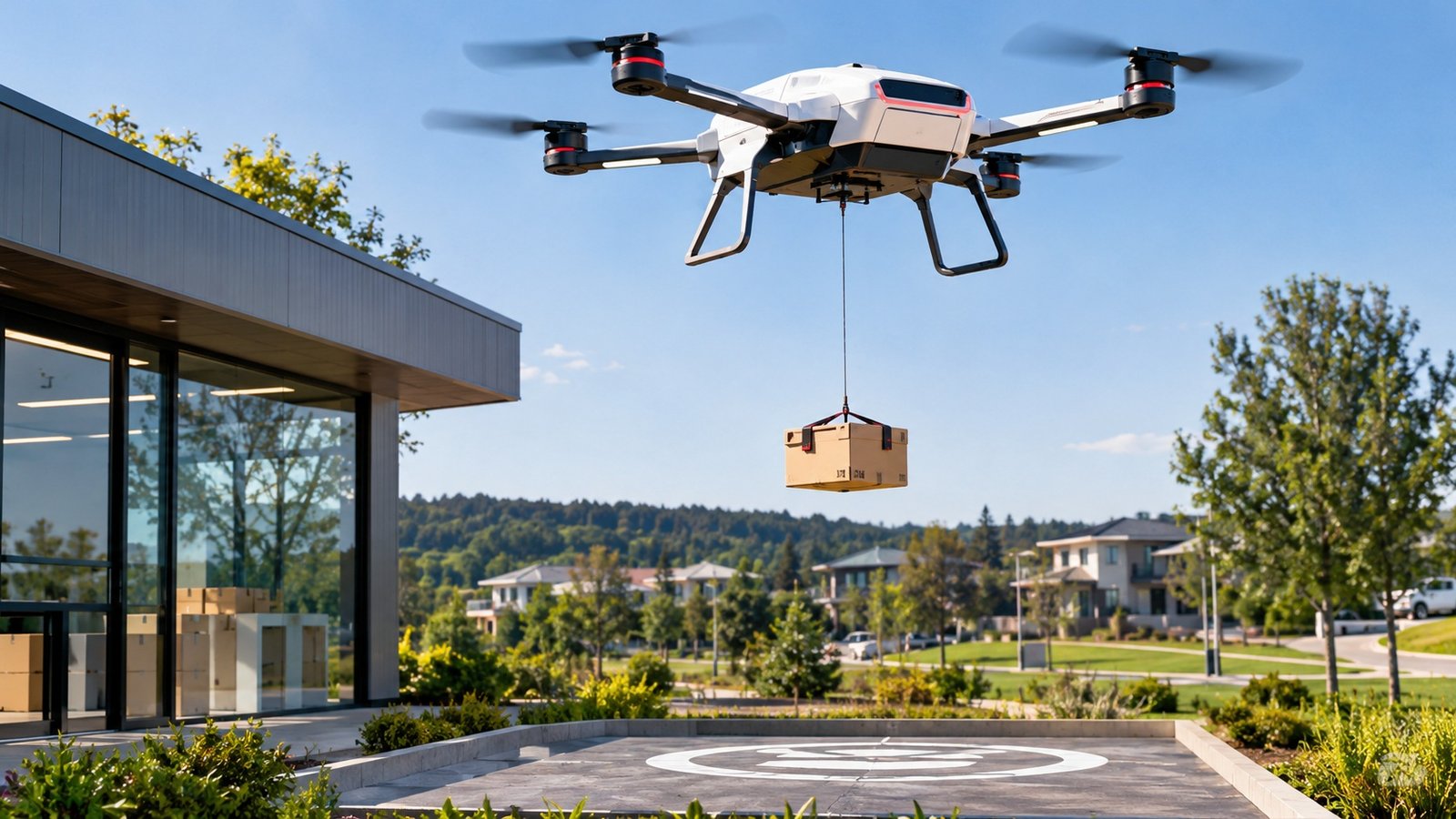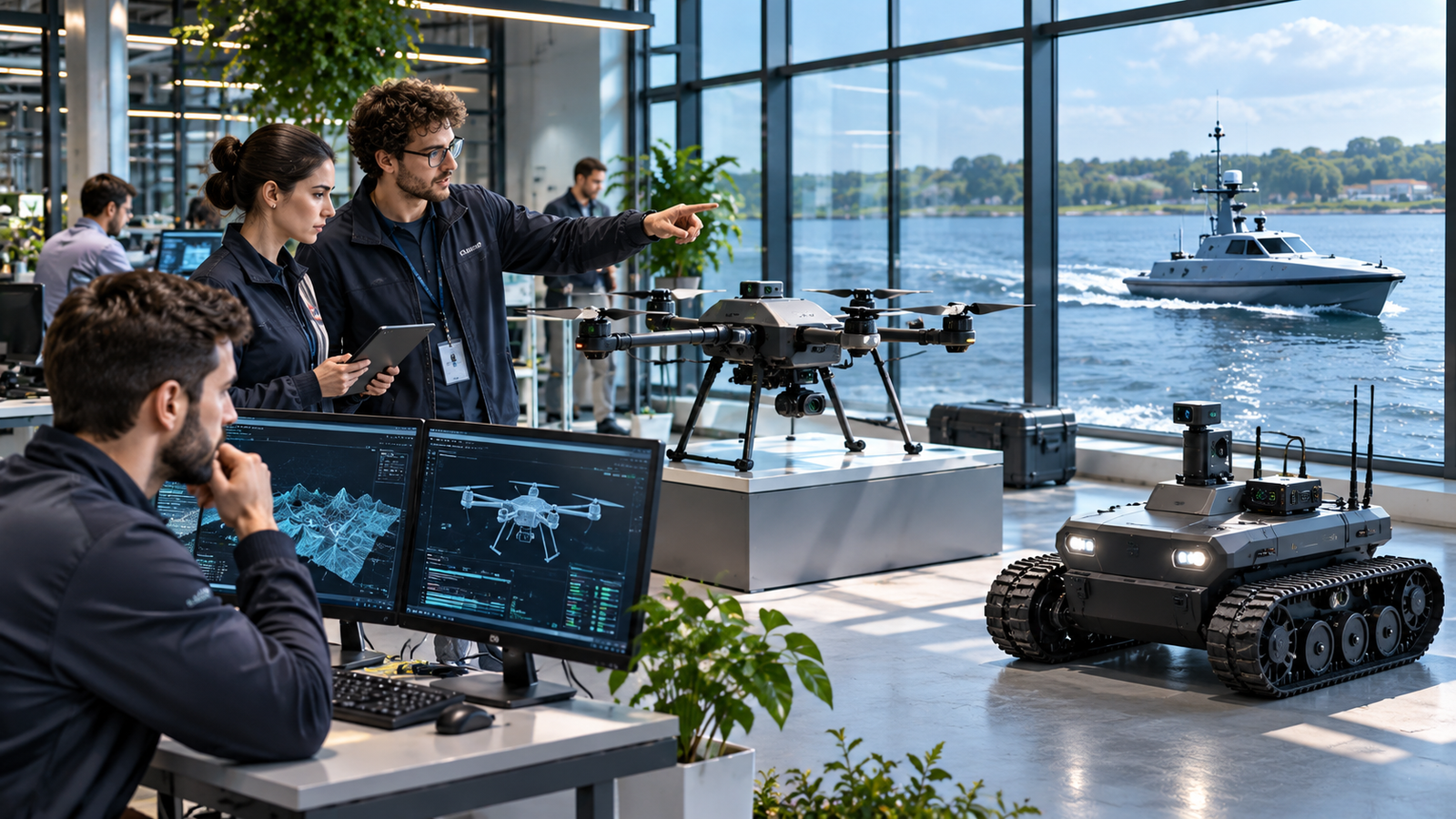
UForce, a Ukrainian-founded technology startup developing autonomous systems for land, sea and air operations, has raised $700 million in a major funding round that values the company at $6 billion. The investment, announced on November 12, 2026, is intended to support the company’s expansion and increase production of its autonomous platforms for Ukraine and allied countries.
The funding represents a significant investment in a technology business operating at the intersection of robotics, autonomous vehicles, software and defence technology. UForce develops uncrewed maritime, aerial and ground platforms, alongside command-and-control software designed to coordinate these systems. Its business model brings together physical machines and software infrastructure, reflecting the growing importance of autonomous technologies across modern industrial and security applications.
The funding round was co-led by Valor Equity Partners and Britain’s National Wealth Fund, with participation from the US-Ukraine Reconstruction Investment Fund. The announced valuation of $6 billion places UForce among a growing group of highly valued technology startups in Europe.
The investment is particularly notable because it comes during the continuing Russia-Ukraine war, in which drones and robotic systems have become increasingly important to military operations. Both sides have continued adapting their technology and tactics, creating demand for systems that can perform tasks remotely or autonomously.
However, the funding should be understood in its proper context. UForce has announced a major capital raise and a plan to expand production, but the announcement does not provide a detailed breakdown of manufacturing targets, individual product orders, future revenue or the number of jobs expected to be created. Its long-term success will depend on execution, customer demand, technology performance and the company’s ability to operate in a highly competitive sector.
What Is UForce and What Does the Startup Develop?
UForce is a Ukrainian-founded technology company headquartered in London, with operational hubs in Kyiv and Washington. Its work focuses on uncrewed systems that can operate across maritime, aerial and land environments.
The term uncrewed refers to platforms that do not require a human operator to be physically present inside the vehicle. Depending on their design, these systems can be remotely controlled, operate with varying levels of autonomy or use software to support specific tasks. They are increasingly used in sectors such as inspection, mapping, logistics, research, maritime monitoring and defence.
UForce’s portfolio includes autonomous maritime platforms, aerial systems and ground-based platforms. The company also develops command-and-control software intended to coordinate these systems. This software component is important because operating multiple autonomous platforms requires more than manufacturing individual machines. Operators need tools to monitor systems, manage information and coordinate activities.
By developing both physical platforms and supporting software, UForce is positioning itself as a broader autonomous technology company rather than a manufacturer focused on a single type of drone.
Reuters reported that the company’s latest funding will support expansion of production across its autonomous sea, land and air systems. The company intends to serve Ukraine and allied countries, although the funding announcement did not provide a complete list of future customers or specific production targets.
Details of the $700 Million Funding Round
UForce announced that it had raised $700 million at a valuation of $6 billion. The round was co-led by Valor Equity Partners and Britain’s National Wealth Fund, while the US-Ukraine Reconstruction Investment Fund also participated.
The size of the investment highlights the growing interest of major investors in autonomous technology and the wider defence technology sector. The funding is also notable because it combines private investment with participation from institutions connected to the United Kingdom and the United States.
A valuation of $6 billion indicates the value investors and the company have placed on the business in connection with the funding transaction. It does not mean that UForce has received $6 billion in cash. The $700 million represents the reported funding amount, while the valuation is a separate measure of the company’s assessed worth.
For a startup, a large funding round can provide resources to expand production, hire specialised employees, develop products and strengthen its commercial operations. In UForce’s case, the stated priority is to increase production of autonomous systems across multiple operating environments.
The announcement does not provide a detailed allocation of the $700 million across research, manufacturing, hiring or infrastructure. It would therefore be premature to assign specific percentages or spending targets to individual business activities.
The round nevertheless represents a major capital commitment to a company operating in a strategically important technology market.
Why Investors Are Backing Autonomous Technology
Autonomous technology has become an increasingly important area of investment because it can be applied across multiple industries. Robotics, artificial intelligence, sensors, navigation systems and communication software are changing how machines operate and how organisations manage complex tasks.
In commercial sectors, autonomous platforms can support industrial inspection, agricultural monitoring, environmental research, warehouse operations and maritime activities. These applications can reduce the need for people to carry out certain repetitive or difficult tasks in hazardous environments.
In defence and security, uncrewed systems have also attracted growing attention because they can be used for surveillance, monitoring, logistics and other operations without requiring a crew to be physically present in the vehicle. Their role has expanded as countries and defence organisations assess how emerging technologies affect equipment, operational planning and security requirements.
UForce operates within this wider trend. Its focus on maritime, aerial and ground systems gives it exposure to several areas of autonomous technology rather than relying on a single product category.
Investors may see opportunities in the growing demand for these systems, particularly as governments and organisations seek to modernise their capabilities. However, demand in this sector can be affected by government procurement cycles, regulatory requirements, geopolitical conditions and the ability of manufacturers to deliver reliable products at scale.
A large investment does not guarantee commercial success. UForce will still need to demonstrate that its technology performs reliably, meets customer requirements and can be manufactured and maintained at a competitive cost.
The Russia-Ukraine War and the Growth of Drone Technology
The continuing Russia-Ukraine war has become an important factor in the development of autonomous and uncrewed systems. Since Russia’s full-scale invasion in February 2022, both countries have adapted their military tactics and technology, with drones and robotic systems playing an increasingly visible role.
The conflict has demonstrated how relatively compact unmanned platforms can influence surveillance, communications, logistics and military operations. It has also encouraged governments and technology companies to reassess the role of autonomous systems in modern security planning.
The growing use of these technologies has created demand for manufacturers capable of producing reliable equipment and supporting software. Companies operating in this sector may benefit from increased procurement interest, but they also face complex technical, operational and regulatory challenges.
UForce’s stated plan to expand production for Ukraine and allied countries reflects this market environment. Its investment announcement comes at a time when autonomous systems are attracting significant attention from governments, investors and technology developers.
However, the company’s future performance should not be assessed solely through the military context. Its wider portfolio includes systems and software that belong to a broader autonomous technology industry. The commercial potential of such platforms can depend on applications beyond a single conflict or customer group.
The development of the sector also raises important questions about safety, accountability, human oversight and the rules governing the use of autonomous systems. As the technology advances, governments and international institutions will face growing pressure to establish clear standards for its development and deployment.
Why UForce Develops Sea, Land and Air Systems
Many technology companies focus on one category of autonomous platform. UForce’s approach covers three different environments: maritime, aerial and land-based operations.
Maritime systems can be designed for activities such as monitoring, inspection, research and other tasks in water environments. Uncrewed aerial platforms can support observation and data collection, while ground-based systems can be used in environments where remote operation may be useful.
Each category presents different technical challenges. Maritime platforms must deal with water conditions, communication limitations and environmental exposure. Aerial systems require careful attention to stability, navigation, energy efficiency and operating conditions. Ground platforms must handle terrain, obstacles, mobility and reliability.
Developing systems across these environments can create opportunities for shared software, sensors, communications and data-management technologies. However, it also requires specialised engineering capabilities and different manufacturing processes.
UForce’s command-and-control software is an important part of this approach. Coordinating several types of uncrewed systems can require a central interface through which operators monitor activity and manage information. Such software can become a valuable part of the company’s technology offering if it proves reliable and adaptable.
The company’s ability to integrate different platforms could help it compete in a market where customers increasingly look for complete systems rather than isolated machines.
The Importance of Command-and-Control Software
Autonomous hardware is only one part of a wider technology system. Software determines how platforms receive instructions, process information, communicate with operators and coordinate with other systems.
Command-and-control software is designed to help operators manage and monitor multiple platforms through a structured interface. Depending on the system, it can provide information about platform status, location, communications and operational activity.
For companies such as UForce, developing this software alongside hardware may offer an important commercial advantage. A customer acquiring a platform may also require the software, technical support and maintenance services needed to operate it.
An integrated offering can help manufacturers develop longer-term relationships with customers. It can also create opportunities for software upgrades, system integration and technical services.
However, software reliability and cybersecurity are critical. Systems operating in demanding environments must be protected against unauthorised access, communication failures and technical disruptions. Customers also need confidence that the software can function under the conditions for which it was designed.
UForce’s funding provides an opportunity to strengthen its overall business, but the company has not publicly disclosed a detailed product roadmap or technical performance benchmarks as part of the Reuters funding report.
What the $6 Billion Valuation Means
UForce’s $6 billion valuation places it among a group of highly valued European technology startups. A valuation is an estimate of a company’s worth based on factors such as investor demand, business prospects, market opportunities and the terms of a funding transaction.
It is important to distinguish valuation from revenue, profit or cash reserves. A company can receive a high valuation because investors expect its business to grow significantly in the future, even if its current financial performance has not yet reached the scale implied by that valuation.
Reuters compared UForce’s valuation with several other European technology companies. France-based generative AI developer Mistral reached a reported valuation of $24 billion in September, while London-headquartered AI voice generation company ElevenLabs reached $22 billion. Britain’s AI infrastructure company Nscale was valued at $14.6 billion in March, and Swedish coding startup Lovable reported a valuation of $13.3 billion in August.
These examples show that investors are placing substantial value on technology companies developing products in areas such as artificial intelligence, computing infrastructure and autonomous systems.
However, comparisons between companies must be made carefully. Each business operates in a different market, has different revenue sources and faces different operating risks. A high valuation alone does not establish that a company is profitable or that its future growth is guaranteed.
For UForce, the next important indicators will include production expansion, customer demand, product reliability and its ability to convert investment into sustainable business performance.
The Role of International Investors
The participation of investors from different countries gives the UForce funding round an international dimension. Valor Equity Partners and Britain’s National Wealth Fund co-led the investment, while the US-Ukraine Reconstruction Investment Fund also participated.
International investment can provide more than financial capital. Depending on the structure of a transaction, investors may offer business expertise, access to networks, strategic relationships and support for expansion into new markets.
For a company headquartered in London with hubs in Kyiv and Washington, international relationships may be important for reaching customers and managing operations across different jurisdictions.
The participation of the US-Ukraine Reconstruction Investment Fund is also notable because the company was founded in Ukraine and aims to expand production for Ukraine and allied countries. It reflects the connection between technology investment, Ukraine’s industrial development and the wider international interest in the country’s economic and security future.
Nevertheless, the funding announcement does not disclose the full investment terms, governance arrangements or the precise role each investor will play in the company’s future operations. Those details should not be assumed without additional confirmation.
Opportunities and Challenges Ahead
The $700 million funding round gives UForce significant financial resources to pursue its expansion plans. Increasing production across sea, land and air systems could allow the company to serve more customers and strengthen its position in the autonomous technology market.
The opportunity is substantial, but the challenges are equally important. Manufacturing autonomous systems at scale requires reliable suppliers, specialised components, quality-control processes and trained employees. Companies must also ensure that their products meet relevant safety, technical and regulatory requirements.
Competition is another factor. The autonomous systems market includes established defence contractors, specialised drone manufacturers, robotics companies and emerging technology startups. These businesses are competing for investment, government contracts and commercial customers.
Technology can also become outdated quickly. Companies need to continue developing software, sensors, communications and hardware to remain competitive. A large funding round may provide resources for research and expansion, but it does not remove the need for consistent product development.
Geopolitical developments could also influence demand. UForce’s stated focus on Ukraine and allied countries places it in a market where government priorities and security requirements can change. Long-term growth may depend on the company’s ability to build a diversified customer base and maintain reliable operations.
The next stage will therefore be about execution. Investors and industry observers will want to see whether the company can turn its funding into greater production capacity, stronger customer relationships and sustainable commercial performance.
Global Implications for the Startup Industry
UForce’s funding round is part of a wider shift in startup investment towards companies developing complex technologies with strategic and industrial applications. In earlier periods, venture capital attention was heavily concentrated on consumer applications, online platforms and software services. Investors are now also committing large sums to businesses working in robotics, defence technology, advanced manufacturing and specialised infrastructure.
This change reflects the growing importance of technology in national security, industrial competitiveness and economic resilience. Governments are increasingly interested in companies that can develop critical systems and strengthen domestic manufacturing capabilities.
The trend also creates opportunities for startups outside traditional technology centres. Countries with engineering talent, research institutions and industrial capabilities may be able to develop specialised companies that serve international markets.
For Pakistan and South Asia, the broader lesson is that technology entrepreneurship can extend beyond consumer applications. Areas such as robotics, chip design, industrial automation, sensors and advanced engineering can offer opportunities for startups that develop specialised expertise.
However, these sectors generally require patient capital, technical talent, research infrastructure and access to international customers. UForce’s funding round demonstrates the scale of investment that can be attracted by a company operating in a strategically important technology market, but it does not mean that the same financing conditions are immediately available to startups in every country.
What to Watch Next
Several developments will help determine whether UForce can translate its funding into long-term growth. The first will be evidence of increased production capacity across its autonomous maritime, aerial and ground platforms.
The company’s customer base will also be important. Reuters reported that UForce intends to serve Ukraine and allied countries, but the funding announcement did not provide a detailed list of contracts or future orders. Confirmed customer agreements and procurement announcements would provide clearer evidence of commercial demand.
Another factor will be the company’s ability to expand its engineering and manufacturing workforce. Autonomous technology requires specialised expertise in software, hardware, systems integration and testing. Building these capabilities will be essential as production grows.
Investors will also monitor the company’s financial performance, product reliability and ability to operate across international markets. A high valuation creates expectations, making execution and transparent business progress especially important.
For now, the $700 million funding round is a major milestone. The next stage will determine whether UForce can use that capital to become a larger and more established global autonomous technology company.
Conclusion
UForce’s $700 million funding round at a $6 billion valuation marks a major development in the global startup and autonomous technology sector. The Ukrainian-founded company is seeking to expand production of uncrewed maritime, aerial and ground platforms, supported by command-and-control software designed to coordinate these systems.
The investment, co-led by Valor Equity Partners and Britain’s National Wealth Fund with participation from the US-Ukraine Reconstruction Investment Fund, highlights growing investor interest in autonomous systems and strategically important technology businesses.
The company’s expansion plans come as drones and robotic platforms play an increasingly important role in the Russia-Ukraine war and as governments reassess their technological capabilities. At the same time, autonomous systems have potential applications across commercial, industrial and research sectors.
The funding provides UForce with an opportunity to expand, but it does not guarantee future success. Manufacturing capacity, customer demand, cybersecurity, product reliability and regulatory requirements will all influence the company’s next phase.
For the global startup industry, the deal demonstrates that large-scale investment is increasingly flowing into companies developing complex hardware and software for real-world applications. UForce’s next challenge will be to convert its substantial funding and valuation into measurable production growth and a sustainable international business.
How much funding did UForce raise in November 2026?
The funding announcement placed UForce at a valuation of $6 billion.
What is UForce’s valuation after the funding round?
The funding announcement placed UForce at a valuation of $6 billion.
What does UForce develop?
UForce develops uncrewed maritime, aerial and ground platforms, along with command-and-control software designed to coordinate these systems.
Who led UForce’s $700 million funding round?
The round was co-led by Valor Equity Partners and Britain’s National Wealth Fund, with participation from the US-Ukraine Reconstruction Investment Fund.
Where is UForce headquartered?
UForce is headquartered in London and has operational hubs in Kyiv and Washington.
Why is UForce expanding its autonomous systems production?
The company plans to expand production of autonomous sea, land and air systems for Ukraine and allied countries.
Does UForce develop only aerial drones?
No. Its reported portfolio includes uncrewed maritime, aerial and ground platforms, as well as command-and-control software.
Why is UForce’s funding important for the global startup industry?
The funding highlights investor interest in autonomous systems, robotics and strategically important technology businesses, showing that large startup investments are also flowing into complex hardware and software development.
About The Author