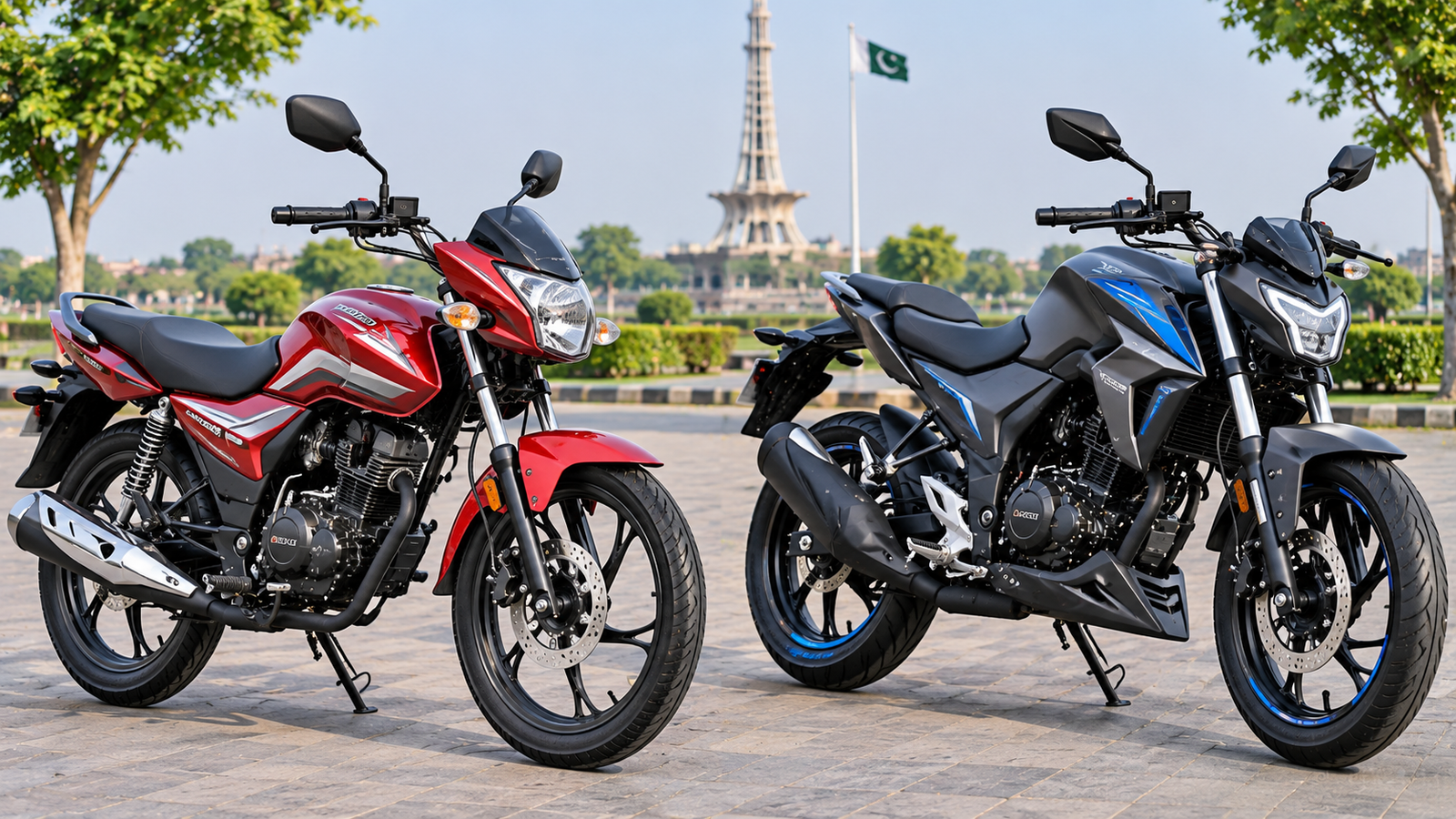
Pakistan’s motorcycle market has received two new additions as Super Power has introduced the Archi 150 and Leo 200, targeting buyers looking for higher engine capacity, modern styling and additional features at relatively competitive prices. The new motorcycles were launched in November 2026, with the Archi 150 carrying an announced price of Rs380,000 and the larger Leo 200 priced at Rs480,000.
The launch brings two different options into Pakistan’s 150cc and 200cc motorcycle segments. The Archi 150 is designed as a conventional commuter motorcycle, offering a 149cc engine, five-speed transmission, front disc brake, alloy wheels and tubeless tyres. The Leo 200, meanwhile, features a larger 200cc engine, naked-bike styling and a balancer shaft intended to reduce engine vibrations.
The two models are separated by Rs100,000, giving buyers a choice between a lighter 150cc motorcycle and a larger 200cc option. Their announced prices also place them in competition with established Japanese motorcycle brands and other emerging manufacturers operating in Pakistan.
However, the launch specifications and manufacturer fuel-economy claims should be considered carefully. Actual mileage, long-term reliability, spare-parts availability, warranty coverage and after-sales service have not yet been established through sufficient independent testing. These factors will play an important role in determining whether the new motorcycles can build a lasting position in the local market.
Super Power Archi 150 Launched at Rs380,000
The Super Power Archi 150 is the smaller of the two newly introduced motorcycles and is positioned for customers seeking a 150cc commuter with practical equipment. Its announced launch price is Rs380,000, placing it among the lower-priced options in Pakistan’s 150cc category.
The motorcycle is powered by a 149cc, single-cylinder, four-stroke, air-cooled engine with a carburettor fuel system. According to the specifications reported at launch, the engine produces 11.2 horsepower at 8,500 revolutions per minute and 10.4 Nm of torque at 7,500 rpm. Power is delivered through a five-speed return-shift transmission.
The Archi 150 supports both electric and kick starting, giving riders two ways to start the motorcycle. It also comes with a front disc brake and rear drum brake, alloy wheels and tubeless tyres. These features are important for buyers comparing equipment across motorcycles in the same price range.
The motorcycle has a reported kerb weight of 122 kilograms and a 10-litre fuel tank. Its relatively conventional commuter design may appeal to riders who need a motorcycle for everyday travel, including city commuting and routine journeys.
One of its main selling points is the announced combination of engine capacity and equipment at Rs380,000. However, the motorcycle’s market performance will depend on more than its initial specifications. Buyers will also want to assess engine refinement, riding comfort, maintenance costs and the availability of replacement parts.
Super Power Archi 150 Engine and Performance
The Archi 150’s 149cc air-cooled engine places it in a category commonly chosen by riders seeking more capacity than standard 70cc and 125cc commuter motorcycles. Its reported output of 11.2 horsepower and 10.4 Nm of torque provides a basis for comparing it with other models in the segment.
The five-speed gearbox gives riders an additional transmission ratio compared with many smaller commuter motorcycles. The electric and kick-start combination also provides flexibility for everyday use, particularly when the battery or electrical starting system requires attention.
Super Power has listed a claimed maximum speed of at least 95 kilometres per hour. This figure should be treated as a manufacturer-reported specification rather than a verified road-test result. Actual speed can vary according to rider weight, road conditions, maintenance, tyre pressure, engine condition and other factors.
The Archi 150 does not include a balancer shaft according to the launch specifications reported by PakWheels. A balancer shaft is a mechanical component used in some engines to reduce vibrations generated by moving internal parts. Its absence does not automatically make a motorcycle unsuitable, but it is a factor riders may want to consider when evaluating comfort, particularly at higher engine speeds.
The actual level of vibration, acceleration and overall riding refinement will become clearer through independent testing and owner experience.
Archi 150 Fuel Average: Is the 50 km/L Claim Realistic?
One of the most noticeable claims associated with the Archi 150 is its reported fuel average of 50 kilometres per litre. If achieved consistently, this figure could make the motorcycle attractive to riders who consider fuel expenses an important part of their purchase decision.
However, the announced mileage figure has not been established through independent real-world testing. Fuel consumption can vary significantly depending on traffic conditions, riding speed, acceleration habits, road quality, engine tuning and maintenance.
A 149cc carburetted motorcycle may deliver different results in city traffic compared with longer journeys on open roads. Frequent stopping, heavy acceleration and congested routes can increase fuel consumption, while steady riding and proper maintenance may improve efficiency.
For this reason, buyers should treat the 50 km/L figure as a manufacturer claim rather than a guaranteed everyday average. Independent road tests involving different riding conditions will be necessary to establish how closely the Archi 150 matches the announced figure.
The motorcycle’s actual fuel economy will also influence its competitiveness against smaller-capacity commuter bikes and other 150cc alternatives. Until reliable testing becomes available, customers should avoid calculating long-term fuel savings solely on the basis of the advertised number.
Super Power Leo 200 Introduced at Rs480,000
Alongside the Archi 150, Super Power has introduced the Leo 200, a larger motorcycle aimed at riders seeking a 200cc engine and a more muscular naked-bike appearance. The announced launch price is Rs480,000, which is Rs100,000 higher than the Archi 150.
The Leo 200 uses a 200cc, single-cylinder, four-stroke, air-cooled, carburetted engine. According to the specifications reported at launch, it produces 13.6 horsepower at 7,500 rpm and 15 Nm of torque at 6,000 rpm.
One of the motorcycle’s notable features is its balancer shaft, which is designed to reduce vibrations generated by the single-cylinder engine. This component could improve the riding experience compared with an otherwise similar engine without a balancing mechanism, although its actual effectiveness will need to be assessed during road testing.
The engine is paired with a five-speed return-shift transmission and offers both electric and kick starting. The motorcycle also comes with alloy wheels, tubeless tyres, a front disc brake and a rear drum brake.
Its reported kerb weight is 138 kilograms, while the fuel tank has a capacity of 12 litres. The Leo 200 also has a reported ground clearance of 210 millimetres, which could be useful on roads with speed breakers and uneven surfaces.
The combination of a larger engine, balancer shaft and naked styling gives the Leo 200 a different character from the commuter-focused Archi 150. However, its overall value will depend on performance, comfort, reliability and ownership costs.
Leo 200 Fuel Economy and Performance Claims
Super Power has reportedly claimed that the Leo 200 can deliver a fuel average of approximately 43.5 to 45.5 kilometres per litre. The company has also listed a claimed maximum speed of 106 kilometres per hour.
These figures have attracted attention because the motorcycle uses a 200cc carburetted engine. However, the fuel-economy claim should be treated cautiously until independent road tests establish its real-world performance.
Fuel consumption on a 200cc motorcycle can vary according to engine tuning, traffic, speed, rider behaviour, maintenance and road conditions. A motorcycle operating in congested city traffic may produce different results from one ridden at a consistent speed on open roads.
The Leo 200’s reported power output of 13.6 horsepower and torque of 15 Nm provides a useful reference for buyers comparing it with other motorcycles. Its balancer shaft is another feature worth examining because engine vibration can influence comfort during longer journeys.
The claimed mileage and top speed are not substitutes for independent testing. Buyers should wait for reliable reviews and owner feedback before assuming that the motorcycle will consistently achieve the advertised figures.
Archi 150 vs Leo 200: Key Differences
Although both motorcycles have been introduced by the same manufacturer, they target different types of buyers. The Archi 150 is positioned as a relatively affordable commuter, while the Leo 200 offers a larger engine and a more aggressive naked-bike design.
The Archi 150 has an announced price of Rs380,000, compared with Rs480,000 for the Leo 200. The price difference is Rs100,000, which may be significant for buyers working within a fixed budget.
The Archi uses a 149cc engine producing 11.2 horsepower and 10.4 Nm of torque. The Leo uses a 200cc engine producing 13.6 horsepower and 15 Nm of torque. The larger model also includes a balancer shaft, a 12-litre fuel tank and reported ground clearance of 210 millimetres.
Both models offer five-speed transmissions, electric and kick starting, front disc brakes, rear drum brakes, alloy wheels and tubeless tyres. Their reported weights differ, with the Archi at 122 kilograms and the Leo at 138 kilograms.
The choice between them will depend on the buyer’s priorities. Riders who prefer a conventional commuter and want to spend less may consider the Archi 150. Those interested in greater engine capacity, additional torque and a larger motorcycle may find the Leo 200 more relevant.
Neither model should be selected on specifications alone. A test ride and confirmation of warranty, parts availability and dealer support are important before making a purchase.
How the New Motorcycles Compare with Competitors
Pakistan’s 150cc motorcycle market includes products from established manufacturers as well as newer brands attempting to attract buyers through competitive pricing and additional features.
The Archi 150’s announced price of Rs380,000 places it above the United CCR150, which PakWheels listed at approximately Rs325,000, but below several other 150cc alternatives. The same comparison listed the Suzuki GS150 at around Rs410,000, the Honda CG150 at approximately Rs460,000 and the Suzuki GR150 at around Rs552,000.
These figures are reported market prices and may change. Buyers should confirm the latest price with authorised dealers before comparing the total cost of ownership.
The Leo 200 enters a smaller segment with fewer directly comparable motorcycles. Its reported price of Rs480,000 places it in competition with models such as the Royal GPX Raptor 200, while other alternatives include motorcycles with different styling or fuel-system configurations.
The Leo’s main attraction on paper is its combination of 200cc displacement, a balancer shaft, alloy wheels, tubeless tyres and a front disc brake at the announced price. However, the availability of spare parts, service facilities and reliable warranty support will be just as important as its initial equipment.
Price comparisons alone cannot establish which motorcycle offers better value. Long-term reliability, resale demand and maintenance expenses can significantly influence the actual ownership experience.
What Buyers Should Check Before Booking
Customers considering either motorcycle should confirm the latest price, availability and delivery arrangements directly with a dealer. The announced launch price may not include registration, transportation, insurance or other charges, and the final amount payable can vary according to location and dealership arrangements.
Buyers should also ask for written warranty terms covering the engine, electrical components and other major parts. The availability of authorised service centres and model-specific spare parts is particularly important for newer motorcycles entering a competitive market.
A proper test ride can help assess clutch operation, gearbox performance, braking response, steering balance, suspension comfort and engine vibration. Riders should also inspect the motorcycle’s tyres, lights, indicators, mirrors and overall build quality before accepting delivery.
Fuel-economy figures should be treated as claims until independent testing is available. Customers who regularly travel long distances may want to wait for owner feedback about mileage under normal Pakistani road conditions.
It is also advisable to obtain a written quotation showing the motorcycle’s model, colour, price, additional charges and expected delivery date. These checks can help buyers make a more informed decision and reduce uncertainty when purchasing a newly introduced model.
What Has Been Confirmed and What Remains Unclear?
The launch coverage confirms the announced prices of Rs380,000 for the Archi 150 and Rs480,000 for the Leo 200, along with their reported engine specifications and major features. The Archi’s 50 km/L and the Leo’s 43.5–45.5 km/L fuel-economy figures are manufacturer claims reported in launch coverage, not independently verified results.
Several ownership details remain unclear, including confirmed delivery schedules, booking requirements, complete warranty terms, long-term parts availability and real-world performance. These details will become increasingly important as the motorcycles reach customers and independent reviews become available.
The success of both models will depend on whether the manufacturer can support the products after launch. Competitive pricing can attract initial attention, but reliable after-sales service and consistent parts supply are essential for building consumer confidence.
Conclusion
Super Power’s introduction of the Archi 150 and Leo 200 adds two new options to Pakistan’s motorcycle market. With announced prices of Rs380,000 and Rs480,000 respectively, the models target buyers seeking greater engine capacity and additional equipment without moving into significantly higher price categories.
The Archi 150 offers a 149cc commuter-oriented package with a five-speed gearbox, front disc brake, alloy wheels and tubeless tyres. The Leo 200 provides a larger 200cc engine, higher reported torque, a balancer shaft and naked-bike styling.
Both motorcycles have features that may attract customers, but their long-term market performance will depend on factors that cannot be established through launch specifications alone. Real-world fuel economy, reliability, riding comfort, spare-parts availability and after-sales service will be important in determining their value.
For now, the two launches increase competition and provide Pakistani buyers with additional choices in the 150cc and 200cc categories. Independent testing and customer feedback will help establish whether the Archi 150 and Leo 200 can turn their announced specifications into a dependable ownership experience.
What is the price of the Super Power Archi 150 in Pakistan?
The announced launch price of the Super Power Archi 150 is Rs380,000.
What is the price of the Super Power Leo 200 in Pakistan?
The announced launch price of the Super Power Leo 200 is Rs480,000.
What is the engine capacity of the Super Power Archi 150?
The Archi 150 has a 149cc, single-cylinder, air-cooled, four-stroke engine.
What is the engine capacity of the Super Power Leo 200?
The Leo 200 is equipped with a 200cc, single-cylinder, air-cooled, four-stroke engine with a balancer shaft.
What is the claimed fuel average of the Archi 150?
Super Power’s reported fuel-economy claim for the Archi 150 is 50 kilometres per litre. This figure has not been independently verified through real-world testing.
What is the claimed fuel average of the Leo 200?
The reported manufacturer fuel-economy claim for the Leo 200 is approximately 43.5 to 45.5 kilometres per litre. Independent testing is still needed.
Do the Super Power Archi 150 and Leo 200 have disc brakes?
Both motorcycles are reported to have a front disc brake and a rear drum brake.
What should buyers check before purchasing the new Super Power motorcycles?
Buyers should confirm the latest price, delivery schedule, warranty terms, spare-parts availability, service support and real-world performance before booking either motorcycle.
About The Author