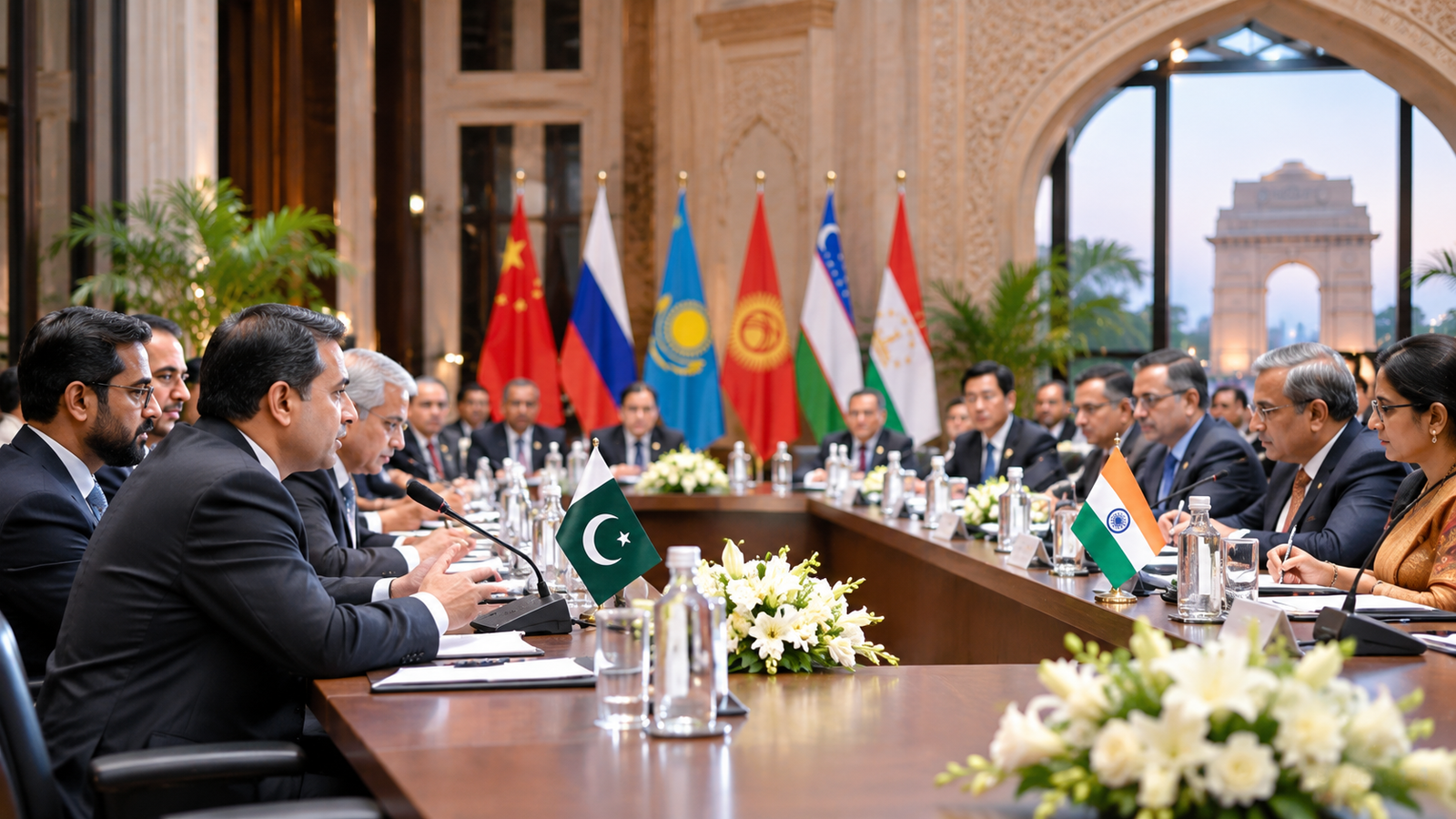
Pakistan has nominated Federal Minister for Climate Change and Environmental Coordination Dr Musadik Masood Malik to represent the country at the Shanghai Cooperation Organisation (SCO) Civilisational Dialogue scheduled to take place in New Delhi from November 20 to 22, 2026. The decision marks an important diplomatic development as it would be the first visit by a Pakistani federal minister to India since May 2023, when former Foreign Minister Bilawal Bhutto Zardari travelled to Goa for an SCO meeting.
Pakistan’s Foreign Office confirmed the nomination in an official statement issued on November 14. It said the event would bring together representatives from SCO member states to exchange views on civilisational dialogue and cultural understanding. The government also reaffirmed its commitment to promoting dialogue among civilisations and encouraging people-to-people contacts through the regional organisation.
The announcement comes at a time when relations between Pakistan and India remain strained following the military confrontation between the two countries in May 2025. Diplomatic engagement between the neighbouring states has remained limited, while their participation in multilateral forums such as the SCO has continued.
Although the nomination creates an opportunity for official representation and regional interaction, it should not be interpreted as confirmation of a bilateral breakthrough between Islamabad and New Delhi. The event is being organised under the SCO framework, and Pakistan’s participation is primarily linked to the organisation’s civilisational and cultural dialogue agenda.
Pakistan Officially Nominates Musadik Malik
The Government of Pakistan announced that Dr Musadik Masood Malik, Federal Minister for Climate Change and Environmental Coordination, would represent the country at the SCO Civilisational Dialogue in New Delhi. The Foreign Office said the gathering would provide a platform for representatives of member states to discuss cultural understanding and dialogue among different civilisations.
The nomination was confirmed through the Foreign Office’s official press release, which emphasised Pakistan’s commitment to promoting mutual respect and people-to-people contacts within the SCO framework. The statement did not announce a separate bilateral meeting with Indian officials or disclose a detailed schedule of the Pakistani minister’s engagements during the event.
According to reporting by The News, Pakistan’s Deputy Prime Minister and Foreign Minister Ishaq Dar announced the decision after consultation with relevant stakeholders. The report also said that the original invitation from India had been sent to Pakistan’s Minister for National Heritage and Culture, Aurangzeb Khan Khichi, before the government selected Musadik Malik to represent the country.
The Foreign Office clarified that the government could nominate a minister according to availability and its decision about representation. This distinction is important because the change in nominee does not itself indicate a change in the purpose of Pakistan’s participation.
The official announcement establishes that Musadik Malik has been nominated to attend the event. His actual arrival, participation in individual sessions and any additional diplomatic engagements will depend on developments closer to the scheduled dates.
What Is the SCO Civilisational Dialogue?
The Shanghai Cooperation Organisation is a regional organisation that brings together countries across Eurasia for cooperation in areas including politics, security, economic development and cultural interaction. Its membership and institutional activities have expanded over time, giving it a wider role in regional engagement.
The Civilisational Dialogue is intended to provide a platform for discussions about shared cultural heritage, historical connections, languages, literature, art and mutual understanding among participating countries. Its purpose is different from a conventional bilateral diplomatic negotiation or a meeting focused exclusively on security and trade.
The inaugural dialogue in New Delhi is scheduled for November 20–22, 2026. According to reporting by Indian and Pakistani media, the programme is expected to include discussions and cultural sessions related to civilisational and cultural expression, art and architecture, language, literature and manuscripts.
The forum was proposed by Indian Prime Minister Narendra Modi during the SCO Council of Heads of State summit in Tianjin, China, in September 2025. India subsequently moved forward with plans to host the first edition and invited SCO member states to participate.
The dialogue is designed to encourage cultural interaction among countries with different histories and traditions. It also provides an opportunity for participating governments to maintain contact through a multilateral framework, even when their bilateral relations face political difficulties.
However, the forum should not be confused with a formal peace process or a platform where major political disputes are automatically resolved. Its announced purpose is civilisational and cultural engagement.
Why Pakistan’s Participation Is Diplomatically Significant
Pakistan’s decision to participate is significant because official engagement between Islamabad and New Delhi has remained limited since the military confrontation in May 2025. Both countries have maintained sharply different positions on regional security and other longstanding disputes, making high-level diplomatic contact difficult.
The planned visit would be the first by a Pakistani federal minister to India since Bilawal Bhutto Zardari attended an SCO Council of Foreign Ministers meeting in Goa in May 2023. That visit was also conducted within the framework of a multilateral regional organisation rather than a dedicated bilateral diplomatic initiative.
Pakistan’s participation in the upcoming forum demonstrates that the two countries can still have a degree of official interaction through established international platforms. Such participation can help preserve institutional communication and allow representatives to engage with officials from other member states.
The development is also relevant because Pakistan and India are both important regional countries and members of the SCO. Their involvement in the organisation means that regional discussions can bring their representatives into the same multilateral setting, even when direct bilateral engagement remains restricted.
Nevertheless, the significance of the visit should be assessed carefully. Attendance at a cultural dialogue does not automatically indicate that diplomatic relations are improving, that negotiations have resumed or that either side has changed its position on outstanding disputes.
The immediate importance lies in Pakistan’s decision to send a federal minister to a regional event hosted by India and in the continuation of engagement through the SCO framework.
A Rare Ministerial Visit Since the 2025 Military Confrontation
The planned visit comes against the background of a serious deterioration in Pakistan-India relations following the military confrontation in May 2025. The episode further complicated an already difficult relationship between the two nuclear-armed neighbours.
Since then, official engagement has largely remained limited, with both countries maintaining their respective positions on security and other bilateral issues. Public statements and diplomatic exchanges have continued, but opportunities for high-level visits have remained restricted.
The last Pakistani federal minister to visit India was Bilawal Bhutto Zardari, who travelled to Goa in May 2023 for the SCO Council of Foreign Ministers meeting. His visit was itself notable because it represented a rare high-level engagement between the two countries.
In October 2024, India’s External Affairs Minister S. Jaishankar travelled to Islamabad to attend the SCO Council of Heads of Government meeting. His visit marked an important moment in multilateral engagement, although it did not result in formal bilateral talks between the two governments.
These examples show that the SCO has provided a channel for official contact even when direct diplomatic relations have faced difficulties. The upcoming Civilisational Dialogue follows a similar pattern, offering a multilateral setting rather than a separate bilateral negotiation.
Whether the November meeting creates any additional diplomatic opportunities will depend on the conduct of the event and the decisions taken by the participating governments.
The Role of the SCO in Pakistan-India Engagement
The SCO has become an important platform for regional interaction involving Pakistan, India, China, Russia and other member countries. Its activities cover a range of issues, including regional security, economic cooperation, trade, connectivity and cultural exchange.
For Pakistan and India, participation in the organisation creates opportunities to interact within a broader multilateral environment. This does not remove their bilateral disagreements, but it provides a structured setting in which representatives can take part in meetings and maintain institutional engagement.
Pakistan has been an active member of the SCO since becoming a full member in 2017. The country has hosted major organisational meetings, including the Council of Heads of Government meeting in Islamabad in October 2024. India also participated in that gathering through its External Affairs Minister.
Pakistan is scheduled to host the next SCO Council of Heads of State summit in Islamabad in August 2027. This upcoming responsibility makes continued engagement with the organisation particularly relevant for Islamabad.
The planned Civilisational Dialogue in New Delhi is therefore part of a wider sequence of SCO activities in which Pakistan and India remain involved as member states. Their participation reflects the organisation’s role as a regional forum that continues to operate despite tensions between some of its members.
Pakistan’s Upcoming Role in the SCO
Pakistan’s engagement with the SCO is not limited to cultural dialogue. The country is also preparing for its responsibilities connected with the organisation’s upcoming high-level meetings and institutional activities.
Pakistan is scheduled to host the SCO Council of Heads of State summit in Islamabad in August 2027. Such a gathering would bring leaders and senior representatives from member countries together to discuss regional priorities and cooperation.
The country has also been involved in other SCO mechanisms. Pakistan’s participation in the organisation’s working groups and institutional activities reflects its interest in maintaining a role in regional discussions covering economic development, security and connectivity.
The planned attendance of Musadik Malik at the Civilisational Dialogue provides another opportunity for Pakistan to participate in an SCO event hosted by a neighbouring member state. It may also contribute to maintaining continuity in regional engagement ahead of Pakistan’s own hosting responsibilities.
However, the upcoming summit in Islamabad and the November cultural dialogue have different purposes. The Civilisational Dialogue is focused on cultural understanding, while the Council of Heads of State summit is a major political gathering involving national leaders.
Pakistan’s broader SCO engagement should therefore be understood through the different functions of the organisation rather than treating every meeting as a direct diplomatic negotiation between Islamabad and New Delhi.
Why Cultural Diplomacy Matters
Cultural diplomacy is often used by governments to encourage understanding between societies through shared heritage, education, language, literature, art and historical connections. It provides an additional channel of interaction that can operate alongside traditional political and diplomatic relations.
In regions with long histories of cultural exchange, such forums can create opportunities to discuss common traditions and historical links. South Asia and the wider Eurasian region contain diverse communities whose languages, artistic traditions, architecture and historical experiences have developed through centuries of interaction.
The SCO Civilisational Dialogue is intended to bring these subjects into a multilateral discussion. By involving representatives from member states, the forum can provide space for cultural institutions and government officials to exchange views about shared heritage and mutual understanding.
For Pakistan, participation offers an opportunity to present its cultural and historical perspective within a regional platform. It may also allow Pakistani representatives to engage with officials and participants from other SCO countries.
However, cultural diplomacy has limitations. It cannot independently resolve political disputes, security concerns or disagreements over territory and other bilateral issues. Its contribution is more gradual, helping maintain communication and encouraging interaction in areas where cooperation may remain possible.
The value of the forum will ultimately depend on the quality of participation, the discussions held and whether any practical cultural cooperation follows.
What the Visit Could Mean for Regional Relations
The planned visit may carry symbolic importance because it brings a Pakistani federal minister to India at a time when direct political engagement remains limited. Even within a multilateral framework, the presence of official representatives can create opportunities for interaction that would otherwise be difficult to arrange.
The event could also help maintain the role of the SCO as a platform where member states continue to participate despite disagreements. For regional organisations, keeping communication channels open is important because political tensions can affect cooperation in several areas, including economic connectivity, security and cultural exchange.
For South Asia, any sustained institutional engagement between Pakistan and India can be relevant because the two countries have significant populations, economies and regional influence. Their relationship also affects the wider environment for trade, connectivity and cooperation across the region.
Nevertheless, the upcoming event should not be described as a breakthrough unless there is clear evidence of additional diplomatic progress. No bilateral meeting between Pakistani and Indian leaders or ministers has been confirmed in the official announcement.
The most accurate assessment is that Pakistan has agreed to participate in an SCO cultural forum hosted by India. Whether the event produces any wider diplomatic impact will become clearer after the meeting takes place.
What Has Been Confirmed and What Remains Unclear?
The Government of Pakistan has officially confirmed the nomination of Dr Musadik Masood Malik to represent the country at the SCO Civilisational Dialogue in New Delhi from November 20 to 22, 2026. The Foreign Office has also explained that the forum will bring together representatives of member states to discuss civilisational dialogue and cultural understanding.
Media reports have provided additional context about the selection of the Pakistani representative, the original invitation and the diplomatic significance of the planned visit. They have also highlighted that it would be the first visit by a Pakistani federal minister to India since May 2023.
Several details remain unclear. The full composition of Pakistan’s delegation, the minister’s detailed programme, the names of officials he may meet and the specific outcomes expected from the forum have not been fully announced in the official statement.
There is also no confirmed announcement of formal bilateral talks between Pakistan and India during the event. The nomination itself does not establish that the two governments have agreed to restart a broader diplomatic process.
Keeping these distinctions clear is important for accurate reporting. The confirmed fact is Pakistan’s participation through its nominated minister. Any claims about bilateral negotiations, policy changes or major diplomatic agreements would require separate official confirmation.
What to Watch During the November 20–22 Dialogue
The most important development to watch will be whether Dr Musadik Malik attends the event as scheduled and what engagements form part of Pakistan’s official programme. Statements made by the Pakistani delegation could provide further insight into Islamabad’s approach to cultural diplomacy and regional cooperation.
The discussions and outcomes announced by the organisers will also be relevant. Any joint statements, cultural cooperation proposals or follow-up initiatives could indicate whether the forum produces practical results beyond symbolic participation.
Another point to monitor will be whether Pakistani and Indian representatives have any official interaction on the sidelines. Such contact should only be reported as a bilateral engagement if it is confirmed by reliable sources or the governments concerned.
The event may also provide an indication of how the SCO intends to use cultural dialogue as part of its wider regional agenda. Its effectiveness will depend on whether member states follow discussions with practical cooperation in education, heritage preservation, cultural exchange or other agreed areas.
For Pakistan, the forum is also part of a wider period of SCO engagement ahead of the country’s planned hosting of the Council of Heads of State summit in 2027.
Conclusion
Pakistan’s nomination of Federal Minister Musadik Malik for the SCO Civilisational Dialogue in New Delhi is a notable diplomatic development at a time when relations between Islamabad and New Delhi remain strained. The planned visit, scheduled for November 20–22, 2026, would be the first visit by a Pakistani federal minister to India since May 2023.
The decision reflects Pakistan’s continued participation in the Shanghai Cooperation Organisation and its willingness to engage through a multilateral platform focused on cultural understanding and civilisational dialogue. It also highlights the role of the SCO in maintaining regional interaction when direct bilateral relations face difficulties.
However, the nomination should not be interpreted as confirmation of a major improvement in Pakistan-India relations. The official announcement concerns participation in a cultural forum and does not confirm bilateral negotiations or a new diplomatic agreement.
The significance of the event will become clearer after the dialogue takes place and the participating governments announce any outcomes. For now, Pakistan’s confirmed decision to send a minister to the New Delhi forum represents a limited but important step in continued regional engagement through the SCO framework.
Who will represent Pakistan at the SCO Civilisational Dialogue in New Delhi?
Pakistan has nominated Federal Minister for Climate Change and Environmental Coordination Dr Musadik Masood Malik to represent the country at the event.
When will the SCO Civilisational Dialogue take place?
The SCO Civilisational Dialogue is scheduled to take place in New Delhi from November 20 to 22, 2026.
Why is Musadik Malik’s planned visit to India significant?
It would be the first visit by a Pakistani federal minister to India since May 2023, when former Foreign Minister Bilawal Bhutto Zardari attended an SCO meeting in Goa.
What is the purpose of the SCO Civilisational Dialogue?
The forum aims to bring representatives of SCO member states together to discuss civilisational dialogue, cultural understanding and people-to-people contacts.
Has Pakistan confirmed bilateral talks with India during the event?
No. Pakistan’s official announcement confirms participation in the SCO forum but does not announce formal bilateral talks with Indian officials.
Who announced Pakistan’s nomination of Musadik Malik?
Pakistan’s Foreign Office confirmed the nomination in an official statement issued on November 14, 2026. Media reports also attributed the decision’s announcement to Deputy Prime Minister and Foreign Minister Ishaq Dar.
When did a Pakistani federal minister last visit India?
The last such visit was in May 2023, when former Foreign Minister Bilawal Bhutto Zardari travelled to Goa for an SCO Council of Foreign Ministers meeting.
Why is the SCO important for Pakistan and India?
The SCO provides a multilateral platform for regional cooperation and interaction, allowing member states including Pakistan and India to participate in common forums despite bilateral disagreements.
About The Author