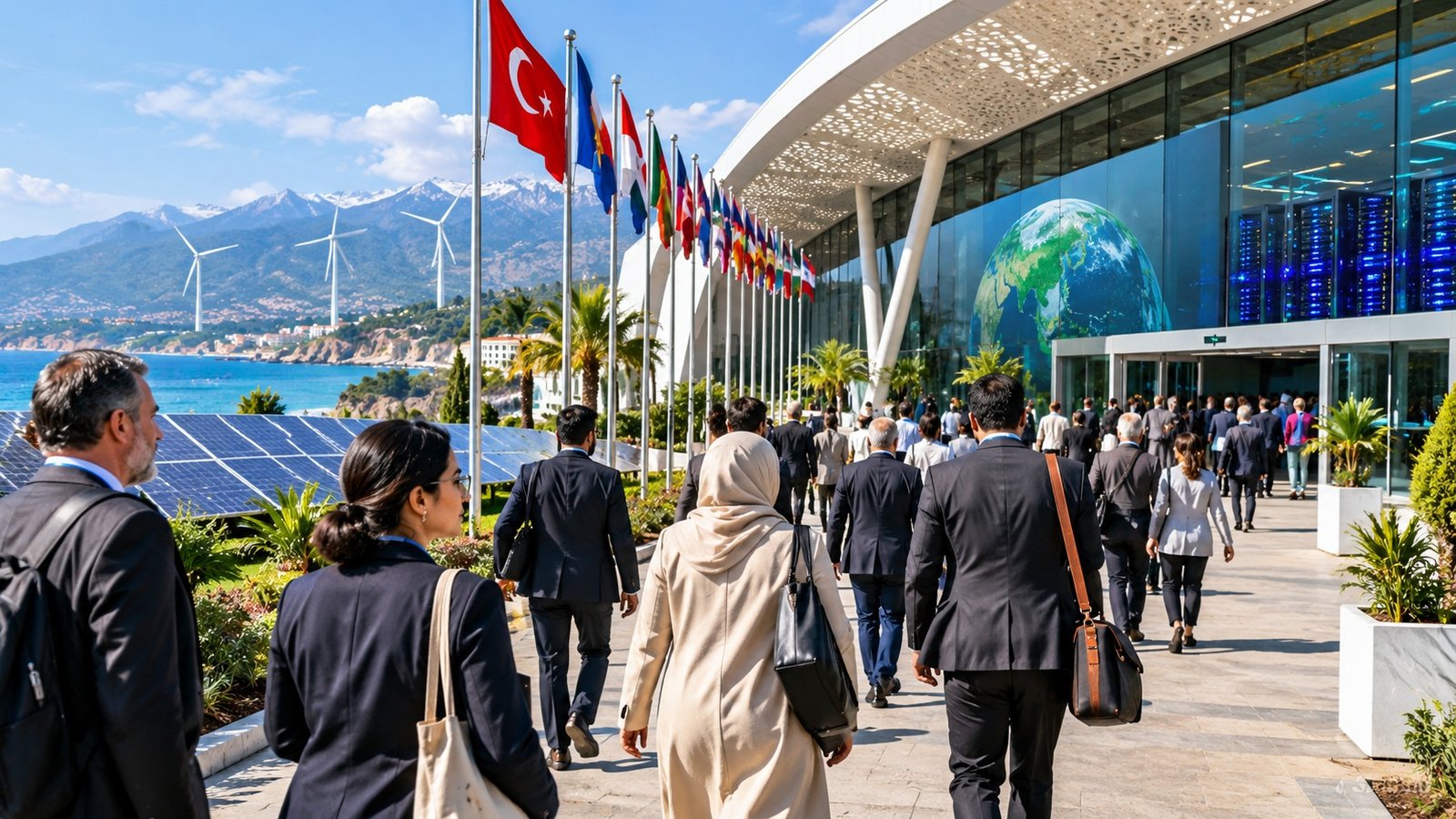
COP31 2026 has opened in Antalya, Türkiye, bringing governments, climate negotiators, scientists, businesses and civil-society groups together for two weeks of discussions on the global climate crisis. The United Nations climate conference is scheduled to run from November 9 to 20, with the formal opening taking place on November 9. The summit comes at a time when countries are facing rising climate risks, pressure to strengthen clean-energy systems and growing electricity demand from digital technologies, including artificial intelligence.
The conference is the 31st session of the Conference of the Parties to the United Nations Framework Convention on Climate Change. Its central challenge is to turn existing climate commitments into practical action. Negotiators will discuss emissions reduction, climate adaptation, finance, technology transfer and support for countries that are especially vulnerable to extreme weather and environmental change.
COP31 is not expected to solve the climate crisis in a single meeting. Instead, its importance will be measured by whether governments can agree on credible steps, mobilise funding and accelerate implementation of commitments already made under the Paris Agreement.
COP31 2026: Dates, venue and global participation
The United Nations and the UN Framework Convention on Climate Change list COP31 as taking place from November 9 to 20, 2026, in Antalya, Türkiye. The official conference venue is the Antalya EXPO Center. Representatives from governments, international organisations, scientific institutions, businesses and civil society are expected to take part in the negotiations and related events.
The summit forms part of the annual UN climate process, in which countries review progress and negotiate collective responses to global warming. The formal negotiations involve national delegations, while a wider programme of meetings and side events brings together researchers, campaigners, companies, local authorities and communities affected by climate change.
The COP31 programme includes thematic discussions covering food, agriculture and health; energy and transport; waste; resilient cities; finance and trade; youth and education; science and technology; oceans and ecosystems; social development; and implementation. This broad agenda reflects the fact that climate change affects nearly every part of economic and social life.
Why the climate summit matters now
The conference is taking place amid warnings that the world remains off track to meet the Paris Agreement’s goal of limiting global warming to 1.5°C above pre-industrial levels. The United Nations has highlighted the growing impacts of heatwaves, floods and droughts, while climate scientists continue to stress the need for rapid reductions in greenhouse-gas emissions and stronger preparation for impacts that can no longer be avoided.
Climate change is not only an environmental issue. It affects food production, water supplies, public health, infrastructure, insurance costs, energy systems and economic stability. Extreme heat can reduce labour productivity and increase electricity demand for cooling. Floods can damage homes, roads, crops and power networks. Drought can place pressure on agriculture and water management, while coastal communities face risks from sea-level rise and stronger storm impacts.
The scientific evidence provides the basis for climate policy, but the decisions taken at COP conferences are political and economic as well as technical. Governments must balance national circumstances, development needs, energy security and the shared requirement to reduce emissions. COP31 is an opportunity to narrow the gap between scientific warnings and the pace of action.
Energy security and the clean-energy transition
Energy security is expected to be a major theme at COP31. Countries are trying to ensure reliable and affordable energy supplies while reducing the emissions associated with electricity, transport and industry. Geopolitical tensions and disruptions to fuel markets have made energy independence and supply resilience more prominent in policy discussions.
Renewable sources such as solar and wind can reduce dependence on imported fossil fuels, but their expansion requires investment in electricity grids, storage, transmission and system flexibility. Hydropower, nuclear energy and other low-carbon technologies may also form part of national energy strategies, depending on local resources and policy choices.
The central question is how to expand reliable energy access while bringing down greenhouse-gas emissions. A transition that raises energy costs or leaves communities without dependable electricity can face public resistance. Governments therefore need policies that support affordability, modern infrastructure, skills development and a fair distribution of costs and benefits.
Artificial intelligence is adding pressure to electricity demand
Artificial intelligence has become a new issue in the global energy debate because training and operating advanced AI systems require large data centres and computing infrastructure. These facilities consume electricity for servers, cooling and supporting systems. As demand for AI services grows, technology companies and energy providers are under pressure to secure additional power capacity.
This creates both a challenge and an opportunity for climate policy. If new data-centre demand is met mainly by fossil-fuel generation, emissions could rise and make climate targets harder to achieve. If operators secure low-carbon electricity, improve energy efficiency and locate facilities where clean power is available, digital growth could be more compatible with climate goals.
AI can also support climate-related work, including weather forecasting, electricity-grid management, industrial efficiency and monitoring of forests or emissions. However, these potential benefits do not remove the need to measure the energy and water used by digital infrastructure. COP31 discussions on science, industry and technology provide a platform to examine how innovation can support climate action without creating new environmental pressures.
Climate finance remains central to negotiations
Many developing countries argue that their ability to reduce emissions and adapt to climate impacts depends on access to affordable finance. They often face high borrowing costs, limited fiscal space and significant investment needs for resilient infrastructure, clean energy, water systems, agriculture and disaster preparedness.
Climate finance discussions cover public funding, private investment, multilateral development banks, grants, concessional loans and mechanisms intended to support countries facing severe climate impacts. The quality of finance matters as much as the headline amount. Vulnerable countries frequently stress that grants and affordable funding are essential where debt burdens are already high and climate disasters have damaged public assets.
COP31 will provide another opportunity for governments and financial institutions to discuss how climate finance can be mobilised and delivered. A key test will be whether funding reaches communities and projects that need it, whether application processes are accessible and whether support is predictable enough for long-term planning.
What COP31 could mean for Pakistan
Pakistan has a strong interest in the outcome of global climate negotiations because it faces exposure to floods, heatwaves, water stress, glacial risks and pressure on agricultural livelihoods. Climate-related disasters can damage infrastructure, displace communities and create additional demands on public finances. The country’s geography and dependence on climate-sensitive sectors make adaptation and disaster preparedness important national priorities.
For Pakistan, climate finance can support flood-resilient infrastructure, early-warning systems, climate-smart agriculture, water management, urban heat planning and stronger public services during extreme weather. International cooperation on technology and capacity-building may also help improve weather forecasting, energy efficiency and the resilience of electricity networks.
Pakistan’s participation in COP31 should be understood in the wider context of developing countries seeking fair access to climate finance and practical support for adaptation. The country’s priorities include protecting vulnerable communities while continuing to expand energy access and economic opportunity. Any specific financial commitment or agreement involving Pakistan should be reported only when confirmed by official documents or credible reporting.
Science, data and the importance of reliable climate information
Climate negotiations rely on scientific evidence, including measurements of temperature, greenhouse-gas concentrations, ocean conditions, ice loss, rainfall patterns and changes in ecosystems. Satellite observations, weather stations, ocean monitoring and climate models help researchers identify trends and estimate future risks.
These tools are increasingly important for local planning. Better forecasts can help authorities prepare for floods and heatwaves, while improved hydrological data can support water management. Agricultural agencies can use climate information to advise farmers on planting periods, crop selection and irrigation. Cities can use heat-risk maps to identify neighbourhoods that need shade, cooling centres and resilient infrastructure.
However, data alone does not protect people. Governments need institutions capable of turning scientific information into public warnings, investment decisions and emergency plans. Communities must also be able to access information in languages and formats they understand. COP31’s science and implementation discussions can help highlight the link between research, policy and practical protection.
The challenge of turning pledges into measurable action
Climate conferences often produce declarations, targets and political commitments. Their long-term value depends on implementation after delegations return home. Governments need domestic policies, budgets, regulatory frameworks and transparent reporting systems to convert international promises into measurable reductions in emissions and improvements in resilience.
For businesses, clear policy signals can influence investment in renewable energy, grid infrastructure, efficient buildings, low-emission transport and industrial technology. For communities, implementation means safer homes, reliable water supplies, resilient health services and protection from climate-related hazards.
COP31’s focus on implementation is therefore important. Countries will be judged not only by what they announce but also by whether they follow through, publish credible progress data and strengthen policies when current plans fall short. Independent scientific assessment and transparent reporting can help the public understand whether commitments are producing real results.
What to watch during the two-week conference
The conference runs through November 20, and the official programme includes technical meetings, ministerial discussions, thematic events and negotiations. The Leaders’ Summit is scheduled for November 11 and 12. The wider programme also sets aside dedicated days for energy and transport, finance and trade, science and technology, oceans and nature, and other areas.
Observers will be watching for progress on climate finance, adaptation support, energy transition plans, implementation of national climate commitments and cooperation on technology. Discussions about the role of AI and electricity demand are also likely to attract attention as governments consider how to support digital development while limiting emissions.
It is important to distinguish scheduled discussions from decisions that have actually been adopted. An item appearing on the conference programme does not mean countries have reached an agreement. Mukhbir will update this story as official outcomes, negotiated texts or verified announcements become available.
Conclusion
COP31 2026 brings the international community to Antalya at a moment when climate risks, energy security and technological change are increasingly connected. The summit provides a platform for governments to assess progress, negotiate cooperation and discuss how to turn climate commitments into action.
For Pakistan and other climate-vulnerable countries, the discussions on adaptation, finance, resilient infrastructure and access to technology are particularly important. For the wider world, the challenge is to expand reliable energy and support economic development while reducing greenhouse-gas emissions and preparing for climate impacts.
The real measure of COP31 will not be the number of speeches or announcements made during the conference. It will be whether countries leave Antalya with practical, measurable steps that are funded, implemented and transparent. As the negotiations continue until November 20, the world will be watching for evidence that climate commitments are becoming real-world progress.
Frequently Asked Questions
What is COP31 2026?
COP31 is the 31st Conference of the Parties to the United Nations Framework Convention on Climate Change, where countries meet to discuss global climate action and implementation of climate agreements.
Where is COP31 being held?
The conference is taking place in Antalya, Türkiye, with the official venue listed as the Antalya EXPO Center.
When does COP31 2026 take place?
The UNFCCC lists the conference dates as November 9 to 20, 2026.
Why is COP31 important?
It provides a forum for countries to discuss emissions reduction, climate adaptation, finance, technology cooperation and implementation of existing commitments.
What are the main topics at COP31?
The programme covers energy, transport, agriculture, health, finance, trade, science, technology, oceans, ecosystems, resilient cities and social development.
How is artificial intelligence connected to climate change?
AI systems require computing infrastructure and electricity. Their climate impact depends partly on energy sources, efficiency and how AI is used to improve systems such as power grids and forecasting.
Why is climate finance important for developing countries?
Finance can help countries invest in clean energy, resilient infrastructure, adaptation, disaster preparedness and protection for communities exposed to climate risks.
Why does COP31 matter to Pakistan?
Pakistan faces climate-related risks including floods, heatwaves, water stress and glacial hazards. International finance, technology cooperation and adaptation planning are important to its resilience.
About The Author