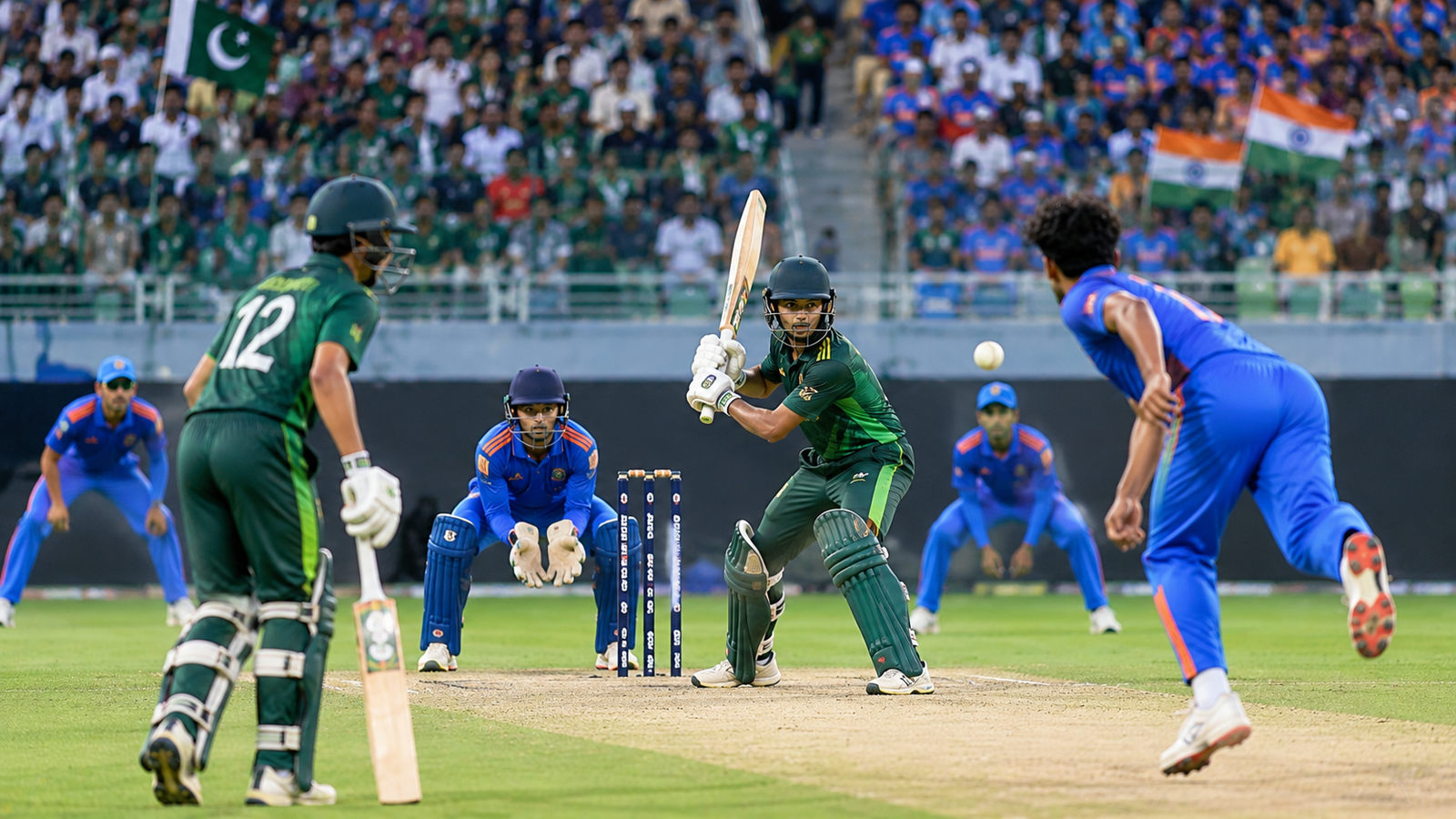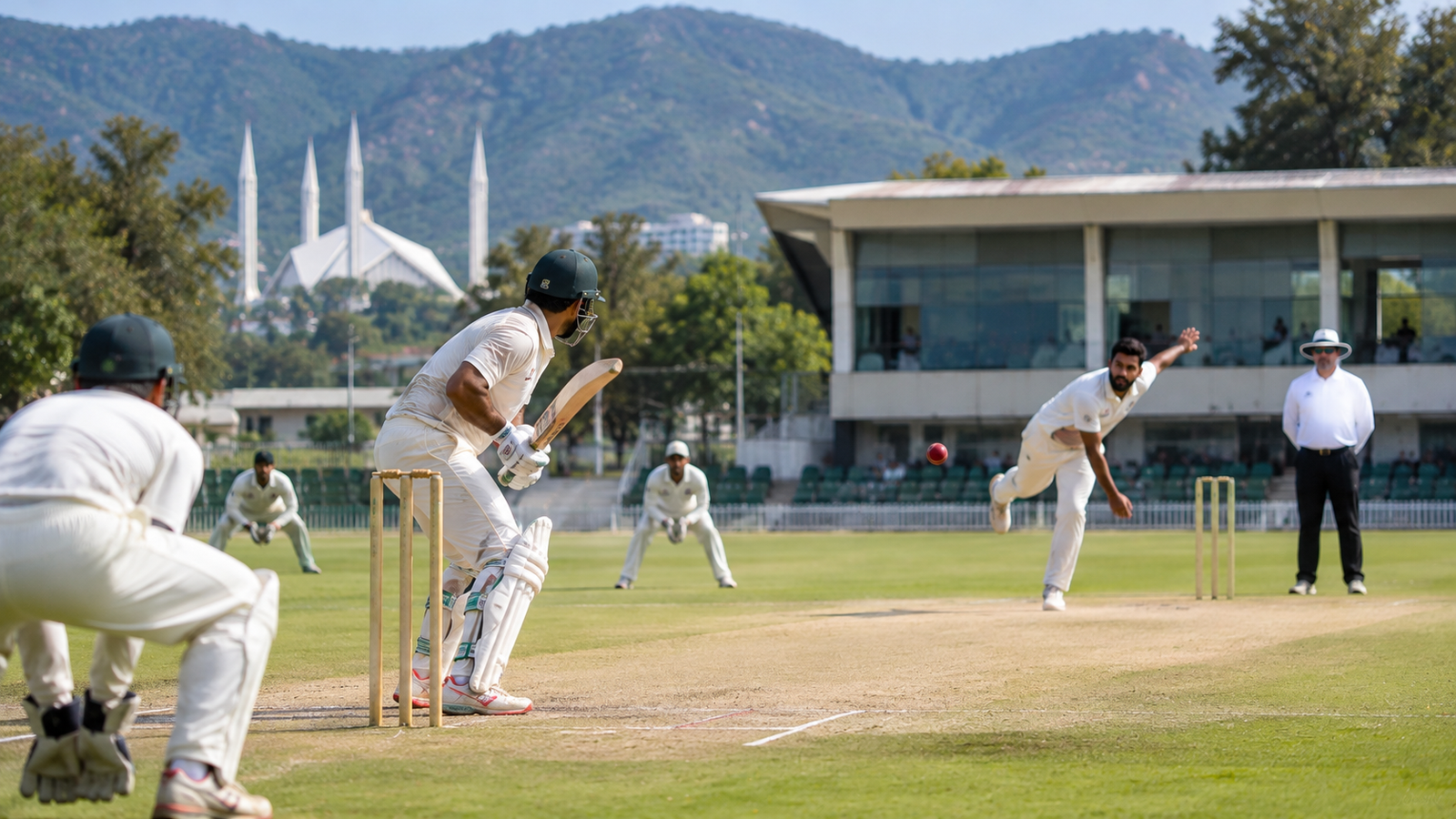
The Quaid-e-Azam Trophy 2026-27 is scheduled to begin on Tuesday, November 3, with Pakistan’s leading first-class competition returning in a new two-tier format and a much-anticipated opening-round meeting between Babar Azam and Shaheen Shah Afridi. According to the Pakistan Cricket Board’s official November 2 schedule and squad announcement, Pakistan Test captain Babar will represent Lahore Whites against a FATA team led by Pakistan ODI captain Shaheen at Diamond Cricket Ground in Islamabad. The event features 20 regional teams across Gold and Silver competitions, both carrying first-class status. A total of 60 matches are scheduled, with 29 in Gold and 31 in Silver. Defending champions Karachi Blues are among eight Gold teams chasing the title, while 12 Silver teams will compete for promotion next season. PCB has also confirmed live streaming on tapmad and Tamasha. This report explains the opening-round fixtures, team structure, key players, dates and viewing arrangements without presenting any unverified match score or result as fact.
Quaid-e-Azam Trophy 2026: Quick Facts
Tournament: Quaid-e-Azam Trophy 2026-27, 69th edition.
Organiser: Pakistan Cricket Board (PCB).
Start date: Tuesday, November 3, 2026.
Gold competition: Eight teams, 29 first-class matches.
Silver competition: Twelve teams, 31 first-class matches.
Total: 20 regional teams and 60 first-class matches.
Opening headline fixture: Lahore Whites versus FATA.
Venue: Diamond Cricket Ground, Islamabad.
Lahore Whites player: Babar Azam, Pakistan Test captain.
FATA captain: Shaheen Shah Afridi, Pakistan ODI captain.
Gold defending champions: Karachi Blues.
Gold host cities: Islamabad, Abbottabad and Rawalpindi.
Silver host cities: Karachi, Multan, Rahim Yar Khan and Bahawalpur.
Gold league dates: November 3 through December 12.
Gold final: December 15 to 19.
Silver group stage: November 3 to 30.
Silver final: December 3 to 7.
Promotion: Silver winner moves to Gold for the following season.
Streaming: All Gold fixtures on tapmad and Tamasha; four of six Silver fixtures each round on the services.
Match results: Not claimed in this pre-match and tournament-launch article.
What Has the PCB Confirmed About the Tournament?
PCB released team rosters and the schedule on November 2, confirming a November 3 start to the 69th edition. The Gold tier will contain eight regions and play in the Islamabad-Rawalpindi-Abbottabad area. In parallel, 12 Silver teams will play matches across venues in southern Punjab and Karachi. Both tiers are recognised as first-class cricket, meaning performances can contribute to players’ official first-class records. The announcement supersedes earlier tentative domestic calendars that had different dates and venues. For readers seeking reliable schedules, PCB’s detailed November 2 release is the primary reference rather than an older provisional calendar.
Babar Azam Versus Shaheen Afridi: Why the Opener Matters
Babar and Shaheen are high-profile international teammates whose different domestic sides are meeting in a first-class fixture. Babar is named in Lahore Whites’ opening-round squad, while Shaheen will captain FATA. Their participation adds interest to a tournament designed to test batting, bowling and endurance over multiple days. It does not guarantee that the two will personally face each other in every innings, and it does not establish the outcome before play. The matchup is newsworthy because it places two senior Pakistan internationals in a competitive domestic setting, where younger teammates can learn from their preparation and match decisions.
Where Is Lahore Whites Versus FATA Being Played?
The scheduled opening-round fixture is at Diamond Cricket Ground in Islamabad. PCB’s announcement specifically identifies the ground for the meeting involving Babar’s Lahore Whites and Shaheen’s FATA. Other Gold matches will take place in Islamabad, Abbottabad and Rawalpindi. Fans should consult official PCB scorecards and schedule notices for any changes to ground allocation or playing conditions. The venue listing is a confirmed schedule, not documentary proof that any particular player has already scored runs or taken wickets on the first morning. Mukhbir will distinguish pre-match information from later score updates.
Gold Tier Teams for the 2026-27 Season
The eight-team Gold field comprises defending champions Karachi Blues, Faisalabad, FATA, Lahore Whites, Islamabad, Peshawar, Multan and Sialkot Blues, as listed in PCB’s official release. Reports sometimes shorten Peshawar’s name or use a region’s formal longer designation. The competition brings established regional teams together in a round-robin phase followed by a five-day final. The winner of the Gold final will claim the Quaid-e-Azam Trophy title for the 69th edition. Karachi Blues begin as the holders following their victory in the preceding season, but there is no confirmed 2026-27 champion yet.
Silver Tier Teams and Groups
Silver is divided into two six-team groups. Group A includes Lahore Blues, Rawalpindi, Larkana, Quetta, Bahawalpur and Peshawar Whites. Group B comprises Karachi Whites, Azad Jammu and Kashmir, Hyderabad, Dera Murad Jamali, Abbottabad and Sialkot Whites. The teams will compete in a separate first-class competition, not a limited-overs or exhibition league. The Silver group stage is scheduled for November 3 through November 30, with a five-day final on December 3 to 7. The winner earns promotion to Gold for the following season, providing a clear competitive objective beyond individual player performances.
How Many Matches Will Be Played?
PCB has scheduled 29 first-class matches in the Gold competition and 31 in Silver, making a total of 60. The two groups create more opportunities for players from different regions to compete in an official format that tests red-ball skills over several days. The numbers are scheduled matches, rather than a count of games already completed as of the November 3 article. Weather, ground conditions and administrative changes can affect individual fixtures, so the final played tally should be checked at the conclusion of the tournament. The confirmed published plan is nonetheless a substantial domestic cricket calendar.
When Is the Gold Final Scheduled?
Gold league fixtures run from November 3 to December 12, according to the PCB’s latest announcement. The two leading teams are scheduled to contest the five-day final from December 15 through December 19. Qualification will depend on results under the tournament rules, so naming finalists before the league progresses would be speculative. The venue for a later final should be checked through updated PCB information before fans arrange travel. While defending champions Karachi Blues enter as a contender, every Gold team begins with an opportunity to reach the title match.
Silver Promotion: Why the Second Tier Matters
The Silver tournament provides a path into Gold for the following domestic season. The winners of the two groups will compete in a final scheduled for December 3-7, and the Silver champion will be promoted. This structure encourages competitive first-class cricket across regions that would otherwise receive fewer opportunities at the top level. Promotion is an incentive for collective success, while players can also use the tournament to demonstrate long-format skills. The PCB announcement establishes the pathway; it does not confirm which team will gain promotion or how individual future selections will be decided.
Who Are the Leading Players in the Gold Competition?
Beyond Babar and Shaheen, PCB has named several established Pakistan internationals in the Gold rosters. Saud Shakeel is listed as captain of Karachi Blues, Mohammad Rizwan leads Peshawar, Imam-ul-Haq captains Multan and Abdullah Shafique leads Sialkot Blues. Names such as Saim Ayub, Sahibzada Farhan, Mohammad Haris, Khushdil Shah and Mohammad Wasim Khan also appear in respective team lists. Availability can change because the board permits travelling squads to use reserve and national-duty pools. A player appearing in the broader squad is not a guarantee of selection in every match or proof of actual participation after the toss.
What Does Babar’s Lahore Whites Squad Look Like?
PCB and Dawn identify Babar alongside notable Lahore Whites squad members including Aamir Jamal, Tayyab Tahir and Noman Ali. Their mix of batting, pace and spin experience can give the region different tactical options across four-day fixtures. However, the match XI is determined through team selection and announced at the toss, not by a news article written ahead of play. The presence of an experienced Test batter draws attention to the importance of patient innings and technical discipline in first-class cricket. Younger players will have a chance to observe how senior internationals manage long spells of batting and varied match conditions.
What Does Shaheen’s FATA Side Bring?
Shaheen Shah Afridi is listed as FATA captain, with Khushdil Shah and Mohammad Wasim Khan among the recognisable members of the wider group. Shaheen’s fast bowling and leadership are likely to be key areas of interest, while teammates may have opportunities to contribute with both ball and bat. This is an assessment of squad potential, not a prediction that a particular bowler will dismiss Babar or that FATA will win. The game will be decided through actual performances across its scheduled days. Mukhbir will avoid turning a domestic contest between two teams into unsupported claims about friction between Pakistan internationals.
Karachi Blues Enter as Defending Champions
Karachi Blues return to defend their Quaid-e-Azam Trophy title and are captained by Saud Shakeel in the announced Gold squad. Players listed include Saim Ayub and Omair Bin Yousuf, with additional reserves and national-duty options such as Shan Masood, Abrar Ahmed and Mir Hamza. The previous title gives Karachi Blues a strong historical storyline, but it does not award any points in the new tournament. The region must qualify through results like every other team. Its mix of international and domestic experience reflects the broader role of the Quaid-e-Azam Trophy as a testing ground for Pakistan’s long-format cricketers.
Rizwan, Imam and Abdullah Shafique in Domestic Action
Mohammad Rizwan is named to lead Peshawar, Imam-ul-Haq to captain Multan and Abdullah Shafique to captain Sialkot Blues. Such participation can make domestic matches more competitive and visible to fans who usually follow these players only in international fixtures. It also offers selectors a way to examine players under sustained first-class conditions. Captaincy involves managing batting orders, bowling changes and field placements over several days, which can be different from the decisions required in short-form cricket. As with other squad announcements, final match participation depends on team selection and availability.
Who Are the Notable Silver Tier Players?
PCB reporting lists Mohammad Nawaz as captain of Rawalpindi in Silver, while Abbottabad’s wider squad includes Fakhar Zaman and Kamran Ghulam. Shadab Khan, Haider Ali and Jahandad Khan also appear in Rawalpindi’s squad. This illustrates that Silver is not an informal competition reserved solely for inexperienced players. Internationally recognised cricketers can participate, contributing to the quality of matches and the development of others. Roster appearances are subject to changes, however, so viewers should verify match XIs through current scorecards. The new structure gives established players and emerging regional talent opportunities to compete under first-class conditions.
Why Both Tiers Have First-Class Status
First-class cricket is a recognised long-format category subject to eligibility and playing requirements. PCB has explicitly given Gold and Silver fixtures first-class status for 2026-27. That means participating players can build records in officially recognised red-ball matches rather than only in lower-status regional fixtures. The distinction is significant for domestic development because performances across both tiers can be assessed in an established statistical context. First-class status does not guarantee selection for the national side. Coaches and selectors must consider the quality of opposition, conditions, consistency and broader team needs.
Where Can Fans Watch the Quaid-e-Azam Trophy?
PCB has confirmed that all four Gold fixtures in each round will be available for live streaming on tapmad and Tamasha. In Silver, four of the six matches per round are also scheduled for streaming. Availability can depend on platform services, territorial restrictions and any subsequent schedule adjustments. The official announcement establishes streaming arrangements but does not establish that a specific match is being broadcast on a channel outside those services. Fans should open the licensed platforms or PCB’s official coverage to find the correct fixture, rather than rely on unverified social-media live-stream links.
Gold Opening-Round Fixtures
The first round is scheduled for November 3-6. Published schedules list Karachi Blues versus Sialkot Blues in Islamabad, Faisalabad against Peshawar in Abbottabad, Lahore Whites versus FATA at Diamond Cricket Ground in Islamabad, and Islamabad against Multan in Rawalpindi. Exact ground names and starting times should be checked against PCB’s updated fixture documents because third-party schedules may shorten venue names. These are scheduled matches; their outcome, toss winners and scores should only be added after official match records become available. Fans seeking live updates should prioritise PCB scorecards and authorised streaming services.
Silver Opening-Round Fixtures
The Silver competition also opens on November 3 with six matches across its two groups. Group A fixtures include Lahore Blues versus Rawalpindi, Larkana versus Quetta, and Bahawalpur versus Peshawar Whites in Karachi. Group B includes Karachi Whites versus Azad Jammu and Kashmir in Multan, Hyderabad versus Dera Murad Jamali in Rahim Yar Khan, and Abbottabad versus Sialkot Whites in Bahawalpur. The cities and groups are drawn from published PCB-related schedules. Fixture details and changes must be confirmed through official updates, especially when planning attendance or attempting to follow an individual player’s match.
Why the Two-Tier Format Is Significant
A Gold and Silver structure gives regional cricket a visible competitive ladder. The top division decides the main Quaid-e-Azam Trophy title, while Silver offers a path upward through winning its competition. The arrangement may help sustain meaningful fixtures across more cities and improve access for players outside the highest-profile regions. Yet competitive structures only achieve their full goals if facilities, scheduling, officiating and player development are managed effectively. These are areas for later analysis using actual tournament outcomes, not assumptions that one announced restructuring has already solved every challenge in Pakistan’s domestic cricket.
Peshawar and Sialkot Get Two Regional Teams
PCB noted that Peshawar and Sialkot regions are fielding two teams each in a first-class competition for the first time. This can widen the number of regional players exposed to recognised long-format cricket. The two representations appear in different tiers: for example, Sialkot Blues are in Gold and Sialkot Whites in Silver. The arrangement should not be confused with two national sides or a franchise competition. Regional team structures are part of domestic cricket administration and may change in future seasons. The current development is a confirmed feature of the 2026-27 programme.
Why First-Class Cricket Is Important for Pakistan
Pakistan’s Test side relies on domestic players who can bat for extended periods, bowl consistent spells and adapt to changing pitch conditions. Four-day and five-day cricket provide a setting for these skills to develop under competitive pressure. Matches can also help identify wicketkeepers, fielders and captains capable of contributing over longer formats. Strong domestic performance is not an automatic passport to international selection, but it gives selectors useful evidence beyond limited-overs statistics. The Quaid-e-Azam Trophy has long been a key component of Pakistan’s red-ball system, and the new edition continues that role.
Can Domestic Performances Influence National Selection?
Selectors can study first-class batting, bowling and fielding records while considering the level of opposition, match conditions and long-term consistency. A strong innings against a competitive attack may be relevant, but one match cannot establish that an international player should be selected or removed. The involvement of senior internationals can also help judge emerging talent against experienced opponents. PCB has not announced an automatic selection policy under which a particular number of runs or wickets in the Quaid-e-Azam Trophy guarantees a national contract. Reporting should avoid presenting fan speculation about future squads as an official selection decision.
How Do Rotating Squads Work?
PCB says teams can work with revolving rosters through the tournament. Each team has 15 travelling players and may select from reserves or the national-duty pool as eligible players become available. This recognises that Pakistan’s domestic and international schedules can overlap. It also explains why a named star may be unavailable for some later rounds even if initially included in the squad. Match previews should be updated based on actual selections rather than reprinting the original tournament list unchanged for every fixture. The flexibility is a confirmed part of the announced competition framework.
Does the Tournament Replace International Cricket?
No. The Quaid-e-Azam Trophy is a domestic first-class competition organised by PCB and operates alongside international cricket obligations. It provides playing opportunities for regional teams and, when available, Pakistan internationals. The fact that Babar and Shaheen feature in the opening-round announcement does not mean their international careers are on hold or that PCB has issued a new national-team selection policy. The tournament’s value is the opportunity to play meaningful long-format cricket at home. Domestic schedules can intersect with national duty, which is why the roster system has built-in flexibility.
What Is the Difference Between Gold and Silver Finals?
The Gold final decides the championship of the 69th Quaid-e-Azam Trophy, with the two highest-ranked Gold teams scheduled to meet from December 15-19. The Silver final, from December 3-7, determines which Silver side earns promotion into Gold for the next season. Both finals are five-day first-class matches under the announced schedule, but they serve distinct competitive purposes. It would be incorrect to describe the Silver winner as the 69th Quaid-e-Azam Trophy Gold champion. PCB’s competition structure gives both groups meaningful goals while reserving the principal title for the highest tier.
What Should Fans Know Before Following Scores?
The first step is to identify the exact competition tier, date and fixture. With 60 matches spread across several venues, two regions may have similarly named teams in Gold and Silver. Fans should also distinguish a squad announcement from the playing eleven and early score updates from final match results. Official PCB scorecards are the best starting point for verified runs, wickets, innings and match status. Mukhbir will not publish invented toss outcomes, centuries, five-wicket hauls or scores simply to make the story sound more current. A tournament-launch article should remain clearly labelled as a launch and schedule report.
Why the Event Has Strong Public Interest
The competition combines nationally recognised cricketers, emerging domestic talent and an expanded two-tier structure. Babar and Shaheen’s meeting draws attention even among fans who do not routinely follow first-class cricket. The geographic spread of fixtures also gives different regions a stake in the tournament. From an SEO perspective, readers are likely to search for schedules, teams, venues, live streaming and results. A useful news article can answer all of those questions accurately while explaining why the tournament matters beyond the opening star matchup. This does not require predicting a winner or inventing audience numbers.
What Happens Next in the 2026-27 Trophy?
The immediate programme involves opening-round fixtures from November 3, followed by additional league rounds in both tiers. Silver group play concludes on November 30 before its December 3-7 final. Gold league fixtures continue to December 12, with the final scheduled for December 15-19. The next confirmed developments will be official scorecards, points tables, changes to player availability and eventual qualification for the two finals. Any postponements or changes should be checked through PCB notices. For now, the governing body’s November 2 announcement supplies the verified schedule and participants.
Conclusion
The Quaid-e-Azam Trophy 2026-27 opens with a prominent domestic contest between Babar Azam’s Lahore Whites and Shaheen Shah Afridi-led FATA in Islamabad. PCB’s official announcement confirms 20 regional teams, 60 scheduled first-class matches and a new Gold and Silver structure. Karachi Blues will defend their championship in Gold, while Silver offers its winning side a route to promotion. Both competitions have confirmed live-streaming arrangements and clear finals in December. The tournament gives Pakistan’s established and emerging cricketers a significant red-ball platform. Any match scores and individual performances must be reported separately after verification through official records.
Frequently Asked Questions
When does the Quaid-e-Azam Trophy 2026 start?
The 69th edition begins on Tuesday, November 3, 2026, according to PCB’s official schedule.
Which teams are Babar Azam and Shaheen Afridi playing for?
Babar is listed for Lahore Whites, while Shaheen is captaining FATA in the opening round.
Where is Lahore Whites versus FATA scheduled?
At Diamond Cricket Ground in Islamabad.
How many teams are playing in Quaid-e-Azam Trophy 2026-27?
Twenty regional teams: eight in Gold and twelve in Silver.
How many first-class matches are scheduled?
Sixty matches, consisting of 29 Gold fixtures and 31 Silver fixtures.
When is the Quaid-e-Azam Trophy Gold final?
The Gold final is scheduled from December 15 to 19, 2026.
Where can I watch Quaid-e-Azam Trophy matches live?
PCB says all Gold games and four of six Silver games per round will be streamed on tapmad and Tamasha.
Does the Silver champion win the main Gold trophy?
No. The Silver winner earns promotion to Gold next season; the main 69th-edition championship belongs to the Gold winner.
About The Author