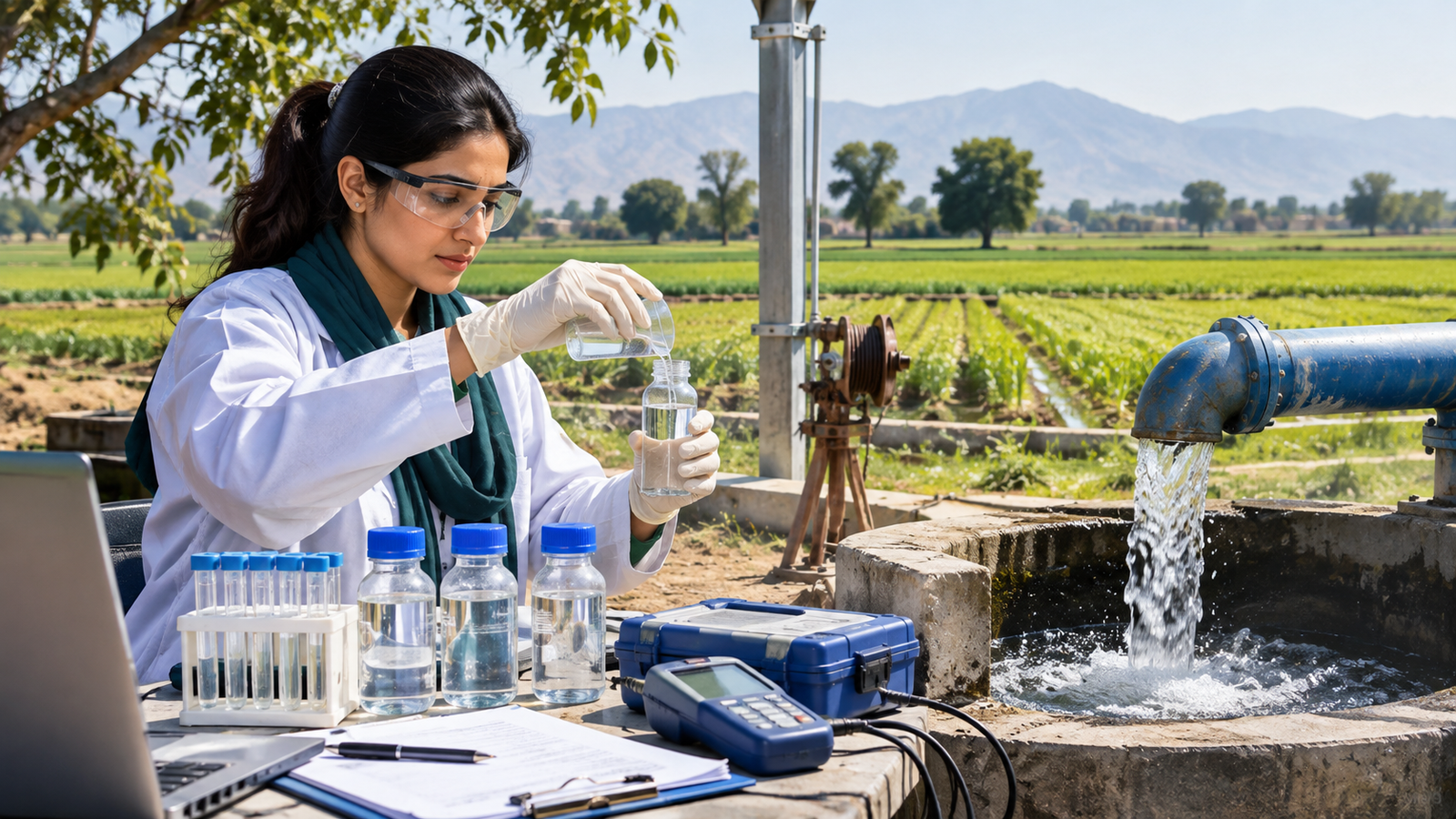
Pakistan groundwater nuclear science research is helping scientists understand where underground water comes from, how old it is and how pollution moves through aquifers, according to a recent International Atomic Energy Agency (IAEA) report. The findings, highlighted in reporting published on November 1, 2026, follow regional cooperation projects using isotope hydrology across Pakistan. Studies cover the Indus Plain, Quetta Valley and Cholistan Desert, where water availability and long-term sustainability are important public concerns. The work has also supported laboratory expertise at the Pakistan Institute of Nuclear Science and Technology (PINSTECH) and collaboration with the Pakistan Council of Research in Water Resources (PCRWR). The news is about using established scientific tools to measure groundwater more accurately—not adding radioactive substances to public water supplies or declaring that Pakistan’s water shortage has been solved. Researchers and policymakers can use better data to inform water management, but long-term outcomes depend on monitoring, practical decisions and continued investment in water protection.
Pakistan Groundwater Nuclear Science: Quick Facts
Reporting date: November 1, 2026.
International organisation: International Atomic Energy Agency (IAEA).
Regional programme: Regional Cooperative Agreement for Research, Development and Training Related to Nuclear Science and Technology for Asia and the Pacific (RCA).
Scientific field: Isotope hydrology.
Main applications: Identifying groundwater recharge sources, estimating water age, tracking aquifer connections and understanding pollution pathways.
Pakistani study areas mentioned: Indus Plain, Quetta Valley and Cholistan Desert.
Key institution: Pakistan Institute of Nuclear Science and Technology (PINSTECH).
Partner research institution: Pakistan Council of Research in Water Resources (PCRWR).
Laboratory development: PINSTECH facility with a wider network of 12 laboratories reported nationally.
Policy applications: Aquifer management, over-extraction monitoring, salinity intrusion and water-resource planning.
Public-health limitation: Isotope tracing alone does not prove a water supply is safe to drink.
Headline verification: Supported by IAEA news-feed listing and Dawn’s November 1 reporting.
What Did the IAEA Report Say About Pakistan?
The IAEA-related reporting says isotope techniques have strengthened Pakistan’s ability to observe groundwater conditions and support science-based water management. Research has helped estimate recharge rates, understand connections between aquifers and identify possible contamination pathways. The findings are important because measuring only how high water stands in a well may not reveal whether the aquifer is being replenished quickly or whether pollution has moved from one location to another. The report connects laboratory methods with the needs of water agencies. It does not claim that every district has comprehensive coverage or that technical progress has already stopped groundwater depletion.
What Is Isotope Hydrology?
Isotope hydrology uses natural variations in the atomic composition of water and substances dissolved in it to investigate the water cycle. Different isotopes can act as tracers of rainfall, evaporation, water mixing, recharge and the relative age of groundwater. Scientists collect samples and compare measured signatures with appropriate reference data. These techniques complement conventional chemical analysis, well measurements and hydrological models. The word ‘nuclear’ refers to the scientific basis of isotope measurement, not to pumping radioactive waste into drinking water. Some methods use naturally occurring stable isotopes, while other established approaches use carefully measured environmental radioisotopes under appropriate laboratory procedures.
Why Is Measuring Groundwater Age Useful?
Groundwater can include water that entered the ground recently as well as water that has remained underground for much longer periods. Knowing its age helps scientists assess how rapidly an aquifer may be renewed. If water was recharged long ago, heavy pumping may not be balanced by current rainfall within a useful planning period. Conversely, a young-water signature can indicate active recharge or mixing with recent sources. Groundwater-age estimates are scientific interpretations and can carry uncertainty, particularly where waters of different ages mix. The value lies in adding a time dimension to resource management, instead of relying only on today’s measured water level.
How Scientists Identify Recharge Sources
Recharge occurs when water from rainfall, rivers, irrigation and other sources infiltrates the ground and reaches an aquifer. Its rate varies with soil, geology, climate and land use. Isotopic signatures can help distinguish potential source waters and evaluate their contribution to a sampled aquifer. Combined with hydrological observations, this may reveal whether groundwater depends on nearby rain, river flow or water originating farther away. The technique does not mean every source can be identified from one sample. Researchers need representative measurements, suitable interpretation methods and repeated testing to make credible conclusions for policy decisions.
How Groundwater Pollution Pathways Can Be Studied
Contaminants can enter groundwater through agricultural activity, wastewater, industrial discharges and natural geological processes. Conventional laboratory testing identifies the pollutants present, while isotope methods can provide additional clues about their origins and the movement of water carrying them. For example, nitrogen and oxygen isotopes in nitrate can help investigate the relative contribution of different nitrate sources when combined with chemical information. An IAEA-backed four-year international research project involving Pakistan explored such methods for freshwater systems. The resulting information can guide monitoring and pollution control, but it is not an automatic treatment process that removes contaminants from water.
Why the Indus Plain Matters
The Indus Plain contains extensive agricultural land and communities that depend on surface water, groundwater or both. Irrigation can influence local recharge, while pumping can affect the amount and movement of stored groundwater. Isotope-based studies provide another way to understand how these sources interact. That is useful where water demand changes seasonally or where irrigation channels and aquifers are closely connected. The regional report cited by Dawn includes the Indus Plain among key areas of research. It does not provide evidence that every part of this vast basin faces an identical groundwater trend or contamination condition.
What Research in Quetta Valley Can Reveal
Groundwater plays an important role for settlements and agriculture in the Quetta Valley. Understanding recharge and the age of stored water is relevant where aquifers face sustained demand. Isotope data may help distinguish recently replenished groundwater from older reserves and clarify connections among different water-bearing layers. Such information can support careful planning about extraction and protection. The report identifies Quetta Valley as an area where work has generated useful hydrological estimates. However, the announcement does not provide a new universal figure for the valley’s annual water decline, nor does it verify that an identified monitoring technique has reversed it.
Why Cholistan Desert Is Part of the Research
The Cholistan Desert is a dry environment where locating and understanding underground water sources can matter greatly for communities and livestock. Rainfall patterns, soil conditions and possible recharge routes differ from those of irrigated plains. Isotope research can provide evidence about how groundwater is supplied and whether available water is being renewed on a timescale relevant to human use. The IAEA-linked programme highlights Cholistan among the locations assessed. That does not mean its entire groundwater supply is drinkable, unlimited or readily accessible. Water quality and quantity still require separate investigation at each relevant location.
What Is PINSTECH’s Role?
The Pakistan Institute of Nuclear Science and Technology, or PINSTECH, is described in the latest coverage as a central institution for advanced isotope analysis. The programme has strengthened expertise and equipment used to study water samples. Dawn reports that PINSTECH hosts one of the region’s advanced isotope-analysis facilities, supported by a wider network of 12 laboratories across Pakistan. That laboratory capacity matters because isotope measurements depend on trained personnel, reliable instruments, quality assurance and repeated analysis. A laboratory network can support research from multiple provinces, although the report does not demonstrate that every groundwater well is being tested continuously.
How PCRWR Contributes to Groundwater Management
The Pakistan Council of Research in Water Resources, or PCRWR, works on water-resource research and monitoring. The IAEA-related coverage describes cooperation between PCRWR and PINSTECH to integrate isotope observations into broader groundwater management models. Hydrological models combine information from multiple sources to examine how aquifers respond to pumping, rainfall and other conditions. Adding isotope information can help improve the models’ assumptions about recharge and water movement. Such collaboration makes technical research more relevant to public policy, but it does not substitute for independent decisions about licensing, water allocation or the enforcement of environmental rules.
What Is the RCA Regional Programme?
The Regional Cooperative Agreement, known as RCA, brings together countries in Asia and the Pacific for research, development and training related to nuclear science and technology. Its hydrology and groundwater projects support scientific capacity and exchange of expertise. The RCA Regional Office reported that an assessment of the social and economic impact of these projects was formally launched during the September 11, 2026, general conference meeting at IAEA headquarters. The later IAEA news coverage discusses the improvements achieved through the programme. It is therefore accurate to describe the story as results from ongoing regional scientific cooperation, rather than an entirely new water-testing machine invented this week.
Why the Science-Policy Connection Matters
Research provides the greatest public value when findings can inform decisions that affect water users. More reliable groundwater data may support planning for irrigation, local water supplies and management of stressed aquifers. Government agencies still need to consider economic circumstances, climate variability, access rights and the interests of people relying on these resources. A 2026 peer-reviewed study of groundwater governance in Pakistan argues that scientific evidence, policy authority and practical choices by water users are often insufficiently connected. That wider academic context explains why better measurements are useful but not enough on their own.
Can Isotope Measurements Detect Over-Extraction?
Isotope observations may contribute to identifying situations in which extraction exceeds sustainable recharge, especially when combined with pumping records, water-table measurements and long-term modelling. If an aquifer contains significant older groundwater and shows limited renewal, managers may need to examine whether current use can be sustained. No single isotope value establishes a legally binding pumping limit. Researchers must account for geological complexity, climate and uncertainties in the data. The reported progress is an improved analytical ability to detect and understand aquifer stress, not proof that authorities already have complete measurements for every groundwater source.
What Is Salinity Intrusion?
Salinity intrusion occurs when more saline water enters a freshwater zone or when changing water conditions allow dissolved salts to become a greater concern. It can affect the suitability of groundwater for drinking, agriculture and some industrial uses. The latest IAEA-related reporting lists salinity intrusion among pressures that integrated groundwater analysis may help detect earlier. Isotopes, water chemistry and changes in water levels can together improve understanding of the problem. Yet identifying a salinity risk is not the same as removing salt. Water treatment, extraction management and other local responses require additional decisions and investment.
Does Nuclear Science Make Drinking Water Radioactive?
No. Using nuclear-science measurement techniques to investigate water does not mean drinking water is being irradiated or contaminated. Scientists typically analyse collected samples in controlled settings to measure isotopic signatures already present in nature. The study of isotopes can reveal aspects of water origin and movement without altering the public water supply. Some analytical methods involve radioactive tracers or naturally occurring radioisotopes under regulated conditions, but the specific method must be evaluated carefully and should not be confused with a municipal treatment process. Readers should not interpret the headline as a warning that scientists are adding nuclear material to groundwater.
Can This Research Tell Whether Water Is Safe to Drink?
Groundwater safety requires assessing contaminants, pathogens and other factors against applicable health and quality standards. Isotope hydrology can help trace where water comes from and where certain pollutants may originate, but it does not replace microbiological, chemical and other required tests. A water sample could have a useful isotope signature and still contain harmful substances. The opposite is also true: an isotope measurement is not itself proof of a public-health problem. Households should use water-quality advice from qualified public authorities and reputable laboratories rather than rely on a news report about research capacity to judge their own supply.
What Does It Mean for Farmers?
Farmers depend on predictable water supplies for irrigation planning, especially when rainfall and canal availability vary. Better information about the rate at which an aquifer refills may help agencies design sensible groundwater strategies and communicate risks. Isotope hydrology may also improve understanding of connections between canal water, rainfall and underground reserves. It does not tell an individual farmer how much water to pump from a particular bore without local assessment. Any proposed restrictions, incentives or recommendations would require policy decisions informed by data and consultation with affected communities. The benefit is improved evidence, not a guaranteed increase in crop yield.
How Could Cities Use the Findings?
Municipal water departments may benefit from improved information about groundwater sources, contamination routes and recharge. Such knowledge can support the placement of monitoring wells, investigation of polluted supplies and planning for future demand. It could also indicate where aquifer conditions deserve closer observation. However, a national research programme cannot immediately supply clean water to every household or replace infrastructure investment. Cities still need treatment facilities, distribution systems, maintenance and effective oversight. The practical value of isotope findings increases when linked with those services and transparent local monitoring.
Why Pakistan’s Groundwater Faces Long-Term Pressure
Pakistan’s groundwater resources serve large agricultural, domestic and industrial needs. Where extraction is intensive, some aquifers may decline if replenishment does not keep pace. Water pollution, salinity and changes in rainfall patterns can add to local challenges. These pressures vary by region and cannot be reduced to a single national groundwater-level statistic without careful definition. Research on the relationship between groundwater science and governance highlights the need for policies that reflect both scientific evidence and everyday users’ decisions. Isotope research is one tool for understanding these challenges more clearly, not a claim that every region is already facing an identical emergency.
What Makes This a Scientific Advance?
Traditional water monitoring commonly includes measuring well depth, water levels, chemical composition and flow. Isotope analysis adds information about water sources, mixing and timescales, making interpretations more detailed. The IAEA programme has also supported trained staff and laboratory infrastructure, allowing more consistent use of these methods. The advance is therefore institutional as well as technical. It means researchers are better equipped to ask questions that ordinary water-level readings alone cannot answer. The report does not announce a new form of nuclear energy generation or a machine that creates underground water.
How Is the Work Relevant to Climate Change?
Climate variability can affect rainfall, runoff and groundwater recharge, influencing how much water enters underground reserves. More extreme wet or dry periods may complicate assumptions about future supplies. Isotope data may help distinguish older water from recent recharge and improve models of water movement. This can support adaptation planning when combined with climate observations and local water-use records. Yet climate projections and aquifer responses have uncertainty, and the IAEA coverage does not claim an exact future supply for each location. The value of better monitoring is to help decision-makers update plans as evidence changes.
Economic and Environmental Implications
Groundwater supports food production, households and economic activity, so understanding its availability has wider relevance than laboratory science alone. An IAEA-related assessment describes social, economic and environmental benefits from the region’s hydrology projects, although the news reporting does not give a precise national monetary value for those benefits. It would be misleading to invent billions of rupees in savings or claim the programme has eliminated water scarcity. More reliable information can support choices about where monitoring, protection or infrastructure might be most useful. Whether that produces measurable savings depends on decisions made after the science is available.
What the Report Does Not Establish
The latest coverage does not establish that every Pakistani aquifer has been mapped, that water pollution has been removed or that groundwater pumping is now sustainable across the country. It does not provide a single exact nationwide recharge rate or prove that all drinking-water supplies are safe. Nor does it suggest that nuclear energy or radioactive waste has been introduced into irrigation systems. The claims supported by the report concern improved monitoring capacity, laboratory expertise and studies in named regions. Separating those achievements from exaggerated outcomes helps the public understand why the research matters without overstating its immediate impact.
What Should Researchers and Policymakers Do Next?
Future priorities may include maintaining a reliable sampling network, expanding appropriate geographic coverage and integrating isotope results with conventional monitoring data. Policymakers can use consistent observations to examine where water abstraction and contamination risks deserve attention. Public reporting should disclose methods, limitations and changes in trends so findings can be evaluated over time. Research institutions also benefit from continuing training, calibration and cooperation among agencies. These are sensible follow-up considerations, not a specific unverified implementation order from the IAEA. A further official technical report could provide more precise project outcomes and monitoring indicators.
Why This Story Is Important for Mukhbir Readers
The story links international scientific cooperation with practical concerns in Pakistan: agriculture, drinking water, environmental protection and the management of underground resources. It also shows that nuclear science has peaceful applications beyond energy generation and medicine. Readers interested in science can learn how isotopes reveal the history of water, while policymakers and businesses can understand why reliable evidence matters for long-term planning. The direct Pakistan relevance is genuine because the reported programme includes local laboratories and the Indus Plain, Quetta Valley and Cholistan. The most responsible headline highlights those verified benefits without suggesting that a water crisis has already been resolved.
Conclusion
Pakistan groundwater nuclear science research is giving scientists and water managers additional tools to study aquifer recharge, groundwater age and contamination pathways. The IAEA’s RCA-linked programme has supported work in the Indus Plain, Quetta Valley and Cholistan Desert, alongside laboratory capacity at PINSTECH and collaboration with PCRWR. The main achievement reported in late October and November 1 coverage is stronger scientific monitoring and the possibility of better-informed decisions. It is not evidence that groundwater shortages have ended or that every water source is now safe to drink. Continued monitoring and practical water management will determine how these research advances benefit communities over time.
Frequently Asked Questions
What is Pakistan groundwater nuclear science?
It refers here to using isotope hydrology to study underground water sources, age, recharge and pollution pathways.
What did the IAEA report about Pakistan?
It reported improved groundwater monitoring capacity through RCA-supported isotope research and laboratory development.
Which Pakistani areas were studied?
The Indus Plain, Quetta Valley and Cholistan Desert were among the regions highlighted.
What is PINSTECH’s role?
PINSTECH provides isotope-analysis expertise and laboratory capacity for investigating water samples.
What does PCRWR do?
PCRWR collaborates on water research and helps connect isotopic data with groundwater management models.
Is nuclear material being put into Pakistan’s drinking water?
No. The article concerns scientific measurement methods, not adding radioactive waste to public water supplies.
Can the technology detect water pollution?
It can help trace water and certain contamination pathways when combined with chemical and other appropriate tests.
Has the research solved Pakistan’s groundwater shortage?
No. It improves knowledge and monitoring; practical water-management outcomes still require ongoing action.
About The Author