Look Less Grainy?
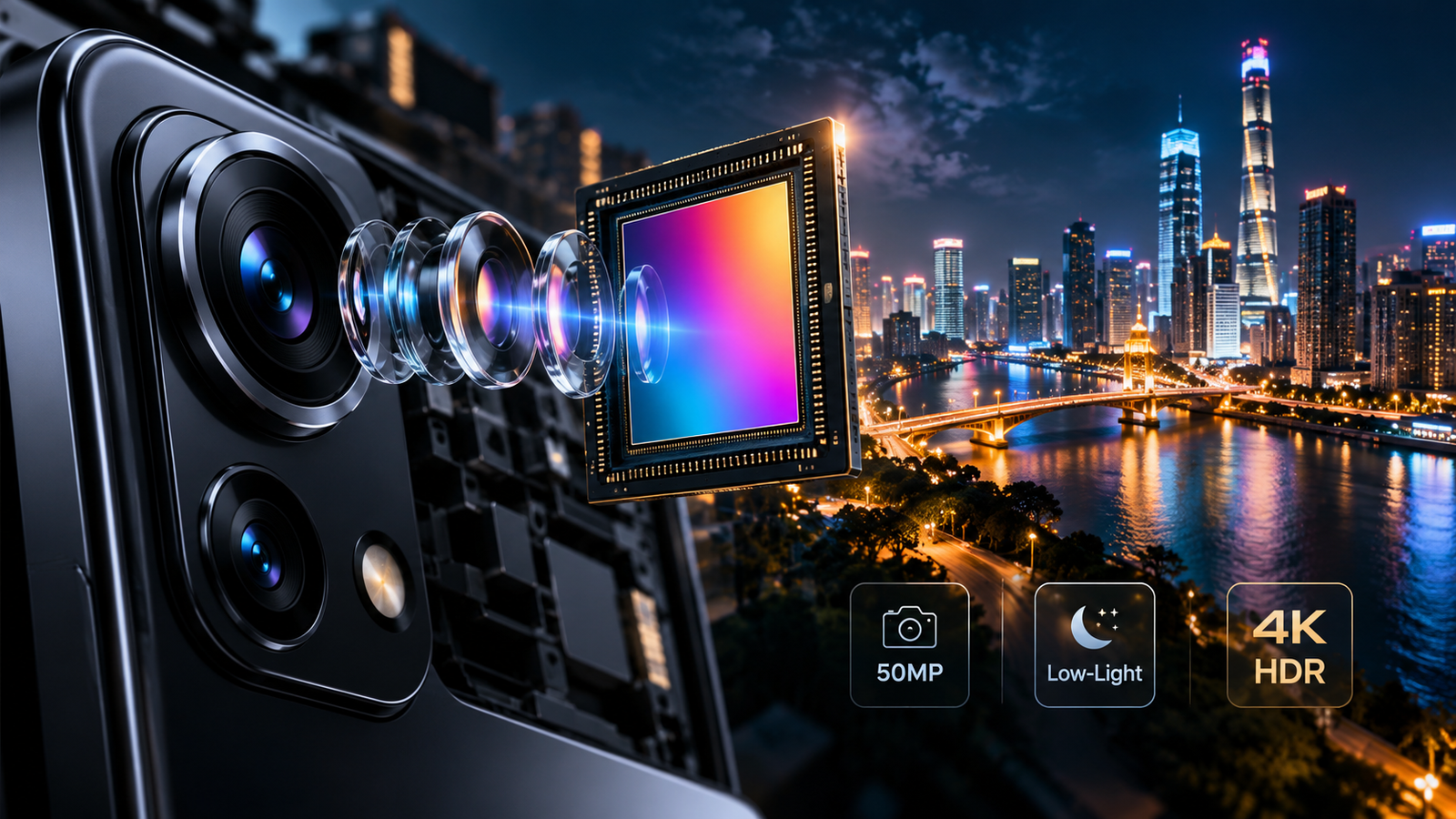
The most promising part of Sony’s announcement concerns low-light image noise. Noise can appear as unwanted grain or blotchy color in dark photographs, especially when the camera has to amplify a weak signal. A sensor that produces cleaner data may give image-processing software more detail to work with and reduce the need for aggressive smoothing. However, it cannot remove every challenge of night photography. A moving subject may still blur, lens aperture affects light collection, and long exposures can create motion artifacts. Until independent smartphones using LYTIA 720 are tested, the responsible conclusion is that Sony has demonstrated a technical improvement—not guaranteed identical outcomes for all users.
Why Smartphone Manufacturers Might Be Interested
Phone makers often face a trade-off between camera performance, module size, power requirements and cost. The LYTIA 720 is designed to offer high-end imaging techniques in a relatively common sensor format. That could make it appealing for primary cameras in a range of premium or upper-midrange devices, depending on commercial pricing and partnerships. Independent imaging publications have noted its suitability for the mainstream size class, but Sony has not disclosed a confirmed list of buyers. Its release should therefore not be used to announce an unverified camera upgrade for any particular Samsung, Xiaomi, Oppo, Vivo, OnePlus or Sony smartphone.
Sensor Hardware Is Only One Part of Camera Quality
A smartphone camera system also includes lenses, optical image stabilization when present, autofocus algorithms, image signal processors, computational photography and image-tuning decisions. The same sensor can perform differently when placed behind different optics or operated with different exposure and sharpening settings. Smartphone brands may prioritize vivid colors, natural texture, fast shutter speed or noise reduction in different ways. For videos, microphones, stabilization and thermal design also affect the final experience. Readers comparing phones should therefore consider trusted real-world reviews, sample images and supported camera modes instead of assuming a newly announced sensor automatically makes any device the best camera phone.
Could the LYTIA 720 Improve Content Creation?
For mobile vloggers, journalists and social-media creators, the ability to capture smoother 4K HDR footage could be helpful in high-contrast scenes and while filming subjects that move. Low-light improvements could also matter at evening events, in restaurants or during street reporting, where carrying additional lights is not always practical. However, a sensor does not guarantee every creator will receive professional-quality footage. Audio, camera movement, exposure choices, available storage and app compatibility remain important. The technology may create new opportunities for future handsets, but its benefits cannot be fully assessed until finished devices and independent footage become available.
What About Battery Life and Heat?
Sony says optimizing the analog-to-digital conversion circuitry helps reduce power consumption during supported high-resolution HDR video recording. That is a meaningful design objective because continuous 4K capture can put considerable strain on a mobile device. But no independently verified phone battery-life measurement accompanies the sensor announcement. The final power consumption of a camera session depends on the processor, display, software, stabilization and recording conditions. It would be incorrect to say that a smartphone using LYTIA 720 will automatically run cooler or provide a specific number of extra recording minutes without testing a complete handset.
When Will Sony LYTIA 720 Become Available?
Sony plans to start mass-production shipments in early November 2026. That timetable refers to shipping camera components for integration into devices, not the global retail launch of a smartphone. Product design, procurement, assembly, testing and marketing schedules will determine when consumers might encounter the sensor in finished phones. Sony did not announce the first phone model, an exact handset release date or a sensor retail price. Therefore, articles claiming a confirmed Pakistan launch or naming a specific upcoming handset as the first LYTIA 720 phone would need additional manufacturer evidence.
Is There a Price for the Sensor or New Smartphones?
Sony’s official release provides technical specifications and a shipment plan, but no public component price or finished smartphone retail price. Semiconductor suppliers typically negotiate commercial arrangements with handset manufacturers, so the price paid for a sensor can depend on volumes and contractual terms. The final smartphone price will reflect many components and the brand’s sales strategy. Mukhbir should not convert an unannounced sensor cost into a claim about the retail price of future phones. Buyers should await official product announcements from manufacturers before assuming how much a device equipped with LYTIA 720 will cost.
What Does the Announcement Mean for Pakistan?
The Sony LYTIA 720 is an international component announcement, not the launch of a specific product in Pakistan. Pakistani consumers may eventually see it in imported or locally distributed smartphones if manufacturers choose to adopt it, but no confirmed handset or official local price has been announced. For users comparing camera-focused phones, the announcement is useful because it shows what features could become available in the next generation of devices. Camera hardware specifications alone should not determine a buying decision. Buyers should also check warranty coverage, software support, taxes, battery performance and independent photography tests for models actually sold in Pakistan.
What Does This Mean for the Global Smartphone Market?
The launch illustrates ongoing competition to improve mobile imaging through better semiconductor design rather than ever-higher megapixel counts alone. Smartphone makers are trying to provide cleaner night shots, more useful HDR and video capabilities without requiring oversized camera modules. Sony’s emphasis on a mainstream 1/1.56-type format suggests a strategy of making advanced features more accessible to device manufacturers. Still, future commercial success depends on contracts, production yields, integration costs and consumer reception. The announcement establishes a technical product roadmap but does not reveal the company’s sales outlook, market share impact or expected revenue from LYTIA 720.
What Should Buyers Watch Next?
The key milestones are the planned start of mass-production shipments in November, the announcement of any confirmed smartphone design wins and independent camera testing once those phones reach reviewers. Consumers should compare full-resolution detail, night photography, HDR video, autofocus reliability, heat and battery drain under similar conditions. News outlets should clearly distinguish Sony’s laboratory demonstrations from performance observed in finished phones. If phone makers confirm LYTIA 720 models, those announcements would justify new stories with exact specifications and local availability. At present, the manufacturer has not identified an official first handset.
Conclusion
Sony’s LYTIA 720 expands the company’s mobile camera-sensor lineup with approximately 50 effective megapixels, UHCG noise reduction, Hybrid Frame-HDR and 4K 60fps HDR video with all-pixel autofocus. The biggest claim is around 50% lower random noise than the LYTIA 700 under Sony’s comparison conditions, together with a 100 dB HDR dynamic range. These specifications could help future smartphones deliver cleaner images and more capable video recording. However, the sensor is only a component, and no specific phone using it has yet been confirmed in the official announcement. Real-world gains will need to be evaluated after manufacturers release complete devices.
Frequently Asked Questions
What is the Sony LYTIA 720?
It is an approximately 50-megapixel stacked CMOS image sensor announced by Sony for mobile-device main cameras.
When was the Sony LYTIA 720 announced?
Sony Semiconductor Solutions announced it on October 28, 2026.
How is LYTIA 720 different from LYTIA 700?
Sony says the new sensor reduces random noise in dark environments by about 50% under specified comparison conditions and adds advanced HDR capabilities.
Does LYTIA 720 support 4K 60fps HDR video?
Yes. Sony specifies 4K 60fps DCG-HDR recording with all-pixel autofocus.
Does it also support 4K at 120fps?
Sony’s table lists 4K at 120fps in a separate non-DCG-HDR mode; 4K 120fps HDR is not a confirmed combined mode.
What is the sensor size?
The optical format is 1/1.56-type, with a 10.24 mm diagonal and 1.0 μm pixel pitch.
When will smartphones with this sensor launch?
Sony plans mass-production component shipments in early November 2026, but did not confirm any smartphone launch date or model.
Is Sony LYTIA 720 available in Pakistan?
No particular Pakistan smartphone product or local price was announced in Sony’s October 28 release.
About The Author