Pakistan has deployed 1,782 fifth-generation mobile network sites across 24 cities, according to figures shared by Federal Minister for Information Technology and Telecommunication Shaza Fatima Khawaja. Jazz accounts for 1,015 of the reported sites, followed by Zong with 640 and Ufone with 127, Business Recorder reported on October 23, 2026.
The numbers offer a snapshot of Pakistan’s initial commercial 5G rollout after operators received licences in March. They show that deployment is progressing, but do not demonstrate uninterrupted service in every neighbourhood of the 24 cities. Coverage depends on the user’s operator, the precise location, network conditions and possession of a compatible device.
This article is part of Mukhbir’s October 25 telecom coverage. The underlying government-reported deployment figures were published on October 23, so they are not presented as a separate nationwide count newly announced on October 25.
Pakistan 5G Network: Key Numbers
Reported deployed sites: 1,782.
Cities with 5G infrastructure reported: 24.
Jazz: 1,015 sites, approximately 57% of the reported total.
Zong: 640 sites, approximately 36%.
Ufone: 127 sites, approximately 7%.
Highest city total: Karachi, 385 sites.
Second: Lahore, 373 sites.
Third: Islamabad, 276 sites.
Commercial rollout started: March 20, 2026, after licence signing on March 19.
Lowest-priced reported compatible handset: approximately Rs36,000.
Locally assembled 5G-capable handsets, January–August 2026: 607,093.
Source: Details attributed to the federal IT minister in Business Recorder’s October 23 report. Percentages are rounded calculations.
Which Network Has the Most 5G Sites?
Jazz has the largest number of reported 5G sites, with 1,015. That represents approximately 57% of the combined 1,782-site total. Zong, officially China Mobile Pakistan, follows with 640 sites, around 36%, while Ufone’s 127 sites represent about 7%.
These are infrastructure deployment counts, not measures of subscribers, mobile data revenue or independently tested network speed. An operator with more sites nationwide may not provide the best experience at every street address. Customers should also consider signal quality, building penetration, network congestion and operator-specific coverage before making comparisons.
The breakdown nevertheless shows that investment and deployment are uneven in the early commercial phase. Jazz’s site total exceeds the combined figures of Zong and Ufone, illustrating its leading position in the government-reported count.
Which Cities Have 5G in Pakistan?
The reported 24-city list includes Islamabad, Karachi, Lahore, Rawalpindi, Faisalabad, Peshawar, Quetta, Multan, Gujranwala, Sialkot, Sheikhupura, Hyderabad, Abbottabad, Attock, Jhelum, Kasur, Kohat, Mardan, Rahim Yar Khan, Sahiwal, Sukkur, Swabi, Chitral and Gujrat.
This is a list of places where services have been introduced or network sites are being consolidated. It should not be interpreted as proof that every part of each city has an available 5G signal. The minister’s reported figures do not supply a verified street-by-street coverage map.
Availability may also differ among Jazz, Zong and Ufone. A subscriber using a compatible 5G handset may connect to 4G in an area where their operator has not yet activated the new technology, even if another operator has a 5G site nearby.
Top Cities by Reported 5G Sites
Karachi leads with 385 sites, followed by Lahore at 373 and Islamabad at 276. Faisalabad has 144, Peshawar 122, Rawalpindi 108, Multan 103, Sialkot 87, Quetta 65 and Sheikhupura 55, according to the figures carried by Business Recorder.
The first three cities account for 1,034 of the reported 1,782 sites, or about 58% of the national tally. This concentration demonstrates that the early rollout is heavily weighted toward major urban centres. It does not establish the number of households or people with reliable coverage in those places.
The remaining locations include smaller urban markets and regional centres. Detailed district and neighbourhood coverage information would be needed to evaluate how equitably the network is spreading across each province.
Why Karachi, Lahore and Islamabad Lead
Large cities tend to have dense mobile-data demand, commercial activity and concentrations of users with higher-end smartphones. That can make initial 5G investments more commercially attractive for network operators. Government licence obligations also prioritise the federal and provincial capitals in the first phase.
These factors can help explain the urban focus, but the reported city counts alone do not establish each operator’s precise investment model. The number of sites is just one part of network planning; spectrum availability, backhaul capacity and local installation permissions also matter.
Future expansion outside the largest cities will be important for evaluating whether the new technology becomes more widely available. Until verified coverage maps are published, network counts should not be converted into unsupported claims about population coverage.
When Did 5G Start in Pakistan?
Pakistan’s commercial 5G rollout followed a multiband spectrum auction conducted in March 2026. According to the IT minister’s reported statement, new Next Generation Mobile Services licences were signed on March 19, with the four-phase rollout beginning on March 20.
Mobile operators had already carried out technical trials between 2020 and 2025. Such trials can demonstrate that a technology functions under selected conditions, but they are distinct from routine commercial services available to paying customers. The March licences and subsequent site deployments mark an important change from controlled trials to phased public availability.
The licences also require work to improve existing 4G networks. This matters because most mobile users will continue relying on 4G for some time, particularly in locations outside the initial 5G footprint.
What Does a 5G Site Actually Mean?
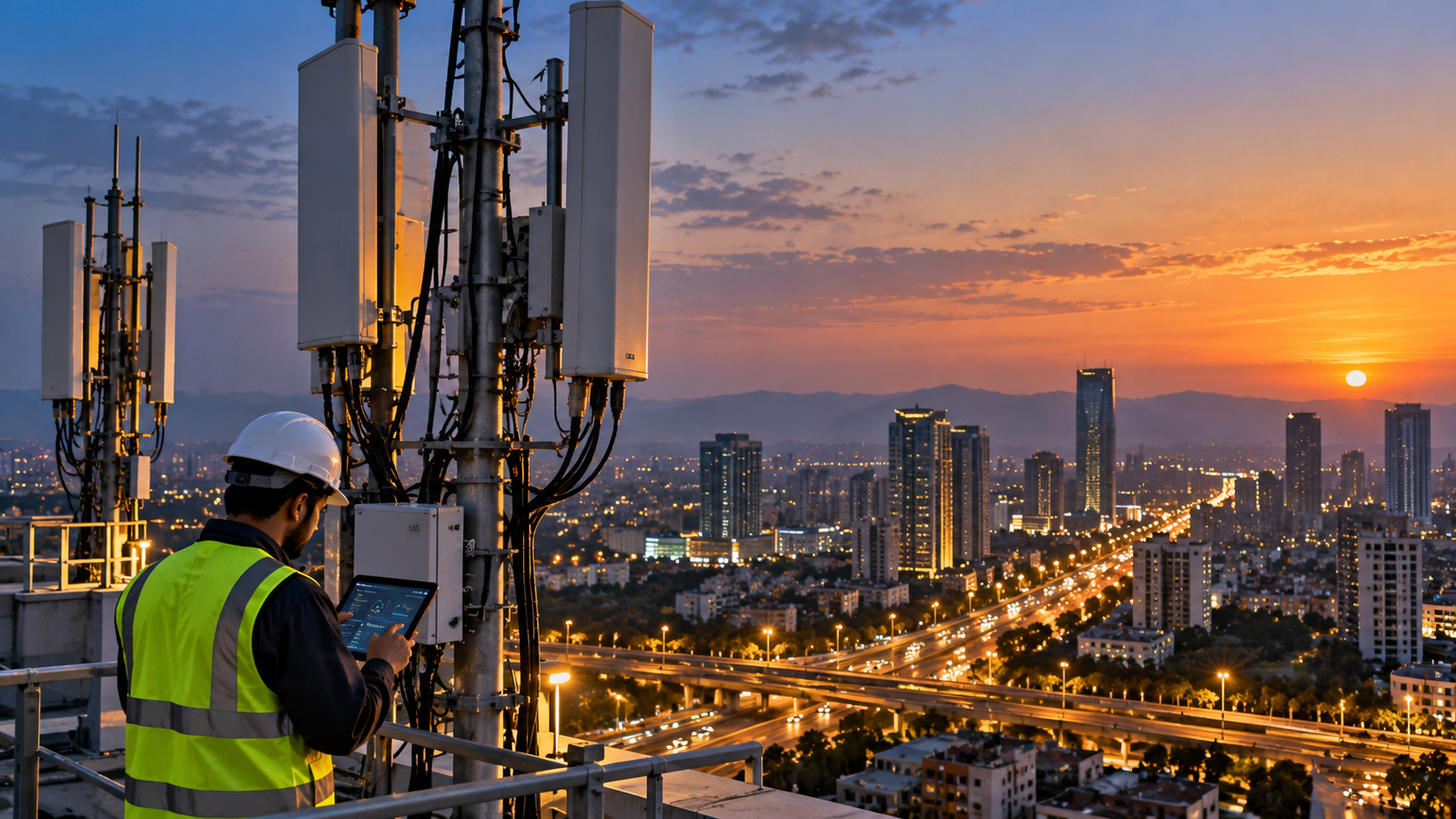
A mobile network site is an installation used to provide wireless coverage. It may include antennas, radio equipment, supporting infrastructure and connections to the wider telecom network. A 5G-capable site can serve eligible devices within a coverage area, but signal strength varies with distance, terrain, buildings, radio frequencies and network configuration.
Counting sites is useful for comparing rollout activity, but it is not a direct measurement of internet speed or geographic completeness. A single site might serve a relatively limited or broader area depending on the spectrum and environment. A city with hundreds of installations can still have dead zones.
Likewise, 1,782 sites should not be described as 1,782 cities, 1,782 complete neighbourhoods or 1,782 independently confirmed high-speed service guarantees. It is a national infrastructure count supplied through a government statement.
Do Existing 4G SIM Cards Work With 5G?
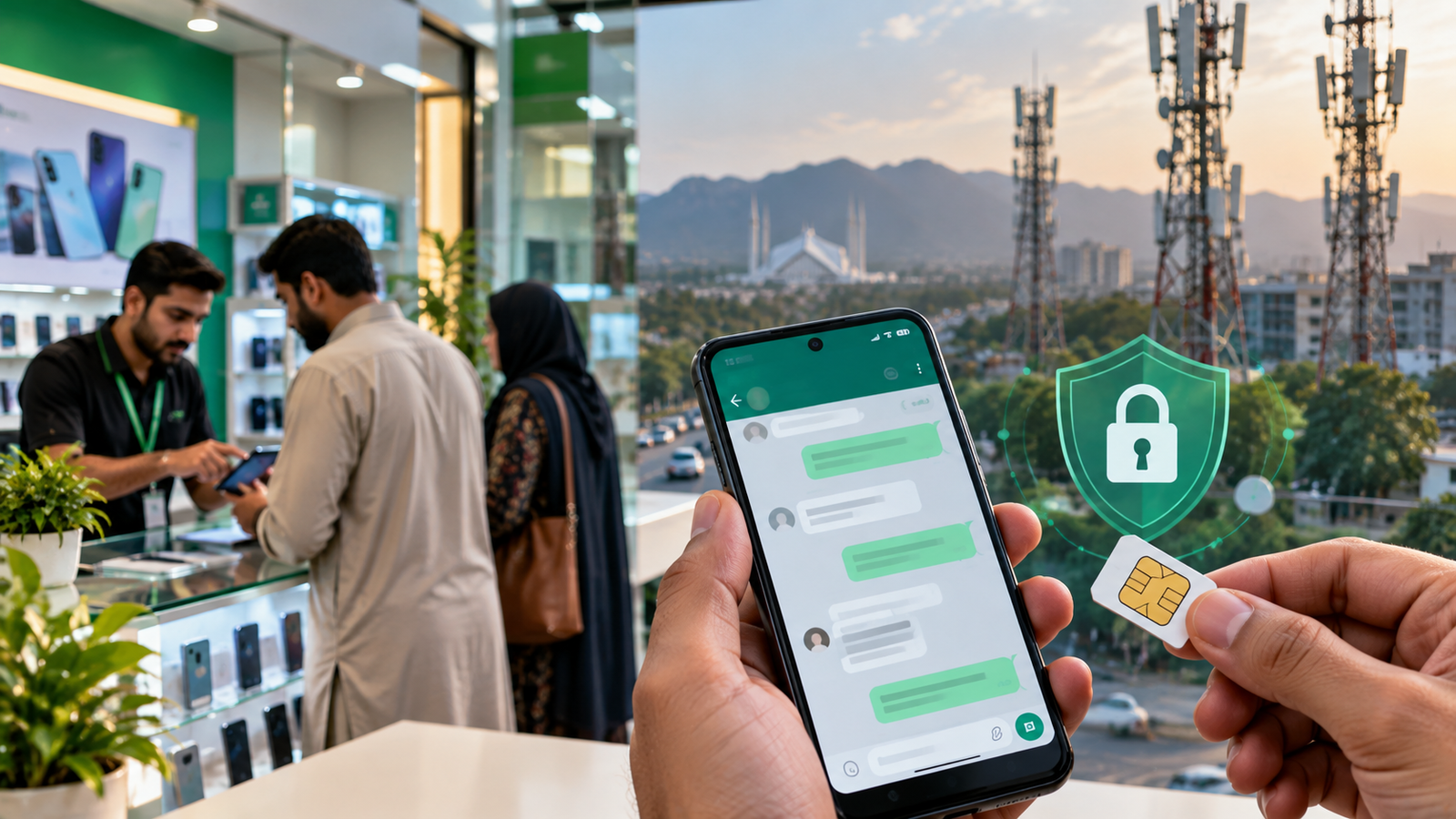
According to the minister’s reported clarification, users do not need to replace an existing 4G-capable SIM solely to use the new 5G services. However, they still need a 5G-compatible smartphone and active 5G coverage from their mobile operator.
A phone that supports 5G technology may also need the relevant local frequency bands and suitable software or operator settings. Network availability can be influenced by the handset model, whether the SIM and account are provisioned correctly, and any applicable package conditions announced by the operator.
For practical troubleshooting, users should check the phone’s network settings, supported bands and their carrier’s official coverage information before purchasing a new device or assuming a SIM replacement is necessary.
How Much Does a 5G Phone Cost in Pakistan?
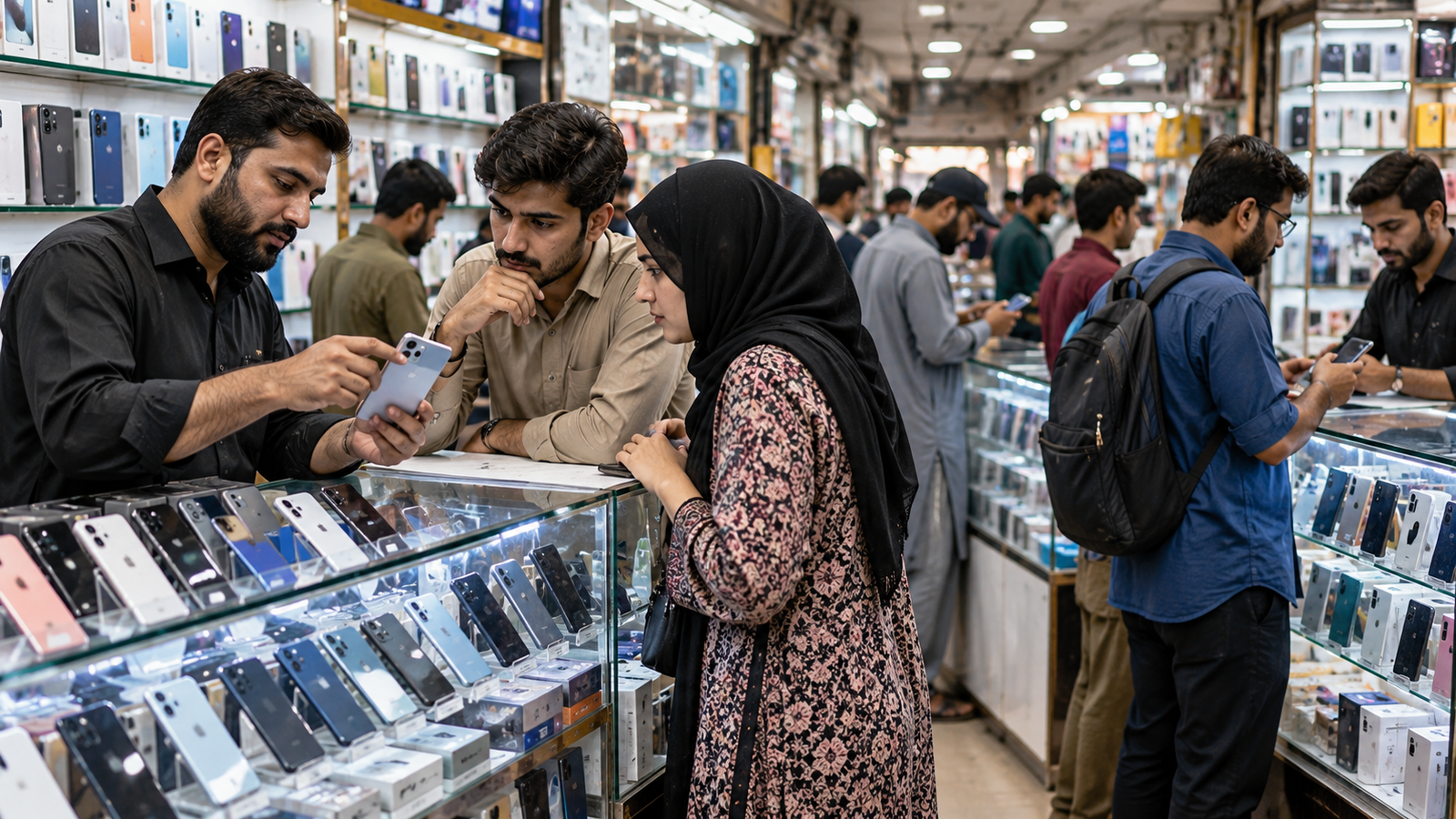
The IT minister said the cheapest locally available 5G-compatible handset cost approximately Rs36,000 at the time of the October 23 reporting. That is a market entry-price estimate supplied in the government response, not a guarantee that every shop has a model in stock at precisely that price.
Retail prices can change because of model availability, taxes, distribution, currency movements and promotional offers. Consumers should verify the exact model, local warranty, PTA registration status and supported network bands before purchase.
The amount remains a meaningful affordability barrier for households with constrained budgets. Having a 5G site nearby does not make the service accessible to someone using a handset that supports only 4G.
More Than 607,000 5G Handsets Assembled Locally
According to the minister, 607,093 5G-capable handsets were assembled in Pakistan between January and August 2026. The figure indicates activity in the domestic mobile-phone assembly market, but it is not equivalent to the number of people using 5G or the number of devices currently connected to the networks.
A locally assembled handset may be sold later, held in inventory or exported depending on the business arrangements. The reported total also does not provide a detailed breakdown of models, prices or the share meeting every operator’s technical requirements.
Over time, more locally assembled compatible models could improve consumer choice. Whether prices fall enough for mass adoption depends on production economics, competition, taxes and consumer purchasing power, not merely on the assembly total.
Why 5G Phone Affordability Matters
A new mobile network is valuable only if customers can connect to it. Network operators may increase capacity and offer faster mobile data, but adoption will depend partly on the cost of appropriate smartphones. Pakistan’s low- and middle-income consumers may find Rs36,000 a substantial upfront expense.
Affordability also includes data packages, electricity for charging, device repair costs and the useful lifetime of a handset. A cheap device that cannot support local network bands or receive reliable updates may not be a sound purchase.
The government has not provided a definite deadline for making 5G-enabled phones affordable to all consumers in the October reporting. It would therefore be misleading to claim a guaranteed future price cut or subsidy without a documented policy announcement.
What Improvements Could 5G Bring?
5G technology can support higher data capacity, lower latency and new types of connected applications under suitable conditions. For consumers, this could mean faster downloads and improved performance in congested areas. Businesses may explore connected equipment, remote monitoring, logistics systems and other services that benefit from more responsive networks.
However, real-world speeds differ according to spectrum, backhaul, device capability, signal quality, network loading and service configuration. The October 23 government figures do not include independently audited average download speeds or a nationwide low-latency guarantee.
It is also important not to describe every potential industrial 5G application as already deployed at commercial scale in Pakistan. The current confirmed milestone is the installation of network sites and the phased availability of service.
Why 4G Upgrades Remain Important
Pakistan’s 5G licences link new network obligations with improvements in 4G service. That parallel requirement reflects the reality that existing 4G users will remain a large part of the market while operators expand 5G access.
For many households and businesses, reliable 4G coverage, consistent call quality and reasonable data performance are more immediately useful than peak 5G speeds in a limited number of locations. Upgrading backhaul and radio networks may support both technologies depending on operator deployment choices.
A successful rollout should therefore be evaluated through wider service quality and customer experience as well as the number of 5G locations. The minister’s site count does not establish that every pre-existing connectivity problem has been resolved.
How Are Jazz, Zong and Ufone Expanding?
The minister’s data show Jazz leading in Karachi, Lahore, Faisalabad and Multan, while Zong has relatively stronger reported deployment in Peshawar, Quetta, Sheikhupura and Sialkot. Ufone’s overall footprint is smaller in the reported nationwide count.
Jazz separately announced on August 27 that it had reached 1,000 live 5G sites and was targeting 2,500 by the end of 2026. That year-end figure is a company target, not a verified achievement as of October 25. Operators may change plans in response to equipment availability, demand or regulatory constraints.
These differences underline why the best network choice is local rather than purely national. Customers should confirm the current coverage and quality of service at the addresses where they actually use mobile data.
What Are the Business Implications?
Telecom infrastructure investment can create demand for radio equipment, engineering services, fibre backhaul, site maintenance and compatible devices. Improved connectivity may also support software businesses and digital services, especially when mobile networks become more reliable and widely available.
The reported site data are evidence of infrastructure deployment, not a financial disclosure of total 5G capital expenditure or a count of new jobs created. No exact economic return can be derived from the operator numbers alone.
Businesses considering 5G-based products should test service availability, service-level requirements, monthly costs and the resilience of their applications. A national announcement does not remove the need for site-specific technical planning.
What Challenges Remain for Pakistan’s 5G Rollout?
The key challenges include uneven geographic availability, the cost of compatible handsets, investment in backhaul and reliable access to electrical power. Network operators also need to manage spectrum, equipment deployment, customer support and operating costs.
The 24-city announcement provides a useful sign of progress but still leaves questions about coverage depth, consumer prices, packages, indoor reception and actual performance. Policymakers and operators will need data beyond installation counts to evaluate whether 5G is improving connectivity for the wider population.
A measured assessment should track independently tested speed and reliability, affordable handset adoption and expansion outside the largest urban centres. Such evidence would show more than headline site totals alone.
How Can Readers Check 5G Availability?
Consumers should start with their operator’s official website, network-coverage information or customer support. It is useful to confirm whether the specific neighbourhood has an active 5G signal, not merely whether the city appears on a national deployment list.
Next, users should check their phone’s 5G capabilities, supported frequency bands, local registration and network settings. An existing 4G SIM may be compatible, according to the minister, but individual account and device settings still matter. Customers should also verify any applicable data charges or package terms.
Finally, performance can vary by location and time. A demonstration in one part of a city does not guarantee the same experience indoors, in another district or while travelling.
What Happens Next?
The government has described the rollout as a four-phase programme, with initial obligations focused on federal and provincial capitals and additional cities chosen through the operators’ commercial plans. More sites could be added as networks expand, but the October report does not provide a definitive date for uninterrupted nationwide coverage.
Future updates should include dated operator totals, measured performance, service maps and changes in the cost of compatible handsets. If new figures are announced after October 23, they should replace the previous snapshot rather than be mixed into it without explanation.
For now, the confirmed development is that the official reported 5G footprint reached 1,782 sites across 24 cities, with Jazz holding the largest share.
Conclusion
Pakistan’s rollout of fifth-generation mobile services has reached 1,782 reported sites across 24 cities, with Jazz accounting for 1,015 installations, Zong for 640 and Ufone for 127. Karachi, Lahore and Islamabad contain the largest shares of the reported infrastructure, according to figures provided by the IT minister and published on October 23, 2026.
The rollout represents measurable progress after the March spectrum licensing process, but affordability and geographic coverage remain important constraints. Consumers need a compatible phone and an active signal from their own operator, although an existing 4G SIM generally does not need replacing. The real measure of success will be whether reliable, reasonably priced mobile connectivity reaches more people over time.
Frequently Asked Questions
Is 5G available in Pakistan in 2026?
Yes. The IT minister reported 1,782 deployed 5G network sites across 24 cities as of the October 23, 2026 reporting.
Which company has the most 5G sites in Pakistan?
Jazz leads with 1,015 reported sites, ahead of Zong’s 640 and Ufone’s 127.
Which cities have 5G in Pakistan?
The list includes Karachi, Lahore, Islamabad, Rawalpindi, Faisalabad, Peshawar, Multan, Quetta, Gujranwala, Sialkot and 14 additional cities; coverage varies by neighbourhood and operator.
Do I need a new SIM for 5G?
The minister stated that an existing 4G-capable SIM need not be replaced solely to access 5G, subject to compatible phone and coverage.
What is the cheapest 5G phone price in Pakistan?
The reported lowest available price was approximately Rs36,000 in October 2026; actual offers and availability may change.
When did 5G launch commercially in Pakistan?
Operators signed licences on March 19, 2026, and commercial rollout began on March 20, according to the minister’s statement.
Does 24-city deployment mean full 5G coverage?
No. Installed sites do not guarantee blanket coverage across every neighbourhood of the cities listed.
How many 5G phones were assembled in Pakistan in 2026?
The minister reported 607,093 locally assembled 5G-capable handsets from January through August 2026.
About The Author