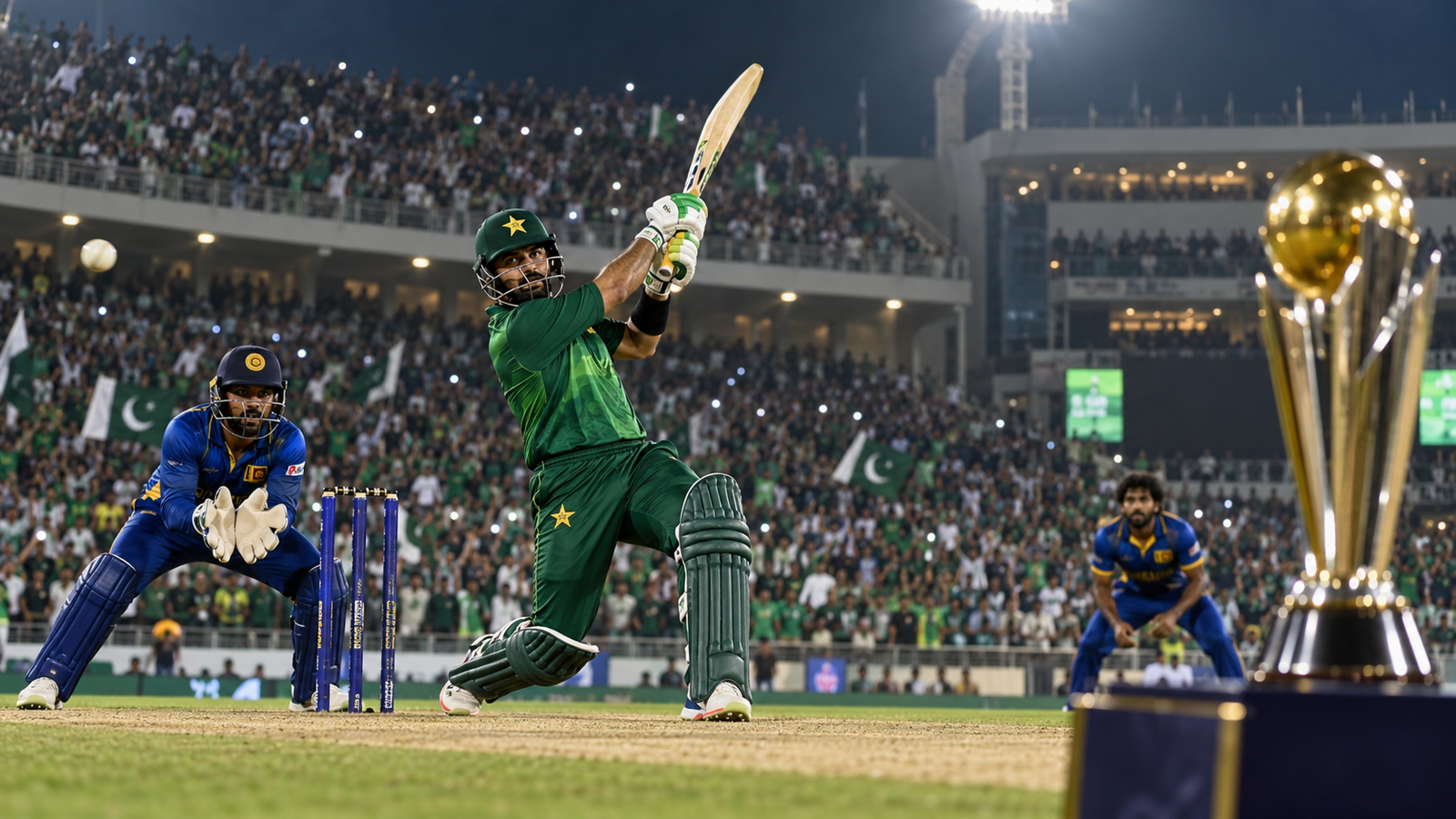
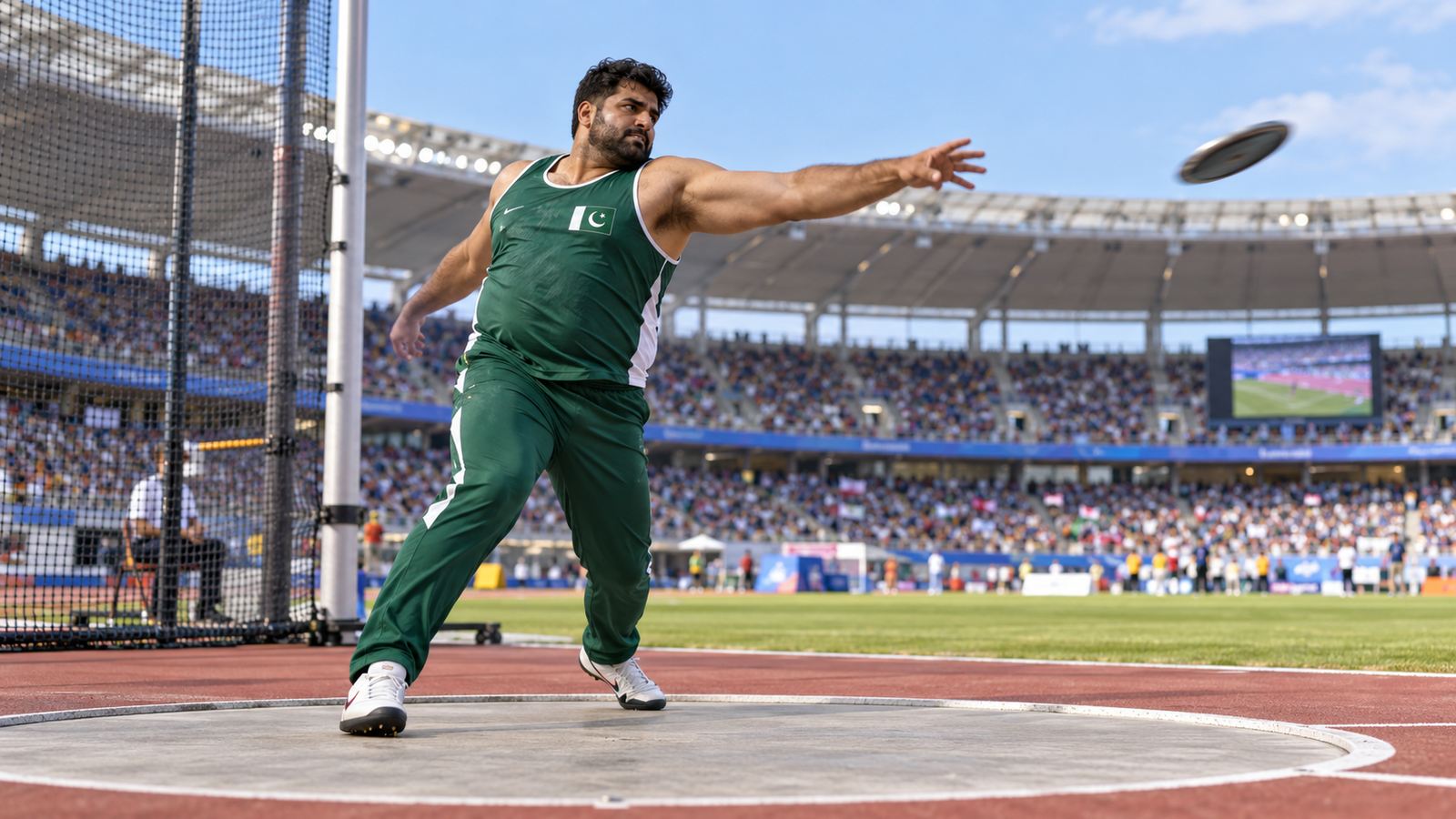
Pakistan’s decorated para-athlete Haider Ali won a silver medal in the men’s F37 discus throw at the Asian Para Games in Nagoya, Japan, on October 21, 2026. His best throw of 57.20 metres secured second place behind Uzbekistan’s Kudratillokhon Marufkhujaev, who took gold with a Games-record 57.39m. India’s Haney earned bronze with 57.04m, leaving just 35 centimetres between the three medallists.
The achievement extends Haider’s international medal record and gives Pakistan a significant result at the continental para-sports competition. Multiple outlets, including The Express Tribune, Daily Times and WE News, reported matching results. Haider also publicly acknowledged the silver medal. This article distinguishes the verified performance from any speculation about future competitions or funding decisions.
Asian Para Games 2026: Men’s F37 Discus Results
The F37 discus final in Nagoya was decided by unusually small margins among the leading competitors. Marufkhujaev recorded 57.39m to win gold and set an Asian Para Games record. Haider finished with 57.20m, 19 centimetres behind the winning mark. Haney’s 57.04m earned bronze, only 16 centimetres behind Pakistan’s silver-medal winner.
These numbers are the athletes’ best valid throws during the final, rather than the sum of their attempts. The gap between the top three highlights the competitive nature of the event, but it would be inaccurate to imply that the difference represents a disputed result. Contemporary reporting identified the final order consistently.
Haider Ali’s Six Throws in Nagoya
According to The Express Tribune, Haider registered throws of 51.63m, 56.51m, 54.98m, 53.65m, 57.20m and 54.45m. His fifth attempt proved to be his longest and ultimately secured the silver medal. In throwing events, each legal attempt is measured independently and the best result determines the athlete’s ranking.
The progression shows that Haider improved on his opening mark during the final, eventually reaching his strongest distance late in the competition. That 57.20m was described as a personal best by several reports. A precise breakdown is useful to readers because it explains the medal result without exaggerating a single dramatic moment.
Who Won Gold and Bronze?
Uzbekistan’s Kudratillokhon Marufkhujaev won the F37 discus title with a best throw of 57.39m. Reports described his mark as a new Asian Para Games record. India’s Haney placed third with 57.04m, completing a close podium in which each position was separated by a few centimetres.
Beyond the three medallists, The Express Tribune reported that Uzbekistan’s Tolibboy Yuldashev finished fourth with 55.39m and Japan’s Yamato Shimbo followed with 51.31m. The event demonstrated the competitive level of the discipline across the region. The reported results should be attributed to the contemporary event coverage rather than reconstructed from unrelated competitions.
What Did Haider Ali Say After Winning Silver?
Speaking to The Express Tribune from Nagoya, Haider credited sustained preparation for his result and said he had worked hard for about a year with the competition in mind. His reaction emphasised the time needed to prepare for a major international event, even for an athlete with significant prior success.
WE News also reported a social-media post from the athlete celebrating the silver medal. These statements provide a direct personal response to the performance, while remaining separate from the measured competition results. No unverified claims about prize money or government awards should be attached to his remarks.
Who Is Haider Ali?
Haider Ali is a Pakistani para-athlete from Gujranwala who has competed internationally in field and track disciplines across several Paralympic cycles. He became especially prominent after winning gold in discus at the Tokyo 2020 Paralympics, a landmark result for Pakistan’s para-sports history. Earlier in his career he also achieved international success in long jump.
His record spans multiple editions of the Paralympics and Asian Para Games. The Nagoya silver is a new competition result rather than a repeat of his Tokyo medal. Readers should not confuse competitions held in different years and locations simply because the same athlete or throwing event is involved.
Haider Ali’s Paralympic Medal Record
Haider won a silver medal in long jump at the Beijing 2008 Paralympic Games and bronze in the same event at Rio 2016. He later took discus gold at Tokyo 2020 and discus bronze at Paris 2024. These achievements were reported in the October 21 coverage reviewing his career.
The sequence reflects his longevity at international level and his involvement in more than one discipline. It is important to identify the event attached to each medal: a long jump result cannot be described as discus, and the Asian Para Games are a separate competition from the Paralympic Games.
What Is the F37 Discus Classification?
F37 is a para-athletics field-event classification associated with athletes who have coordination impairments, including certain forms of hypertonia, ataxia or athetosis. Athletes in this class compete in standing field events; it is not a seated wheelchair throwing classification. Competitive classifications exist so athletes with comparable eligible functional impairments can contest events under defined criteria.
This distinction is relevant for photographs and illustrations. A generic image showing a seated athlete throwing from a fixed frame is not an accurate depiction of Haider’s F37 discus event. Editors should use a verified photo from Nagoya or a clearly labelled standing-discuss illustration rather than a misleading representation of his performance.
Why the Silver Medal Matters for Pakistan
The silver medal adds a continental podium result for Pakistan in a discipline where Haider has previously achieved Paralympic success. His performance illustrates how sustained training and international experience can remain valuable across multiple competitions. For readers, the immediate significance is clear: a Pakistani athlete finished second in a closely contested Asian Para Games final.
The result also offers an opportunity to discuss visibility for para-sports. These athletes compete in technically demanding disciplines with formal classifications, records and high performance standards. Coverage is strongest when it focuses on their measured sporting achievements, preparation and competition rather than framing disability itself as the story.
Pakistan’s Participation at the Nagoya Games
The Express Tribune reported ahead of the Games that Pakistan sent a 16-member contingent participating across athletics, powerlifting, table tennis and wheelchair tennis. Haider was among the most experienced competitors in the delegation. The Games were scheduled for October 18–24 in Nagoya.
A medal in one event should not be used to invent the final ranking or medal count for the whole Pakistan team before all competitions finish. Other athletes were scheduled to compete after Haider’s final. Official event results and updated delegation reports are needed to establish any subsequent medals.
How Close Was Haider to the Gold Medal?
At 57.20m, Haider finished 0.19 metres behind the winning 57.39m, equivalent to 19 centimetres. That is a small margin in a throwing event where release angle, rhythm, speed and other technical details can alter the outcome of an attempt. His fifth throw was sufficient to finish above the bronze-medal distance by 16 centimetres.
The comparison is useful because it places the silver medal in the context of the competition rather than suggesting an easy or uncontested podium. It also highlights the difference between an athlete’s longest throw and a record: Haider’s mark was a personal best according to reports, whereas the gold winner’s mark set the Games record.
Why Para-Sports Reporting Needs Precision
Para-athletics events use classification systems and discipline-specific rules that general sports coverage does not always explain. A reader seeing ‘F37’ may not immediately know whether the competitor throws while seated or standing, and photographs can unintentionally create a false impression. The classification is therefore an essential part of accurately describing this news.
Likewise, medal tables and records need dates and sources. Haider’s Paralympic gold and current Asian Para Games silver are both significant but distinct. News coverage should not combine the medals, imply a new world record was set, or attribute the gold-winning 57.39m mark to the Pakistani athlete.
What Comes Next for Haider Ali?
The Nagoya result adds to Haider’s competitive record, but the available October 21 reports do not establish a new confirmed contract, sponsorship, retirement plan or next championship entry. Subsequent competitions and national support decisions would need new official announcements or direct confirmation.
Fans following the athlete’s career can monitor verified results and statements from appropriate sports bodies. A strong news follow-up would focus on documented achievements and plans rather than assume that this medal automatically determines qualification for a future Paralympic event.
International Competition and Regional Interest
The podium featured athletes from Uzbekistan, Pakistan and India, illustrating strong representation from multiple Asian countries. Uzbekistan’s winner set a Games record, Pakistan’s Haider achieved a reported personal best and India’s Haney also recorded a personal best, according to contemporary event coverage.
The event is a sporting result, not a political contest. Its value for an international audience comes from the high standard of performance and the fine margins between medal positions. The presence of athletes from neighboring countries provides regional relevance without needing nationalistic or inflammatory framing.
Conclusion
Haider Ali secured a silver medal for Pakistan in the men’s F37 discus throw at the 2026 Asian Para Games with a 57.20m performance on October 21. He finished only 19 centimetres behind Uzbekistan’s Kudratillokhon Marufkhujaev, who won gold with 57.39m, while India’s Haney collected bronze at 57.04m.
The result continues Haider’s long record of international medals and offers a clearly documented success for Pakistan’s para-athletics programme. Mukhbir’s coverage relies on reported distances, results and attributable athlete comments, while keeping future plans and unsupported claims out of the story.
Frequently Asked Questions
What medal did Haider Ali win at the Asian Para Games 2026?
He won silver in the men’s F37 discus throw at Nagoya, Japan.
What was Haider Ali’s best discus throw?
His longest valid throw in the final measured 57.20 metres.
Who won gold in the F37 discus final?
Uzbekistan’s Kudratillokhon Marufkhujaev won gold with 57.39m, reported as an Asian Para Games record.
Who won the bronze medal?
India’s Haney secured bronze with a throw of 57.04 metres.
How far was Haider Ali behind the gold medallist?
Haider was 19 centimetres, or 0.19 metres, behind the winning distance.
When was the event held?
The F37 discus final took place on October 21, 2026 at the Asian Para Games in Nagoya.
Has Haider Ali previously won a Paralympic gold medal?
Yes, he won gold in discus at the Tokyo 2020 Paralympic Games.
Is F37 discus a wheelchair throwing event?
No. F37 is a standing para-athletics throwing classification associated with eligible coordination impairments.
About The Author