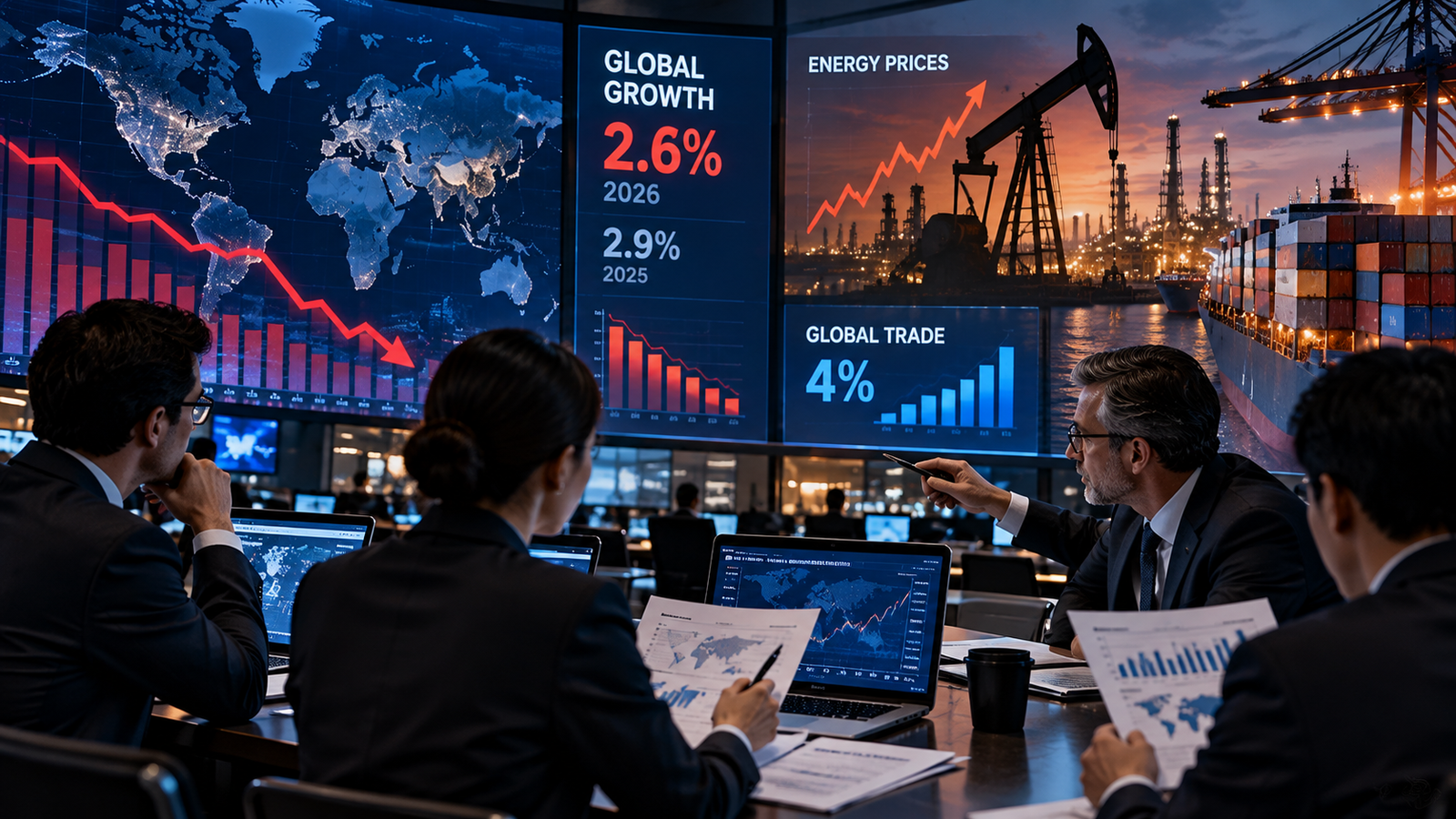
The global economy is expected to expand by only 2.6% in 2026, slowing from 2.9% in 2025 as higher energy costs, geopolitical tensions and uneven development weigh on growth, according to the United Nations Conference on Trade and Development.
UNCTAD’s Trade and Development Report 2026, released on October 9, says the global economy remains resilient but increasingly divided. Developing economies are expected to grow by about 4% this year, down from 4.7% in 2025, while global trade in goods and services is projected to increase by roughly 4% in constant prices.
The report highlights a key contradiction: trade is still growing, but much of the increase in trade values is being driven by higher energy prices rather than a broad acceleration in real economic activity. That means headline trade numbers can look strong even while households, businesses and governments face a more difficult growth environment.
For businesses, investors and policymakers, the 2.6% forecast matters because slower growth can reduce consumer demand, pressure corporate earnings and complicate monetary policy at a time when energy prices and borrowing costs are already elevated.
Global Growth Falls From 2.9% to 2.6%
UNCTAD expects the world economy to grow by 2.6% in 2026, compared with 2.9% last year. The slowdown reflects a combination of external shocks, including the continuing Middle East crisis and its effect on energy markets.
Higher oil and gas prices raise costs across transport, manufacturing, agriculture and electricity generation. These pressures can feed into inflation and reduce household purchasing power, especially in countries that depend heavily on imported energy.
Higher energy prices can also force central banks to keep interest rates elevated for longer, making credit more expensive for companies and consumers. That creates an additional drag on investment and housing activity.
UNCTAD’s outlook therefore suggests the global economy is not moving into recession, but it is losing momentum.
Developing Economies Are Still Growing Faster
Developing economies are projected to grow by around 4% in 2026, faster than the global average but significantly below the 4.7% pace recorded in 2025.
This group includes a wide range of economies with very different conditions. Some Asian markets continue to perform strongly, while other developing regions face slower investment, higher debt costs and greater exposure to commodity-price shocks.
UNCTAD says many developing economies are also dealing with new technological and policy barriers. These include unequal access to artificial intelligence, fragmented trade rules and higher financing costs.
The result is a more uneven global recovery in which a small number of economies and sectors capture a disproportionate share of new growth.
Global Trade Is Still Expected to Rise 4%
Despite slower economic growth, UNCTAD expects global trade in goods and services to expand by about 4% in constant prices during 2026.
Global trade reached a record $35 trillion in 2025. However, UNCTAD warns that higher trade values in 2026 are being influenced by rising prices, especially in energy markets.
That distinction is important because higher trade values do not necessarily mean more goods and services are moving across borders. Part of the increase can simply reflect the fact that oil, gas and other commodities cost more.
Businesses therefore need to look beyond headline trade values when assessing demand conditions.
Energy Shock Is Central to the Outlook
The ongoing Middle East crisis has become one of the biggest risks to the global economy because of its effect on oil, shipping and energy security.
Higher fuel prices increase transport costs and can raise prices across global supply chains. Airlines, shipping companies, manufacturers and food producers all face higher operating expenses when energy markets tighten.
Countries that import most of their energy are particularly exposed because their trade balances can worsen as import bills rise.
UNCTAD’s forecast reflects the possibility that elevated energy costs may persist long enough to reduce real income and business investment.
Trade Patterns Are Changing
UNCTAD also points to a significant reshaping of global trade. Trade between China and the United States has fallen by more than 20% since 2024, while East Asia has expanded trade links with both China and North America.
This does not mean globalisation is ending. Instead, trade is becoming more selective and regionally diversified.
Companies are increasingly spreading production across multiple countries to reduce political, tariff and supply-chain risks. This can create opportunities for economies that position themselves as reliable manufacturing or logistics alternatives.
However, supply-chain diversification can also increase costs if companies sacrifice efficiency for resilience.
Asia Remains a Major Source of Resilience
UNCTAD says most Asian economies continue to show strong resilience and dynamic growth despite the difficult global environment.
Asia remains central to manufacturing, electronics, trade and investment flows. The region is also benefiting from strong demand related to artificial intelligence, semiconductors and data-centre infrastructure.
This gives many Asian economies an advantage compared with regions that are more exposed to weaker commodity demand or high borrowing costs.
However, the benefits are not evenly distributed. Economies with stronger technology ecosystems and manufacturing capacity are gaining more than countries that remain dependent on traditional exports.
Artificial Intelligence Is Boosting Trade but Gains Are Concentrated
AI is one of the few sectors providing strong momentum to global trade. Demand for semiconductors, servers, networking equipment and data-centre infrastructure has increased rapidly.
UNCTAD says this AI-related dynamism is highly concentrated. A relatively small group of countries and companies controls much of the investment, production and intellectual property linked to the technology.
This creates a risk that AI widens existing development gaps rather than closing them.
Countries without strong digital infrastructure, skilled workers or access to capital may struggle to benefit from the AI investment cycle.
Business Impact
For multinational companies, slower global growth can mean weaker demand in some consumer and industrial markets. Businesses may respond by reducing investment, managing inventories more cautiously and focusing on regions where growth remains stronger.
Higher energy prices also raise costs. Companies with fuel-intensive operations may experience margin pressure unless they can pass those costs on to customers.
At the same time, trade diversification creates new opportunities. Manufacturers may invest in additional production hubs, logistics networks and supplier relationships to reduce dependence on a single market.
Technology and AI-related firms may continue to outperform the broader economy if investment in computing infrastructure remains strong.
Investment Impact
Slower economic growth combined with high inflation risk creates a difficult environment for investors. Equity markets can face pressure if earnings expectations weaken, while bond markets may remain volatile if central banks keep interest rates high.
Energy producers may benefit from elevated oil and gas prices, while transport and consumer companies can face higher costs.
Investors may also favour countries with stronger growth, lower debt burdens and exposure to AI-driven trade.
UNCTAD’s report suggests geographic diversification will become increasingly important as economic performance diverges between regions.
Technology Impact
The report reinforces the idea that artificial intelligence is becoming a major force in global commerce. Semiconductor exports, data-centre construction and AI hardware investment are supporting trade even while other parts of the economy slow.
But the concentration of AI investment creates policy challenges. Countries without advanced digital infrastructure may fall further behind in productivity and export competitiveness.
Governments may therefore increase spending on broadband, energy systems, education and computing infrastructure to improve their ability to participate in the AI economy.
Pakistan Relevance
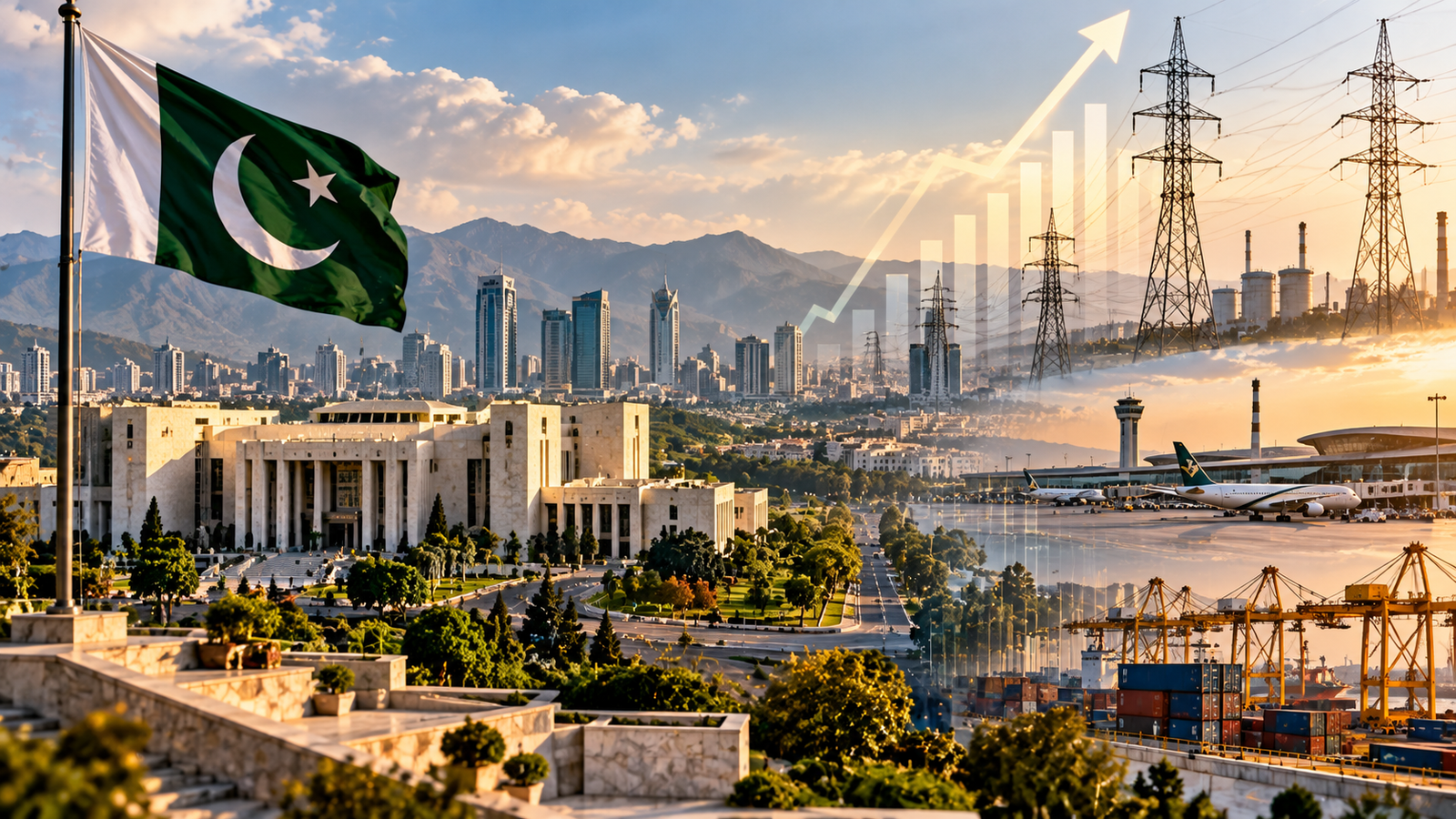
Pakistan is highly exposed to several of the risks highlighted by UNCTAD. The country imports a significant share of its energy, so sustained high oil and gas prices can increase the import bill and put pressure on inflation, the current account and foreign-exchange reserves.
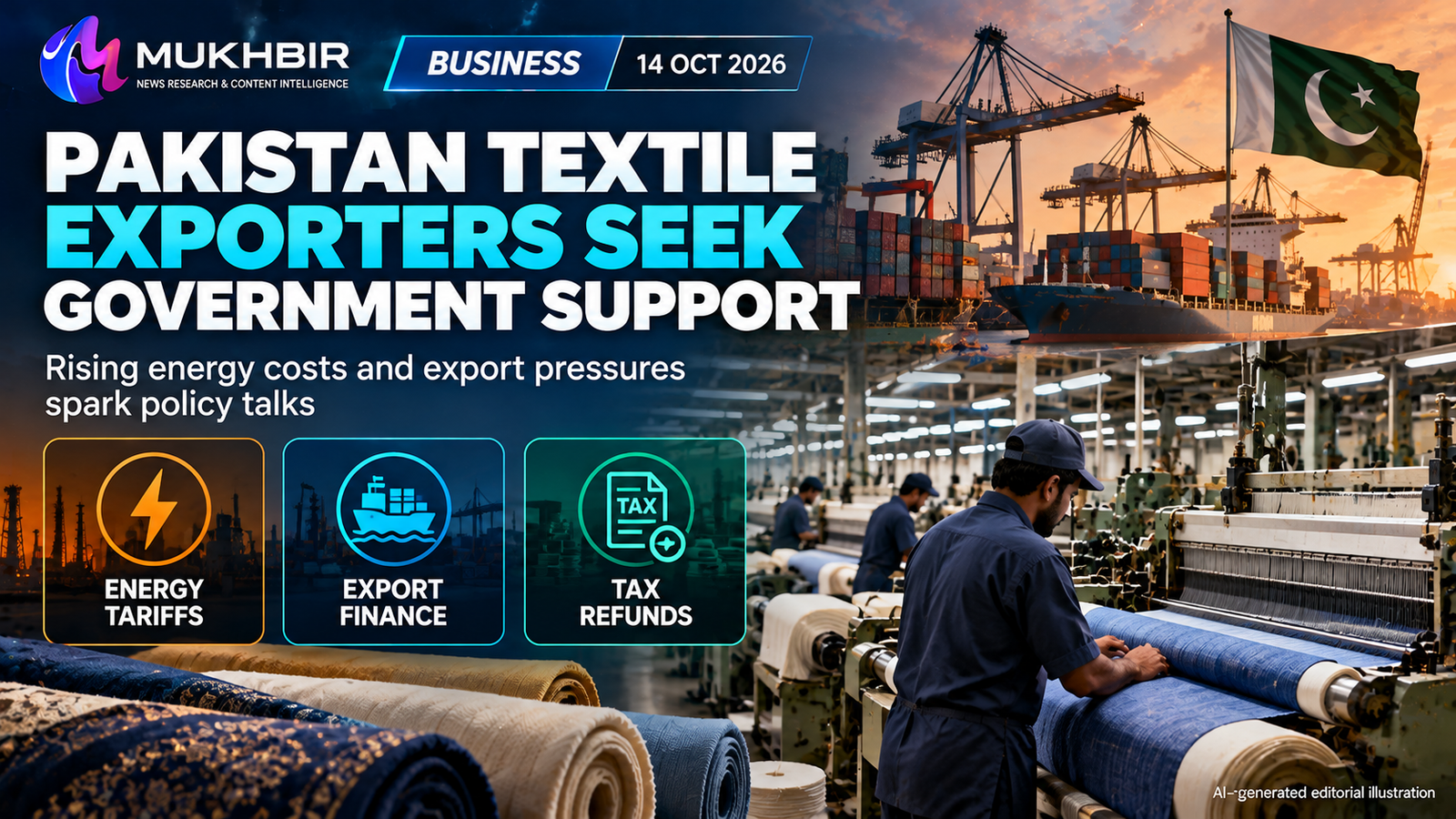
Slower global growth can also affect export demand, remittances and foreign investment. Textile exports and other manufacturing sectors can face weaker orders if major consumer markets slow.
At the same time, stronger growth in Asian trade and AI-related services creates opportunities for Pakistan’s technology and services sectors.
Pakistan’s ability to benefit will depend on improving digital infrastructure, energy reliability, export competitiveness and access to finance.
South Asia Relevance
South Asian economies face a mixed outlook. Many benefit from strong domestic demand and young populations, but they remain vulnerable to energy costs and external financing conditions.
Oil-importing countries can face higher inflation and weaker currencies when energy prices rise. Governments may also spend more on subsidies, reducing fiscal space for development spending.
Countries with strong services exports, digital industries and regional trade links may be better positioned to manage the slowdown.
What Policymakers Are Watching
Policymakers will closely monitor energy prices, inflation, interest rates and trade volumes over the coming months.
If energy prices remain elevated, central banks may be forced to delay rate cuts or tighten policy further. That could slow investment and consumption even more.
Governments may also focus on energy security, supply-chain diversification and support for strategic industries.
For developing economies, debt costs will remain a major concern because higher interest rates make it more expensive to finance infrastructure and social programmes.
What Happens Next
The next major updates will come from the International Monetary Fund, World Bank and national statistical agencies as they publish revised economic forecasts and inflation data.
Markets will also watch the Middle East closely because any escalation or de-escalation could have an immediate impact on energy prices and global growth expectations.
UNCTAD’s 2.6% forecast should therefore be seen as a snapshot of a highly uncertain global environment.
The key message is that the world economy is still expanding, but growth is slowing and becoming more uneven.
FAQs
What is UNCTAD’s global growth forecast for 2026?
UNCTAD expects global economic growth of 2.6% in 2026, down from 2.9% in 2025.
How fast are developing economies expected to grow?
Developing economies are projected to grow by around 4% in 2026, compared with 4.7% in 2025.
What is the global trade forecast?
UNCTAD expects global trade in goods and services to rise by about 4% in constant prices during 2026.
Why is global growth slowing?
Major factors include higher energy prices, geopolitical tensions, elevated borrowing costs and uneven investment.
Is AI helping global trade?
Yes. AI-related products such as semiconductors and data-centre equipment are supporting trade, although the gains are concentrated in a small number of economies.
How does this affect Pakistan?
Pakistan can be affected through higher energy import costs, weaker global demand and tighter financing conditions, while its technology services sector could benefit from AI-related growth.
Is global trade collapsing?
No. Trade is still expected to grow, but higher energy prices are inflating trade values and underlying economic growth remains weaker.
What should businesses watch next?
Businesses should monitor energy prices, interest rates, consumer demand, shipping costs and changes in global trade patterns.
About The Author