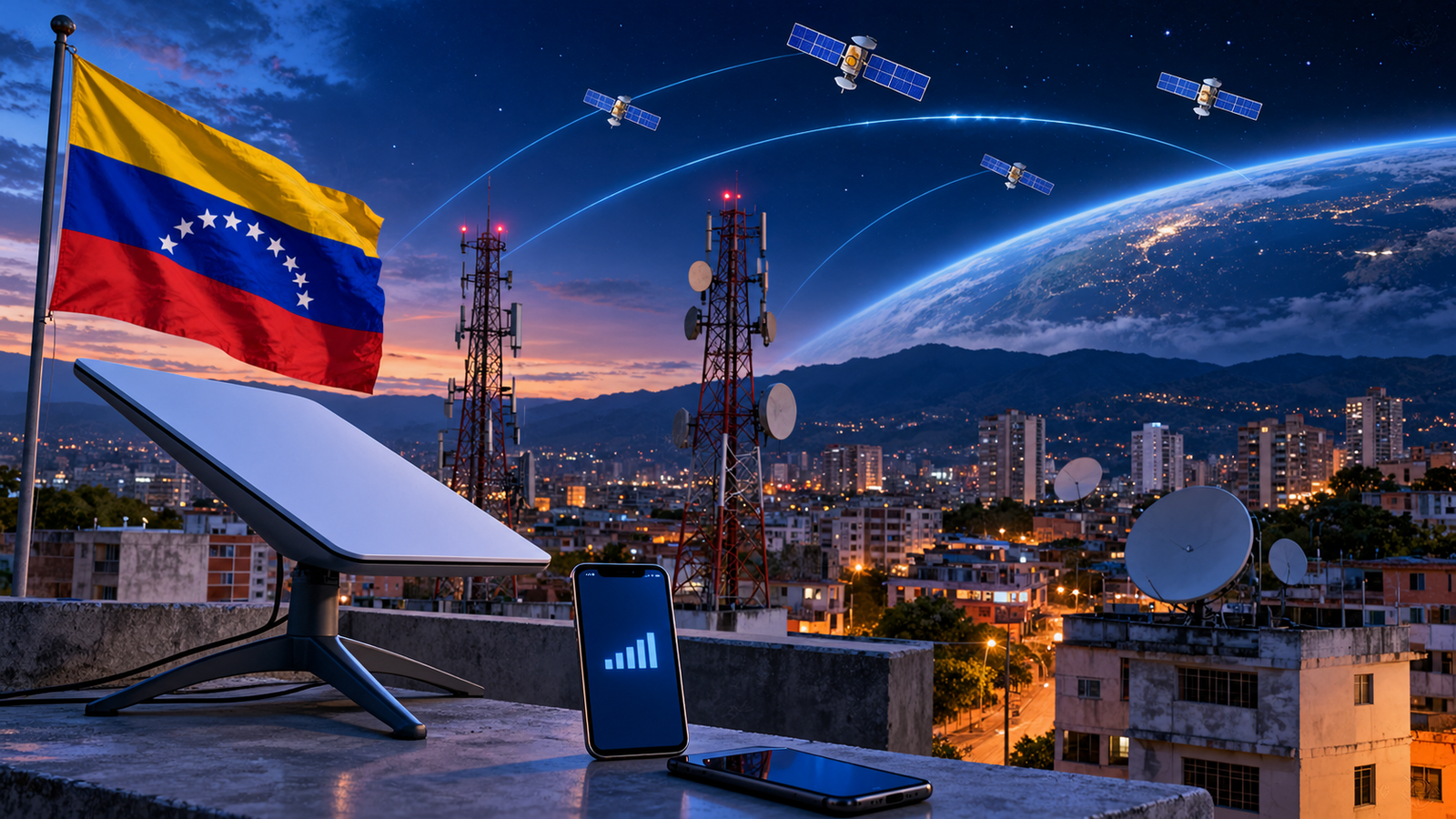
Venezuela has formally authorized SpaceX’s Starlink satellite-internet service to operate in the country, marking another step in the global expansion of low-Earth-orbit broadband and potentially widening connectivity options for households and businesses.
Reuters reported on October 10 that Venezuela’s interim President Delcy Rodriguez authorized Starlink to begin operations under an agreement with the U.S.-based company. The government said the approval forms part of a broader arrangement with SpaceX.
The decision comes as Starlink continues to expand its subscriber base and service portfolio across consumer, enterprise, aviation, maritime and government markets. SpaceX has also been increasing the size and capacity of its satellite constellation, strengthening the company’s ability to serve areas where terrestrial broadband remains limited or inconsistent.
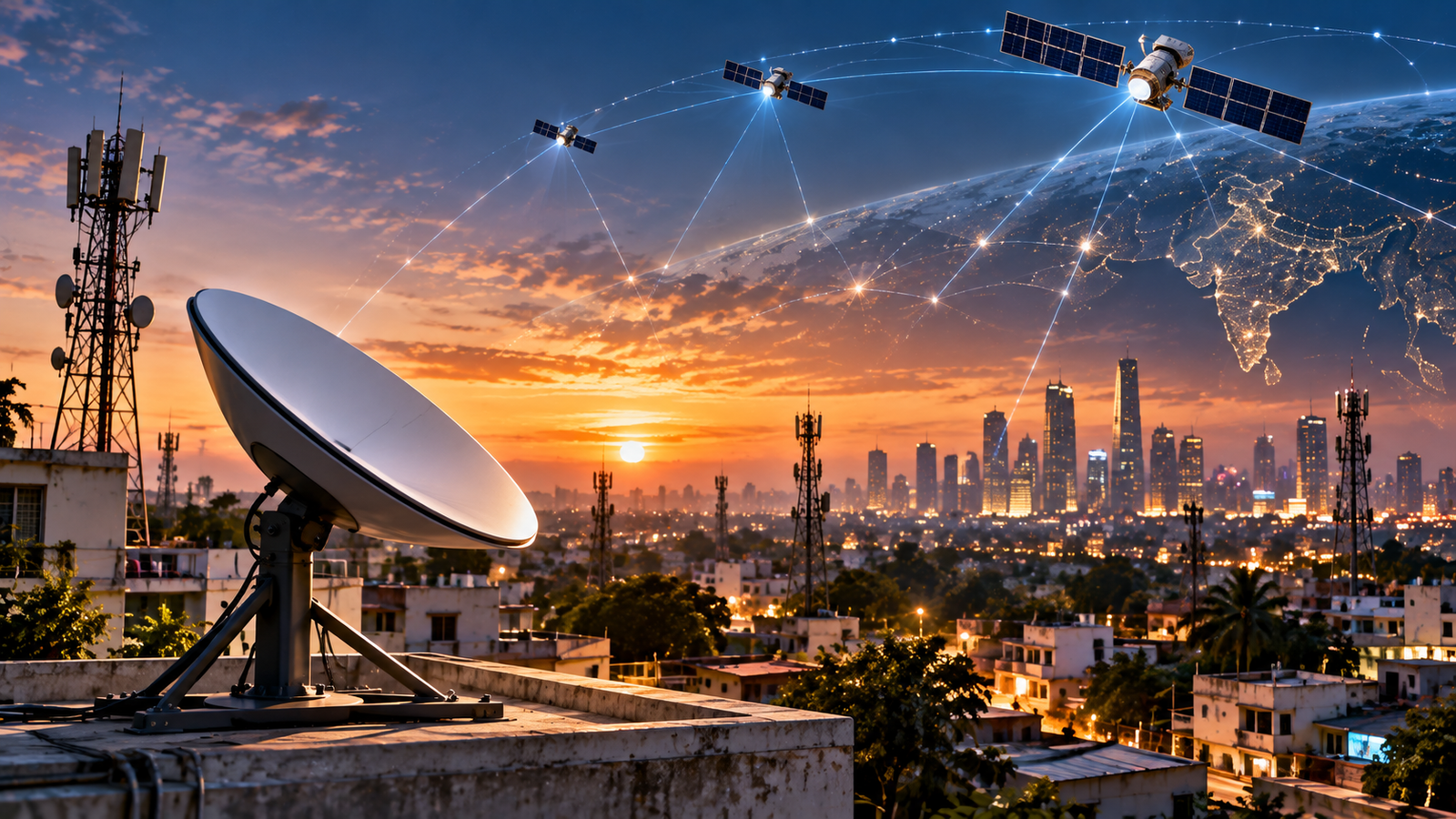
The authorization is notable because satellite broadband is increasingly moving from a niche connectivity option toward a mainstream part of global telecom infrastructure. For countries with difficult geography, uneven fibre deployment or rural coverage gaps, low-Earth-orbit systems can provide an additional route to internet access without waiting for fixed networks to reach every location.
What Venezuela Has Approved
The core development is regulatory authorization for Starlink to operate in Venezuela. Reuters said the approval was announced by the Venezuelan government after an agreement with SpaceX.
Starlink’s own support pages indicate that service had already been available in Venezuela through approved local retailers, existing Roam plans and bring-your-own-device activation. The new authorization therefore appears to formalize and broaden the company’s operating position in the country rather than introduce satellite connectivity from zero.
Starlink lists approved Venezuelan retailers including Daka, Multimax and Soytechno. The company has also said local Residential service has been available under discounted pricing, while some users could activate compatible hardware through existing Roam arrangements.
Why Satellite Internet Matters for Venezuela
Satellite internet can be especially useful in areas where fibre or mobile broadband is expensive to deploy. Mountains, remote towns and sparsely populated regions can make terrestrial network expansion difficult.
A low-Earth-orbit satellite network does not eliminate the need for local infrastructure, electricity or ground equipment, but it can reduce dependence on long fibre routes and dense cell-site coverage.
For households, that can mean faster access to broadband where fixed-line alternatives are weak. For businesses, it can provide redundancy, backup connectivity and service in locations that may not have dependable terrestrial links.
Government agencies, schools, clinics and emergency services can also use satellite broadband in situations where conventional networks are unavailable or disrupted.
Starlink Is Expanding Beyond Home Broadband
Starlink is no longer focused only on residential users. Reuters noted that the business now spans consumer, enterprise, aviation, maritime and government services.
That diversification matters because it increases the number of markets where satellite connectivity can compete with established telecom services. Airlines can use satellite broadband for in-flight internet, ships can use it at sea, and companies can connect remote offices, industrial sites and transport assets.
Starlink’s growing service mix also creates new competitive pressure for traditional telecom operators, especially in markets where network quality varies widely outside large cities.
Low-Earth Orbit Is Changing the Telecom Model
Traditional satellite internet relied heavily on satellites in geostationary orbit, which are much farther from Earth and therefore tend to have higher latency. Low-Earth-orbit constellations reduce that distance, helping improve response times and making satellite broadband more practical for everyday internet use.
The International Telecommunication Union has described direct-to-device and satellite connectivity as an emerging layer of global telecom infrastructure, particularly useful for filling coverage gaps and improving resilience.
This shift does not mean satellites will replace terrestrial networks. Fibre and mobile infrastructure can still deliver higher capacity in dense urban areas. Instead, satellite systems are becoming complementary networks that extend coverage beyond the economic limits of conventional deployment.
Starlink’s Constellation Continues to Grow
Starlink says it operates the world’s largest satellite constellation, with more than 11,000 satellites in low-Earth orbit as of early October 2026.
The company has also begun deploying its newer V3 satellites, which it says provide greater capacity, power generation and data density. Those improvements are intended to support a larger user base and higher-bandwidth services.
As satellite capacity grows, the company can potentially serve more users in markets where early Starlink deployments were constrained by congestion or limited regional capacity.
Telecom Competition Could Intensify
Starlink’s expansion comes as SpaceX pushes more directly into mobile communications. The company has been acquiring spectrum and building direct-to-device capabilities that could allow ordinary smartphones to connect through satellites in areas without traditional cellular service.
That broader strategy has already affected investor sentiment toward traditional telecom operators. Reuters reported that telecom shares in the United States and Europe fell sharply after SpaceX announced a major low-band spectrum acquisition aimed at expanding Starlink Mobile.
Venezuela’s authorization is therefore part of a larger telecom story: satellite operators are moving closer to the services historically delivered by mobile and fixed-network companies.
What This Means for Consumers
For consumers, more connectivity options can create competitive pressure on price, coverage and service quality. In locations where only one or two terrestrial providers are available, satellite broadband can introduce a new alternative.
However, the economics are different from ordinary mobile service. Users need compatible hardware, an unobstructed view of the sky and reliable electricity. Equipment and subscription prices can also be significant for lower-income households.
Service quality may vary depending on local congestion, weather and network capacity. Satellite broadband should therefore be viewed as an additional option rather than a universal substitute for fibre or mobile networks.
Business Impact
Businesses in remote or difficult-to-connect locations may benefit most immediately. Energy companies, logistics firms, farms, mines, construction sites and tourism operators can use satellite links where terrestrial connectivity is weak.
Starlink can also serve as backup connectivity for companies that cannot afford long outages. A second network path can help maintain payment systems, communications and cloud access when fixed-line service is interrupted.
For local telecom operators, however, the arrival of a well-funded satellite competitor may increase pressure to improve rural coverage and service quality.
Technology Impact
The authorization highlights how rapidly telecom infrastructure is becoming hybrid. Future networks are likely to combine fibre, terrestrial mobile towers and satellites rather than rely on a single technology.
Satellite systems can fill gaps, while terrestrial networks handle dense traffic in cities. Direct-to-device services may blur the distinction further by allowing standard smartphones to switch between cellular and satellite connectivity.
This hybrid model could become especially important for emergency communications, disaster recovery and transport networks.
Global Importance
Starlink’s expansion into additional markets has global significance because the company is creating one of the largest privately operated communications infrastructures ever built.
As coverage increases, governments must decide how satellite providers fit within national licensing, spectrum, security and consumer-protection frameworks.
The policy choices made by countries such as Venezuela, India and others will influence how quickly satellite broadband becomes part of mainstream telecommunications.
Pakistan and South Asia Relevance
The Venezuela decision is relevant to Pakistan because Starlink and other satellite providers are also seeking to expand across South Asia.
Pakistan has large rural and mountainous areas where terrestrial broadband deployment can be difficult or expensive. Satellite services could eventually complement fibre and mobile networks in such regions.
However, local licensing, spectrum allocation, security requirements and pricing will determine how useful these services become in practice.
India is facing similar regulatory questions as Starlink, Reliance Jio and Bharti Airtel pursue satellite-internet opportunities, showing that the regulatory model for satellite broadband is still evolving across South Asia.
SEO and Social-Media Potential
The story has strong search potential because it combines Starlink, SpaceX, satellite internet and telecom regulation. It also connects to the larger direct-to-device trend that is attracting significant attention from investors and consumers.
For social media, the strongest factual angle is simple: Venezuela has formally authorized Starlink to operate. Avoid overstating the development as meaning Starlink will immediately replace local telecom networks or provide universal coverage.
The most useful supporting context is that Starlink is expanding globally and increasingly moving into enterprise and mobile connectivity.
What Happens Next
The next step will be implementation. Users and businesses will watch for clearer information on local service availability, pricing, hardware distribution and any additional regulatory conditions.
SpaceX will also continue expanding its satellite network and mobile ambitions. The company’s spectrum acquisitions and direct-to-device plans suggest that Starlink’s long-term strategy extends well beyond fixed satellite broadband.
For Venezuela, the authorization could improve connectivity options, but the practical impact will depend on affordability, distribution and network capacity.
For the wider telecom industry, the message is broader: satellite connectivity is becoming a permanent competitor and partner within the global communications market.
FAQs
Has Venezuela authorized Starlink?
Yes. Reuters reported that Venezuela’s government formally authorized SpaceX’s Starlink to operate in the country.
Who approved Starlink in Venezuela?
Reuters said interim President Delcy Rodriguez authorized the service under an agreement with SpaceX.
Was Starlink already available in Venezuela?
Starlink’s support pages indicate that service had already been available through approved retailers, Roam plans and bring-your-own-device activation.
What services does Starlink offer?
Starlink provides consumer, enterprise, aviation, maritime and government connectivity services.
Why is satellite internet useful?
It can provide broadband in remote or difficult-to-connect areas where fibre or mobile infrastructure is limited.
Will Starlink replace mobile networks?
Not necessarily. Satellite and terrestrial networks are more likely to complement each other, especially as direct-to-device technology develops.
Why does this matter for Pakistan?
Pakistan has rural and mountainous regions where satellite broadband could complement traditional telecom infrastructure, subject to local regulation and pricing.
What should users watch next?
Key issues include local pricing, hardware availability, service capacity and any additional regulatory conditions.
About The Author