Starlink India pricing is back in focus after Elon Musk promised to make SpaceX’s satellite internet service affordable for Indian consumers, increasing attention on the market ahead of Reliance Jio’s planned public listing. Reuters reported the pledge on October 11, 2026, as competition over satellite broadband and pending government approvals intensified.
Musk has not provided an official monthly subscription fee, installation charge or launch date for India. Starlink has obtained preliminary permissions, but its commercial launch still depends on security requirements and spectrum assignment. Jio’s satellite venture and Eutelsat OneWeb are also awaiting final regulatory steps.
The latest development concerns India, not SpaceX’s separate U.S. spectrum acquisition announced days earlier. Both illustrate the growing significance of satellite communications, but each country applies different licensing rules and supports a different competitive market.
For customers, the central questions are whether a satellite connection can be priced competitively, where it will be available and how reliably it will work. For operators and investors, the question is whether satellite broadband will complement existing networks or directly challenge them in commercially important segments.
What did Elon Musk say about Starlink’s India prices?
According to Reuters, Musk said SpaceX needed to offer internet access at affordable prices in India. The comment came amid a public disagreement over how quickly satellite providers should receive their final operating permissions. His remarks signal an intended pricing approach, not a published tariff plan.
The absence of an actual price matters. A provider can describe its service as affordable without defining what consumers will pay for equipment, monthly access, taxes, delivery, installation or service changes. Those components all affect the cost of ownership.
Reuters noted that mobile data in India costs around eight U.S. cents per gigabyte, putting strong pressure on any new broadband entrant to demonstrate value. However, that mobile-data benchmark should not be directly compared with an entire satellite household subscription without considering different usage, coverage and equipment needs.
Starlink may appeal most where terrestrial connectivity remains weak or unavailable. Whether the company can also attract mass-market subscribers in places with inexpensive fiber and 4G or 5G depends on final packages and service quality.
Has Starlink launched commercially in India?
No nationwide commercial launch was established in the Reuters reporting reviewed for October 12. Starlink has received a license and other preliminary authorizations, but final security compliance and spectrum assignment remain necessary before commercial service can begin.
India’s telecom ministry has said Starlink, Jio’s satellite operation and Bharti-backed Eutelsat OneWeb are at broadly comparable regulatory stages. The government disputes suggestions that its procedures deliberately favor one operator. That is the government’s stated position; the competing allegation has not been independently substantiated in the reporting.
Some infrastructure and partnership preparations have taken place, but preparation should not be confused with permission to sell subscriptions nationwide. Customers should rely on official launch and pricing notices rather than unverified social media posts.
A launch timeline can change based on regulatory completion, local network readiness and commercial decisions. No verified date should be inferred merely from a pricing pledge or the approaching Jio IPO.
Why Starlink faces Jio in a highly competitive market
Reliance Jio transformed India’s mobile data market by making connectivity widely available at comparatively low prices. Its large mobile subscriber base, distribution networks and existing telecom infrastructure give it strong customer reach.
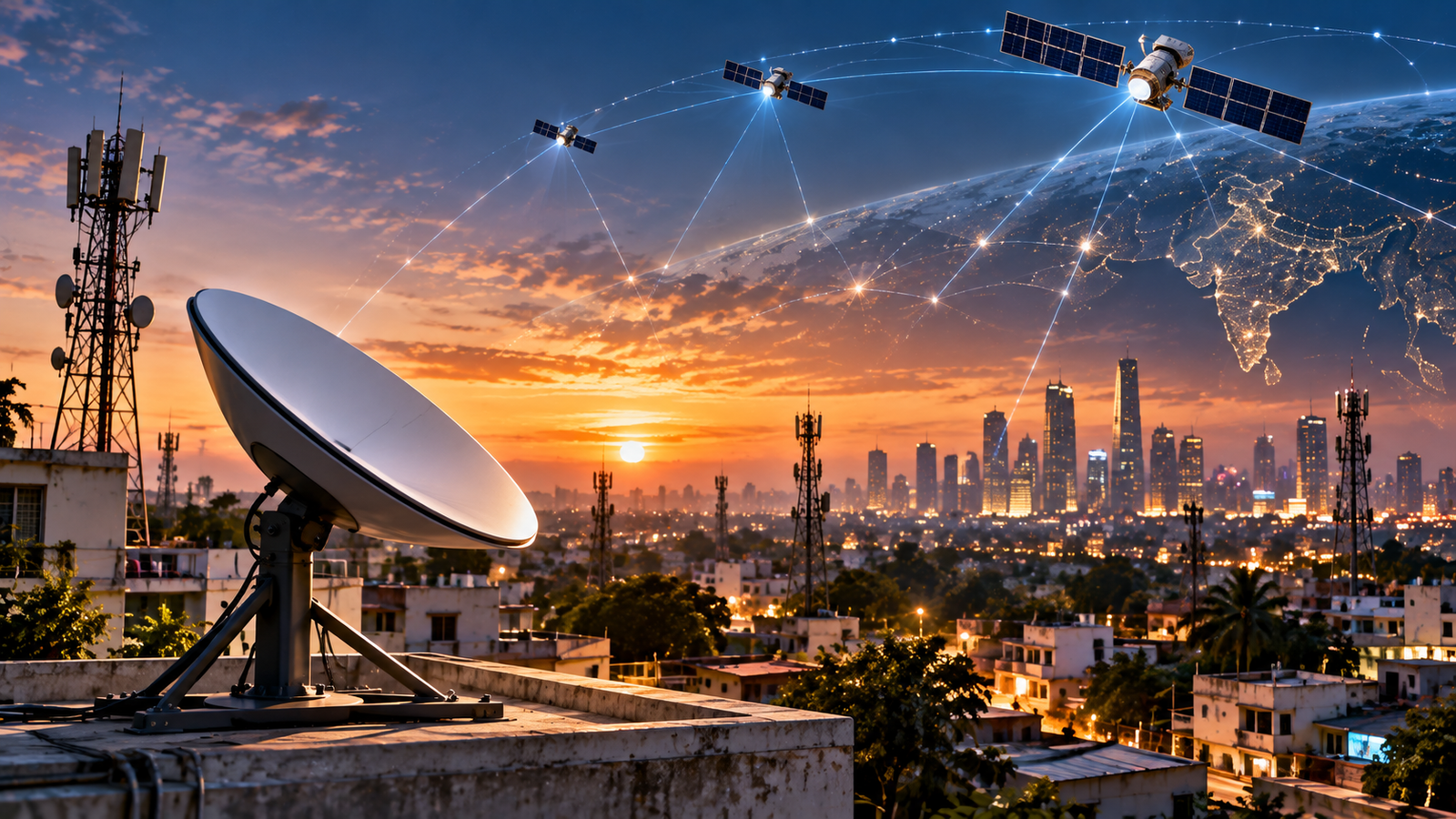
Starlink’s proposition is different. Low-Earth-orbit satellites can extend internet access to remote places without requiring fiber or cell towers along every route. However, satellite networks still need ground facilities, regulatory permissions and customer equipment, and their capacity and coverage differ from terrestrial systems.
Jio is also involved in satellite communications, making this competition more complex than a simple fight between an established cellular provider and a new satellite entrant. Bharti-backed OneWeb adds a further participant to the emerging sector.
The likely market will contain a combination of technologies. Fiber remains well suited to high-volume fixed traffic, cellular networks serve widespread mobility, and satellites may help cover difficult terrain or underserved locations. The degree of direct substitution remains uncertain.
How Jio’s proposed IPO fits into the story
Reuters reported that Jio Platforms was preparing a major public offering and targeting a valuation around $106 billion. That figure represents the reported intended valuation, not a confirmed final listing price or market capitalization after trading begins.
The IPO is relevant because future competition and subscriber economics affect how investors assess telecommunications businesses. The value of a network depends on revenue, customer retention, infrastructure spending and the ability to offer profitable services over time.
A separate Reuters Breakingviews analysis on October 12 discussed market expectations and a potential valuation nearer $102 billion. Different valuation figures reflect estimates or deal assumptions; they should not be presented as final results.
Why pricing is difficult for satellite broadband
Satellite internet uses spacecraft, launches, ground gateways, terminals and network operations. These require major upfront investment and continuing replacement and maintenance costs. Providers need sufficient paying customers or business users to justify those expenses.
Inexpensive mobile data makes India a challenging market for any service that relies on relatively costly customer hardware. A rural household might value connectivity highly, but the price still needs to fit its budget.
The real comparison is often availability rather than an identical price per gigabyte. A remote school or clinic with no reliable ground connection may benefit even if satellite service costs more than urban mobile data. In a city with strong fiber competition, satellite’s advantage may be much smaller.
Subsidies, institutional contracts or different packages could influence affordability, but none should be assumed for India until a provider announces verifiable terms. Advertising an invented introductory fee would mislead readers and undermine consumer trust.
What is satellite spectrum and why does India regulate it?
Wireless services transmit signals using radio spectrum, a limited resource shared among different applications. Satellite operators must coordinate frequencies, manage interference and comply with conditions that protect other communications systems.
For commercial service in India, companies need appropriate licenses, security compliance and spectrum assignment. India’s authorities have debated the pricing and assignment framework for satellite communications, while industry participants have previously disagreed on auction-based versus administrative allocation.
On October 9, Communications Minister Jyotiraditya Scindia said the pricing regime for satellite spectrum was nearing finalization, according to the Financial Express. He also said the licensed companies could start after completing the remaining security and regulatory steps.
These requirements help explain why possessing satellites and existing global customers does not automatically authorize service in every country. National rules cover public interest, communications security, spectrum coordination and commercial obligations.
The dispute over alleged favoritism
Musk used social media to allege that powerful interests were obstructing Starlink’s launch in India. Reuters reported his comments and said he did not provide evidence substantiating allegations of improper influence.
India’s telecom minister rejected suggestions that monopolies were being protected and said the country does not allow monopolies in any sector. The government described the satellite approval process as fair and said multiple applicants were awaiting equivalent final checks.
Reliance Jio did not provide a response to Reuters’ request for comment on Musk’s allegations. An absence of comment should not be interpreted as confirmation or denial of an allegation.
The accurate account is therefore of a dispute involving statements by Musk and counter-statements from government officials. It would be misleading to present the allegation as an established finding or to claim that the final approval process has been completed.
Starlink, OneWeb and Jio: what is different?
Starlink operates a large low-Earth-orbit satellite constellation and is seeking to reach Indian users directly with satellite broadband services. Eutelsat OneWeb is another satellite-network player with its own commercial partnerships and service models.
Jio’s satellite initiative is linked to an established telecom group with national distribution and substantial ground network experience. Different providers may target households, businesses, enterprise networks or remote institutional customers.
The existence of several licensed applicants can support future competition, but licenses alone do not guarantee equal coverage, pricing or operating capability. Those differences emerge only when equipment, service packages and commercial networks are deployed.
Could satellite internet improve rural connectivity?
India has remote mountain areas, islands and rural regions where extending fixed infrastructure can be costly. Satellite broadband can offer a potential alternative or backup connection for schools, medical centers, businesses and communities.
That opportunity should not be exaggerated as universal coverage without constraints. Clear sky visibility, terminal placement, network capacity, congestion, power and weather can affect performance. Equipment maintenance and affordability are also important.
In areas where existing cellular networks are reliable, consumers may prefer lower-cost terrestrial options. Satellite access could instead serve as a complement during emergencies, network failures or travel to locations beyond established coverage.
How this matters for Pakistan and South Asia
The India pricing announcement does not establish any new Starlink tariff or launch authorization in Pakistan. Pakistan maintains separate telecommunications rules, security requirements and licensing processes. A neighboring country’s potential offer cannot be treated as proof of local service availability.
However, the regional debate is relevant because South Asian markets share challenges involving rural access, difficult terrain and unequal broadband coverage. Satellite connectivity may contribute to more resilient communications where fiber and mobile infrastructure are costly to extend.
For Pakistan, the core questions remain service affordability, spectrum policy, licensing, consumer protection and practical device access. Any actual local rollout would need official verification from relevant Pakistani authorities and the provider.
What could happen to mobile and telecom companies?
Established mobile operators may face pressure to improve coverage or partner with satellite companies as the technology matures. Some may incorporate satellite access as a supplemental feature, while others could compete for enterprise and remote connectivity contracts.
But satellite broadband is not automatically a replacement for urban mobile networks. Towers, fiber backhaul and dense terrestrial capacity remain important for serving large numbers of users with consistent high data volumes.
Competitive pressure can benefit consumers through increased options, though actual affordability depends on infrastructure cost and regulation. The strongest evidence will come from published prices, independently measured performance and subscriber adoption.
For investors, the Starlink–Jio story is a reminder that long-term telecommunications valuations depend on more than headline subscriber numbers. Competition, capital intensity, operating margins and regulatory uncertainty all affect sustainable returns.
What happens next for Starlink in India?
The most important next milestones are final security clearance, spectrum assignment, an official commercial launch notice and published consumer packages. Once service begins, speeds, reliability, equipment cost and geographic availability can be independently evaluated.
Investors will also watch Jio’s IPO documentation for verified valuation, offer structure and risk disclosures. The launch and listing timetables are different processes and should not be conflated.
As of October 12, the central facts are a promise of affordable Starlink pricing, a market with powerful existing operators and final regulatory steps that remain incomplete. Actual consumer prices and the competitive effects are still unknown.
Frequently Asked Questions
What is Starlink India pricing in October 2026?
No official India subscription price was confirmed in the Reuters reporting reviewed for October 12. Elon Musk pledged affordability without publishing a specific tariff.
Has Starlink officially launched in India?
Starlink has preliminary permissions, but commercial service still requires final security compliance and spectrum assignment.
Why is Starlink competing with Reliance Jio?
Both are interested in India’s large digital connectivity market, although satellite and terrestrial services have different technical and commercial characteristics.
What valuation is being discussed for the Jio IPO?
Reuters reported an intended valuation of about $106 billion, while a separate analysis discussed an estimate nearer $102 billion. Neither is a final confirmed trading valuation.
Has India rejected Starlink’s application?
The reporting does not say India rejected it. Officials say Starlink and other licensed satellite operators still need to complete final regulatory steps.
Can Starlink replace India’s mobile networks?
No such outcome is established. Satellite connectivity may complement ground networks, especially in remote areas, while urban traffic still benefits from terrestrial capacity.
Is Starlink’s India pricing available in Pakistan?
No. The Indian pricing pledge does not establish Pakistani prices or regulatory authorization.
What should consumers watch next?
Look for official launch permission, equipment prices, monthly tariffs, coverage maps and independent performance testing.
About The Author