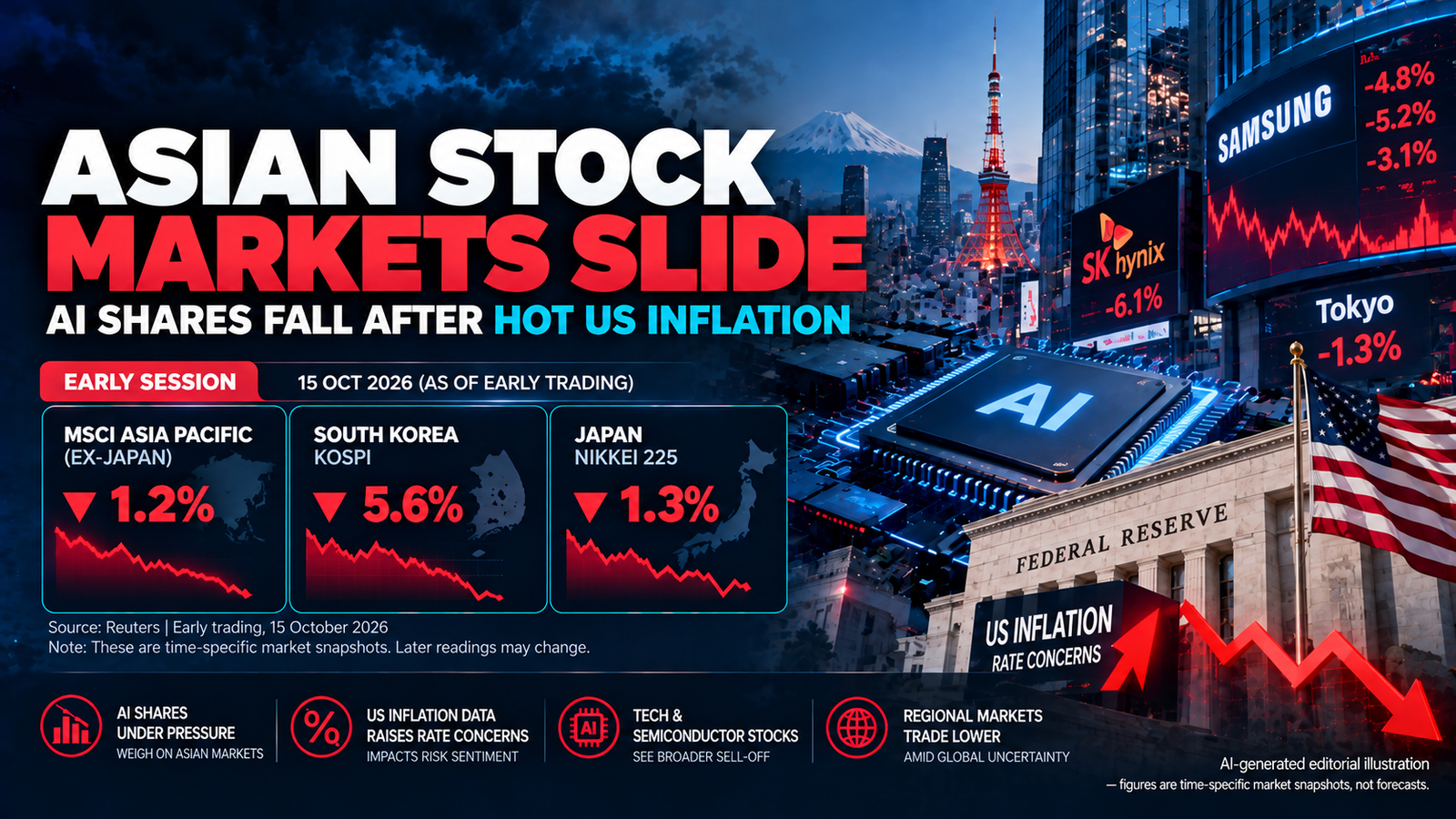
Asian markets moved lower on October 7 as investors weighed another rise in oil prices, elevated U.S. Treasury yields and growing concerns that inflation and borrowing costs could stay higher for longer. Reuters reported that MSCI’s broadest index of Asia-Pacific shares outside Japan slipped about 0.3%, even after major U.S. stock indexes had reached fresh highs in the previous session.
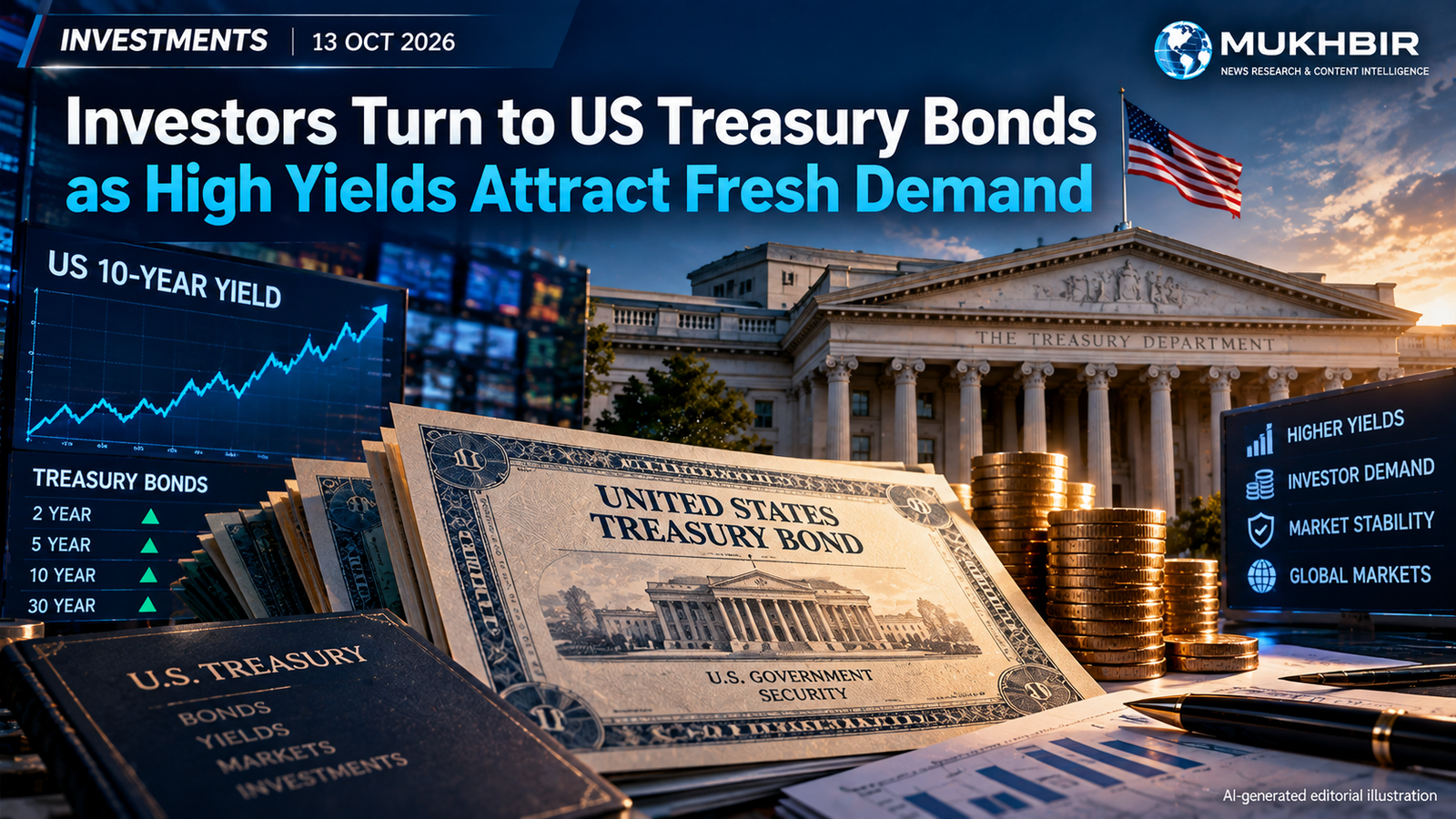
The shift in sentiment was driven largely by energy and bond markets. Brent crude traded above $100 a barrel as an approaching Gulf of Mexico storm threatened U.S. production while escalating Saudi-Houthi tensions raised fears of further disruption to Middle East supplies. At the same time, the U.S. 10-year Treasury yield remained above 5.3%, close to levels not seen in roughly 24 years.
The combination creates a difficult backdrop for investors. Higher oil prices can revive inflation pressure, while high government-bond yields raise the cost of capital across the economy and can make equities less attractive relative to fixed-income assets. That tension is particularly important for growth stocks and highly valued technology companies, even though Wall Street’s recent rally has remained supported by strong earnings and AI-related optimism.
For South Asia, including Pakistan, the story has an additional dimension. Sustained oil prices around or above $100 can increase import bills and inflation pressure in energy-dependent economies, while elevated U.S. yields can keep the dollar supported and make external financing more expensive. Those effects can influence currencies, sovereign borrowing costs and local equity sentiment even when the original market move starts in the United States or East Asia.
Asian Shares Lose Momentum After Wall Street Records
Reuters reported that Asian shares were slightly weaker on Wednesday despite another positive session on Wall Street. The S&P 500 had risen about 0.6% on Tuesday to a fresh record, while the Nasdaq also reached an all-time high. The Dow Jones Industrial Average gained about 0.5%.
That strength did not fully carry into Asia. Investors instead focused on the renewed rise in crude oil and on the persistence of high U.S. bond yields. Hong Kong and Singapore were among the weaker markets, while the broader Asia-Pacific benchmark outside Japan slipped.
This divergence shows how quickly market leadership can change. Strong U.S. corporate earnings and enthusiasm around technology may support major American indexes, but Asian markets are often more sensitive to energy costs, dollar moves and global funding conditions. When oil and yields rise together, that can outweigh the positive signal from U.S. equities.
Brent Crude Holds Above $100
Oil remained one of the biggest drivers of market sentiment. Reuters reported Brent crude around $101 a barrel, with prices supported by two separate supply risks. The first was a developing storm in the Gulf of Mexico that threatened offshore oil and gas infrastructure. The region produces a significant share of U.S. crude and natural gas, meaning severe weather can quickly affect production expectations.
The second source of pressure came from the Middle East. Intensifying attacks linked to Yemen’s Houthi movement raised concerns about Saudi infrastructure and wider regional energy flows. Even without a major confirmed loss of supply, geopolitical risk can push prices higher because traders add a premium for the possibility of disruption to production, refining or shipping.
Reuters also reported a decline in U.S. crude inventories, adding another supportive factor. Together, storm risk, geopolitical tension and lower inventories helped keep Brent above the psychologically important $100 level.
Why $100 Oil Matters for Investors
Oil above $100 matters far beyond the energy sector. It can increase transportation, manufacturing and logistics costs across the economy, while also raising household fuel and utility expenses. Those pressures can make inflation more persistent, which in turn can influence central-bank policy.
For equity investors, the impact differs by sector. Energy producers may benefit from higher prices, while airlines, transport companies, chemicals, manufacturers and consumer-facing businesses can face higher costs. Companies with weak pricing power may find it difficult to pass those costs on to customers, squeezing margins.
The inflation effect is especially important when interest rates are already high. If policymakers fear that another energy shock could push inflation higher, expectations for interest-rate cuts can be delayed and the probability of further tightening can rise. That is one reason oil and bond yields are being watched together rather than as separate stories.
U.S. Treasury Yields Remain Near Multi-Decade Highs
The U.S. bond market remains another source of pressure. Reuters reported the 10-year Treasury yield around 5.3%, close to multi-decade highs. Earlier in the week, the benchmark yield had climbed to levels last seen in the early 2000s.
High Treasury yields affect almost every major asset class because U.S. government bonds are a central reference point for global borrowing costs. When Treasury yields rise, corporate bonds, mortgages and other forms of credit can become more expensive. Higher risk-free yields can also reduce the relative appeal of equities, particularly shares valued on profits expected far into the future.
Investors are also watching large U.S. bond auctions. Strong demand can help stabilise yields, while weak demand can push them higher. A solid three-year auction provided some relief, but markets were still focused on a larger 10-year sale and on whether buyers would absorb additional government debt without demanding even higher returns.
The Federal Reserve Remains Central to the Outlook
Federal Reserve policy expectations continue to influence both bonds and equities. Markets are waiting for minutes from the Fed’s September meeting as well as comments from policymakers for clues about the path of interest rates.
Recent market pricing has shown reduced expectations of an immediate rate increase compared with earlier in the month, but investors still see a meaningful possibility of further tightening later in the year. That uncertainty helps explain why Treasury yields remain elevated even as some economic data have softened.
The key question is whether inflation continues to ease despite expensive energy. If oil remains near $100 or moves higher, the Fed may have less room to signal an easier policy stance. That would keep pressure on bond markets and could make equity valuations more difficult to justify.
Technology Shares Face a Complicated Backdrop
Technology and AI-linked stocks have been major drivers of Wall Street’s 2026 gains, but high bond yields create a challenge for the sector. Many fast-growing technology companies are valued heavily on future earnings, and those future cash flows become less valuable when discount rates rise.
So far, strong earnings and investor excitement around AI have helped offset that pressure. Nvidia and other large technology companies have continued to attract capital, while the Nasdaq has repeatedly set records. But the gap between strong technology shares and weaker parts of the market has become more visible.
If yields remain above 5% and oil continues to push inflation expectations higher, investors may become more selective. Companies with strong cash flow and proven earnings could remain resilient, while more speculative growth names may face greater valuation pressure.
European Markets Also Come Under Pressure
The weakness was not limited to Asia. Reuters reported European shares falling as investors dealt with higher oil prices and renewed fiscal concerns. The STOXX 600 moved lower, while the euro weakened toward a 17-month low.
France remained an important source of bond-market anxiety. Investors have been watching public finances and political uncertainty ahead of the 2027 presidential election. Wider French bond spreads indicate that markets are demanding a larger premium to hold French government debt relative to safer German bonds.
The combination of energy inflation and fiscal stress is particularly difficult for Europe because it can reduce the room available to both governments and central banks. Higher energy prices hurt consumers and companies, while high debt limits the ability of governments to cushion the impact through additional spending.
Dollar Strength Adds Pressure to Emerging Markets
The U.S. dollar strengthened as yields remained high, putting additional pressure on some emerging-market currencies. A stronger dollar can make dollar-denominated debt more expensive to service and increase the local-currency cost of imported commodities, including oil.
For emerging economies that rely heavily on energy imports, the combination of expensive oil and a strong dollar can be particularly challenging. It can widen trade deficits, raise inflation and complicate monetary policy. Central banks may be forced to keep rates higher for longer in order to protect their currencies and contain price pressure.
That dynamic can also affect foreign investment flows. When U.S. government bonds offer yields above 5%, international investors may demand higher returns before taking risk in emerging markets. This can reduce capital inflows into local bonds and equities.
Pakistan Relevance: Oil, Rupee and External Financing
Pakistan is especially sensitive to global energy prices because it imports a large share of its fuel needs. If Brent crude stays above $100 for a sustained period, the country could face additional pressure on its import bill and domestic fuel prices.
Higher oil prices can also feed into transport, electricity and food costs, making inflation harder to control. The impact depends on exchange rates, tax policy and how quickly international prices are passed through to consumers, but the direction of pressure is clear.
Elevated U.S. Treasury yields matter as well. Higher global borrowing costs can make sovereign financing more expensive and strengthen the dollar, which can put pressure on the rupee. For Pakistan’s stock market, banks and energy companies may respond differently, but the overall environment becomes more difficult when global risk-free yields are high and imported energy is expensive.
Business Impact
For businesses, the current market environment creates a three-way squeeze: higher energy costs, expensive financing and uncertain demand. Companies with large fuel bills or significant debt exposure may face the greatest pressure.
Exporters could benefit from currency movements in some cases, but they may also face weaker global demand if high rates slow economic activity. Import-dependent industries may see costs rise, especially if oil and the dollar strengthen at the same time.
Companies with strong balance sheets, low debt and the ability to pass on higher costs are likely to be better positioned. That distinction may become increasingly important for investors as the market moves away from broad optimism and toward more selective stock picking.
What Investors Are Watching Next
Several events could determine whether the current pressure becomes a deeper market move or simply a short-term pause. The first is the path of oil prices. A drop below $100 would ease some inflation concerns, while a move significantly higher could intensify pressure on bonds and equities.
The second is demand for U.S. Treasury auctions. Strong buying would suggest investors are comfortable with current yields, while weak auctions could push borrowing costs higher. The third is Federal Reserve communication, especially the September meeting minutes and upcoming speeches from policymakers.
Finally, investors will continue to watch corporate earnings. Strong results have helped keep U.S. equities resilient despite high yields. If earnings momentum weakens while borrowing costs remain elevated, market valuations could face a more serious test.
Overall Market Outlook
The October 7 market picture is defined by conflicting forces. U.S. equities remain close to record highs, supported by strong earnings and AI-related optimism, but energy prices and bond yields are creating a more difficult macroeconomic backdrop.
Asian and European markets are showing more caution, while emerging economies face additional risks from a stronger dollar and expensive imports. The result is a market environment where headline indexes can remain strong even as underlying financial conditions become tighter.
For investors, the key question is whether earnings growth can continue to offset the pressure from high yields and energy costs. If it can, global equities may remain resilient. If inflation rises again or bond yields push materially higher, risk assets could face a more volatile period.
FAQs
Why did Asian stocks fall on October 7?
Asian shares weakened as investors focused on oil prices above $100 a barrel, elevated U.S. Treasury yields and concerns that inflation and borrowing costs could remain high.
How high is Brent crude oil?
Brent crude traded around $101 a barrel on October 7, supported by Gulf of Mexico storm risks, Middle East tensions and lower U.S. crude inventories.
Why are U.S. Treasury yields important for stock markets?
Higher Treasury yields raise global borrowing costs and make bonds more attractive relative to equities, particularly highly valued growth stocks.
Are U.S. stocks also falling?
Not necessarily. The S&P 500 and Nasdaq had reached fresh records in the previous session, supported by earnings and technology-sector strength, even as Asian markets weakened.
How could $100 oil affect Pakistan?
Sustained high oil prices can increase Pakistan’s import bill, fuel inflation and put pressure on the rupee and domestic energy costs.
What is the Federal Reserve’s role in the market outlook?
Investors are watching whether the Fed keeps rates high or tightens further. Energy-driven inflation could reduce the central bank’s flexibility to ease policy.
Which sectors may benefit from higher oil prices?
Energy producers can benefit from higher crude prices, while transport, manufacturing and other fuel-intensive sectors may face higher costs.
What should investors watch next?
Key signals include oil prices, U.S. Treasury auctions, Federal Reserve communication, the U.S. dollar and corporate earnings.
About The Author