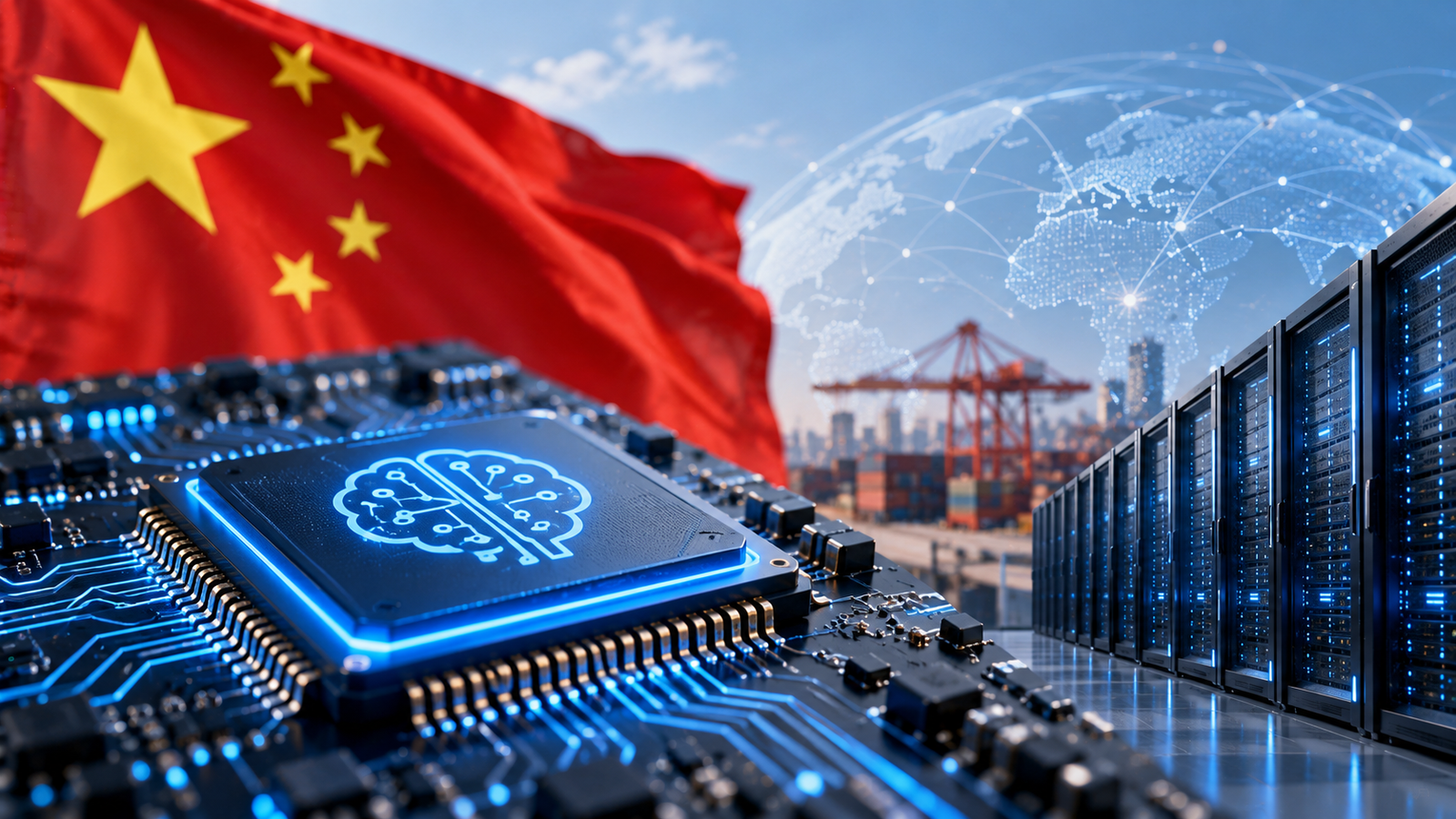
BEIJING, October 17, 2026 – China has proposed adding 23 artificial intelligence technologies to its catalogue of prohibited or restricted exports as part of a broader revision covering 40 strategic technologies. The proposal, announced by China’s Ministry of Commerce and Ministry of Science and Technology on October 16, targets sensitive technologies connected to AI models, autonomous agents, computing infrastructure and related systems.
The China AI export controls 2026 proposal also includes biotechnology and photovoltaic technologies. Public consultation is scheduled to remain open until November 15. Separately, Chinese authorities have introduced temporary pre-export registration requirements for covered technology transfers while the revision is being considered.
Reuters, Associated Press, Financial Times, Caixin and Chinese state news agency Xinhua covered the development. The distinction between the draft export-control list and the temporary registration measures already introduced is crucial: not all 40 proposed restrictions have been enacted as final bans.
What Did China Announce on October 16?
Two Chinese ministries jointly published a proposed update to the country’s Catalogue of Technologies Prohibited or Restricted from Export. The draft seeks to add 40 technologies across artificial intelligence, biomedicine and photovoltaic manufacturing, including 23 directly related to AI.
Xinhua reported that 14 technologies are proposed for prohibition and 26 for restricted export. These figures refer to the complete 40-item proposal, not to 14 AI technologies alone.
The ministries invited comments until November 15, 2026. The consultation may lead to adjustments before the revised catalogue takes final effect, meaning businesses should not interpret every draft category as an irreversible regulatory decision.
Authorities also announced interim registration arrangements applying to specified technology-export activities. These temporary measures are distinct from the outcome of the proposed longer-term catalogue revision.
China AI Export Controls 2026: Key Facts
Announcement: October 16, 2026. Ministries: Commerce and Science and Technology. Technologies in proposed revision: 40. AI-related technologies: 23. Biomedicine: 5. Photovoltaics: 12. Proposed prohibited categories: 14. Proposed restricted categories: 26. Public comment deadline: November 15, 2026. Temporary pre-export registration: announced for relevant covered transfers pending the revision.
A prohibited technology generally faces tighter limits on its transfer abroad, while a restricted technology may require approval or licensing. The exact treatment of an individual technology depends on the applicable legal text, definitions and final classifications.
Which Artificial Intelligence Technologies Are Covered?
Reuters said the proposal addresses large AI models, intelligent agents and computing clusters, described as foundational components of China’s AI industry. Other reporting also identifies advanced chip design and sensitive AI applications.
The draft includes technologies associated with models trained on sensitive information, certain highly capable AI systems and techniques that may have cybersecurity implications. Xinhua identified AI-driven malicious-code generation and modification among the technologies proposed for export prohibition, while AI-assisted vulnerability discovery appears among restricted technologies.
These are specific underlying technologies and know-how, not an announcement that every chatbot response, AI app or electronic device made in China will be blocked abroad.
Descriptions of very large model thresholds and other technical criteria should be checked against the final Chinese-language catalogue before a company decides its product is covered.
What Is the Difference Between a Ban and an Export Restriction?
A proposed prohibition would prevent certain covered technology exports if formally adopted as described. A restricted category can allow an export through prescribed licensing and approvals, depending on the relevant rules.
The difference matters because a headline claiming a blanket ban on Chinese AI would misrepresent the draft. China is proposing a targeted system for strategic technology transfers, and the treatment of different technologies is not identical.
A technology transfer can involve much more than shipping physical equipment. Licensing intellectual property, transferring technical knowledge or changing ownership of a controlled technology may also be relevant under the regulatory framework.
Businesses with cross-border research or corporate transactions should review official definitions rather than relying solely on summaries that use the word ‘export’ to mean physical shipments.
Are Open-Source AI Models Exempt?
Reuters and the Chinese policy explanations indicate that technology already available in the public domain through open-source release, academic publication or other recognised forms of public disclosure is generally excluded from the relevant technology controls.
The exemption is not necessarily unlimited. Financial Times reporting described special treatment for certain very large or high-performing systems and sensitive technologies, so commercial developers should not assume that applying an open-source label removes every possible obligation.
The scope also depends on what exactly is transferred. Access to publicly released model weights, proprietary training methods, sensitive datasets and undisclosed technical know-how can raise different legal questions.
China’s final published rules, rather than a company’s marketing description, will determine how the exemptions are interpreted and applied.
Can Foreign Users Still Access Chinese AI Services?
Reuters reported an important distinction between technology exports and access through application programming interfaces, websites, mobile applications and software-as-a-service platforms.
That means an overseas user visiting a Chinese AI service online is not necessarily receiving a restricted technology transfer merely by using the service. Underlying model ownership or certain sensitive capabilities moving abroad could be treated differently.
The distinction may allow Chinese developers, including companies such as DeepSeek and Alibaba, to keep providing international online services while regulators supervise transfers of strategic technology.
The proposal does not establish that all users outside China must stop using Chinese AI apps. Nor does it guarantee uninterrupted service under every future law or commercial arrangement.
Why Is China Tightening Oversight?
Chinese officials described the move as an effort to protect national security and prevent misuse as advanced technologies enter sensitive applications. The ministries said the review was routine and not directed at any particular country, region or company.
At the same time, international reporting places the announcement within a prolonged technology competition between China and the United States. Washington has imposed restrictions on access to some advanced semiconductors and other strategic technologies, while Beijing is increasingly focused on controlling sensitive domestic know-how.
Both contexts matter. A government’s stated national-security rationale can be reported alongside analysts’ assessment of geopolitical consequences without claiming that every measure explicitly targets the US.
The draft also reflects the difficulty of balancing domestic innovation, global business and concerns about powerful technology being misused.
The US–China AI Technology Competition
Advanced AI development depends on computing power, semiconductor supply chains, research, skilled engineers and access to data. Countries that control strategically important parts of that system have potential influence over global technology development.
US restrictions on advanced chips supplied to China have shaped the competitive environment for American companies such as Nvidia and Chinese alternatives. China’s proposal concerns a different part of the system: the outward transfer of Chinese technologies and intellectual property.
These measures may affect company strategy, foreign investment and cross-border partnerships, but their impact will vary according to the technology, licensing requirements and implementation.
The October 16 draft alone does not prove that a specific US company has lost a licence or that any named deal has been cancelled under the proposed final catalogue.
How Could DeepSeek and Alibaba Be Affected?
Chinese AI developers may need to review whether particular partnerships involve restricted technology transfers rather than standard access to hosted services. International expansion can involve model deployment, licensing, joint research or establishing computing operations abroad.
Reuters suggested that distinctions protecting ordinary API or hosted access could preserve important international business opportunities for large Chinese AI firms.
However, companies developing very large models or working with sensitive datasets could face additional scrutiny, depending on the eventual text and licensing decisions.
Neither DeepSeek nor Alibaba should be described as subject to a complete export ban merely because their names appear in news analysis of the policy.
Why Computing Clusters Matter
An AI computing cluster combines processors, networking equipment, storage and software to train or operate models at scale. The technical knowledge needed to build and manage such infrastructure can be strategically valuable.
The proposed controls recognise that competitive advantage may arise not only from individual chips but also from system architecture, operating methods and specialised software.
Export controls over such know-how could influence how overseas AI facilities are built or operated. Yet an actual commercial consequence requires evidence about a particular arrangement and whether it falls under a covered category.
Many data centres use globally available technologies; the proposal does not mean every server rack assembled in China will become prohibited for export.
What About Biotechnology and Solar Manufacturing?
The broader draft is not limited to artificial intelligence. Five biomedicine-related technologies and 12 photovoltaic technologies are included among the 40 proposed additions, according to published policy summaries.
The categories extend to areas such as cell and gene therapy, advanced medicines and production methods for solar materials and components. Xinhua identified specific manufacturing processes among the proposed restrictions.
These sectors affect global supply chains in medicine and clean energy. Nevertheless, the announcement concerns selected technologies and processes rather than a complete ban on Chinese solar panels or pharmaceutical products.
Importers and manufacturers will need to distinguish technical know-how exports from ordinary finished-goods trade.
Temporary Export Registration: What Is Already in Place?
Alongside the consultation, the ministries announced temporary registration management for relevant technology-export transactions. MLex and reporting on the official notice indicate this pre-export registration takes effect immediately while the revised catalogue is under consideration.
The interim requirement may apply to ownership transfers, licensing abroad and transactions changing foreign control over covered technology. Detailed obligations must be checked against the original announcement, including rules for transactions already in progress.
This is the operational part of the October 16 announcement that should not be dismissed as merely hypothetical. At the same time, a registration requirement is not identical to a final export prohibition.
Businesses involved in relevant technology transfers should obtain qualified legal advice rather than assume a press report supplies all compliance details.
Possible Implications for Global Startups
Startups often rely on partnerships, specialised research and international investment. Rules restricting certain technology transfers can affect corporate acquisitions, cross-border licensing or expansion into foreign markets.
Companies developing AI tools for ordinary consumers may face different exposure from those transferring proprietary large-model weights or sensitive technical systems. The distinction is especially important for investors evaluating cross-border deals.
A clearer regulatory framework could help identify which activities require approval, but additional paperwork may increase transaction costs or uncertainty for some businesses.
There is no evidence that all Chinese technology startups will be prevented from raising foreign investment or providing international products.
What Does This Mean for Pakistan and South Asia?
Pakistan and other South Asian markets increasingly use Chinese equipment, cloud infrastructure, smartphones and software. Changes in the global technology trade may eventually influence partnership structures, access to specialised AI systems or investment decisions.
However, the October 16 proposal does not establish a direct ban on AI services in Pakistan or a new local policy. Businesses in Pakistan should avoid assuming that normal use of a Chinese chatbot has suddenly become unlawful.
The most direct potential relevance would concern firms undertaking sensitive technology transfers, manufacturing partnerships or advanced AI research with entities subject to Chinese export rules.
For Mukhbir’s audience, this is an important global story because it concerns the future movement of advanced technologies across borders, with potential but not yet quantified regional business consequences.
How Could Export Controls Affect AI Research?
International AI research often depends on exchange of ideas, publications and shared tools. Restrictions on non-public technical methods could limit some forms of private technology collaboration, while exemptions for openly published material may preserve much academic activity.
Research groups should assess whether work involves controlled technical know-how or sensitive information. An international co-authored paper and a commercial transfer of proprietary technology are not necessarily treated in the same way.
The policy also raises longer-term questions about whether global AI research and industrial supply chains will become more fragmented across regulatory jurisdictions.
Those outcomes remain uncertain because the proposed list could change following consultation and licensing practices have not yet been fully established.
What Happens Before November 15?
Authorities have invited public comments on the draft until November 15, 2026. Stakeholders may seek clarification on the types of controlled technology, the scope of public-domain exemptions and the procedures for cross-border transfers.
After the consultation, ministries may revise or formally adopt the updated catalogue. Businesses should watch for an authoritative final notice, implementation dates and detailed compliance guidance.
Reporting should distinguish these future decisions from the temporary registration requirements already announced. Later policy changes would warrant an updated article with the final legal text.
Conclusion
China’s proposed export controls on 23 AI technologies form part of a wider effort to oversee 40 strategically significant technologies across AI, biomedicine and photovoltaics.
The announcement demonstrates the growing importance of advanced models, intelligent agents and computing infrastructure in international technology policy. It also comes amid intense competition over chips, computing power and intellectual property.
The proposed catalogue remains open for comment through November 15, while temporary registration requirements have been introduced for relevant technology exports. That distinction is central to understanding what has changed now and what may change next.
Frequently Asked Questions
What are the China AI export controls 2026?
They are proposed additions to China’s prohibited and restricted technology export catalogue, including 23 AI-related technologies within a 40-item draft.
When were the proposed controls announced?
China’s Ministry of Commerce and Ministry of Science and Technology announced the proposal on October 16, 2026.
How many technologies are included?
Forty in total: 23 in AI, five in biomedicine and 12 in photovoltaics, according to the official and specialist reporting.
Does China plan to ban all AI exports?
No. The proposal differentiates between prohibited and restricted technologies, and public-domain exemptions and other arrangements apply.
Can users outside China still access Chinese AI chatbots?
Ordinary access through websites, APIs and hosted services is distinguished from covered transfers of underlying technology, according to Reuters.
When does the consultation end?
Public comments are being accepted until November 15, 2026.
Are any rules already in effect?
Temporary pre-export registration requirements have been introduced for relevant covered technology transfers, separate from the proposed final catalogue.
Does the announcement directly ban Chinese AI in Pakistan?
No such Pakistan-specific restriction is established by the sources reviewed.
About The Author