NEW YORK/LONDON, October 13, 2026 — Investors are returning to United States government bonds after a prolonged period of rising yields made Treasuries more attractive to some large fund managers. New reporting from the Financial Times highlights substantial inflows into US government bond funds, while Reuters describes bonds finding renewed demand as global stock markets came under pressure.
The US Treasury bond yields 2026 story reflects a changing investment calculation: investors can earn higher interest income from government securities than they could during much of the previous decade, but they still face the possibility of further price losses if market yields rise again.
The shift comes amid concerns about inflation, public debt, geopolitical tensions and the valuation of artificial intelligence-related stocks. Some institutions see opportunities to secure attractive yields, while others remain wary of price volatility, especially in longer-maturity bonds.
The development is not a recommendation that all investors purchase Treasuries. It is a news story about changes in market demand and the trade-offs between income, credit risk, interest-rate risk and currency exposure.
Why Are Investors Returning to US Treasury Bonds?
Higher yields are one major reason. Bond investors receive promised coupon payments on many Treasury securities and can estimate the income available if they buy and hold a bond to its maturity, assuming the US government makes the contractual payments.
The Financial Times reported on October 13 that nearly $14 billion had flowed into US government bond funds since the beginning of October. It also described a record $59.3 billion of inflows during the third quarter, indicating demand was building before the latest market volatility.
Those figures are fund-flow estimates from the cited reporting, not a count of every Treasury transaction worldwide. Investors also purchase US government securities directly and through other structures, so fund flows are only one indication of appetite.
Another important factor is the relative appeal of fixed income when equity prices are unsettled. Investors often reconsider how much market volatility they are willing to accept when the potential income from bonds rises.
What Are US Treasury Bonds?
US Treasuries are debt securities issued by the federal government of the United States to finance public obligations. They are widely used by banks, pension funds, insurers, foreign central banks and individual investors.
Treasury bills generally mature in a year or less, while notes cover intermediate maturities and bonds usually refer to longer-term instruments. Each category has different exposure to interest-rate changes.
Many Treasury notes and bonds pay coupons at scheduled intervals. The price investors pay in the secondary market determines their effective yield, which can be above or below the original coupon rate.
These instruments are commonly used as benchmarks for other borrowing costs. Movements in US Treasury yields can influence mortgage rates, corporate bonds and asset valuations in markets around the world.
Where Are Yields in October 2026?
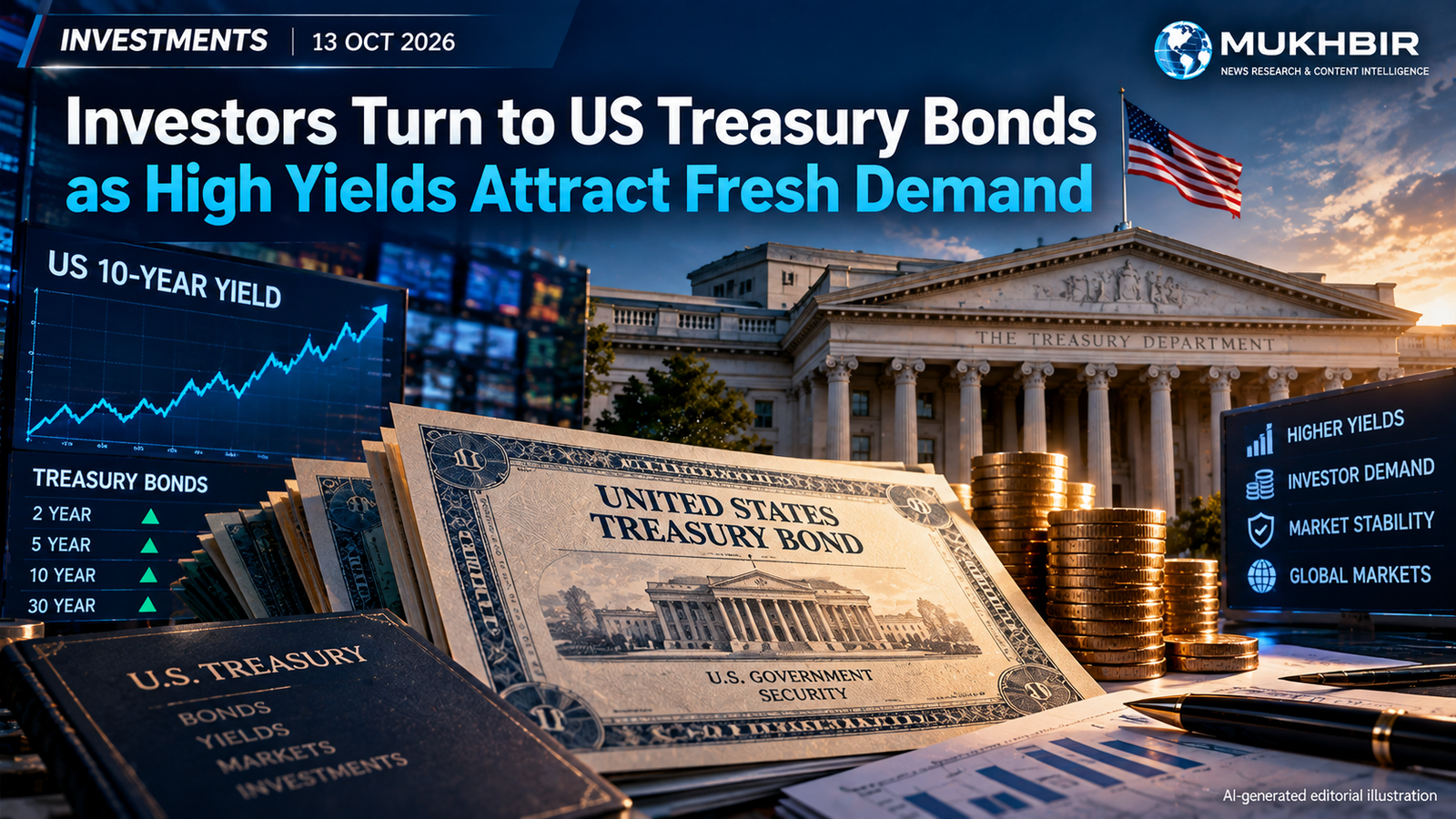
The Financial Times reported that the benchmark 10-year Treasury yield had recently reached around 5.24%, its highest level in approximately 24 years. Reuters reported the yield easing to roughly 5.19% on October 13 as demand for bonds increased.
The figures refer to different reporting moments and are not contradictory: Treasury prices and yields move during trading, and short-term demand can change the market rate.
These levels help explain why some fund managers are increasingly interested in bonds. A higher yield offers more income on new purchases than a lower yield would, all else equal.
However, yields shown in news reports are market observations rather than a guaranteed rate available to every buyer. Transaction timing, maturity, bond price and trading costs affect an investor’s actual return.
Why Bond Prices and Yields Move in Opposite Directions
The relationship between bond prices and yields is central to understanding the current market. When a bond’s market price falls, its yield generally rises because its future payments are being purchased at a lower price.
Conversely, when demand pushes the price higher, the effective yield usually falls. That is why a bond-market rally can be accompanied by declining yields.
For example, an investor buying an older fixed-coupon bond at a discount may earn more than the stated coupon rate if the security is held to maturity and all payments are made. Someone who already owns the bond, however, could have an unrealized price loss.
This difference between new buyers and existing holders helps explain the mixed reactions to the high-yield environment: attractive entry points for some investors reflect price declines suffered by others.
What Is Driving the Rise in Treasury Yields?
Several broad forces can push yields higher. Investors may demand extra compensation for the possibility of inflation reducing the purchasing power of fixed payments.
Expectations about Federal Reserve policy also matter. If traders think interest rates will remain elevated for longer, yields on some government securities may adjust upward.
US fiscal policy and the supply of new government debt are additional considerations. Heavy borrowing creates a continuing need to find buyers, while uncertainty about future budget balances can influence the premium investors require.
Geopolitical and energy-price developments add volatility because they can affect inflation forecasts, economic confidence and demand for assets viewed as more defensive.
It would be inaccurate to say any single factor fully explains every movement. Treasury yields respond continuously to new information and changing investor positions.
Why Fund Managers Are Interested Now
The Financial Times described institutions seeking to secure high yields after a prolonged government-bond selloff. Managers cited in the report include major global investment firms that are reassessing fixed-income opportunities.
For pension funds and insurers, bonds can help align expected future payments with long-term liabilities. For a diversified investment portfolio, government debt may offer income and a different pattern of price movements from shares.
The attractiveness depends on an institution’s investment goals. A fund managing short-term cash needs may use different maturities from a pension plan seeking to match obligations decades ahead.
Some managers are reportedly more comfortable with maturities up to around 10 years than with the longest-dated issues, reflecting concern that rates could rise further. That is a market observation, not a recommendation for a particular portfolio.
Why Longer-Term Treasury Bonds Carry Additional Risk
Longer-dated bonds are especially sensitive to changes in market interest rates. Financial professionals refer to this sensitivity as duration.
When yields rise, prices of longer-duration securities can fall more sharply than those of comparable short-maturity instruments. The reverse may occur when yields decline.
An investor who needs to sell before maturity could therefore realize a loss even in a US government bond. Holding to maturity changes the significance of day-to-day price swings, but it does not eliminate inflation, currency or opportunity costs.
Long bonds also depend on distant economic assumptions. Future inflation, monetary policy and borrowing demand are difficult to forecast, especially when fiscal and geopolitical risks remain elevated.
How Inflation Changes the Investment Calculation
Nominal Treasury yields describe the interest return in dollar terms before adjusting for inflation. Real yields account for changes in purchasing power.
The Financial Times cited market inflation expectations of roughly 2.35% in its analysis, suggesting that some Treasuries may offer a meaningful positive inflation-adjusted return if those expectations prove accurate.
This is an estimate, not a guaranteed real return. Actual inflation can be higher or lower than investors expect when the securities are purchased.
Inflation-linked Treasury Inflation-Protected Securities, or TIPS, provide a different structure because their principal adjusts according to specified inflation measures. They can still fluctuate in market value.
Investors deciding among nominal bonds, inflation-linked debt and other assets must therefore consider their own exposure to inflation rather than looking only at the headline interest rate.
What Happened to Asian Stocks on October 13?
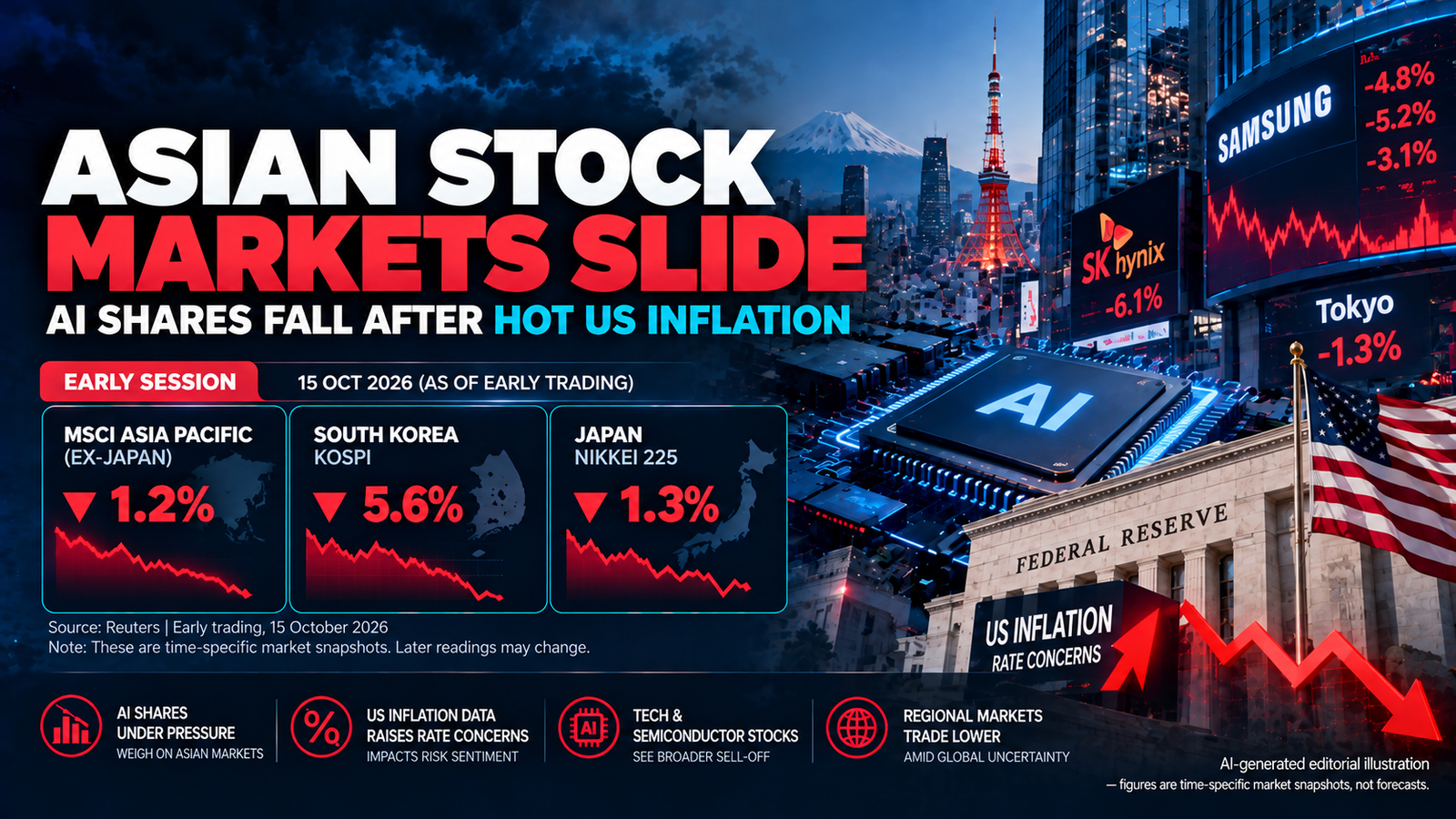
Reuters reported that Asian equities fell sharply as investors reassessed expensive technology shares and the outlook for the AI investment boom. South Korean semiconductor stocks were among the hardest hit.
The market weakness encouraged demand for defensive assets, including government bonds. Reuters noted that benchmark US Treasury yields eased while shares were under pressure.
This reaction illustrates how bonds can attract interest when equities decline. Yet their ability to offset stock losses is not constant: rising inflation or changes in interest-rate expectations can pressure stocks and bonds at the same time.
The Asian market selloff is useful context, but the Treasury fund inflows described by the Financial Times are a broader development and should not be attributed solely to one trading session.
What Does the Federal Reserve Have to Do With This?
The US Federal Reserve influences short-term interest rates through monetary policy, which in turn affects market expectations for future borrowing costs.
Longer-dated Treasury yields are also shaped by inflation expectations, economic growth, risk premiums and government-bond supply. They do not simply move one-for-one with the Fed’s current policy rate.
Investors are watching forthcoming US inflation figures and the central bank’s communications for indications of whether rates might stay higher for longer.
A surprisingly strong inflation report could change market expectations and increase yields. Weaker inflation or rising concern about growth could have a different effect.
Because economic releases and policymaker statements can shift markets quickly, articles about today’s yields should carry a clear date and avoid describing a temporary price as permanent.
Are Treasuries a Safe-Haven Investment?
US government securities are widely regarded as highly liquid assets with low conventional credit risk in dollar terms. That reputation helps explain their role in international finance and why they may attract demand in turbulent periods.
But safe haven does not mean risk-free. Treasury prices fluctuate, and investors can lose money on sales before maturity. Inflation can also erode the value of future payments.
For investors outside the United States, exchange rates create another major risk. A bond may perform well in dollars while producing a different return when converted into the investor’s home currency.
Market liquidity is usually substantial, but it can become more difficult during periods of severe stress. Financial stability analysis should therefore distinguish credit quality from price, liquidity and currency risks.
What Do Higher Treasury Yields Mean for Global Markets?
US Treasury yields are used as reference rates across international financial markets. Higher yields may influence how investors value equities, corporate debt and investments in emerging economies.
When US government bonds offer more income, some investors may become less willing to take additional risks unless other assets offer sufficient compensation.
Higher global borrowing costs can also affect companies considering bond issuance, real estate projects, infrastructure spending and major technology investments.
At the same time, demand for Treasuries can support bond prices and reduce yields, illustrating how financial conditions adjust as investors rebalance portfolios.
The international consequences depend on capital flows, exchange rates, inflation and local economic policies. They should not be reduced to a simple claim that higher US yields automatically damage every other market.
Pakistan and South Asia: What Is the Relevance?
The immediate story is about US dollar-denominated government bonds and the institutions investing in them. There is no evidence in the cited reports that Pakistani bond prices changed specifically because of the October 13 fund-flow news.
Nevertheless, developments in US Treasury yields can influence global financing benchmarks and the attractiveness of international assets. Countries and businesses seeking foreign financing may be affected indirectly when global borrowing conditions shift.
For Pakistani investors evaluating dollar-based assets, the exchange rate between the rupee and the dollar is a crucial additional variable. Legal access, transaction costs and tax treatment also depend on the investor and relevant rules.
South Asian economies may feel broader effects through capital flows, sovereign borrowing costs or changes in investor appetite for emerging-market securities. These are possible channels of transmission, not confirmed immediate outcomes.
What Should Investors Watch Next?
Financial markets are paying close attention to upcoming US inflation data, Federal Reserve guidance, Treasury auctions and new information about federal borrowing requirements.
Investors will also monitor whether fund inflows continue, whether higher yields attract sustained buying and whether equity-market volatility changes asset-allocation decisions.
A decline in yields can generate capital gains for some existing bondholders, while a further rise may create losses for those needing to sell. Neither direction is assured.
For readers, the most useful distinction is between the yield available when a bond is purchased and the return ultimately realized after price movements, inflation, currency changes and costs.
Conclusion
US Treasury bonds are drawing fresh interest in October 2026 after a sustained selloff lifted yields to levels not seen for decades. The Financial Times reported substantial fund inflows, while Reuters described bonds finding support during an Asian equity-market downturn.
The development highlights why fixed-income markets matter to the global investment outlook. Higher income can appeal to new buyers, but longer-term government debt remains sensitive to inflation, interest-rate expectations and fiscal conditions.
Investors should not confuse strong demand with a guarantee that Treasury prices will rise. The core news is that institutions are reassessing US government bonds as yields remain elevated and global markets become more volatile.
Frequently Asked Questions
Why are investors buying US Treasury bonds in October 2026?
Higher yields have increased the income available on new purchases, while market volatility has encouraged some investors to seek government bonds.
How high is the US 10-year Treasury yield?
The Financial Times cited a recent level around 5.24%, while Reuters reported approximately 5.19% on October 13. Yields fluctuate during trading.
How much money has entered US government bond funds?
The Financial Times reported nearly $14 billion of inflows since the start of October and a record $59.3 billion during the third quarter.
Do Treasury prices rise when yields rise?
Generally no. Existing fixed-rate bond prices and market yields usually move in opposite directions.
Are US Treasuries risk-free?
No. They have low conventional credit risk in dollar terms but carry interest-rate, inflation and, for foreign investors, currency risks.
Why do long-term Treasury bonds move more sharply?
Their longer duration makes market prices more sensitive to changes in yields.
Does this directly affect investors in Pakistan?
There is no confirmed immediate Pakistan-specific effect in the cited reports. Indirect impacts can arise through dollar exchange rates and global financing conditions.
What should readers monitor next?
US inflation releases, Treasury yields, central-bank guidance, new debt issuance and continued bond-fund flows.
About The Author