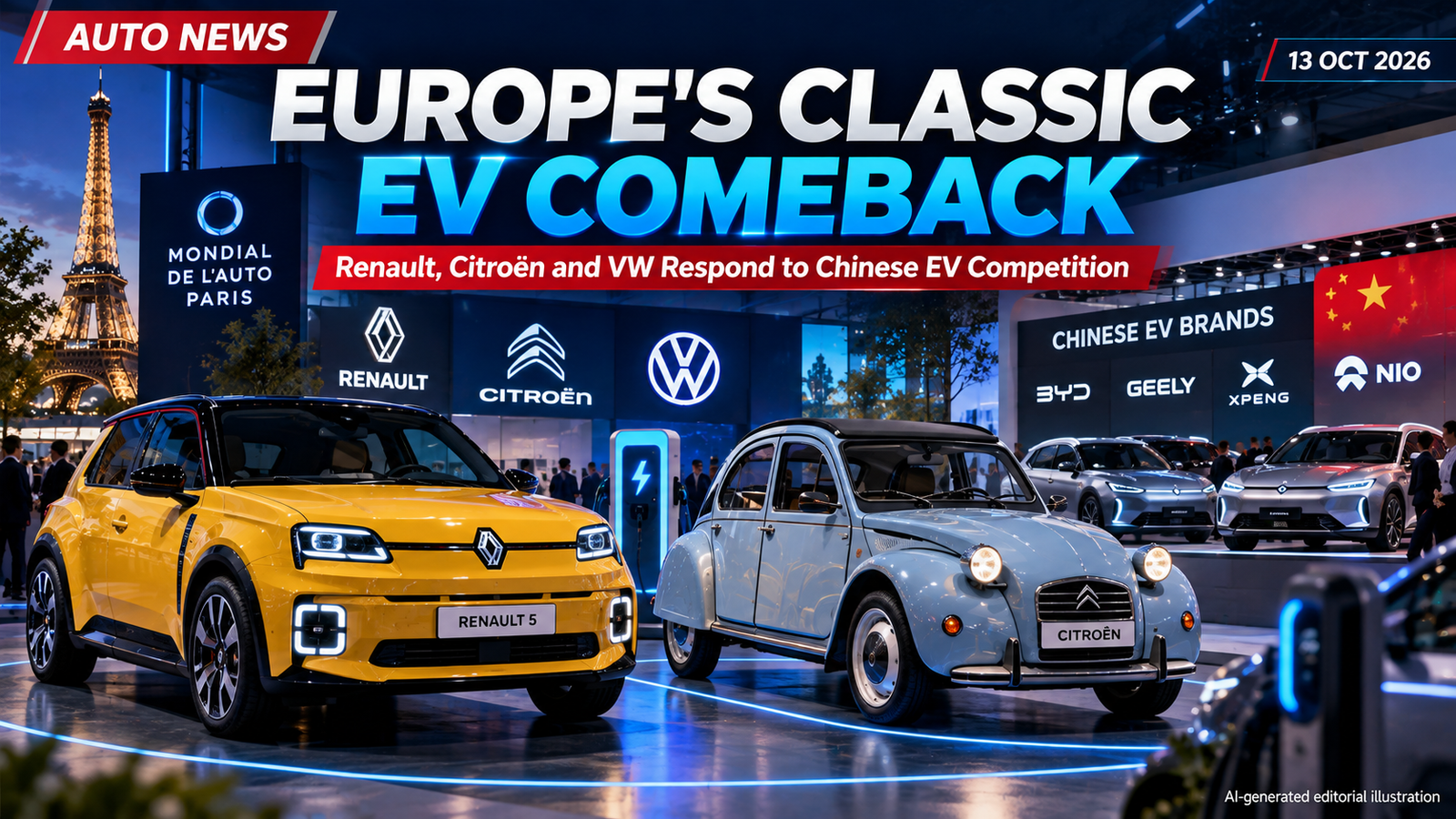
PARIS, October 13, 2026 — European automakers are turning to well-known designs from their past as they face growing competition from Chinese electric vehicle manufacturers. Renault, Stellantis-owned Citroën and Volkswagen are promoting modern electric cars inspired by familiar models, hoping brand history will offer an advantage in a crowded and increasingly price-sensitive market.
The European classic electric cars 2026 story gained fresh attention at the Paris Motor Show, where manufacturers highlighted electric versions and concepts linked to iconic names such as the Renault 5 and Citroën 2CV. Reuters reported on October 13 that automakers are using nostalgic design to reconnect with buyers while also attempting to improve affordability and technical competitiveness.
The strategy is not a substitute for strong battery performance, charging, software or price. Chinese companies including BYD and Geely have increased their European presence, forcing established brands to rethink both how their cars look and how much value they deliver.
Why Are European Automakers Bringing Back Classic Cars?
Automakers spend years building a recognizable design language. A vehicle name or silhouette associated with an earlier generation can create familiarity even when the new product has very different mechanical technology.
Renault’s approach illustrates this. Its modern electric Renault 5 evokes the compact hatchback that became a familiar sight on European roads. The company is attempting to bring that recognizable character into an era defined by batteries, software and urban electric mobility.
Stellantis has presented a Citroën 2CV-inspired concept, showing how another much-loved European name might be reinterpreted as an affordable electric car. Volkswagen has also linked forthcoming electric small-car ambitions with long-established model identities.
The commercial question is whether those associations persuade consumers when rival vehicles have attractive prices, long feature lists and increasingly competitive charging performance.
What Happened at the Paris Motor Show 2026?
The Paris Motor Show opened on October 12 with European and Chinese companies competing for attention. Media-day displays placed retro-inspired concepts alongside newer electric and plug-in hybrid vehicles from fast-growing competitors.
Reuters reported that the 2026 event included Citroën’s new electric 2CV concept, a conspicuous illustration of the industry’s move toward historical designs. The show also featured Renault’s electric R5 Turbo 3E, a specialist revival of a performance icon.
The two examples serve different audiences. A small, potentially low-cost 2CV-inspired car is intended to demonstrate affordable mobility, while the R5 Turbo 3E plays on sporting heritage. They should not be described as products with identical pricing, production timelines or market purposes.
Many auto-show vehicles are concepts rather than models already on sale. Readers should distinguish design previews from confirmed production vehicles with published specifications and delivery dates.
Renault 5: Nostalgia Meets Everyday Electric Driving
The electric Renault 5 has become an important example of how a heritage-inspired design can work commercially. It draws visual inspiration from the original Renault 5 while using a contemporary electric powertrain and modern safety and connectivity systems.
According to Reuters, the model has helped strengthen Renault’s recent performance in Europe’s electric-car market. Its success provides evidence that some buyers value the combination of familiar styling and up-to-date usability.
Design recognition can help make a new vehicle stand out, particularly in the small-car market where buyers face a wide choice of similar-looking models. However, buyers still assess affordability, daily range, charging access and running costs.
A revived name alone cannot ensure long-term success. Product quality and the ownership experience ultimately determine whether initial enthusiasm turns into repeat demand.
Citroën 2CV Concept: A Possible Return to Affordable Motoring
The original Citroën 2CV gained a reputation for simple, practical transportation. Stellantis is drawing on that heritage to signal its interest in lower-cost electric vehicles suitable for European city driving.
Reuters reported on October 11 that Stellantis presented an electric concept inspired by the 2CV at a pre-show event. The company envisages a European-made, low-cost electric model around 2028, aligned with an emerging small-vehicle category.
The design is a concept and should not be reported as a confirmed mass-market launch with finalized specifications or a guaranteed price. Features, production plans and timing may change.
The appeal of the concept lies in the possibility of a simple electric car that does not try to compete with larger, more expensive vehicles on every specification. Whether it can deliver sufficiently low costs remains an open business challenge.
Volkswagen and the Power of Familiar Model Names
Volkswagen is also highlighting affordable electric cars as part of its wider transition. The company has an extensive history of small European models, giving it opportunities to connect modern EVs with identities consumers already know.
Its small-car plans sit within a larger restructuring effort and a competitive response to Chinese manufacturers. Volkswagen executives have emphasized the need for a supportive European industrial environment while continuing to develop products consumers can afford.
A familiar model badge may reduce the sense of uncertainty around a new electric car, but it does not answer questions about battery durability, service support or charging convenience.
The broader lesson across these brands is that design heritage becomes valuable only when paired with a compelling modern product.
How Strong Is Chinese EV Competition in Europe?
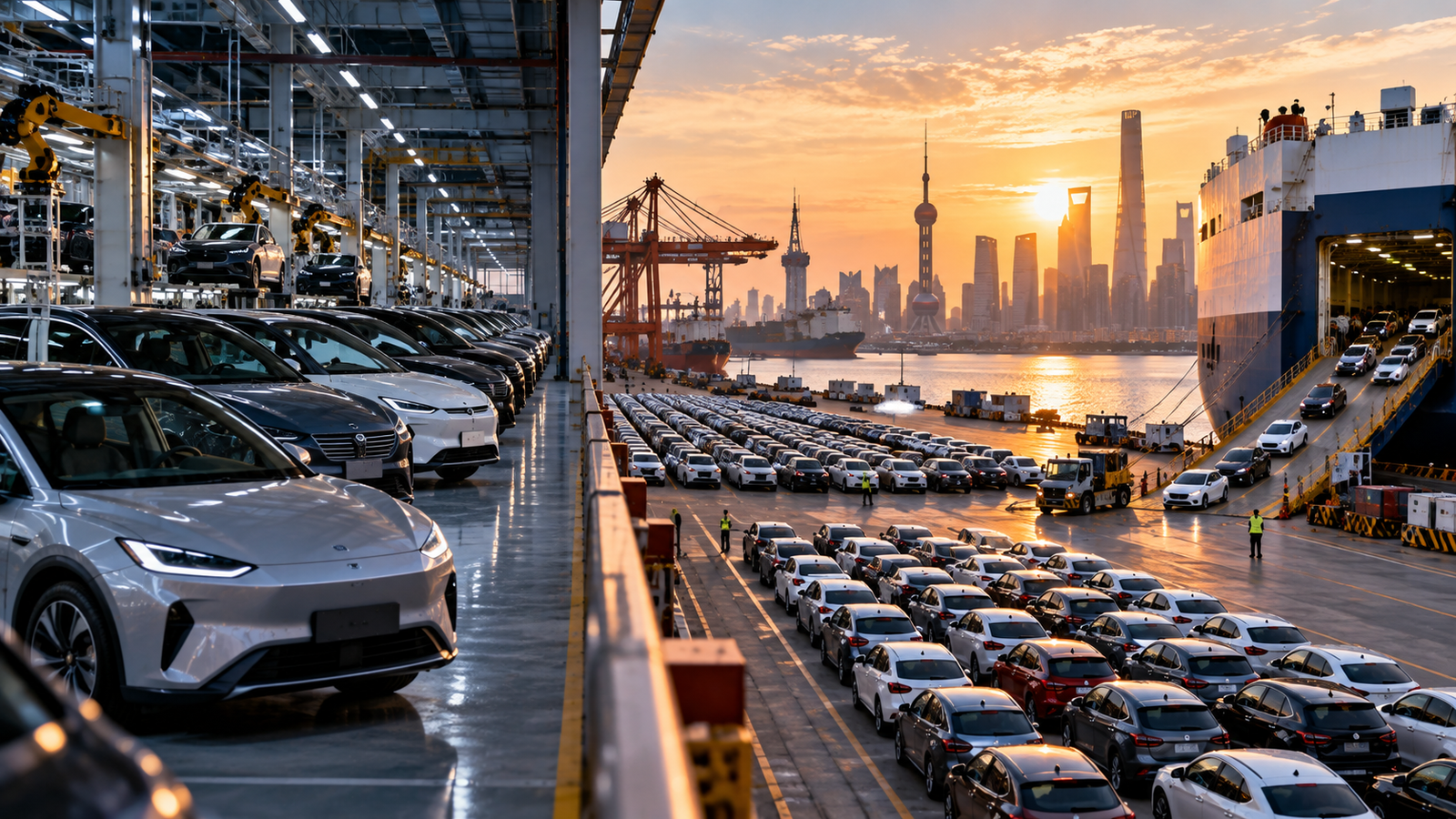
China’s automotive industry has expanded quickly into foreign markets, offering battery-electric and plug-in hybrid vehicles across different price points. BYD, Geely and other Chinese groups are increasing consumer choice and changing competitive expectations.
Reuters cited Schmidt Automotive Research estimates showing Chinese manufacturers with nearly 11% of the European electric-vehicle market in the second quarter of 2026. Such market-share figures depend on the definition and geography used and should not be applied automatically to all vehicle sales.
The Paris Motor Show also highlighted the scale of China’s participation, with numerous Chinese manufacturers displaying models and advertising heavily around the event.
For European brands, the challenge is no longer only to create electric vehicles. It is to offer distinctive products that compete on software, charging, efficiency, warranty coverage, distribution and value for money.
Why Chinese Automakers Have an Advantage in Some Segments
Several Chinese manufacturers entered electric mobility with supply-chain strengths in batteries, electronics and integrated manufacturing. Competition in their domestic market has encouraged rapid model development and attractive feature packages.
In Europe, this may translate into vehicles that are relatively inexpensive or technologically sophisticated compared with some rivals. The balance varies between brands, vehicle classes and countries.
Established European manufacturers retain other strengths, including dealer networks, service infrastructure, brand recognition and a long history of safety and engineering development.
It is therefore too simplistic to describe the market as a certain win for either side. Buyers benefit from comparing specific vehicles rather than assuming an entire country of origin determines quality.
Electric-Car Affordability Remains Crucial
A major barrier to electric-car adoption is the upfront purchase price. Government incentives, financing terms, battery size and manufacturing costs can all influence whether a small EV is truly accessible.
Retro styling may attract attention, but manufacturers still need to keep prices within reach of the customers they are targeting. This is particularly difficult when production, labor and regulatory compliance costs differ substantially across regions.
Stellantis has emphasized the opportunity for an affordable European-made EV, while Renault’s smaller electric models illustrate another attempt to serve buyers beyond the premium segment.
For consumers, the relevant comparison is the total cost of ownership, including home or public charging, insurance, maintenance and depreciation, rather than the headline sticker price alone.
The European Union’s Role in the Competition
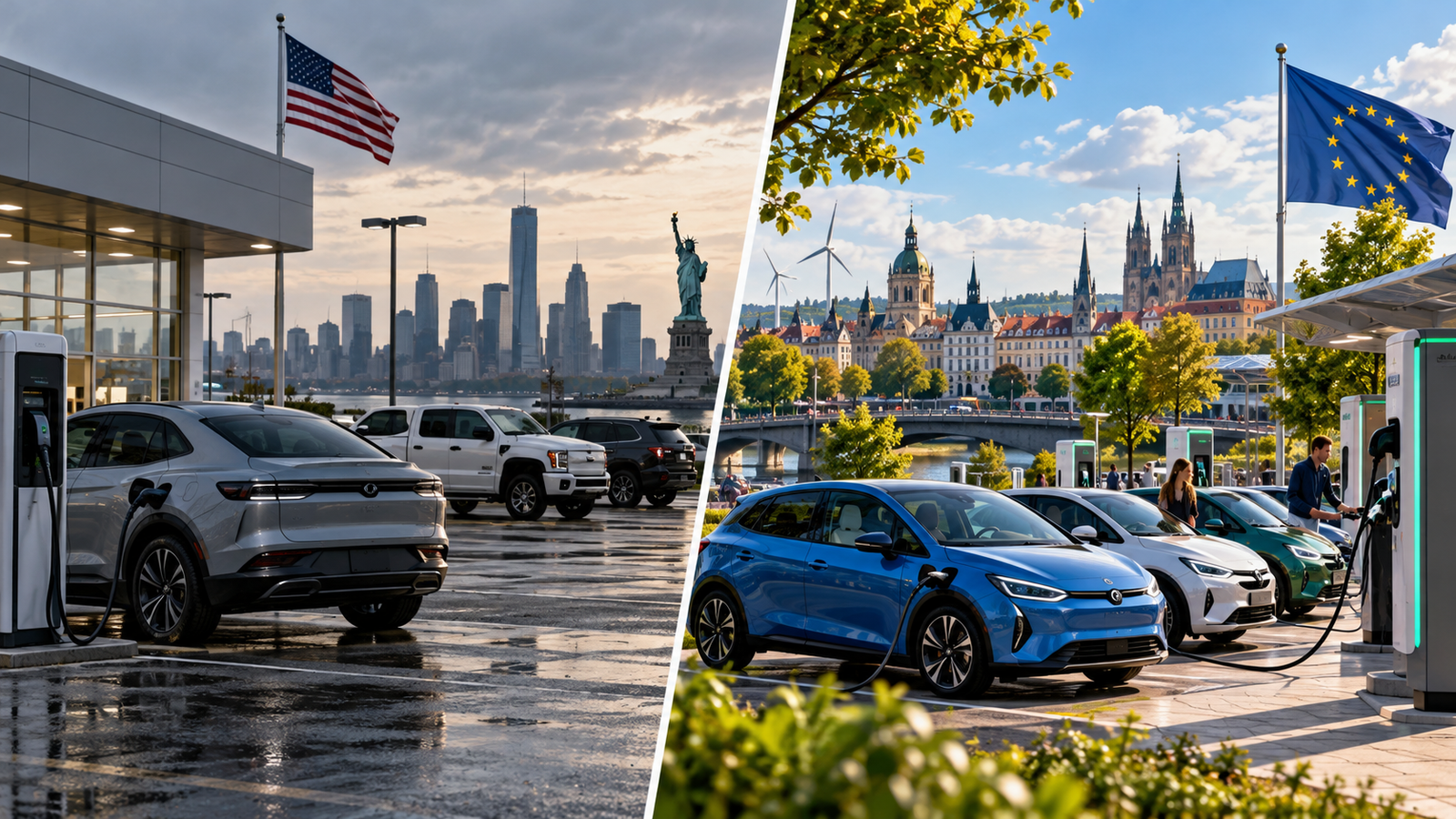
European policymakers are responding to pressure on domestic manufacturers with debates about trade rules, industrial incentives and local production. These policies can affect costs and investment decisions across the automotive supply chain.
Reuters reported on October 12 that the European Union and China had agreed on a framework intended to limit Chinese hybrid imports, with further implementation details still being discussed.
Such measures are distinct from the retro-EV design strategy. One addresses trade conditions, while the other addresses the products manufacturers believe consumers will buy.
Policies can buy time for companies to adapt, but they do not replace the need for competitive vehicles. Future market results will depend on consumer demand and actual product delivery.
Is Nostalgia Enough to Win EV Buyers?
Analysts and designers cited by Reuters caution that nostalgia has limits. A familiar design can create an emotional connection, yet younger buyers may have no memory of the original model.
Electric cars are also judged on modern practical requirements. Drivers expect reliable charging, useful range, safety technology, responsive software and repairability.
This creates a delicate balance for design teams. If they copy too much of the original car, they may limit practicality; if they change too much, they risk losing the visual identity that makes the revival meaningful.
Strong retro-inspired models therefore combine a recognizable character with modern engineering instead of treating historical styling as the entire product proposition.
What Does This Mean for the Global Auto Industry?
Europe’s strategy reflects a wider question for carmakers everywhere: how can established brands stand out as new EV producers improve technology and expand internationally?
Manufacturers with decades of history may leverage their archives for storytelling and design continuity. Newer companies can counter with faster development, different software approaches or aggressive pricing.
Both approaches must ultimately satisfy customers. In a competitive market, lasting success depends on products that deliver measurable value, not only their marketing narratives.
The competition may also encourage partnerships, faster product cycles and different approaches to small-car engineering as companies reassess manufacturing costs.
Is There a Pakistan or South Asia Angle?
The main development concerns the European automotive market. There is no verified direct announcement in these reports that the newly displayed Citroën concept or every retro electric model will launch in Pakistan.
Nevertheless, the rivalry could influence global vehicle pricing, supplier decisions and the availability of technology used in other markets over time. South Asian consumers also face questions about EV affordability and charging infrastructure.
Those are potential indirect implications, not evidence that local vehicle prices have already changed because of the Paris Motor Show.
Mukhbir will keep direct Pakistan relevance separate from the main international story unless manufacturers announce local distribution or another concrete regional development.
What Happens Next?
The immediate questions concern which retro-inspired concepts become production vehicles, whether planned prices can be achieved and how buyers respond once the cars reach showrooms.
Industry watchers will also track the commercial performance of Renault’s electric models, Stellantis’s progress on small affordable EVs and Volkswagen’s next generation of compact electric cars.
Chinese brands are likely to continue refining their European strategies, including local manufacturing, model launches and adaptations to trade rules. The exact outcomes are uncertain.
For now, October 13’s clear development is that European automakers are making heritage a visible part of their response to stronger Chinese EV competition, while recognizing that modern technology and pricing will determine success.
Frequently Asked Questions
Why are European automakers reviving classic cars?
They are using recognizable designs and model names to attract electric-car buyers while facing increased competition from Chinese manufacturers.
Which brands are involved?
Reuters highlighted Renault, Citroën under Stellantis, and Volkswagen among the European manufacturers drawing on automotive heritage.
Is the new Citroën 2CV already available to buy?
No. The vehicle presented at the Paris Motor Show is a concept associated with a future affordable electric-car strategy.
What is special about the electric Renault 5?
It combines design cues from an iconic European small car with a modern electric powertrain and current automotive technology.
Which Chinese brands are competing in Europe?
Companies including BYD and Geely are part of the growing competition, alongside several other Chinese EV and hybrid manufacturers.
Will retro EVs necessarily be cheaper?
No. Design heritage does not guarantee low prices. Manufacturing costs, equipment, battery size and market strategy determine affordability.
What happened at the Paris Motor Show 2026?
The event showcased retro-inspired European electric concepts and new offerings from Chinese manufacturers, reflecting increased competition.
Will these models launch in Pakistan?
The reviewed reports do not establish Pakistan-specific launches for the showcased concept cars. Future distribution would require separate confirmation.
About The Author