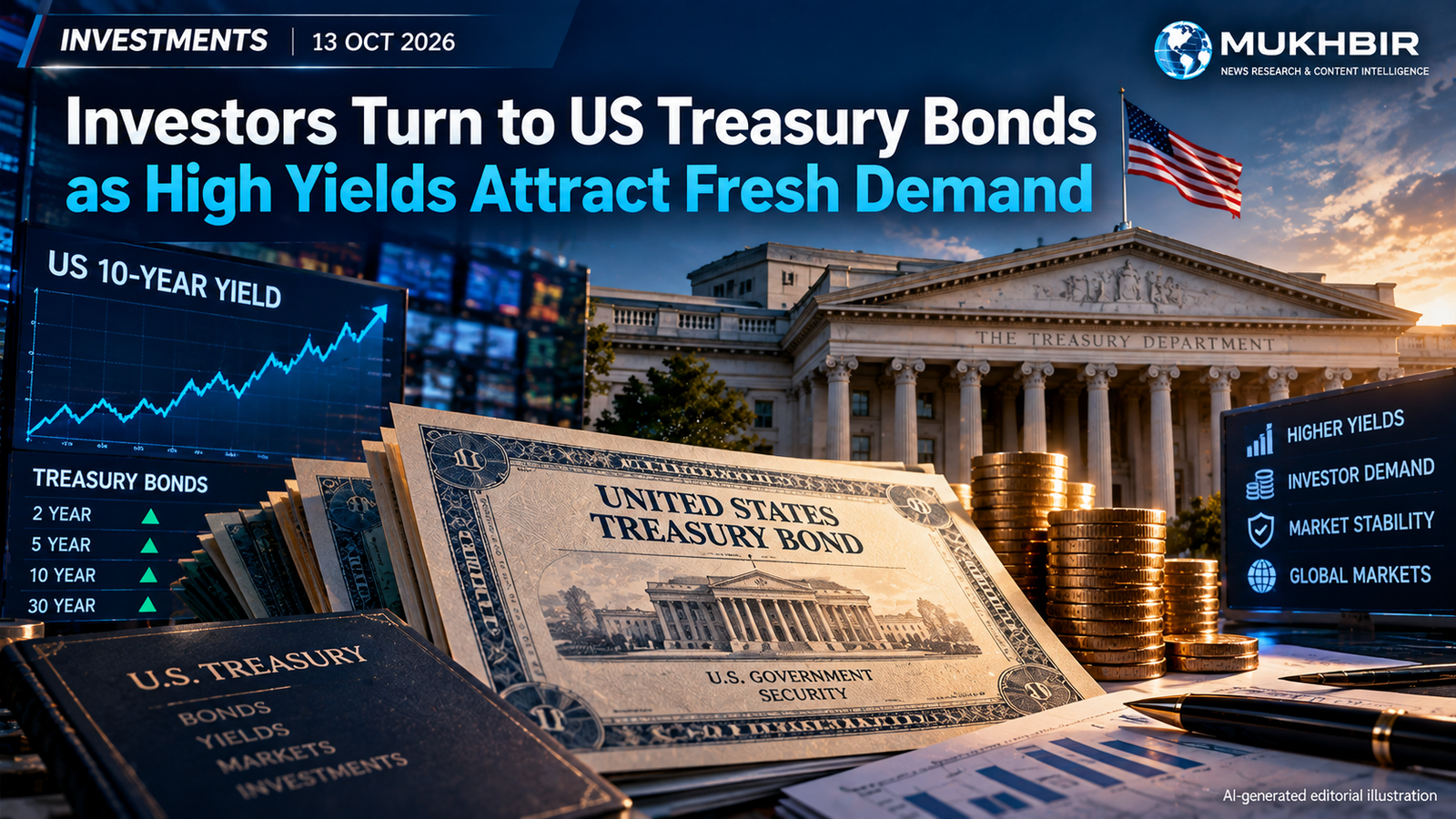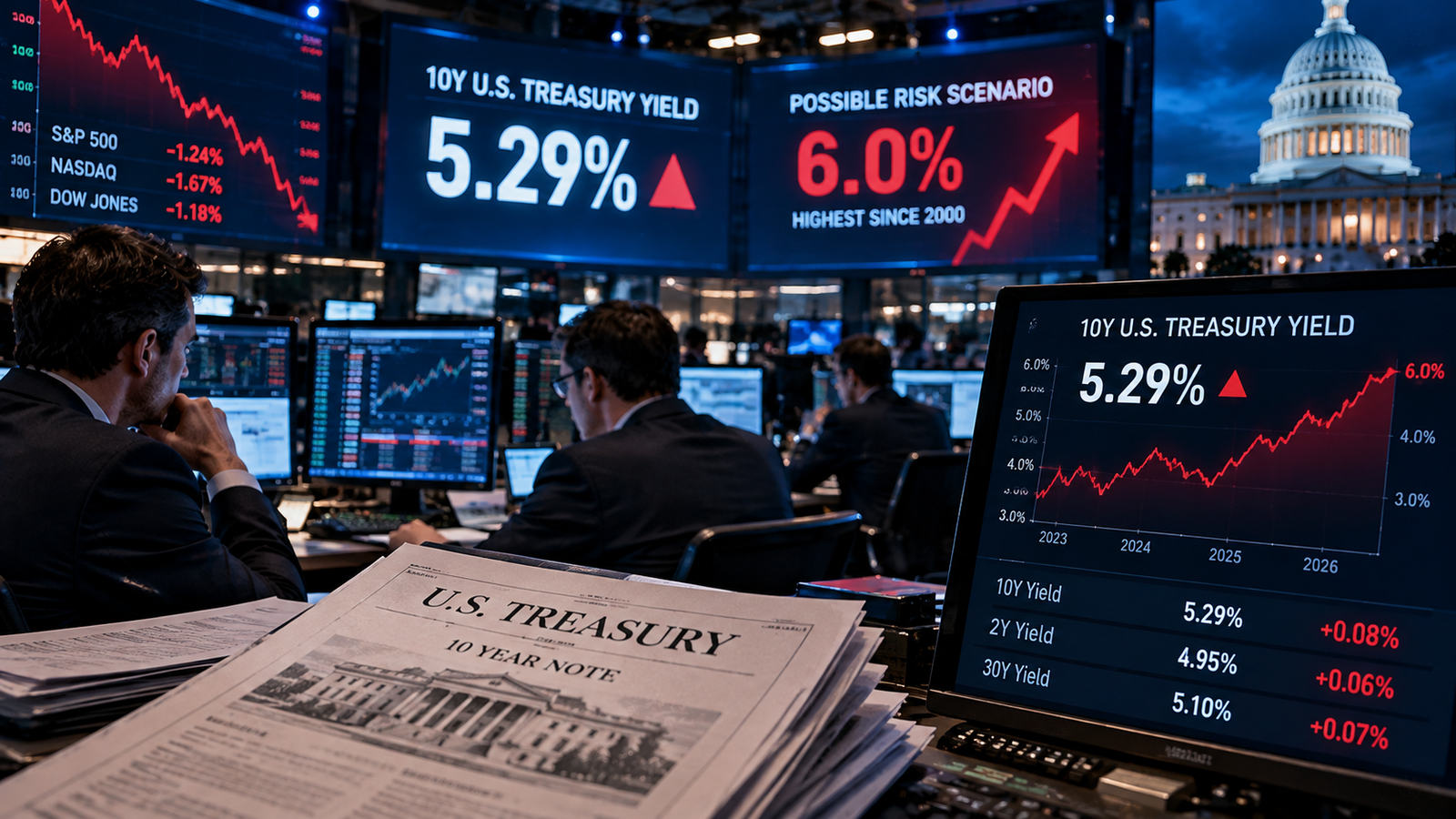
The benchmark 10-year U.S. Treasury yield could rise to 6% for the first time since 2000, according to Dan Ivascyn, chief investment officer at bond manager Pimco, as high oil prices, persistent inflation concerns and worries over U.S. public debt continue to pressure global bond markets.
Reuters reported that the 10-year yield was trading around 5.29% after climbing nearly 120 basis points in 2026. It recently touched about 5.34%, its highest level since 2002, while separate market data showed an intraday peak around 5.36% during the latest bond selloff.
Ivascyn told the Financial Times that a move toward 6% was “feasible” in the near term, particularly if technical selling intensifies and leveraged investors continue unwinding losing bond positions.
The warning matters far beyond the U.S. Treasury market. The 10-year yield is a global benchmark used to price mortgages, corporate debt, equity valuations and borrowing costs across financial markets.
Why Treasury Yields Are Rising
Several forces are pushing U.S. Treasury yields higher at the same time. The first is inflation. Oil prices remain elevated after supply concerns linked to the Middle East and other disruptions, raising fears that inflation could stay above central-bank targets for longer than investors previously expected.
Higher inflation reduces the real return investors earn from fixed-rate bonds. To compensate, investors often demand higher yields, which means bond prices fall.
The second issue is fiscal risk. Investors remain concerned about the size of U.S. government borrowing and the amount of debt the Treasury must issue. A larger supply of bonds can require higher yields to attract enough buyers.
The third factor is market positioning. Leveraged hedge funds and other investors can amplify price moves when they are forced to exit losing positions quickly.
Pimco Says 6% Is No Longer an Extreme Scenario
Ivascyn’s comments are notable because Pimco is one of the world’s largest bond managers. His assessment suggests that a 6% yield is no longer being treated as an implausible tail risk.
Reuters said he pointed to negative technical factors, stop-out activity and deleveraging by platform hedge funds and other leveraged investors as possible short-term accelerants.
If those pressures intensify, bond selling can become self-reinforcing. Falling bond prices raise yields, which can trigger additional losses and force more investors to reduce positions.
This type of feedback loop is one reason bond-market volatility has increased sharply in recent weeks.
Why 5.5% Could Already Hurt Risk Assets
Ivascyn warned that markets may not need to reach 6% before stress becomes visible elsewhere. According to Reuters, he said a move to 5.5% or higher could produce “decent weakness” in equities and credit markets.
The reason is simple: higher government-bond yields raise the return investors can earn from relatively low-risk assets. That makes stocks and lower-quality corporate bonds less attractive unless their expected returns also rise.
Higher yields also increase the discount rate used to value future corporate earnings, which can pressure the valuations of growth stocks.
Technology companies can be especially sensitive because much of their value is tied to profits expected years into the future.
AI Debt Issuance Is Adding Pressure
The current bond selloff is also interacting with the artificial-intelligence investment boom. Large companies are raising enormous amounts of debt to fund data centres, chips and related infrastructure.
Reuters reported that the surge in corporate borrowing linked to AI projects is contributing to Treasury-market pressure because dealers and investors hedge the duration risk created by large bond sales.
This does not mean AI spending is causing the Treasury selloff by itself, but it adds another source of bond-market supply and hedging activity at a time when government borrowing is already high.
The result is a financial environment where corporate investment, public debt and inflation concerns are reinforcing each other.
Mortgage Hedging Can Accelerate the Move
Another technical force comes from the mortgage market. When interest rates rise, homeowners refinance less often, meaning mortgage-backed securities remain outstanding for longer.
Investors holding those securities may then need to sell Treasuries or use derivatives to manage the increase in duration. This is known as convexity hedging.
When yields are already rising quickly, mortgage hedging can add further selling pressure and intensify volatility.
This mechanism has played an important role in previous sharp moves in U.S. rates markets.
Long-Term Fiscal Concerns Are Growing
One of the clearest signs of investor concern is the behaviour of longer-dated Treasury yields. The 30-year yield has also risen sharply and recently traded at levels not seen in more than two decades.
When long-term yields rise faster than shorter-term yields, it can indicate investors are demanding a larger term premium to hold government debt for extended periods.
Part of that premium reflects uncertainty about inflation, but fiscal policy is also important. Investors want compensation for the risk that large deficits and debt issuance persist for years.
A higher term premium can keep borrowing costs elevated even if the Federal Reserve eventually lowers short-term interest rates.
Money Is Moving Into Cash-Like Funds
The bond selloff has already changed investor behaviour. Reuters reported that global money-market funds attracted about $153.8 billion in the week ending October 7, the largest weekly net inflow since May.
Money-market funds become more attractive when short-term interest rates are high and investors are worried about losses in longer-duration bonds.
The strong inflows suggest many investors are prioritising capital preservation and liquidity while waiting for volatility in government bond markets to settle.
That shift can also reduce demand for equities and long-duration assets if investors decide attractive cash yields are sufficient.
What This Means for Stock Markets
Higher Treasury yields can become a significant headwind for equities because they change the relative attractiveness of stocks versus bonds.
When a 10-year Treasury offers more than 5%, investors can earn a historically strong nominal return without taking equity-market risk. That raises the hurdle for stocks.
High-growth technology shares may face particular pressure because their valuations are often more sensitive to discount-rate changes.
At the same time, banks and some financial companies can benefit from higher rates if they improve interest margins, although extreme volatility can create other risks.
Corporate Bonds Could Also Weaken
Corporate borrowing costs are typically priced as a spread over government yields. If Treasury yields rise, even unchanged credit spreads can result in much higher financing costs for companies.
That matters for businesses planning acquisitions, capital expenditure or debt refinancing.
Lower-quality borrowers face even greater pressure because investors may demand wider credit spreads at the same time that Treasury yields are rising.
A sustained move toward 6% could therefore tighten financial conditions across a wide range of industries.
Why Oil Prices Matter So Much
Energy is one of the biggest macro drivers behind the latest bond move. High oil prices can push transport, manufacturing and household costs higher, making inflation harder to control.
If investors believe energy costs will keep inflation elevated, they may expect the Federal Reserve to maintain restrictive policy for longer.
That expectation pushes up yields across the curve.
The bond market is therefore closely watching oil markets, Middle East developments and global supply conditions alongside traditional economic data.
Business Impact
For businesses, higher Treasury yields mean more expensive financing. Companies issuing new debt may face significantly higher interest costs than they did only a year earlier.
Higher rates can also reduce investment because projects that looked profitable under cheaper financing may no longer meet return requirements.
Capital-intensive sectors such as infrastructure, real estate, technology and utilities can be especially sensitive.
Companies with large refinancing needs may face the most immediate pressure.
Technology Impact
The technology sector sits at the centre of this story because AI infrastructure investment is driving record capital spending and large debt raises.
Data centres, semiconductors and cloud infrastructure require enormous upfront investment. If borrowing costs rise sharply, the economics of some projects become less attractive.
Large technology companies with strong balance sheets may still be able to fund projects, but smaller firms and highly leveraged operators could face more difficulty.
Investors may therefore begin paying closer attention to cash flow and financing structures across the AI ecosystem.
Pakistan Relevance
The direct impact on Pakistan comes mainly through global financial conditions. When U.S. Treasury yields rise, investors often demand higher returns from emerging-market debt as well.
This can increase borrowing costs for governments and companies in developing economies, particularly those already facing fiscal or external-account pressure.
Higher U.S. yields can also strengthen the dollar, which may create additional pressure on emerging-market currencies.
For Pakistan, tighter global financial conditions can affect sovereign borrowing costs, foreign investment flows and the cost of refinancing external debt.
South Asia Relevance
South Asian markets are exposed to higher U.S. yields through exchange rates, portfolio flows and borrowing costs.
Countries with large external financing needs may find international debt markets more expensive, while local central banks can face additional pressure if capital flows move toward U.S. assets.
At the same time, investors may become more selective, favouring countries with stronger reserves, lower inflation and more credible fiscal policy.
What Could Stop Yields From Rising Further?
There are several possible stabilising forces. The first is valuation. As yields rise, bonds become more attractive to long-term investors such as pension funds and insurers.
Second, weaker economic data could reduce inflation expectations and increase demand for Treasuries.
Third, a decline in oil prices would ease some of the pressure currently driving inflation fears.
Finally, if bond-market volatility becomes severe enough to damage risk assets or credit conditions, policymakers may shift expectations around future interest-rate policy.
What Investors Should Watch Next
The most important indicators are U.S. inflation data, oil prices, Treasury auctions, Federal Reserve communication and fiscal-policy developments.
Investors should also watch corporate debt issuance, especially from companies funding large AI infrastructure projects.
Market positioning will remain important because leveraged investors can accelerate moves when volatility rises.
A sustained break above 5.5% in the 10-year yield would likely become a major cross-asset event.
FAQs
What did Pimco say about the U.S. 10-year Treasury yield?
Pimco CIO Dan Ivascyn said the yield could rise to 6% for the first time since 2000.
Where is the 10-year yield trading now?
Reuters reported it around 5.29%, after recently reaching roughly 5.34% to 5.36%.
Why are Treasury yields rising?
Key factors include high oil prices, inflation concerns, heavy government borrowing, leveraged position unwinds and technical hedging pressure.
What happens if the yield reaches 5.5% or higher?
Pimco warned that risk assets such as equities and corporate bonds could experience meaningful weakness.
Why does a higher Treasury yield hurt stocks?
Higher bond yields make low-risk assets more attractive and increase the discount rate applied to future corporate earnings.
How does AI investment affect bond markets?
Large AI infrastructure projects are driving corporate debt issuance and related hedging activity, adding pressure to rates markets.
Why is this relevant to Pakistan?
Higher U.S. yields can raise emerging-market borrowing costs, strengthen the dollar and tighten global financial conditions.
What should investors watch next?
Oil prices, U.S. inflation data, Treasury auctions, Federal Reserve guidance and bond-market technicals are key indicators.
About The Author