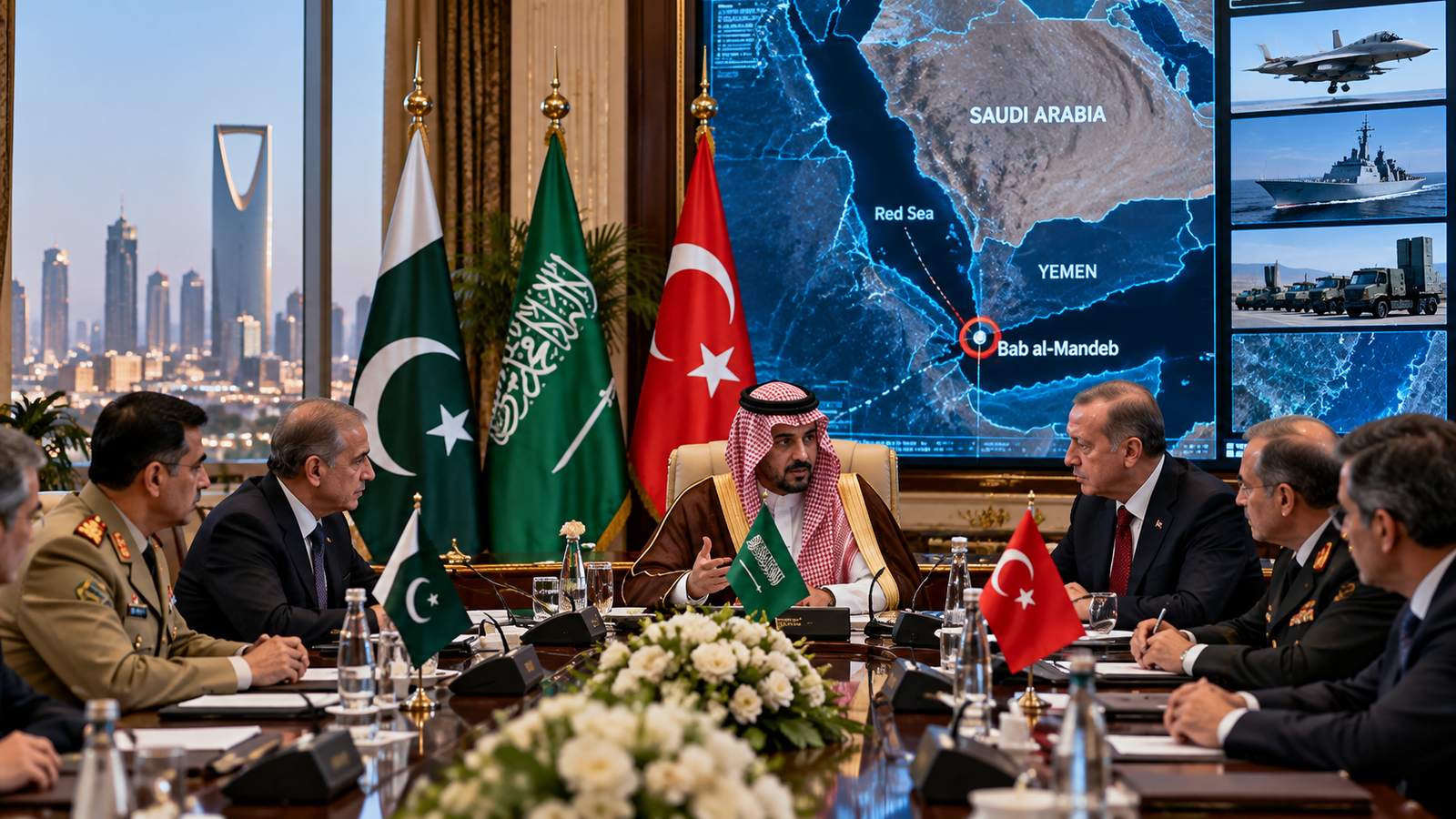
Pakistan, Turkiye and Saudi Arabia have moved to implement the collective-defence provisions of the Makkah Joint Defence Agreement, approving measures for the rapid deployment of agreed military forces and capabilities to Saudi Arabia after escalating attacks linked to Yemen’s Houthi movement.
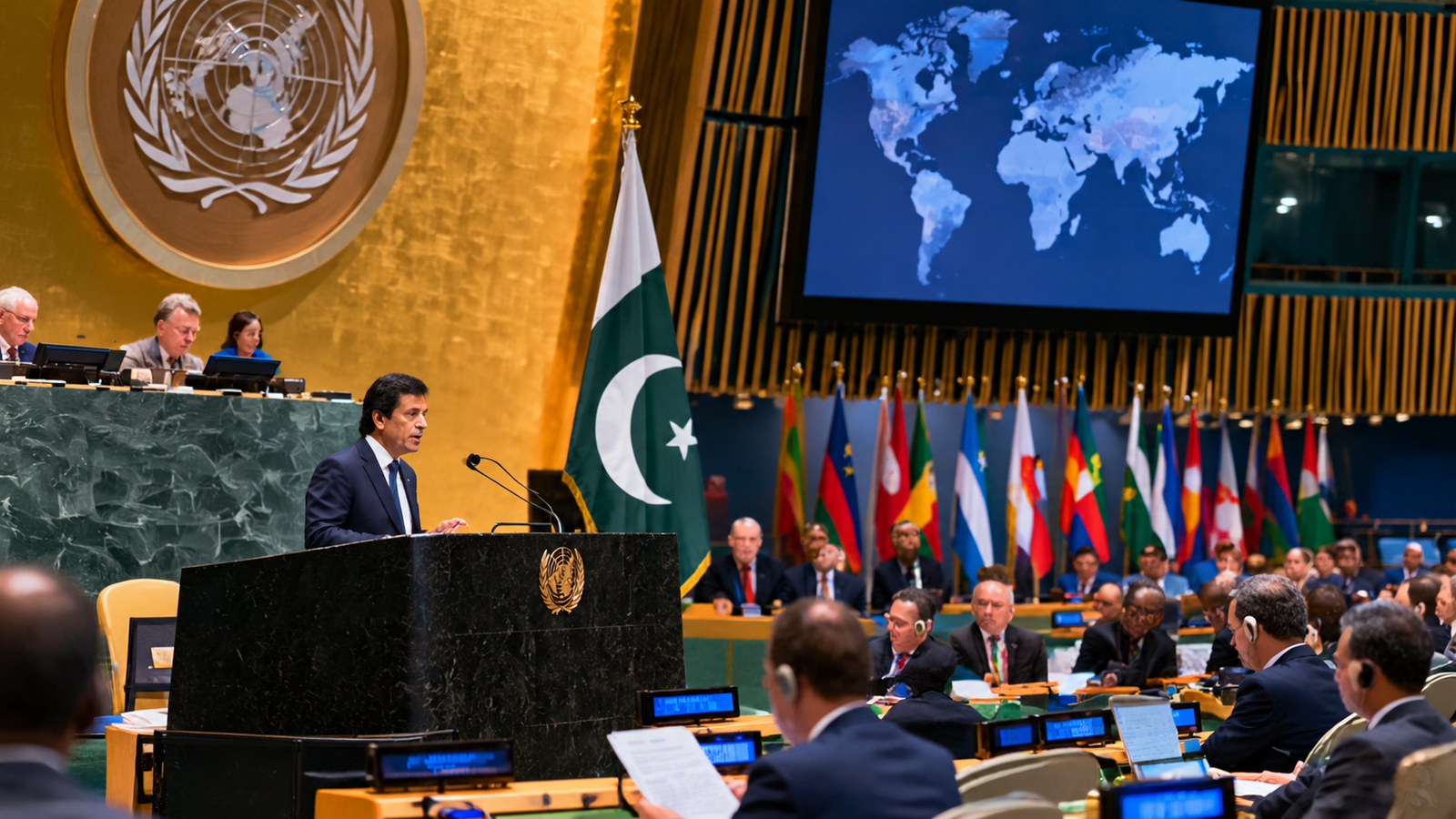
The decision was announced after an emergency meeting of the Makkah Alliance’s Strategic-Political and Defence Committee in Riyadh on October 5, 2026. The joint statement said the three countries would begin practical implementation of their collective-defence commitments in accordance with approved arrangements and each country’s national laws.
The statement did not disclose troop numbers, deployment dates, units, bases or specific combat missions. Pakistan’s Defence Minister Khawaja Asif told Dawn that Saudi forces were the only forces directly involved in combat operations against the Houthis at that stage, while Pakistani and Turkish forces were playing supportive roles.
The move marks the most significant operational step yet under the trilateral defence pact signed in Makkah on August 7, under which an armed attack on one member is to be treated as an attack on all three.
What Did Pakistan, Turkiye and Saudi Arabia Decide?
The Riyadh committee agreed to move from political commitments toward practical collective-defence measures.
According to Pakistan’s Foreign Office, the members decided to take the necessary steps to provide the military forces and capabilities already agreed among them and ensure their rapid deployment inside Saudi Arabia.
The statement said the purpose was to improve readiness, military integration and the three countries’ collective ability to confront threats.
It did not identify which Pakistani or Turkish units would move, how many personnel would be involved, or whether any deployment would include combat forces. Those details remain outside the public record.
Why the Makkah Pact Was Activated Now
The decision follows a sharp deterioration in the regional security environment.
Saudi Arabia has faced renewed missile and drone threats associated with Yemen’s Houthis, while fighting has intensified around the Red Sea and the strategic Bab al-Mandeb Strait.
Reuters reported that Saudi-backed Yemeni government forces launched a major counteroffensive and recaptured territory near the strait, including the port city of Mocha, with Saudi air support.
The Houthis have also claimed attacks on Saudi infrastructure. Some individual Houthi claims have not been independently verified, so they should not be treated as confirmed simply because the group announced them.
What Is the Makkah Joint Defence Agreement?
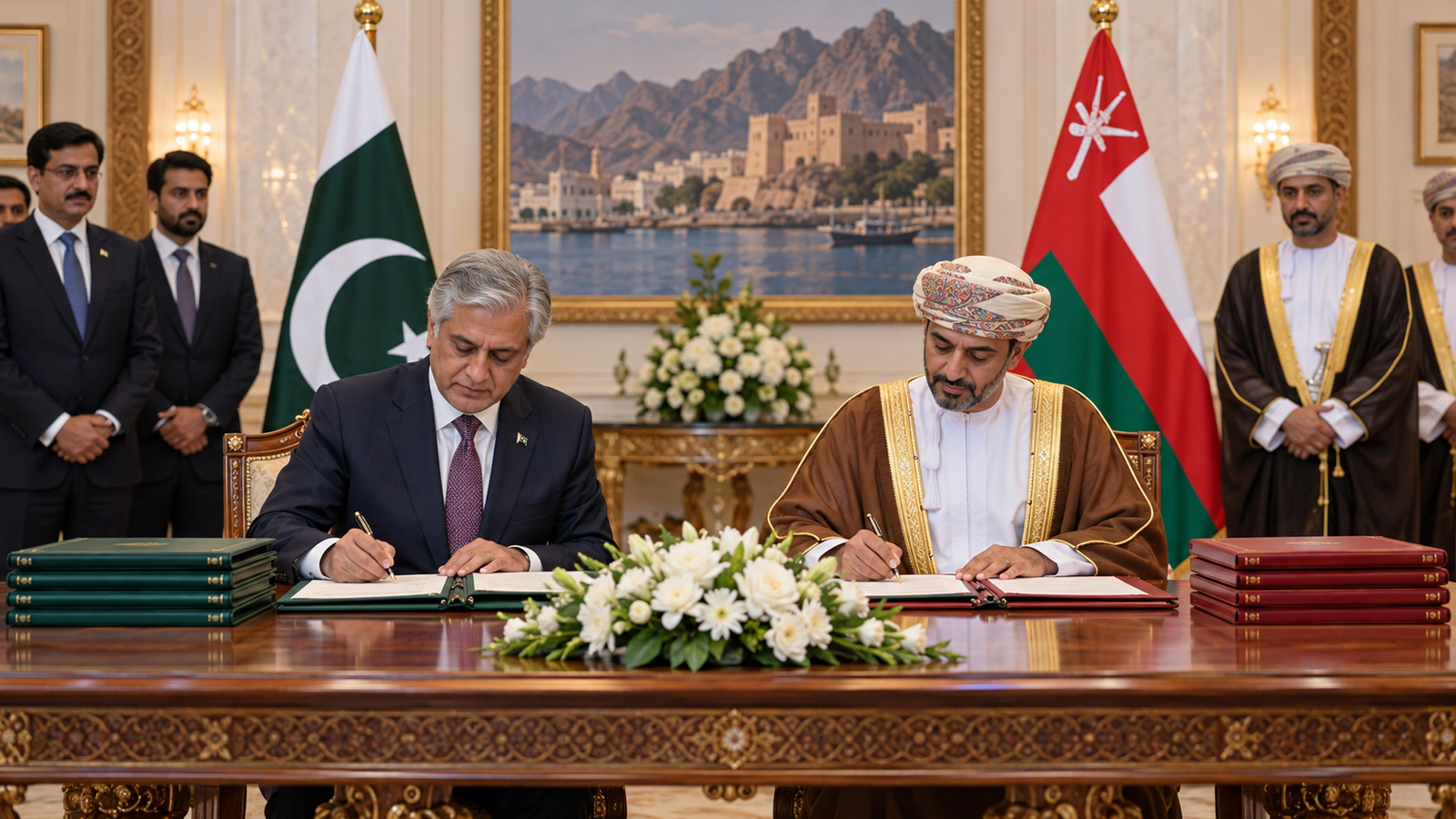
The Makkah Joint Defence Agreement was signed on August 7, 2026, by Saudi Crown Prince Mohammed bin Salman, Turkish President Recep Tayyip Erdogan and Pakistani Prime Minister Shehbaz Sharif.
The agreement establishes a collective-defence framework among the three countries.
Official Pakistani and Saudi statements say an armed attack against any one of the three states is to be regarded as an attack against all of them.
The pact also calls for broader defence cooperation and collective deterrence. Pakistan’s Foreign Office has repeatedly described the agreement as defensive and said it is not directed against any specific country.
The Alliance Is Becoming More Institutionalised
The October 5 meeting did more than approve rapid deployment measures.
The committee also appointed retired Pakistani Lieutenant General Nauman Mahmood as the first secretary-general of the Makkah Alliance for a three-year term.
Creating a permanent secretariat is important because defence alliances need mechanisms for planning, communication, intelligence sharing, logistics and coordination beyond summit-level political declarations.
The appointment suggests the three countries are trying to turn the Makkah Pact into an operating security structure rather than leaving it as a broad diplomatic pledge.
What Role Could Pakistan Play?
Pakistan has longstanding defence ties with Saudi Arabia, including training, military cooperation and a history of Pakistani personnel serving in the Kingdom under bilateral arrangements.
The new Makkah framework adds a trilateral layer involving Turkiye.
However, the current joint statement does not define Pakistan’s precise operational role in the new deployment. It refers broadly to agreed forces and capabilities.
Khawaja Asif’s comments reported by Dawn indicate that Pakistani forces were not directly engaged in combat against the Houthis at the time of the announcement. That distinction should be maintained unless the government later confirms a change.
What Role Could Turkiye Play?
Turkiye brings NATO military experience, a large defence industry and significant drone, missile and electronic-warfare capabilities to the alliance.
Ankara has also developed close defence relationships with both Pakistan and Saudi Arabia.
Like Pakistan, however, Turkiye’s exact deployment role has not been publicly detailed.
The official language covers military forces and capabilities but does not specify whether Turkish support will centre on air defence, intelligence, logistics, advisers, equipment or other functions.
Saudi Arabia Remains at the Centre of the Immediate Security Crisis
The current activation is focused on Saudi security.
The Riyadh joint statement condemned attempts to target Makkah and Madinah as well as continuing attacks against Saudi cities and civilian and economic facilities.
Pakistan and Turkiye praised the readiness of Saudi armed forces and reaffirmed that Saudi security is part of the alliance’s collective security.
That language helps explain why the current practical measures are being directed toward the Kingdom rather than another member state.
Why Bab al-Mandeb Matters
The Bab al-Mandeb Strait is one of the world’s most important maritime chokepoints.
It connects the Red Sea with the Gulf of Aden and the Arabian Sea, forming part of the shipping route between Europe and Asia through the Suez Canal.
Fighting around the strait can affect oil shipments, container traffic, insurance costs and commercial shipping schedules.
Reuters reported that Saudi-backed Yemeni forces had retaken key territory near the strait as part of a wider offensive against Houthi positions.
Does the Pact Mean Pakistan Is Entering the Yemen War?
Not on the evidence currently public.
The alliance has approved rapid deployment of agreed military forces and capabilities to Saudi Arabia, but the statement does not say Pakistani forces have entered combat in Yemen.
Pakistan’s defence minister said Saudi forces were directly involved in combat operations while Pakistani and Turkish forces were supporting them.
That could change if governments announce new operational decisions, but the current record does not support describing Pakistan as having entered ground combat against the Houthis.
Why Exact Wording Matters in This Story
Terms such as ‘activated’, ‘deployed’, ‘combat’ and ‘support’ can create very different impressions.
The official statement says the members decided to take measures to provide agreed forces and capabilities and ensure their rapid deployment in Saudi Arabia.
It does not state that every force has already arrived, that Pakistani or Turkish troops are fighting in Yemen, or that a specific number of soldiers has been committed.
For that reason, reporting should distinguish between a decision to implement deployment arrangements and confirmed arrival or combat participation.
The Pact Also Has a Diplomatic Track
The Makkah Alliance has not been operating only as a military framework.
Before the emergency meeting, Pakistan said the members would also discuss an Iranian suggestion for political engagement with the Houthis.
Reuters reported that Pakistan described the Iranian idea as a goodwill suggestion rather than a formal offer.
This indicates that the three governments are considering both deterrence and diplomacy as the conflict evolves.
What This Means for Pakistan’s Foreign Policy
The decision places Pakistan more visibly inside a new regional security architecture with Saudi Arabia and Turkiye.
Islamabad has historically maintained close relations with Riyadh while also keeping diplomatic channels open with Iran.
That balancing act becomes more difficult when regional conflicts intensify.
Pakistan’s official position has been that the Makkah Pact is defensive and consistent with collective self-defence under Article 51 of the United Nations Charter.
Domestic Political and Legal Considerations in Pakistan
The joint statement says implementation will occur in accordance with each country’s national legislation.
That wording is important because military deployments can involve domestic legal, parliamentary and executive procedures depending on their nature.
The government has not publicly released a detailed legal roadmap for any new Pakistani deployment under the October 5 decision.
If the mission expands, questions about mandate, duration, rules of engagement and parliamentary oversight are likely to become more important.
Regional Security Impact
The alliance links three militarily significant states: Saudi Arabia, Turkiye and Pakistan.
Saudi Arabia brings financial resources and a central geographic role in Gulf security. Turkiye is a NATO member with an expanding defence industry. Pakistan is a nuclear-armed state with extensive military experience and longstanding Gulf defence relationships.
The combination increases the alliance’s deterrent value, but it also means decisions taken under the pact may attract close attention from Iran, Gulf states, Western governments and actors in Yemen.
The three governments have emphasised that the pact is defensive rather than an offensive bloc.
Business and Energy Impact
The security situation has direct economic relevance because Saudi Arabia and nearby waterways are central to global energy supply.
Reuters reported on October 6 that Gulf oil flows had recovered substantially from earlier disruption, but regional tension remained high and shipping risks continued to affect markets.
Any expansion of attacks on Saudi infrastructure or shipping near Bab al-Mandeb could increase insurance, freight and energy costs.
The Makkah Pact deployment is therefore relevant not only as a defence story but also as a potential stabilisation measure for critical infrastructure and trade routes.
What the Pact Does Not Tell Us Yet
The agreement leaves many operational questions unanswered.
There are no publicly confirmed figures for the number of Pakistani or Turkish personnel involved in the new rapid-deployment arrangements.
No official timeline has been released for when those forces or capabilities will arrive.
The public statement also does not disclose the rules of engagement, command arrangements, locations of deployment or how costs will be shared.
Those gaps mean speculation about exact military roles should be avoided until governments release further information.
What Happens Next?
The immediate focus will be on whether Pakistan, Turkiye or Saudi Arabia publicly confirm the first actual deployments under the October 5 decision.
Further detail may also emerge from the alliance secretariat once it becomes operational under Secretary-General Nauman Mahmood.
Attention will remain on Yemen, where Saudi-backed government forces are fighting to recover territory from the Houthis near strategic Red Sea routes.
Diplomatic developments will matter as well, particularly if Iran’s suggestion of political engagement with the Houthis develops into a formal channel.
Important Questions Still Unanswered
The most important unanswered question is the scale and nature of Pakistani and Turkish deployment.
It is also unclear whether their roles will remain supportive or could expand if attacks on Saudi territory continue.The alliance has not disclosed detailed command-and-control arrangements or the trigger for additional collective-defence measures.
Finally, the effect of the Makkah Pact on Pakistan’s relations with Iran and on the wider regional balance will depend on how the agreement is implemented in practice rather than on the text alone.
FAQs
What happened under the Makkah Pact on October 5, 2026?
Pakistan, Turkiye and Saudi Arabia agreed to begin practical implementation of their collective-defence commitments and take measures to rapidly deploy agreed military forces and capabilities to Saudi Arabia.
Are Pakistani troops already fighting the Houthis?
The public record does not establish that. Pakistan’s Defence Minister Khawaja Asif said Saudi forces were directly involved in combat while Pakistani and Turkish forces were playing supportive roles at that stage.
How many Pakistani or Turkish troops will be deployed?
No official troop numbers have been disclosed. The joint statement does not identify units, personnel strength or deployment locations.
What does the Makkah Joint Defence Agreement say?
The pact says an armed attack against one of Saudi Arabia, Pakistan or Turkiye is to be regarded as an attack against all three and calls for enhanced defence cooperation.
When was the Makkah Pact signed?
The agreement was signed in Makkah on August 7, 2026, by Saudi Crown Prince Mohammed bin Salman, Turkish President Recep Tayyip Erdogan and Pakistani Prime Minister Shehbaz Sharif.
Why was the pact activated now?
The decision followed escalating Houthi attacks and renewed fighting in Yemen, including threats to Saudi territory and strategic areas near the Bab al-Mandeb Strait.
Who is the first secretary-general of the Makkah Alliance?
The October 5 committee appointed retired Pakistani Lieutenant General Nauman Mahmood as the alliance’s first secretary-general for a three-year term.
Is the Makkah Pact directed against Iran?
The three governments describe the pact as defensive and not directed against any specific country. Pakistan has also maintained diplomatic channels with Iran and discussed an Iranian suggestion for political engagement with the Houthis.
About The Author