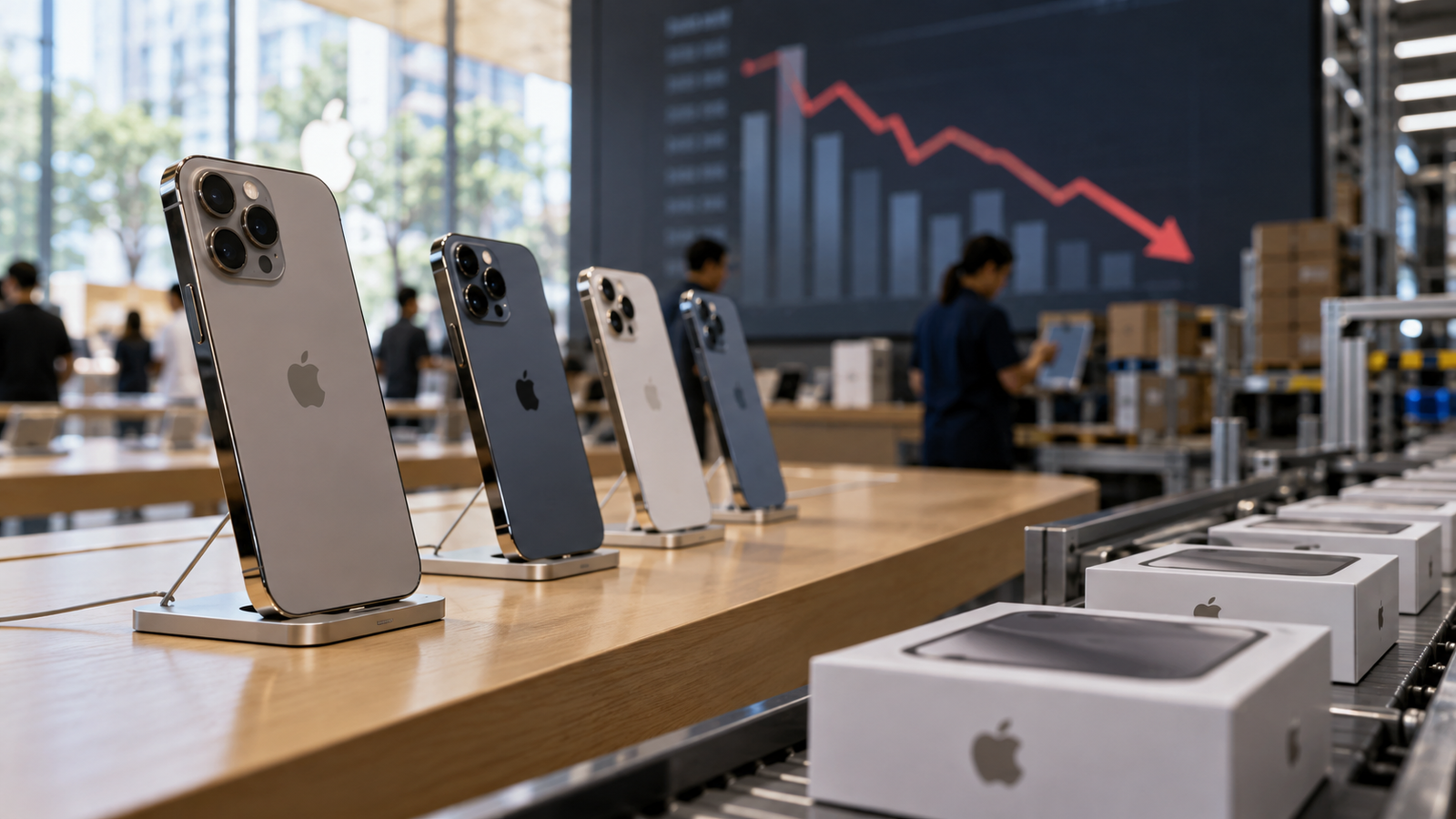
Apple has reportedly asked suppliers to reduce component orders for the iPhone 18 Pro and iPhone 18 Pro Max by at least 15% from earlier projections as demand for the newly launched premium models comes in softer than expected.
Reuters, citing Nikkei Asia, reported on October 9 that Apple has taken a more cautious approach to production planning since early September. The reported adjustment affects October component orders and comes after the company raised starting prices for both Pro models by $100 compared with their predecessors.
The iPhone 18 Pro now reportedly starts at $1,199, while the iPhone 18 Pro Max starts at $1,299. The higher pricing arrives at a time when advanced memory costs have climbed, partly because strong demand from artificial-intelligence data centres is tightening supplies of high-performance chips across the technology industry.
Apple has not publicly announced a broad production cut or revised sales target for the iPhone 18 Pro lineup. The current information is based on supplier-chain reporting, so the scale and duration of the adjustment could still change as Apple responds to demand during the rest of the quarter.
What Apple Is Reportedly Changing
The key development is a reduction in component orders rather than a formal cancellation of the iPhone 18 Pro line. According to Reuters’ summary of the Nikkei report, Apple instructed suppliers to trim October orders by at least 15% from initial expectations.
Large consumer-electronics companies frequently adjust orders after a product launch as they compare real-world demand with internal forecasts. Production plans can move up or down quickly depending on regional sales, retail inventory, promotional activity and component availability.
That means the reported cut should not automatically be interpreted as a long-term collapse in iPhone demand. It does, however, suggest Apple may have overestimated near-term demand for its highest-priced models or may be managing inventory more carefully than usual.
Higher Prices May Be Testing Consumer Demand
Price is one of the clearest factors in the story. Reuters reported that the iPhone 18 Pro and Pro Max each launched $100 above the equivalent previous-generation models. That pushes Apple’s premium phones further into a price range where consumers may take longer to upgrade, compare more alternatives or wait for carrier promotions.
Smartphone replacement cycles have already lengthened in many markets as devices become more durable and year-to-year hardware improvements become less dramatic for mainstream users. A higher launch price can therefore make the upgrade decision more difficult, even for customers who prefer Apple’s ecosystem.
The effect may be especially noticeable in markets where household budgets remain under pressure from high interest rates, energy costs or slower economic growth. Premium devices are more exposed to changes in discretionary spending because consumers can often keep an existing phone for another year rather than upgrade immediately.
Memory Chip Costs Are Adding Pressure
The reported demand weakness is also connected to a broader technology-supply story. AI data centres are consuming growing volumes of advanced memory, increasing competition for high-performance components used across servers, PCs and smartphones.
Reuters said rising memory costs have contributed to pressure on Apple and other electronics makers. The same trend has already affected PC and smartphone markets, where manufacturers are trying to balance product performance, margins and retail pricing.
Apple had also raised prices for some iPads and MacBooks earlier in the year amid higher component costs. If memory prices remain elevated, the company may have less flexibility to absorb costs without passing some of them on to consumers.
AI Is Reshaping the Smartphone Supply Chain
One of the more important long-term implications is that the AI boom is no longer confined to data-centre companies. Demand for AI computing is influencing the cost and availability of components used in consumer devices.
Modern premium smartphones increasingly rely on larger and faster memory to support on-device AI features, image processing, voice tools and more advanced operating-system functions. As manufacturers add more AI capabilities, the hardware requirements of flagship phones become more demanding.
This creates a new tension in the supply chain. Smartphone makers want to market AI as a reason to upgrade, but the same AI boom can increase component costs and push device prices higher. If consumers become price-sensitive, companies may have to choose more carefully which AI features justify expensive hardware upgrades.
Apple’s Launch Strategy May Also Be Affecting Demand
Reuters noted that Apple introduced the new iPhone models alongside its foldable device, the Duo, in the previous month. A broader product portfolio can create more choice for customers, but it can also spread demand across different models.
If buyers who would previously have chosen a Pro model are now considering a foldable product or another premium Apple device, the mix of sales can change even if overall Apple hardware demand remains healthy.
This is another reason the reported production cut should be interpreted carefully. Lower-than-expected Pro-model demand does not necessarily mean Apple’s entire smartphone business is weakening at the same rate.
What the Report Means for Apple’s Supply Chain
Apple’s scale means even a modest percentage adjustment can matter for suppliers. Component makers, assemblers and logistics companies often plan capacity around expected iPhone volumes, so changes in Apple orders can affect revenue forecasts throughout the supply chain.
A 15% reduction in projected component demand can be meaningful for companies that rely heavily on Apple. Suppliers with diversified customer bases may be better positioned to absorb the impact, while companies with concentrated exposure could feel more pressure.
Investors therefore tend to watch Apple production reports not only as a signal about iPhone sales but also as an indicator for the wider smartphone-component industry.
Could Orders Be Raised Again?
Yes. Apple regularly adjusts its supply chain throughout a product cycle. If demand improves during holiday sales, carrier promotions or new regional launches, the company could raise orders again.
Conversely, if retail sell-through remains weak, further reductions would be possible. The next few months will provide a clearer picture of whether the current adjustment is a temporary inventory correction or evidence of a more persistent demand problem.
Actual quarterly results will ultimately be more important than supplier reports because Apple’s revenue, product mix and regional performance will show whether higher prices are materially affecting the business.
Business Impact
For Apple, the central business question is whether higher prices can protect margins without discouraging too many buyers. Premium smartphones generate substantial revenue, but aggressive pricing becomes harder to sustain if consumers delay upgrades.
The company may also need to manage a more complicated product mix as foldables, standard iPhones and Pro models compete for the same high-end customers. Pricing gaps between models will become increasingly important in determining where demand settles.
For suppliers, the story highlights the risk of depending on optimistic launch forecasts. Companies across the semiconductor, camera, display and assembly industries may face more volatile order patterns as Apple adapts production to market conditions.
Technology Impact
The report also illustrates how AI investment is reshaping consumer electronics. Strong demand for data-centre chips can raise the cost of components used in phones and PCs, while smartphone manufacturers simultaneously try to add more AI features to their own devices.
If this trend continues, premium devices may require more expensive memory and computing hardware just as buyers become more sensitive to price. That could encourage manufacturers to place greater emphasis on efficient on-device AI, software optimisation and longer product lifecycles.
It may also create opportunities for chipmakers that can deliver strong AI performance with lower power use and more efficient memory requirements.
Global Importance
Apple remains one of the world’s most influential consumer-technology companies, so changes in iPhone demand can affect suppliers and competitors across Asia, North America and Europe.
A softer premium-smartphone cycle could influence pricing strategies across the industry, particularly for Samsung, Xiaomi and other companies competing for high-end customers.
At the same time, the memory-supply issue connects consumer devices directly to the global AI infrastructure boom. That makes the story relevant not only to smartphone buyers but also to investors following semiconductors, cloud computing and data-centre spending.
Pakistan and South Asia Relevance
For Pakistan and South Asia, the direct production impact is limited, but the pricing trend is highly relevant. Premium iPhones already reach many consumers at significantly higher effective prices because of taxes, import costs, currency movements and local-market markups.
If Apple continues raising global launch prices, the final retail cost in Pakistan can become even less accessible. That can strengthen demand for older iPhone models, used devices and non-Apple flagship phones.
Higher global component costs can also affect other smartphone brands sold across South Asia, particularly if memory prices remain elevated. Consumers may see higher prices, slower specification upgrades or more aggressive segmentation between premium and mid-range devices.
SEO and Social-Media Potential
The story has strong search potential because it combines several high-interest themes: iPhone 18 demand, Apple pricing, AI-driven chip shortages and smartphone production cuts.
On social media, the most engaging angle is likely to be the contrast between Apple’s premium pricing strategy and reports that orders have been reduced. Headlines should remain cautious and use words such as “reportedly” because Apple has not publicly confirmed the supplier adjustment.
Avoid framing the story as “iPhone 18 fails” or “Apple sales collapse,” because the available reporting does not support those conclusions.
What Happens Next
Investors and consumers will now watch Apple’s holiday-quarter performance, supplier commentary and any further changes in production plans. Demand in major markets such as the United States and China will be especially important.
Memory prices will also remain a key variable. If AI data-centre demand continues to tighten component supply, Apple and other device makers may face further cost pressure.
For now, the clearest conclusion is that Apple appears to be adjusting iPhone 18 Pro production expectations after a softer-than-anticipated start. Whether that becomes a broader demand problem will depend on how sales develop during the rest of the launch cycle.
FAQs
Has Apple confirmed an iPhone 18 Pro production cut?
No. The report is based on supplier-chain information cited by Nikkei Asia and Reuters. Apple has not publicly announced a production cut.
How much were iPhone 18 Pro component orders reportedly reduced?
October component orders were reportedly cut by at least 15% from initial projections.
Why is demand reportedly softer?
Higher device prices, rising memory-chip costs and changing consumer upgrade behaviour are among the factors cited in the reporting.
What are the reported starting prices of the new Pro models?
The iPhone 18 Pro reportedly starts at $1,199 and the iPhone 18 Pro Max at $1,299.
How is AI affecting smartphone prices?
AI data centres are increasing demand for advanced memory, contributing to tighter supply and higher component costs across technology markets.
Does this mean overall iPhone demand is collapsing?
No. The report concerns production planning for specific Pro models and does not by itself prove a broad collapse in total iPhone demand.
Could Apple increase orders again?
Yes. Apple can adjust orders throughout the product cycle if demand strengthens or inventory conditions change.
Why does this matter for Pakistan?
Higher global iPhone prices can translate into even higher effective retail prices in Pakistan once taxes, currency and import costs are included.
About The Author