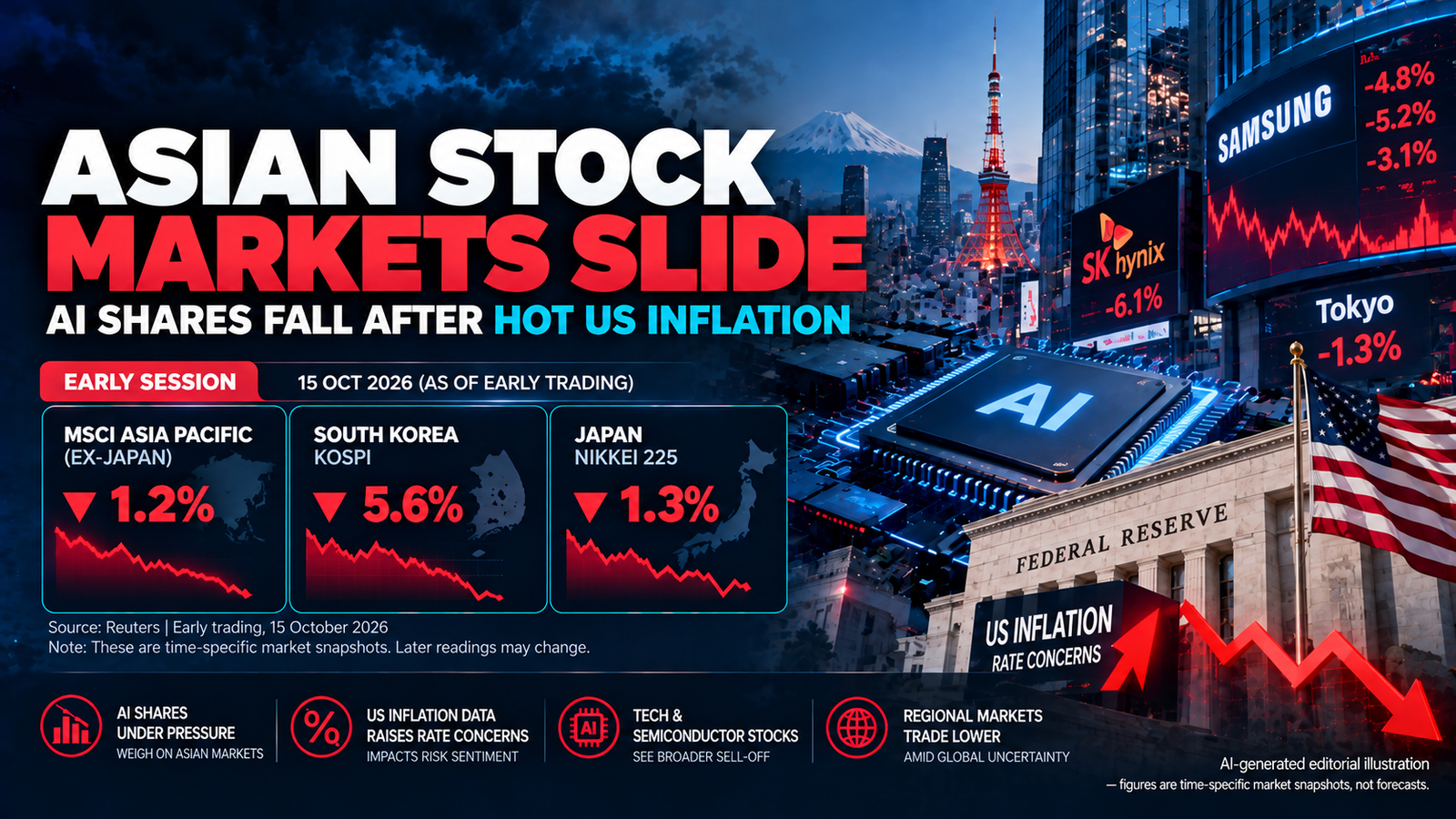
Asian equity markets moved higher on October 6, 2026, following a technology-led rally on Wall Street that pushed the Nasdaq Composite to a record close, even as U.S. Treasury yields remained near their highest levels in roughly 24 years. Reuters reported that MSCI’s broadest index of Asia-Pacific shares outside Japan rose 0.2%, while Japan’s Nikkei gained 0.7% in early trade and European stock futures also pointed higher.
The rally reflected a striking split in global markets. Investors were willing to keep buying technology and artificial-intelligence stocks despite sharply higher government borrowing costs. Nvidia rose 2.1% to a record close, taking its market value to about $5.76 trillion, while softer-than-expected U.S. jobs data reduced expectations that the Federal Reserve would raise interest rates again in October.
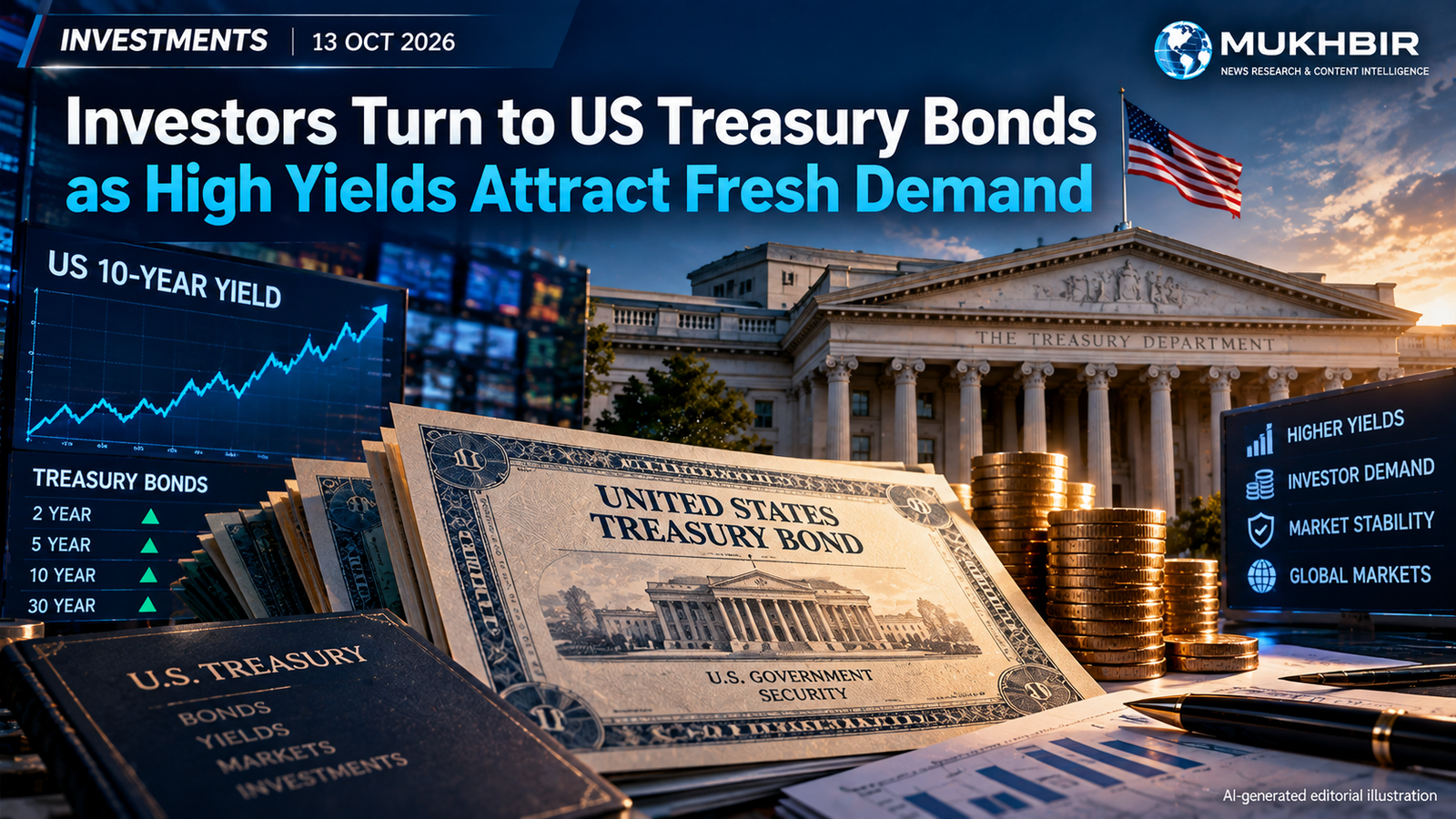
At the same time, long-dated U.S. government bonds remained under pressure. The 10-year Treasury yield had climbed as high as 5.3493%, its highest level since 2002, while the 30-year yield briefly reached 5.7029%. Those moves reflect persistent concern about inflation, heavy government borrowing and the long-term cost of financing U.S. debt.
For investors, the central question is whether strong corporate earnings and AI-related growth can continue supporting equities while bond yields stay at levels that raise borrowing costs across the global economy.
Why Asian Stocks Rose on October 6
Asian markets took their lead from Wall Street, where the Nasdaq closed at a record after another strong session for large technology companies. Reuters said MSCI’s Asia-Pacific index excluding Japan gained 0.2% and Japan’s Nikkei rose 0.7%, while Hong Kong and other regional markets also drew support from improved risk sentiment and a pullback in oil prices.
The immediate catalyst was a combination of softer U.S. labour data and strong enthusiasm for AI-linked earnings. The weaker jobs signals reduced the perceived urgency for another Federal Reserve rate increase in October, while investors continued to reward companies seen as benefiting from large-scale spending on AI infrastructure, chips and data centres.
Nasdaq Record Keeps AI Trade in Focus
The Nasdaq’s record close reinforced the idea that the AI investment theme remains powerful enough to offset some of the pressure from high interest rates. Nvidia gained 2.1% and reached a market capitalisation of roughly $5.76 trillion, according to Reuters, making it one of the clearest symbols of the market’s willingness to pay for expected AI-related growth.
Goldman Sachs estimates cited by Reuters showed consensus expectations for about 27% year-on-year growth in S&P 500 earnings in the third quarter, with more than half of that growth expected to come from companies benefiting from AI infrastructure spending. If those forecasts are met, investors may continue to tolerate higher yields for longer than would normally be expected.
Why Treasury Yields Are Near 24-Year Highs
The bond market is sending a much more cautious signal. U.S. 10-year and 30-year Treasury yields reached levels not seen since 2002, with the 10-year touching 5.3493% and the 30-year briefly hitting 5.7029%. Bond yields move inversely to prices, so the rise reflects sustained selling pressure in longer-dated government debt.
Investors are concerned about several factors at once: inflation remains above the Federal Reserve’s 2% target, the U.S. government continues to borrow heavily, and recent economic data have not clearly signalled a sharp slowdown. An ISM survey also showed service-sector input prices rising to their highest level in more than four years, adding to inflation concerns.
Fed Rate-Hike Expectations Have Still Fallen
One of the unusual features of the current market is that Treasury yields are near multi-decade highs even though expectations for an immediate Federal Reserve rate increase have fallen sharply. Reuters reported that markets were pricing only about a 23% chance of an October rate hike, down from roughly 71% a week earlier.
That shift followed softer U.S. employment data and comments from policymakers suggesting they wanted more evidence before tightening again. The result is a market where short-term rate expectations have eased but long-term yields remain elevated because investors are demanding more compensation for inflation, fiscal risk and the supply of government debt.
What High Treasury Yields Mean for Investors
Higher Treasury yields matter because U.S. government bonds serve as a benchmark for pricing many other financial assets. When the risk-free return available on government debt rises, investors often demand higher expected returns from stocks, corporate bonds, real estate and private investments.
For equities, that can pressure valuations, especially for companies whose expected profits lie far in the future. For businesses, higher yields feed into borrowing costs on corporate bonds and loans. For households, they can affect mortgage rates and other financing costs. That is why the coexistence of record technology stocks and 24-year-high Treasury yields is such an important market contradiction.
Oil’s Retreat Helped Risk Sentiment
Energy prices also provided some relief. Reuters reported that Brent crude was close to $100 a barrel after falling 1.9% in the previous session as Middle Eastern exports improved and Group of Seven countries pledged efforts to increase supplies.
Lower oil prices can support equities because energy costs affect transport, manufacturing, consumer spending and inflation expectations. However, crude remains high enough to keep inflation risks alive, especially if geopolitical tensions disrupt supply again. Investors therefore remain sensitive to developments in the Middle East as well as changes in global production and shipping flows.
The Euro Remains Under Pressure
Currency markets reflected growing political and fiscal concerns in Europe. The euro traded around $1.1215 after briefly falling to $1.116, its weakest level since May 2025, according to Reuters. Pressure came partly from France, where investors have been demanding a higher premium to hold government bonds amid worries about the country’s budget and public debt.
Political uncertainty in Spain added another risk after Prime Minister Pedro Sánchez called a snap election. These developments have increased concerns about how much fiscal tightening European governments can deliver without creating political instability or weakening growth.
France and Spain Add a European Risk Premium
French government bonds have become a particular focus because the proposed fiscal consolidation plan faces political resistance. Reuters reported that the spread between French and German 10-year yields remained elevated even after narrowing slightly, showing that investors still demand a larger risk premium to hold French debt.
Spain’s sudden election announcement adds a second source of political uncertainty. Markets are not treating either country as facing an immediate sovereign-debt crisis, but the combination of high borrowing costs and unstable politics can affect the euro, regional bond markets and investor confidence across the euro zone.
Gold Holds Near Historic Levels
Gold traded near $4,141 an ounce, remaining at historically elevated levels even as the U.S. dollar stayed firm. High gold prices typically reflect a mixture of inflation concerns, geopolitical risk and demand for assets perceived as stores of value.
The metal’s resilience is notable because high bond yields can reduce the appeal of gold, which does not pay interest. Its ability to remain elevated suggests investors are balancing the attraction of high yields with continuing concern about inflation, government debt and geopolitical uncertainty.
Why This Market Environment Is Unusual
Ordinarily, a rapid rise in long-term bond yields would be expected to create heavier pressure on growth stocks, especially highly valued technology companies. Instead, the market is currently rewarding firms that can demonstrate unusually strong earnings growth linked to AI investment.
This means investors are differentiating sharply between companies. Firms with strong margins, dominant technology positions and rapid earnings growth can continue attracting capital, while weaker businesses may struggle as financing costs rise. The headline stock indexes can therefore look healthy even while large parts of the economy face increasing financial pressure.
What It Means for Bonds and Fixed-Income Investors
For fixed-income investors, higher yields improve the income available on newly purchased bonds, but they also create price losses for investors who already hold lower-yielding securities. Long-duration bonds are particularly sensitive to changes in interest rates.
Investors must therefore decide whether current yields are attractive enough to compensate for the possibility that rates rise further. If inflation remains stubborn or fiscal concerns intensify, long-term yields could stay high. If growth weakens sharply or the Federal Reserve turns more dovish, bond prices could recover.
What It Means for Equity Investors
Equity investors face a more complicated trade-off. Strong earnings and AI spending can support share prices, but higher discount rates make expensive valuations harder to justify. A company may continue growing quickly and still see its stock under pressure if bond yields rise faster than expected.
That makes earnings quality increasingly important. Investors are likely to focus on whether AI-related companies can convert capital spending and demand into sustainable profits rather than relying only on long-term expectations.
South Asia and Pakistan Relevance
The market moves have indirect but genuine relevance for Pakistan and South Asia. Higher U.S. Treasury yields can strengthen the dollar, raise global borrowing costs and make emerging-market assets relatively less attractive, particularly for countries that depend on external financing.
For Pakistan, persistent high global yields can affect the cost of future sovereign borrowing and investor appetite for emerging-market debt. Lower oil prices can offer some relief because Pakistan is a major energy importer, but that benefit can be offset if the dollar strengthens or global financing conditions become tighter.
What Investors Should Watch Next
The next major test will be the start of the U.S. third-quarter earnings season. If large technology companies continue delivering strong profit growth, the stock market may remain resilient even with high bond yields. Disappointing earnings, however, could make valuations more vulnerable.
Investors will also watch U.S. inflation data, Treasury auctions, Federal Reserve commentary and fiscal developments in Europe. Oil prices and geopolitical risks remain important because another energy shock could quickly revive inflation fears and push yields even higher.
Important Questions Still Unanswered
The biggest uncertainty is how long the divergence between rising equity markets and high bond yields can continue. It is also unclear whether the Federal Reserve can keep rates steady if inflation remains sticky while job growth slows.
Another question is whether AI-related earnings will remain strong enough to justify current valuations. Finally, investors must assess whether fiscal and political tensions in the United States and Europe will remain contained or begin to create broader stress in credit and currency markets.
FAQs
Why did Asian stocks rise on October 6, 2026?
Asian markets followed a tech-led Wall Street rally after the Nasdaq reached a record close. Softer U.S. jobs data also reduced expectations for an immediate Federal Reserve rate hike.
How high did the U.S. 10-year Treasury yield rise?
Reuters reported that the 10-year Treasury yield reached 5.3493%, its highest level since 2002, before easing slightly during Asian trading.
What happened to the U.S. 30-year Treasury yield?
The 30-year yield briefly reached 5.7029%, also around a 24-year high.
Why are Treasury yields rising?
Investors are demanding higher returns because of persistent inflation, heavy U.S. government borrowing, strong economic data and concerns about long-term debt sustainability.
Is the Federal Reserve expected to raise rates in October?
Market pricing cited by Reuters put the probability at about 23%, down sharply from around 71% a week earlier.
Why did Nvidia shares rise?
Nvidia gained 2.1% as investors continued to favour companies benefiting from AI infrastructure spending. Its market value reached roughly $5.76 trillion.
What does this mean for Pakistan?
High U.S. yields can tighten global financial conditions and make emerging-market borrowing more expensive. Lower oil prices can help Pakistan, but a stronger dollar may offset part of that benefit.
What should investors watch next?
Key signals include U.S. earnings, inflation data, Federal Reserve guidance, Treasury auctions, oil prices and political developments in Europe.
About The Author