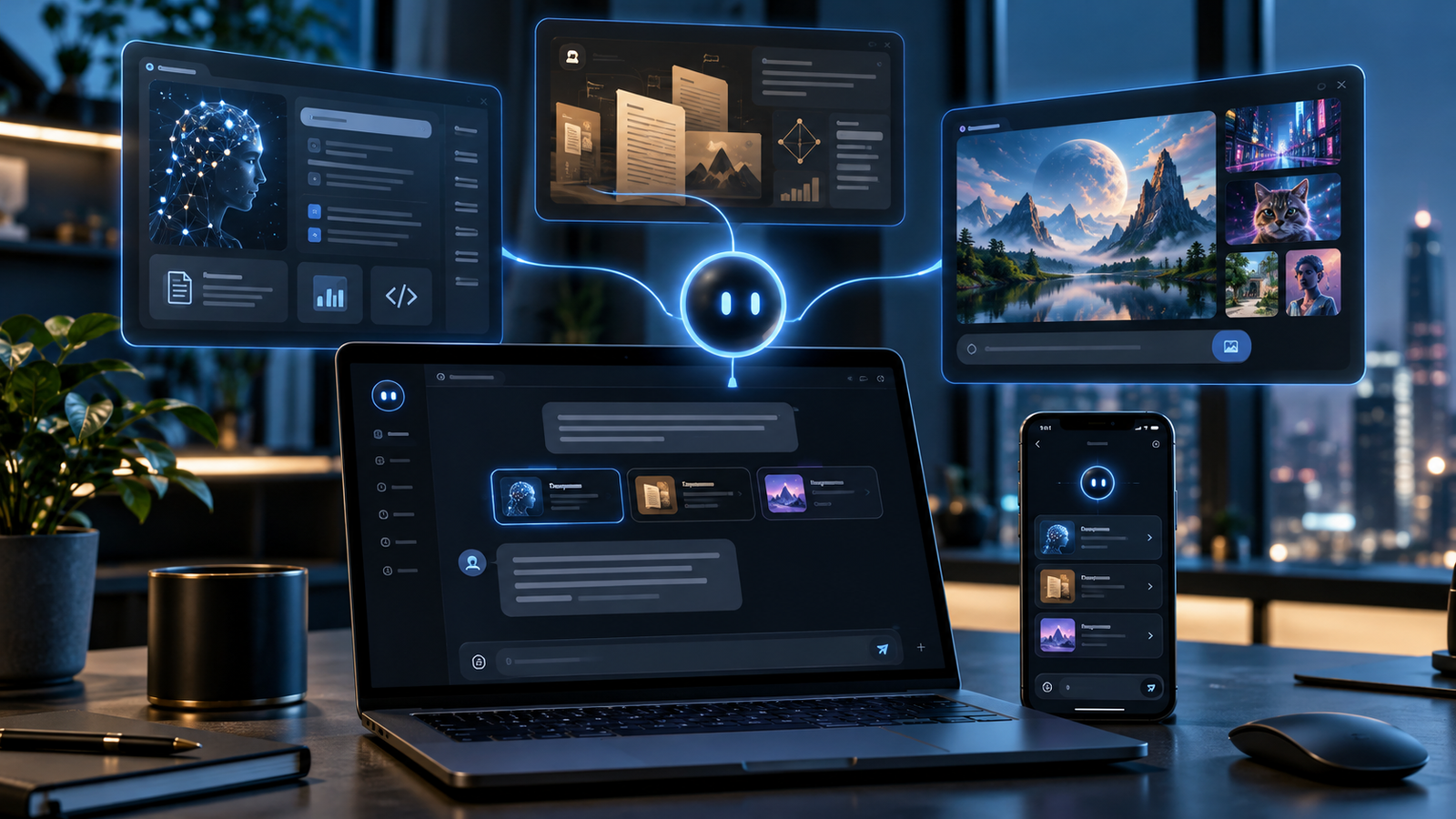
Grok Bot is moving toward a multi-model architecture in which different tasks can be routed to different artificial-intelligence systems instead of relying only on one in-house model. Elon Musk said the agent will use the “best back end model” for each task and specifically named Anthropic’s Claude Opus 5.5, Midjourney and Suno among the systems that may be selected.
The announcement, made on October 7 and picked up by technology outlets over the following days, suggests Grok Bot is being positioned more like an AI orchestration layer than a traditional single-model chatbot. ProPakistani highlighted the change on October 10, noting that users may be able to benefit from specialist models without paying for separate subscriptions to each provider, although pricing and routing details remain unclear.
The important distinction is that Grok Bot itself may remain the user-facing product while the underlying task is handed to whichever external or internal model is judged most suitable. That means a reasoning-heavy request could be sent to Claude Opus 5.5, an image task could be handled by Midjourney, and music generation could be routed to Suno.
However, several operational details have not yet been publicly documented. Musk did not explain the routing logic, whether users will be able to see which model handled a request, how data will be shared with third-party providers, or whether the use of external APIs will change subscription pricing.
What Musk Actually Announced
Musk said Grok Bot will use the backend most likely to deliver the best outcome for a given task. He named Claude Opus 5.5, Midjourney, Suno and other leading APIs as examples of systems that may be used.
The statement is significant because it moves beyond the assumption that an AI product should always rely on models built by the same company. Instead, the product can act as a router that selects from multiple specialised systems behind the scenes.
That approach is already becoming more common in enterprise AI. Developers often combine one model for reasoning, another for coding, another for image generation and another for speech or audio, depending on the task.
Grok Bot’s shift therefore reflects a broader trend toward AI agents that coordinate several services rather than operate as a single model with a fixed capability set.
Why Claude Opus 5.5 Was Named
Anthropic describes Claude Opus 5.5 as a model designed for long-running agentic coding and knowledge work. Its official documentation lists a one-million-token context window, a maximum output of 128,000 tokens and pricing of $4 per million input tokens and $20 per million output tokens.
Those characteristics make it suitable for complex reasoning, long documents and agent workflows. For a system like Grok Bot, Claude could therefore be used when a task requires deeper analysis or longer context than a faster general-purpose model.
That does not mean every Grok Bot task will run on Claude. Musk’s wording implies dynamic routing, not a full replacement of Grok’s own models.
Midjourney and Suno Add Specialist Capabilities
Midjourney and Suno are notable because they represent specialist creative tools rather than general chat systems.
Midjourney is widely used for AI image generation, while Suno focuses on music and audio creation. By naming both, Musk signaled that Grok Bot’s model-routing strategy may extend beyond text and reasoning into multimodal production.
If the integrations work as described, the user may not need to manually choose which provider to use. The system could identify the type of task and route it automatically.
This could simplify the user experience, but it also raises questions about transparency and control.
Grok Bot Could Become an AI Routing Layer
The most important strategic implication is that Grok Bot may increasingly function as a routing layer above multiple AI providers.
In this model, the product’s value does not come only from having the strongest proprietary model. It also comes from deciding which system to use, combining tools and managing workflows on behalf of the user.
This is similar to how cloud platforms integrate services from multiple vendors. The customer interacts with one interface while the platform handles infrastructure choices behind the scenes.
For AI agents, routing quality could become a major competitive advantage. A system that consistently chooses the right model for each task may outperform a product that relies on a single model, even if that model is individually strong.
What “Free Access” Really Means
ProPakistani described the update as giving Grok Bot users access to Claude Opus 5.5, Midjourney and other models without paying each provider separately. That framing requires an important clarification.
Users still need access to Grok Bot itself. The “free” aspect means they may not need separate direct subscriptions or API accounts for every external model routed through the product.
It does not necessarily mean third-party model usage is free to the platform. Grok Bot may still have to pay API or commercial fees to the providers it uses.
It is also not yet clear whether heavy use of expensive external models could affect future pricing, quotas or subscription limits.
Privacy and Data Handling Remain Open Questions
Multi-model routing creates an important privacy question: which provider receives a user’s prompt, files or connected-app context?
If Grok Bot sends a task to an external API, some amount of information may need to leave Grok’s own infrastructure and be processed by the selected provider.
Musk’s announcement did not explain what data would be shared, how long it would be retained, whether enterprise customers can restrict certain providers or whether users will be shown when external routing occurs.
For individuals, these questions affect privacy. For businesses, they can also affect compliance, data-governance rules and contractual obligations.
Model Transparency Could Become a Competitive Issue
Users may also want to know which model handled a given task. Without that visibility, it can be difficult to understand differences in quality, cost or behaviour between requests.
Developers and enterprise teams often need reproducibility. If the same workflow is routed to different models at different times, outputs can vary.
A strong routing system therefore needs not only intelligence but also logging, policy controls and clear model-selection rules.
Whether Grok Bot will expose that level of control has not yet been publicly confirmed.
Why Multi-Model AI Is Growing
No single AI model is best at every task. Some systems are stronger at reasoning, others at coding, images, video, audio or real-time information.
As models become more specialised, the economic case for routing becomes stronger. A platform can use an expensive model only when necessary and send simpler tasks to faster or cheaper systems.
This can reduce costs while improving output quality, especially for agents performing many different types of work.
The approach also reduces dependence on one model provider, although it introduces new complexity around integration and data governance.
Business Impact
For businesses, a successful multi-model agent could simplify AI procurement. Instead of integrating several vendors separately, companies could use one agent platform that chooses the appropriate model automatically.
That could reduce engineering work and make advanced AI tools more accessible to smaller teams.
However, businesses would still need to understand where their data is being processed, what each provider’s terms allow and how routing decisions affect reliability.
Enterprise adoption may therefore depend as much on governance and auditability as on model quality.
Technology Impact
The move reinforces the idea that the next generation of AI products may be built around orchestration rather than a single foundation model.
Agent platforms can combine models, tools, web access, cloud computers and connected applications into a broader workflow.
If Grok Bot can reliably select the strongest model for each job, it could increase pressure on rival AI companies to support similar cross-provider routing.
That may also encourage more competition among model makers, because providers can win usage even when they do not control the user-facing product.
Impact on AI Model Providers
For Anthropic, Midjourney and Suno, being named as potential Grok Bot backends could expand usage through a large external distribution channel.
At the same time, it could reduce the importance of direct consumer subscriptions if users increasingly access specialist models through aggregators or agent platforms.
This creates a strategic trade-off for model companies: wider distribution can increase usage and revenue, but it may weaken direct customer relationships.
Impact on xAI and Grok
For xAI, the strategy suggests a willingness to prioritise user outcomes over keeping every task inside its own model stack.
That can make Grok Bot more capable in the short term, but it also invites comparisons between xAI’s own models and competitors.
If users frequently receive better results from third-party systems, xAI may face pressure to improve its proprietary models or explain why external routing is necessary.
On the other hand, if the routing experience is seamless, the user may care more about the result than about which model produced it.
Pakistan and South Asia Relevance
The direct impact on Pakistan is limited, but the broader trend is relevant to local developers, agencies and software companies.
Pakistani technology teams increasingly work with multiple AI APIs for content, coding, automation and customer support. A routing layer can simplify that workflow and reduce the need to build separate integrations.
For startups, the trend also shows that competing in AI does not always require building a frontier model from scratch. Companies can create value by combining, routing and managing existing models more effectively.
That may be especially relevant in markets where access to large-scale computing infrastructure is limited.
SEO and Social-Media Potential
The story has strong search potential because it combines several high-interest AI brands: Grok, Claude, Midjourney, Suno and Elon Musk.
For social media, the clearest angle is that Grok Bot may no longer rely only on its own AI models and will instead route tasks to specialist systems.
Avoid claiming that all users already have unlimited access to every named service, because rollout, usage limits and pricing have not been fully documented.
What Happens Next
The next key development will be clearer documentation from Grok Bot or SpaceXAI on routing, privacy, billing and model controls.
Users will also watch whether Midjourney and Suno integration is fully live and whether the product reveals which backend handled each task.
Enterprise customers are likely to focus on data handling and provider restrictions, while consumers may care more about quality, limits and subscription cost.
The broader trend is already clear: AI agents are moving toward multi-model systems where the product experience matters more than allegiance to a single model provider.
FAQs
What changed with Grok Bot?
Elon Musk said Grok Bot will use the best backend model for each task, including Claude Opus 5.5, Midjourney, Suno and other leading APIs.
Does Grok Bot now use Claude Opus 5.5?
Musk named Claude Opus 5.5 as one of the models Grok Bot can route tasks to, but the exact rollout and routing rules have not been fully documented.
Can users choose the model themselves?
No user-facing model-selection system was announced. Musk described automatic routing based on which backend is most likely to produce the best result.
Will Grok Bot use Midjourney for images?
Midjourney was named as one of the external systems Grok Bot may use, but detailed implementation information has not been published.
What role does Suno play?
Suno was named as a possible backend for music and audio-related tasks.
Is access to these models free?
Users may not need separate subscriptions to each provider when access occurs through Grok Bot, but Grok Bot itself may still require a paid plan and pricing details remain unclear.
Are there privacy concerns?
Yes. Multi-model routing can involve sending some task data to third-party providers, and detailed data-handling rules have not yet been publicly explained.
Why is this important for the AI industry?
It shows how AI products are evolving from single-model chatbots into orchestration platforms that combine multiple specialist models and tools.
About The Author